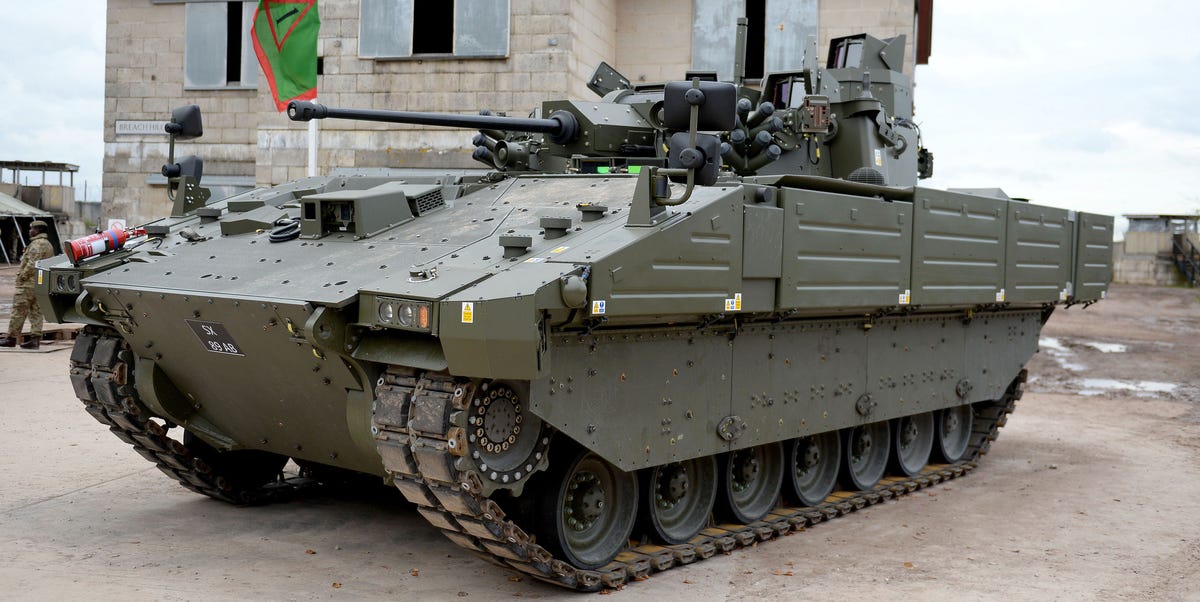
The British Army’s Ajax armored vehicle was supposed to be a digital-age leap forward: faster intelligence, better reconnaissance, modern sensors, improved protection, and a long-overdue replacement for aging tracked reconnaissance vehicles. Instead, Ajax has become a rolling case study in how a high-tech military program can stumble when engineering, safety, training, maintenance, and procurement bureaucracy all decide to form a very expensive group chat.
At the center of the controversy are reports of British soldiers becoming ill after operating or riding in Ajax vehicles. Symptoms have included nausea, vomiting, shaking, hearing problems, numbness, discomfort, and concerns linked to noise and vibration. The vehicle is not simply “a bit bumpy,” as if it were an old farm truck with ambitions. The issues have been serious enough to trigger pauses in training, parliamentary scrutiny, safety investigations, technical reviews, and public pressure on the Ministry of Defence.
So why is Ajax making British soldiers sick? The short answer: there does not appear to be one single villain wearing a tiny engineering cape. Official investigations have pointed toward a multi-factor problem involving noise, vibration, vehicle condition, track tension, loose or missing components, air quality inside the crew compartment, cold exposure, training variability, maintenance procedures, and the way the platform is operated under demanding conditions. In other words, Ajax is not one problem. It is a stack of problems, and stacks are usually where military procurement stories go to become documentaries.
What Is the Ajax Vehicle?
Ajax is a family of tracked, all-terrain armored fighting vehicles being built for the British Army by General Dynamics Land Systems–UK. It is often casually called a “tank,” but technically it is not a main battle tank. Its core role is armored reconnaissance: finding, tracking, and sharing battlefield information while operating with enough protection and firepower to survive in dangerous places.
The Army is acquiring 589 vehicles across six variants. These include the Ajax reconnaissance version, Ares personnel carrier, Athena command vehicle, Argus engineer reconnaissance vehicle, Apollo repair vehicle, and Atlas recovery vehicle. The idea is to give the British Army a modern, digitally connected family of vehicles that can operate with Challenger 3 tanks, Boxer infantry vehicles, Apache helicopters, artillery, drones, and other battlefield systems.
On paper, that sounds impressive. Ajax is meant to bring advanced sensors, communications, protection, mobility, and a powerful 40mm cannon into a single modern platform. It has been promoted as a key part of the Army’s future armored force. But the phrase “on paper” is doing a lot of heavy lifting here, because the program’s real-world journey has been rougher than a tracked vehicle crossing Salisbury Plain after too much coffee.
A Troubled Program Years Behind Schedule
The Ajax program has been delayed for years. The vehicle was originally expected to enter service much earlier, with delivery ambitions dating back to the previous decade. Over time, milestones slipped, technical challenges mounted, and the Ministry of Defence faced criticism over how the project was managed.
The contract with General Dynamics Land Systems–UK covers hundreds of vehicles and has been widely reported in the range of several billion pounds. Beyond the cost, Ajax has become politically sensitive because the British Army badly needs modern armored reconnaissance capability. Scrapping it would be expensive, embarrassing, and operationally disruptive. Keeping it, however, requires confidence that soldiers can use it safely. That is the uncomfortable balancing act: the Army needs Ajax, but it cannot afford a platform that makes its own crews sick.
By late 2025, Ajax reached Initial Operating Capability, meaning it had cleared a major milestone and was considered capable of deploying a squadron on operations. That should have been the champagne moment. Instead, soon afterward, soldiers reported symptoms during Exercise Titan Storm, and the program was pushed back into the spotlight for all the wrong reasons.
Why Are British Soldiers Getting Sick in Ajax?
The health complaints associated with Ajax have generally centered on two big categories: noise and vibration. More recent scrutiny has also raised concerns about air quality, fumes, heating, crew comfort, maintenance condition, and human factors. The latest official view is not that one single defect explains everything. Instead, the problem appears to involve several interacting causes.
1. Excessive Noise Exposure
Armored vehicles are loud. Engines roar, tracks clatter, weapons systems generate noise, radios chatter, and crew members often work in a confined metal hull. That is already a challenging acoustic environment. Ajax added an extra concern: reports that soldiers experienced hearing-related symptoms, including tinnitus and hearing loss concerns, during testing and training.
Noise exposure matters because hearing damage can be permanent. Occupational health agencies warn that loud noise at work can damage the inner ear, and risk depends on volume, duration, and repeated exposure. In armored combat vehicles, that risk is not theoretical. Crew members rely on communication headsets, hearing protection, and vehicle design to reduce exposure. If any part of that system underperforms, soldiers may face a dangerous mix of mission pressure and physical harm.
Earlier Ajax reviews noted concerns about excessive noise and the need for better controls. There were also disputes and questions around headsets, protective equipment, and whether vehicle noise levels were being properly understood. This is where the story becomes more than “the vehicle is noisy.” A military platform can meet one test condition and still create practical risk if crews experience long exposure, poor headset performance, difficult terrain, or communication equipment that transmits or amplifies unwanted noise.
2. Whole-Body Vibration
Vibration is the other headline issue. Tracked armored vehicles naturally vibrate, especially at speed, over rough ground, or when track tension and suspension behavior are not ideal. But the Ajax complaints have gone beyond normal battlefield discomfort. Soldiers have reported symptoms associated with strong vibration exposure, including nausea, shaking, numbness, and physical distress.
Whole-body vibration occurs when vibration travels through the seat, floor, or structure of a vehicle into the body. Occupational health research has linked prolonged whole-body vibration to musculoskeletal issues, back pain, discomfort, fatigue, and other health effects. In a military vehicle, the problem can be amplified by heavy armor, complex suspension dynamics, rough terrain, long mission duration, and crews who must remain alert while wearing body armor and headsets.
Ajax’s vibration story has been long-running. Concerns were raised years before the latest incident, including warnings that exposure could create risks for hand-arm vibration and whole-body vibration. A major issue is that vibration is not always a single constant number. It can change with terrain, speed, vehicle load, maintenance state, track tension, seating position, posture, and mission length. That makes it harder to diagnose than a broken switch. It is more like chasing a ghost that only appears at 30 mph, uphill, in the cold, with the wrong bolt loose.
3. Track Tension and Mechanical Condition
The April 2026 ministerial update pointed to platform conditions at the time of Exercise Titan Storm, including incorrect track tension and loose or missing engine deck bolts, as part of the multi-factor picture. That matters because tracked vehicles are sensitive to track condition. If track tension is wrong, ride quality, noise, vibration, wear, and safety can all be affected.
Track tension is not glamorous. It will never get a movie poster. But on an armored vehicle, it can be crucial. A track that is too tight can increase strain; a track that is too loose can create additional noise, vibration, and risk of throwing a track. During long cross-country exercises, track condition can change, and crews need clear procedures for checks and maintenance.
Officials have argued that Ajax can be safe when operated and maintained within defined parameters. Critics respond that this is not fully reassuring if those parameters are difficult to maintain during realistic training. A vehicle designed for war must work not only in a clean test lane but also in mud, cold, fatigue, time pressure, and imperfect field conditions. The battlefield rarely pauses politely so someone can consult a maintenance spreadsheet.
4. Air Quality, Fumes, and Crew Compartment Conditions
Recent official statements have also identified air quality within the Ajax vehicle as a relevant factor. Reports have discussed possible concerns around air filtration, heating, fumes, and the crew environment. The Ministry of Defence has said planned improvements will focus on air filtration, crew compartment heating, and the electrical power generation system.
Air quality is important because symptoms such as headache, dizziness, nausea, weakness, confusion, and vomiting can be associated with exposure to harmful fumes, including carbon monoxide. That does not mean carbon monoxide has been definitively established as the single cause of the Ajax sickness incidents. Officially, the conclusion has been more cautious: symptoms were likely caused by multiple factors, and air quality was one of the issues requiring attention.
Still, the concern is serious. Armored vehicles are enclosed environments. If ventilation, filtration, heating, engine sealing, or exhaust routing is not right, the crew may experience discomfort or illness. Even when levels remain within legal limits, the combination of heat, cold, vibration, noise, fatigue, fumes, and stress can push the human body into “absolutely not today” mode.
The 2021 Safety Review: A Warning Sign That Was Hard to Ignore
Ajax’s health concerns did not begin with the latest exercise. A government review published in 2021 examined noise and vibration problems and found serious safety-management failures. It noted that service personnel had reported motion sickness and that safety notices had identified high vibration levels on early Ajax platforms. The review also highlighted collective failings that allowed activity to continue when it should have been stopped or better controlled.
That review was a turning point because it showed Ajax was not merely suffering from routine teething problems. New military equipment often has defects during testing, but the Ajax issue became more troubling because soldiers were reporting injuries and symptoms while the system for escalating and managing safety concerns appeared inadequate.
The Public Accounts Committee later criticized the program, noting that the department had acknowledged excessive noise and vibration concerns and that the issues had delayed entry into service. It also pointed to broader weaknesses in program management, technical understanding, and risk control. For taxpayers, soldiers, and defense planners, that combination is not ideal. It is a bit like buying a very expensive smartwatch and discovering it gives you a rash, loses time, and occasionally argues with your doctor.
What Happened During Exercise Titan Storm?
Exercise Titan Storm brought Ajax back into public controversy. During the exercise, more than 30 soldiers reportedly experienced symptoms associated with noise and vibration exposure. Some accounts described vomiting and uncontrollable shaking. Training was paused, medical checks were conducted, and the Ministry of Defence began further investigations.
The Army Safety Investigation Team later concluded that there was no single causal mechanism. Instead, it identified a combination of factors, including incorrect track tension, loose or missing engine deck bolts, cold exposure, air quality issues, and differences in training and experience. The update also stated that noise and vibration levels were found to be below legal exposure limits. That detail is important, but it does not end the debate.
Why? Because legal exposure limits are not the same as soldier confidence. A crew member who vomits after a mission will not be comforted by a spreadsheet explaining that the vibration reading was technically acceptable. Safety is not just compliance; it is lived experience. If soldiers feel ill, lose trust, or worry about long-term health, the Army has a real operational problem even if the vehicle passes a narrow test condition.
Why “Within Limits” Does Not Always Mean “Problem Solved”
One of the most confusing parts of the Ajax story is that officials have said noise and vibration levels can be within legal exposure limits while soldiers still report symptoms. This sounds contradictory, but it is possible. Exposure limits measure specific hazards in specific ways. Human discomfort and illness can come from combined stressors that are harder to capture in a single number.
Imagine riding in a vehicle that is loud, vibrating, cold, physically cramped, mentally demanding, and filled with the smell of machinery. Now add body armor, a helmet, limited visibility, a headset, radio traffic, mission pressure, and hours of movement over rough terrain. Any one of those factors might be manageable. Together, they can become overwhelming.
That is why the Ajax issue is best understood as a systems problem. The vehicle, crew, terrain, maintenance regime, protective equipment, environmental conditions, and training procedures all interact. Fixing one part may help, but the goal must be to make the entire operating experience safe and sustainable.
What Fixes Are Being Considered?
The Ministry of Defence has said Ajax will be reintroduced under strict controls and a phased approach. The current plan includes limited trials, controlled maintenance regimes, and improvements related to air filtration, crew heating, and electrical power generation. Officials have also discussed learning from aviation safety methods by creating clearer links between design, maintenance, and operation.
There has also been discussion of future upgrades sometimes described as moving toward an improved “Ajax 2” concept. Possible changes may include composite rubber tracks, automatic track tensioners, improved seating, damping, headset improvements, better crew environment controls, and stricter operational checks. These upgrades aim not only to reduce technical risk but also to rebuild confidence among soldiers.
Rebuilding confidence may be the hardest part. A machine can be modified with parts. Trust requires repeated proof. Soldiers need to see that the vehicle can perform safely in realistic conditions, not just in carefully managed trials. Commanders need to know that crews can train hard without ending up in medical review. The public needs assurance that billions of pounds are not being spent on a platform that looks advanced in brochures but feels like a washing machine full of rocks.
Why Ajax Still Matters to the British Army
Despite the problems, Ajax remains strategically important. The British Army needs modern reconnaissance vehicles that can detect threats, share data, support armored formations, and survive on a battlefield shaped by drones, precision fires, electronic warfare, and fast-moving sensors. Old reconnaissance vehicles are no longer enough for the demands of modern war.
Ajax is designed to act as the Army’s eyes and ears in dangerous territory. Its sensors and digital systems are supposed to gather information and pass it quickly to other units. In theory, this gives commanders better situational awareness and helps the Army strike first, move faster, and avoid surprises.
The war in Ukraine has reinforced the importance of reconnaissance, survivability, mobility, and rapid information sharing. It has also shown that armored vehicles must adapt to drones, loitering munitions, mines, artillery, and electronic warfare. Ajax was conceived before some of these battlefield lessons became impossible to ignore. That does not automatically make it obsolete, but it raises pressure on the program to prove that it can be upgraded and used safely in the modern threat environment.
The Procurement Lesson: Complexity Can Be a Trap
Ajax is a reminder that complex defense programs can fail in complicated ways. The vehicle is not just an engine, tracks, armor, and gun. It is a system of systems: sensors, communications, software, suspension, weapons, crew interfaces, safety controls, maintenance routines, training pipelines, supply chains, and contract requirements. When one part goes wrong, others may follow.
Major defense programs often try to deliver cutting-edge capability while also meeting cost, schedule, industrial, and political goals. That creates pressure. Contractors want to deliver. Governments want milestones. Armies want capability. Ministers want good news. Nobody wants to stand at a podium and say, “The expensive vehicle is still making people sick.” Unfortunately, physics, acoustics, vibration, and human biology do not care about press releases.
The deepest lesson from Ajax may be that safety must be treated as a design requirement, not a late-stage compliance box. If crews cannot operate a vehicle comfortably and safely for realistic mission durations, then the vehicle’s impressive sensors and firepower are not enough. A reconnaissance platform is only as effective as the soldiers who can use it without being harmed by it.
Experience-Based Perspective: What Ajax Problems Feel Like for Soldiers
To understand why the Ajax vehicle problems have caused such concern, it helps to think beyond procurement charts and imagine the experience from a crew’s point of view. A soldier climbing into an armored vehicle is already entering a demanding space. The interior is tight, hard-edged, noisy, and full of equipment. You are not sitting in a luxury SUV with heated cupholders and a playlist called “Chill Recon Vibes.” You are inside a metal fighting vehicle built for survival, not spa-day comfort.
Now imagine that the vehicle starts moving across rough ground. The engine note rises. The tracks begin their constant mechanical rhythm. The hull vibrates through the floor. The seat carries that motion into your back, hips, and legs. Your headset is active, but it does not remove all the noise. It may even become part of the problem if the fit, configuration, or signal is wrong. You are trying to listen to commands, watch screens, maintain awareness, and stay ready for a simulated mission. Meanwhile, your body is being shaken in ways that are hard to ignore.
At first, discomfort may feel manageable. Soldiers are trained to push through discomfort. Military culture does not encourage dramatic complaints because a seat feels annoying. But after time passes, the symptoms can build. A mild headache becomes a heavy one. The vibration that felt irritating starts to feel like it is inside your bones. If the crew compartment is cold, poorly ventilated, or affected by fumes, nausea can creep in. Your stomach turns. Your hands or feet may feel strange. You may feel dizzy, unfocused, or suddenly exhausted.
That is when the issue stops being a technical debate and becomes a human one. A reconnaissance crew must make decisions quickly. They must communicate clearly, interpret sensor data, monitor threats, and react under pressure. If soldiers are nauseated, shaking, struggling to hear, or worried about long-term injury, performance drops. Safety and combat effectiveness are not separate topics. They are the same topic wearing different helmets.
The psychological side matters too. Once a vehicle gets a reputation for making soldiers sick, every new ride begins with doubt. Crews may wonder whether symptoms will return. Commanders may wonder whether pushing training too hard will create another incident. Maintainers may feel pressure to catch every possible issue before the vehicle moves. Even when improvements are made, trust does not instantly reappear. It has to be earned mile by mile, exercise by exercise, and crew by crew.
For soldiers, the most frustrating part is likely the gap between promises and lived experience. Ajax has been described as advanced, transformational, and vital. Those things may be true in capability terms. But from inside the vehicle, what matters is simpler: Can I do my job? Can I communicate? Can I stay healthy? Can I trust this machine when the training day is long, the weather is miserable, and the terrain is doing its best impression of a medieval punishment device?
This is why the Ajax controversy has lasted so long. It is not only about defects. It is about credibility. Soldiers need equipment that works in the real world, not only in controlled demonstrations. If the Army can fix the vehicle, tighten maintenance standards, improve the crew environment, and prove that Ajax is safe under demanding use, the platform may yet become the capability it was promised to be. If not, Ajax will remain a cautionary tale: a high-tech armored vehicle that won the PowerPoint battle but struggled when real soldiers climbed inside.
Conclusion
Ajax vehicle problems have made British soldiers sick because the platform appears to have suffered from a complex mix of noise, vibration, mechanical condition, air quality, environmental exposure, training variation, and safety-management failures. Official findings have moved away from a single-cause explanation and toward a systems view: the vehicle must be designed, maintained, operated, and monitored correctly as one complete safety ecosystem.
The British Army still wants Ajax because it fills a major capability gap in armored reconnaissance. But the program’s future depends on something more basic than advanced sensors or digital architecture. It must prove that soldiers can use it safely, repeatedly, and confidently in realistic conditions. A modern armored vehicle cannot be considered truly battle-ready if its crews are fighting nausea, vibration, and doubt before they ever meet the enemy.
Ajax may still become a valuable battlefield platform. But to get there, the Ministry of Defence and General Dynamics must solve the soldier experience, not just the engineering paperwork. The vehicle needs to be safe in the mud, the cold, the long exercise, the imperfect field check, and the stressful training day. That is where trust is built. That is where Ajax must finally stop rattling the people it is supposed to protect.