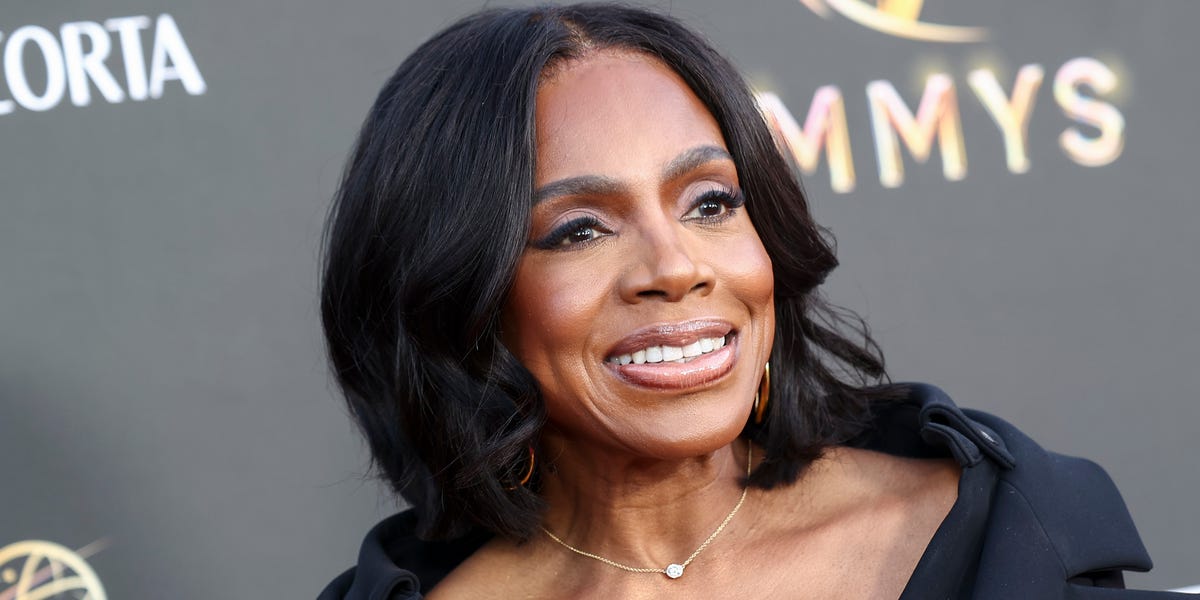
Every so often, the internet collectively discovers a piece of pop-culture trivia so delightful that everyone has the same reaction: “Wait, how did I not know this?” That is exactly what happened when many Abbott Elementary fans learned that Sheryl Lee Ralph, the Emmy-winning actress behind the elegant, no-nonsense Barbara Howard, has a major Wicked connection. And no, this is not a “she once saw the show from row M and bought a magnet” kind of connection. Ralph actually played Madame Morrible in the Broadway production of Wicked.
For fans who know Ralph mainly as Barbara Howardthe veteran kindergarten teacher whose cardigan game deserves its own awards categorythe reveal feels almost too perfect. Madame Morrible is polished, commanding, theatrical, and capable of turning a room cold with one carefully placed sentence. Barbara Howard is warm, faithful, disciplined, and equally capable of ending foolishness with one eyebrow lift. Different worlds, same queenly authority.
The surprise also says something bigger about Sheryl Lee Ralph’s career. Abbott Elementary may have introduced her to a new generation of viewers, but Ralph has been a Broadway, film, television, and music force for decades. Her Wicked chapter is not a random footnote. It is another example of a performer whose résumé is basically a treasure chest with better lighting.
The Sheryl Lee Ralph ‘Wicked’ Connection, Explained
Sheryl Lee Ralph joined the Broadway company of Wicked in 2016 as Madame Morrible, the powerful Shiz University figure who recognizes Elphaba’s magical talent and later becomes deeply involved in the political machinery of Oz. Ralph’s run began in November 2016 and continued into 2017, placing her inside one of the most recognizable modern Broadway musicals of the 21st century.
For casual viewers, Madame Morrible may seem like a secondary character at first: a grand academic, a mentor, a gatekeeper, a woman with excellent posture and suspiciously convenient access to authority. But anyone who knows Wicked understands that Morrible is crucial. She helps shape the public narrative around Elphaba. She knows how power works. She smiles while moving the chess pieces. In other words, she is not simply “the school official.” She is the storm before the stormsometimes literally.
That is why fans reacted so strongly when Ralph’s history with the role resurfaced. It makes instant sense. Her voice, presence, timing, and regal energy fit the character so naturally that many people wondered how they had missed it. Ralph did not just “appear” in Wicked; she stepped into one of the show’s most deliciously complex adult roles.
Why Abbott Elementary Fans Were So Shocked
The surprise comes partly from timing. Abbott Elementary has made Ralph newly visible to millions of viewers who may not have followed her Broadway career closely. On the ABC comedy, she plays Barbara Howard, a veteran teacher at a fictional Philadelphia public school. Barbara is respected, principled, occasionally stubborn, and usually right. Even when she is wrong, she is wrong with excellent diction.
Ralph’s performance as Barbara has become one of the emotional anchors of the series. She brings old-school grace to a modern mockumentary sitcom, creating a character who feels both funny and deeply familiar. Barbara is the teacher who remembers every student’s name, keeps standards high, and can turn a chaotic classroom into a peaceful learning environment without raising her voice. That kind of power is not magic, but it is close.
So when fans connect Barbara Howard to Madame Morrible, the contrast is thrilling. Barbara represents care, faith, and educational devotion. Morrible represents ambition, control, and political manipulation. The fun is in watching how one actress can convincingly inhabit both. Ralph’s range becomes the story: from Abbott’s calm classroom queen to Oz’s polished power broker.
Who Is Madame Morrible in Wicked?
To understand why the connection matters, it helps to understand Madame Morrible’s role in Wicked. The musical reimagines the world of The Wizard of Oz by focusing on Elphaba, the green-skinned young woman who eventually becomes known as the Wicked Witch of the West, and Glinda, the popular blonde student who becomes Glinda the Good.
Madame Morrible is a powerful figure at Shiz University, where Elphaba and Glinda first meet. She sees Elphaba’s raw magical ability and positions herself as a mentor. But her guidance is tangled with ambition. Morrible is not simply nurturing talent; she is recruiting power. As the story unfolds, she becomes aligned with the Wizard’s political agenda, helping manipulate public opinion against Elphaba.
The role requires more than a strong voice. It demands authority, theatrical precision, and the ability to suggest danger underneath charm. A weak Morrible disappears into the machinery of the plot. A strong Morrible makes the audience understand how institutions can smile while doing terrible things. Ralph’s stage presence made her a natural fit for that kind of layered performance.
Sheryl Lee Ralph Was Broadway Royalty Long Before Abbott
The Wicked reveal may have shocked some Abbott Elementary fans, but theater lovers know Ralph’s Broadway credentials run deep. She originated the role of Deena Jones in the original Broadway production of Dreamgirls, one of the most important musicals of the early 1980s. That role helped establish her as a major stage talent and earned her Tony and Drama Desk recognition.
Her performance in Dreamgirls remains a key part of Broadway history. Deena Jones is glamorous, complicated, and emotionally controlled in ways that require subtle acting beneath the sparkle. Ralph helped define that character for audiences, proving early in her career that she could hold attention not by overplaying a moment, but by understanding exactly when to let silence, stillness, and elegance do the work.
That same skill is visible in Abbott Elementary. Barbara Howard does not need slapstick to be funny. Ralph can get a laugh from a pause, a look, a polite correction, or a sentence delivered with the calm finality of a judge closing a courtroom. Her comedy often works because she treats Barbara’s seriousness seriously. The joke is not that Barbara is ridiculous; the joke is that everyone else has failed to meet the standard.
From Dreamgirls to Wicked to Abbott Elementary
One reason Ralph’s career feels so satisfying is that it connects major eras of American entertainment. In Dreamgirls, she helped shape a landmark Broadway musical inspired by the sound, ambition, and cost of pop stardom. In Wicked, she joined a blockbuster musical that reframed a classic fantasy through friendship, propaganda, and misunderstood womanhood. In Abbott Elementary, she became part of a network sitcom that brought warmth, workplace comedy, and public-school realities back into mainstream conversation.
That is not a random career path. It is a master class in longevity. Ralph has moved through stage, film, sitcoms, prestige television, voice work, activism, and awards-season moments without losing her distinctive identity. She is glamorous without feeling distant. She is funny without chasing the joke. She is commanding without flattening everyone around her.
Her Wicked connection reminds newer fans that Ralph did not suddenly arrive fully formed when Abbott Elementary premiered. She brought decades of craft with her. Barbara Howard works because Ralph has lived enough performance lives to know how a character stands, breathes, corrects, forgives, and occasionally side-eyes a person into spiritual growth.
Why the Wicked Movie Made Fans Revisit Ralph’s Broadway Past
The renewed attention around Wicked also helped bring Ralph’s stage history back into the spotlight. The film adaptation, led by Cynthia Erivo as Elphaba and Ariana Grande as Glinda, introduced the musical to an even wider audience. Michelle Yeoh took on the role of Madame Morrible for the screen version, adding her own cool, controlled authority to the character.
When a beloved stage property becomes a major movie event, fans naturally begin comparing casts, digging through Broadway history, and asking, “Who else played this role?” That curiosity led many people to Ralph. For Abbott Elementary viewers, discovering that Barbara Howard once ruled the halls of Shiz as Madame Morrible felt like finding a secret passageway between two favorite fandoms.
Ralph has spoken warmly about the movie cast while also acknowledging that she would have loved to be considered for the screen version. That honesty only made fans appreciate her more. There is no bitterness in recognizing that a role meant something to you. There is also no need to pit performers against each other. Michelle Yeoh brought her own flavor to the film, while Ralph’s Broadway performance remains part of the role’s stage legacy.
Barbara Howard and Madame Morrible: Two Very Different Kinds of Power
The most interesting part of the Ralph-Wicked connection is not just that she played both a beloved teacher and a morally slippery academic. It is how differently those characters use authority.
Barbara Howard’s power is rooted in service. She has spent years teaching children, guiding younger educators, and trying to preserve dignity in an underfunded school system. Her authority comes from consistency. She knows the rules because she has lived through the consequences of people ignoring them. When Barbara speaks, the room listens because she has earned that respect.
Madame Morrible’s power is rooted in access. She understands proximity to institutions, leaders, and public messaging. She knows how to identify talent and redirect it toward a political purpose. Where Barbara uses influence to protect children, Morrible uses influence to protect systems. Barbara builds trust; Morrible manufactures consent. Barbara is the teacher you remember fondly. Morrible is the administrator whose emails start with “Per my last announcement” and end with someone being exiled.
That contrast shows Ralph’s sophistication as an actress. She does not rely on one version of authority. She can make command feel maternal, spiritual, comic, dangerous, glamorous, or bureaucratic depending on the role. That is not typecasting. That is range wearing a perfectly tailored jacket.
Why Fans Love Discovering These Career Connections
Pop culture fans enjoy surprises, but they especially love surprises that make sense after the fact. Sheryl Lee Ralph in Wicked is exactly that kind of discovery. At first, people are shocked. Then they think about her voice, her posture, her Broadway background, her Emmy speech, her Barbara Howard energy, and suddenly the reaction becomes: “Actually, of course.”
These discoveries also make fandom feel more connected. A person might come to Ralph through Abbott Elementary, then discover Wicked, then go backward to Dreamgirls, then recognize her in Moesha, Sister Act 2, or another earlier project. One role becomes a doorway to an entire career. That is the joy of following performers with long, varied résumés: there is always another room in the house.
For younger viewers, Ralph’s career is also a reminder that success does not always move in a straight line. Sometimes a performer becomes iconic in one era, keeps working, keeps evolving, and then receives a fresh wave of mainstream celebration decades later. Her Emmy win for Abbott Elementary was powerful not only because it honored one performance, but because it recognized a lifetime of persistence, talent, and grace.
What This Says About Abbott Elementary’s Casting Magic
Abbott Elementary works so well because its casting feels lived-in. Quinta Brunson built a world where every adult in the school has a specific rhythm, worldview, and emotional temperature. Ralph’s Barbara Howard is central to that balance. She is not merely the “older teacher.” She is a moral compass, a comic foil, a mentor, and sometimes the person who must learn that her own way is not the only way.
Knowing Ralph’s Broadway background adds another layer to that performance. Barbara’s elegance is not accidental. Her voice carries musicality even in ordinary dialogue. Her gestures are economical in the way stage actors often learn to make movement read clearly. Her timing has the confidence of someone who understands both live audience energy and camera intimacy.
In other words, Abbott Elementary did not just cast a funny actress. It cast a performer with stage discipline, television experience, musical history, and the kind of charisma that cannot be faked. That is why Barbara can be hilarious in one scene and genuinely moving in the next. Ralph knows how to turn the volume up, but more importantly, she knows when to lower it.
Experience Section: Watching the Discovery Happen as a Fan
There is a particular pleasure in watching fans discover Sheryl Lee Ralph’s Wicked connection in real time. It feels like sitting in a group chat where someone casually drops a fact and the entire room tips over. One person says, “Barbara Howard was Madame Morrible?” Another replies, “Excuse me, WHAT?” Then someone posts a photo, someone else finds a Broadway clip, and suddenly everyone is acting like they personally uncovered a national secret in the faculty lounge.
The funniest part is that the discovery does not feel random. Once you picture Ralph in the role, it locks into place. You can imagine her sweeping across the stage with that unmistakable presence, delivering Morrible’s lines with velvet authority and a hint of thundercloud. You can also imagine the audience straightening up in their seats the moment she enters. Some performers ask for attention. Ralph simply arrives, and attention behaves itself.
For Abbott Elementary fans, the connection deepens Barbara Howard too. Barbara is not Madame Morrible, of course; Barbara would probably need one staff meeting to identify every ethical problem in Oz and three minutes to organize a parent committee. But seeing Ralph’s range makes you appreciate how carefully she plays Barbara. She could make Barbara much bigger, louder, or more theatrical. Instead, she keeps her grounded. Barbara’s drama comes from conviction, not volume.
As a viewer, that makes the rewatch experience richer. A Barbara scene that once seemed simply funny now carries the weight of Ralph’s stagecraft. The way she pauses before correcting Ava, the way she softens around Janine, the way she protects her students, the way she lets pride crack just enough to show vulnerabilityall of it feels more precise. You start to notice the little technical choices behind the warmth.
The Wicked connection also captures why older performance histories matter. Streaming culture can make it feel like actors begin existing the moment they enter your favorite show. Ralph is a perfect reminder that many “overnight sensations” have been working for 40 years, collecting skills, surviving industry changes, and building careers one role at a time. Her current popularity is not a surprise ending. It is a long-earned standing ovation that happened to arrive with better memes.
That is why fans cannot stop talking about it. The fact itself is fun, but the meaning behind it is better. Sheryl Lee Ralph’s career connects Broadway glamour, sitcom comfort, musical-theater history, and modern TV fandom. Her Wicked past gives fans another reason to celebrate her present. And honestly, if someone wants to start a petition for Barbara Howard to lead a school production of Wicked on Abbott Elementary, the internet would not complain. Ava would produce it, Janine would over-prepare, Gregory would build one extremely practical set piece, and Barbara would remind everyone that emerald green is not an excuse for poor classroom behavior.
Conclusion
Sheryl Lee Ralph’s Wicked connection is more than a fun trivia nugget. It is a reminder of how wide, rich, and impressive her career has been. Before she became beloved by a new generation as Barbara Howard on Abbott Elementary, she had already made Broadway history, originated a legendary role in Dreamgirls, and brought Madame Morrible to life in Wicked. Fans may be shocked when they first learn it, but the surprise quickly turns into admiration.
Ralph’s ability to move from the warm moral authority of Barbara Howard to the polished danger of Madame Morrible proves what longtime fans already knew: she is not simply having a moment. She is receiving the spotlight she has earned over decades. And if the internet needs to rediscover one dazzling chapter at a time, so be it. Some legends deserve multiple grand entrances.
Note: This article is based on verified entertainment reporting, official theater and television records, and publicly available career information, rewritten in original language for web publication.