Some houses announce themselves with a top hat and a firm handshake. A proper Victorian home does exactly that. From the sidewalk, it may show off a steep roofline, decorative trim, tall windows, an expressive porch, and enough personality to make a plain box house feel underdressed. But step inside a thoughtfully updated Victorian today, and the mood can shift completely. Suddenly, the carved brackets and historic facade give way to warm wood, soft light, clean lines, hidden storage, and rooms that seem to whisper, “Please put down your phone and breathe.”
That contrast is the magic behind a home that is proper Victorian on the outside and modern Zen on the inside. It is not a design identity crisis. It is a conversation between eras. The exterior honors craft, history, and neighborhood character. The interior supports calm, function, wellness, and everyday life. In other words, the house keeps its manners at the curb and takes off its corset in the living room.
This approach has become especially appealing for homeowners who love historic architecture but do not want to live in a museum. A Victorian home can keep its original charm while gaining an interior that feels open, peaceful, and deeply livable. The secret is not to erase the past. The secret is to edit with respect.
Why Victorian Homes Still Capture the Imagination
Victorian architecture in the United States covers several styles that flourished during the 19th and early 20th centuries, including Queen Anne, Italianate, Second Empire, Gothic Revival, and Folk Victorian. These homes were rarely shy. They embraced asymmetry, ornament, texture, verticality, patterned shingles, turned porch posts, brackets, bay windows, stained glass, and expressive rooflines. A Victorian facade often behaves like a well-dressed storyteller: every gable, spindle, and sash window has something to say.
Part of the appeal is emotional. Victorian houses feel rooted. They remind neighborhoods that time existed before open shelving, wireless chargers, and the phrase “statement island.” Their exteriors contribute to streetscape character, especially in older American cities and towns where rows of historic homes create a shared architectural rhythm. Preserving that exterior is not just nostalgia; it is a way to protect the visual memory of a place.
The “Proper” Victorian Exterior
A proper Victorian exterior does not have to be fussy, but it should feel intentional. The best restorations respect original proportions and materials wherever possible. Wood siding, decorative trim, porch railings, original windows, masonry details, and period-appropriate paint palettes all help maintain the home’s historic identity. Even when replacement is necessary, the goal should be compatibility rather than costume drama.
That means avoiding random modern insertions that fight the architecture. A sleek black slab door might look fantastic on a new minimalist home, but on a Queen Anne with turned posts and patterned shingles, it can look like it wandered in from the wrong party. A better strategy is to update subtly: restore the original front door, choose historically sympathetic hardware, repair rather than remove decorative millwork, and use exterior colors that highlight architectural depth without turning the house into a cupcake.
Why a Modern Zen Interior Works So Well
At first, Victorian and Zen design seem like unlikely roommates. Victorian style is associated with layers, pattern, ornament, and visual richness. Modern Zen interiors emphasize simplicity, balance, natural materials, open space, and calm. One loves a dramatic parlor. The other would like that parlor to take a deep breath.
Yet the pairing works because each style solves the other’s problem. Victorian homes bring soul, craftsmanship, and texture. Modern Zen interiors bring clarity, light, and ease. Together, they create a home that feels grounded but not heavy, historic but not dusty, elegant but not uptight.
What “Modern Zen” Really Means in a Home
Modern Zen interior design is not about putting a Buddha statue in every corner and calling it a day. It is about atmosphere. It favors uncluttered rooms, tactile materials, soft neutrals, natural light, low-profile furniture, indoor-outdoor connection, and quiet transitions between spaces. It overlaps with Japandi style, which blends Japanese minimalism with Scandinavian warmth. The result is calm without coldness, simplicity without emptiness, and function without that unfortunate “waiting room with expensive chairs” feeling.
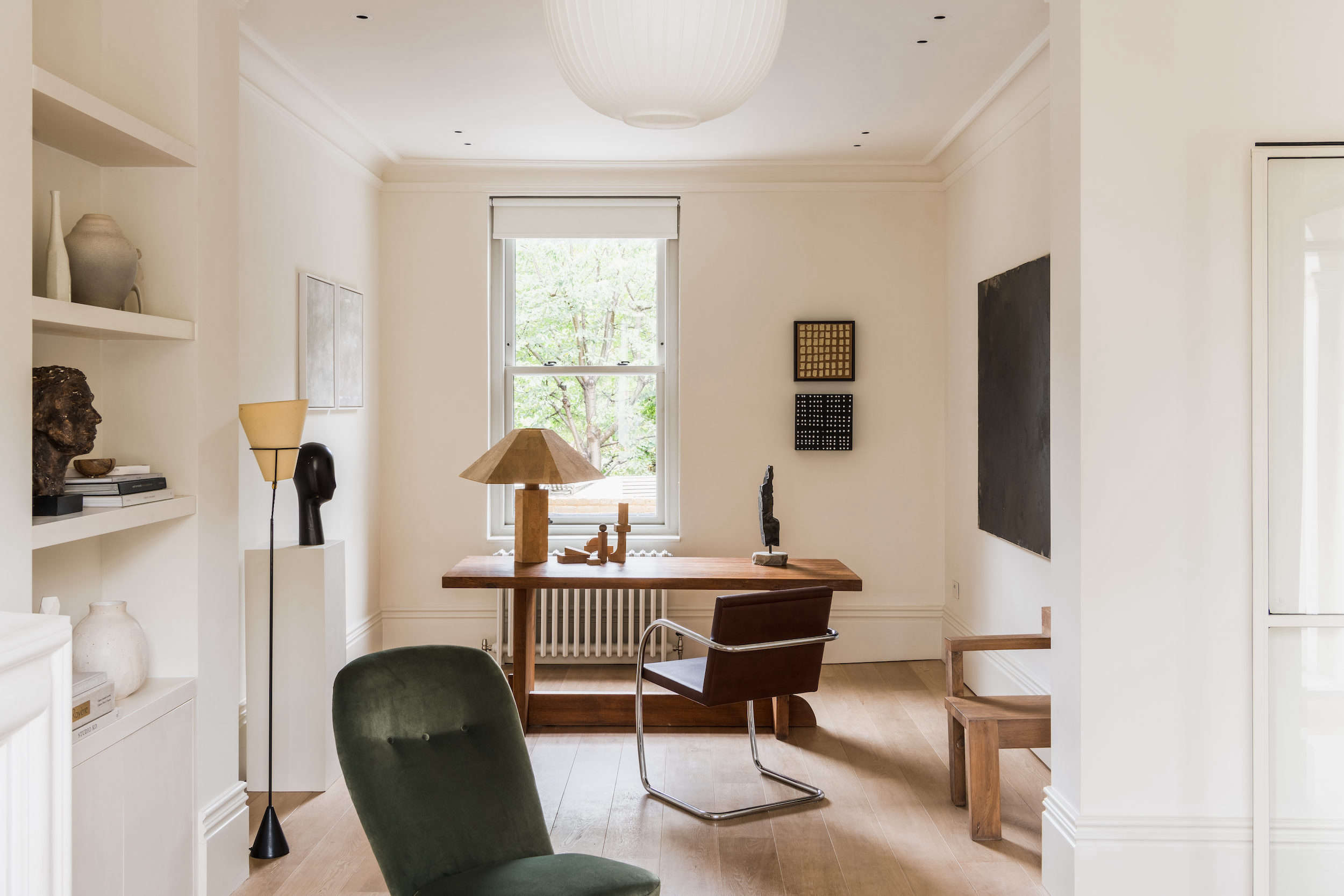
In a Victorian renovation, modern Zen might appear as pale oak floors, limewashed walls, linen curtains, plaster-like finishes, handmade ceramics, matte black accents, concealed appliances, built-in storage, warm white lighting, and a restrained palette of cream, taupe, soft gray, clay, sage, charcoal, and natural wood. The rooms still feel designed, but nothing screams for attention. Even the coffee table knows how to use its indoor voice.
The Art of Balancing Old and New
The most successful Victorian-modern renovations are not split personalities. They are layered compositions. The exterior says, “I belong to history.” The interior says, “I belong to the people living here now.” The design challenge is to make both statements feel true.
Keep the Exterior Authentic
Start with the parts of the house the public sees and the neighborhood shares. Preserve the facade, porch, roofline, windows, trim, and masonry whenever feasible. Repair original materials before replacing them. If replacement is unavoidable, match scale, profile, and texture closely. Historic homes can tolerate modern life, but they rarely forgive careless proportions.
Paint is one of the most powerful tools. Victorian homes often handle multi-color palettes beautifully because trim, brackets, shingles, and panels create natural places for contrast. However, “more colors” does not automatically mean “better.” A sophisticated palette may use three or four coordinated tones to emphasize depth: a body color, trim color, sash color, and accent color. Deep greens, warm creams, muted blues, earthy reds, charcoal, taupe, and soft ochre can all work depending on the home’s materials and region.
Let the Interior Breathe
Inside, the goal is not to strip away every historic feature. Original staircases, ceiling medallions, fireplaces, pocket doors, plasterwork, stained glass, and wood floors can become beautiful anchors in a modern Zen interior. The trick is to give them breathing room. A carved fireplace surrounded by quiet plaster walls becomes sculptural. A stained-glass window beside simple linen drapery feels luminous rather than busy. A grand staircase paired with a clean runner and soft lighting becomes a moment of calm drama.
Editing matters. Victorian rooms were often designed with smaller compartments, darker finishes, and formal functions. Modern families usually want better flow, more light, improved kitchens, spa-like bathrooms, and flexible work areas. Selective wall openings, glass doors, skylights, interior courtyards, and open sightlines can modernize the home without destroying its bones. The aim is not to make the interior look like a new-build condo. The aim is to create space for modern life inside historic character.
Design Elements That Make the Contrast Feel Intentional
1. A Calm, Natural Color Palette
A modern Zen interior starts with color restraint. Warm white, stone, oatmeal, mushroom, clay, muted olive, pale oak, and charcoal create a peaceful backdrop. These shades soften the ornate nature of Victorian architecture and allow original details to stand out. If the exterior is richly painted, the interior can become a quiet exhale.
2. Natural Materials with Honest Texture
Wood, stone, linen, wool, paper, rattan, clay, limewash, and plaster finishes help bridge old and new. Victorian homes already contain material richness, so modern Zen design should not feel synthetic. A white oak dining table, honed marble counter, handmade tile backsplash, or wool rug can add warmth without clutter. The texture does the decorating, which is wonderful news for anyone tired of dusting seventeen tiny objects on a shelf.
3. Hidden Storage
Nothing ruins Zen faster than a battlefield of chargers, backpacks, pet toys, mail, and the mysterious cable nobody can identify but everyone is afraid to throw away. Built-in storage is essential. In a Victorian home, storage can be tucked into alcoves, under stairs, mudrooms, window seats, pantry walls, and custom cabinetry. Flat-front doors, touch-latch hardware, and integrated appliances keep visual noise low.
4. Light as a Design Material
Many Victorian homes were built before today’s obsession with giant glass walls. They can feel dark if not carefully updated. Modern Zen design depends on layered light: natural daylight, warm ambient lighting, task lighting, and soft accent lighting. Sheer linen curtains, restored sash windows, interior glass partitions, skylights, and reflective pale surfaces can make rooms feel brighter without sacrificing privacy or historic charm.
5. Furniture with Low, Clean Lines
Modern Zen furniture works best when it is simple, comfortable, and grounded. Low-profile sofas, platform beds, rounded lounge chairs, slim dining tables, and minimal nightstands help counterbalance the vertical energy of Victorian architecture. The furniture should not compete with crown molding or fireplaces. It should act like the calm friend at a lively dinner party.
Room-by-Room Ideas for a Victorian-Zen Home
Entryway: The Handshake Between Eras
The entry is where the two styles meet first. Keep the original door, staircase, banister, or tile if possible. Add a simple bench, a single ceramic vessel, a concealed shoe cabinet, and warm wall sconces. If there is stained glass, let it be the star. A restrained entryway tells guests immediately that the house respects its past but does not plan to trap them in 1892.
Living Room: Historic Bones, Soft Mood
In the living room, preserve major architectural features and simplify everything around them. A decorative fireplace can pair beautifully with a low linen sofa, a wool rug, a sculptural wood coffee table, and a few large-scale art pieces. Replace visual clutter with negative space. One excellent chair is better than five nervous little chairs having a committee meeting.
Kitchen: Quiet Function Behind Classic Walls
The kitchen is often the biggest test. A Victorian home may have originally kept cooking spaces separate and utilitarian. Today, the kitchen is command central, snack headquarters, homework station, and unofficial therapy office. A modern Zen kitchen can use flat-panel wood cabinets, stone counters, integrated appliances, soft-close drawers, and a hidden pantry. To keep the design connected to the home, consider a plaster hood, handmade tile, unlacquered brass, or a freestanding furniture-style island.
Bathroom: Spa Calm Without Losing Character
A Victorian-Zen bathroom should feel serene, not sterile. Think stone floors, a floating wood vanity, wall-mounted faucets, warm lighting, a deep soaking tub, and simple mirrors. If the home has original clawfoot tubs or vintage tile worth saving, integrate them with modern fixtures and quiet finishes. The result can feel like a boutique spa that happens to have excellent manners.
Bedroom: The Deep Exhale
The bedroom is where modern Zen design can fully take over. Use a low bed, linen bedding, minimal art, blackout drapery, soft rugs, and dimmable lighting. Keep electronics hidden. Choose nightstands with drawers, not open shelves that become accidental museums of lip balm, receipts, and half-read books. A Victorian bedroom with modern calm can feel romantic without becoming theatrical.
Sustainability: The Quiet Bonus of Keeping the Old House
Renovating an existing Victorian home is often more sustainable than demolishing and rebuilding. Older buildings contain embodied energy in their foundations, framing, masonry, and envelope. Reusing those materials avoids much of the waste and carbon impact associated with new construction. Add modern insulation strategies, efficient HVAC, smart ventilation, LED lighting, water-saving fixtures, and careful air sealing, and a historic home can become far more comfortable while keeping its character.
The key is sensitivity. Historic buildings need upgrades, but not every upgrade should be aggressive. Vapor permeability, original windows, plaster walls, and old-growth wood all require informed decisions. A good architect, preservation consultant, or contractor experienced with historic homes can prevent expensive mistakes. In old houses, enthusiasm is lovely; random demolition is not.
Common Mistakes to Avoid
Turning the Exterior Into a Theme Park
Restoration should not become caricature. Overly bright paint, fake gingerbread trim, or mismatched replacement windows can make a Victorian exterior look less authentic, not more. Respect scale, proportion, and craftsmanship.
Making the Interior Too Cold
Minimalism can go wrong when it forgets comfort. A Zen interior still needs texture, warmth, and human softness. Add wool, linen, wood grain, handmade ceramics, plants, books, and meaningful objects. Calm does not mean empty.
Removing Every Original Detail
If you remove all the moldings, fireplaces, floors, doors, and stair details, you may end up with a modern interior that could exist anywhere. The magic of this style is contrast. Keep enough historic detail to remind the home who it is.
Experience Notes: Living With a Proper Victorian Exterior and a Modern Zen Interior
Living in a home like this feels a little like having two wardrobes. Outside, the house wears polished shoes, a tailored coat, and maybe a pocket watch. Inside, it changes into linen pants and makes tea. That daily transition becomes part of the pleasure. You arrive home through a facade full of history, then step into rooms designed to lower your shoulders.
One of the best experiences is how guests react. From the street, they expect ornate wallpaper, heavy drapes, carved furniture, and perhaps a faint smell of old books and dramatic relatives. Then they walk inside and find pale wood, warm light, quiet walls, and a kitchen that actually has enough outlets. The surprise is delightful. It makes the home memorable without trying too hard.
Another benefit is emotional balance. Historic exteriors can feel protective and dignified. Modern Zen interiors can feel restorative. Together, they create a rhythm that suits real life. The porch is perfect for waving at neighbors or pretending you are the charming main character in a small-town movie. The interior is perfect for cooking, working, resting, stretching, reading, hosting, or simply hiding from the laundry with dignity.
Maintenance, of course, is part of the relationship. A Victorian exterior asks for attention. Paint, trim, gutters, woodwork, porch boards, and windows need regular care. This is not a house that appreciates being ignored. But the modern Zen interior helps balance that effort by reducing daily friction. When storage is smart, surfaces are calm, and rooms are easy to clean, the home feels manageable rather than demanding.
The most rewarding strategy is to renovate slowly and intentionally. Live in the house before making every decision. Notice where light lands in the morning. Learn which rooms feel too closed off. Watch how people move through the kitchen. Find out where clutter gathers. Old houses reveal their logic over time, and modern Zen design works best when it responds to actual habits rather than a mood board having a dramatic week.
Personal objects matter, too. A Zen-inspired Victorian should not erase identity. A few family heirlooms, travel finds, handmade bowls, framed sketches, vintage books, or inherited furniture pieces can add soul. The rule is not “own nothing.” The rule is “let every visible thing earn its place.” A single antique chair beside a modern sofa can say more than a room packed with period pieces shouting over one another.
There is also a practical joy in contradiction. The exterior can satisfy a love of ornament, history, and curb appeal. The interior can satisfy a need for calm, simplicity, and modern function. You do not have to choose between character and peace. You can have a porch with decorative brackets and a bedroom that feels like a meditation retreat. You can have a stained-glass transom and a clutter-free mudroom. You can have a house that remembers the past without forcing you to live by candlelight unless the power goes out, in which case the Victorian mood will be very convincing.
Ultimately, the experience is about harmony rather than perfection. A proper Victorian outside and modern Zen inside creates a home with depth. It respects the street, supports the people inside, and proves that design contrast can feel elegant when guided by care. The best version of this home does not ask, “Old or new?” It answers, “Both, but thoughtfully.”
Conclusion
A home that is proper Victorian on the outside and modern Zen on the inside offers the best of two worlds. The exterior preserves history, craft, and architectural personality. The interior creates calm, comfort, light, and practical modern living. This design approach works because it does not treat history as a cage or modernity as an eraser. Instead, it lets each style do what it does best.
For homeowners, designers, and old-house lovers, the lesson is simple: preserve the character that gives the home its soul, then edit the interior so life feels easier and more peaceful. Keep the porch, the trim, the beautiful windows, and the sense of arrival. Inside, choose natural materials, warm minimalism, hidden storage, soft lighting, and rooms that support the way people actually live. The result is a home that looks proud from the sidewalk and feels serene from the sofa. Honestly, that is a pretty excellent personality.