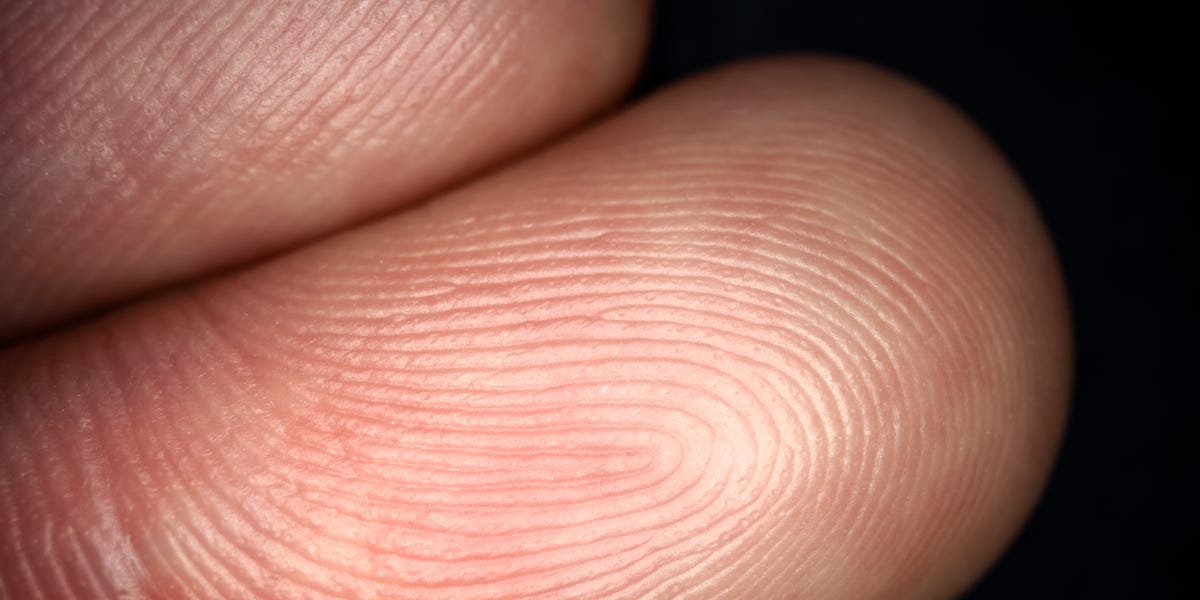
One tiny ridge-mark in ancient tar may be the closest thing we have to shaking hands with a seaborne raider from the Iron Age.
The Smallest Clue in a Very Old Cold Case
History usually arrives wearing heavy boots: ruined cities, buried swords, broken temples, and the occasional skeleton that makes archaeologists cancel lunch. But sometimes the past enters quietly, almost shyly, through something as small as a fingerprint pressed into sticky tar more than 2,000 years ago.
That is exactly what researchers found on the Hjortspring boat, Scandinavia’s oldest known wooden plank boat. The vessel was discovered in a bog on the Danish island of Als, and for more than a century it has carried a tantalizing question: who were the attackers who came by sea, fought the islanders, lost, and had one of their boats ceremonially sunk with weapons after the battle?
The answer has not floated politely to the surface. Archaeology rarely works like a detective show where the lab results arrive before the commercial break. Yet a newly studied fragment of caulking material, preserved from the boat, contains a partial human fingerprint. It is not enough to identify a name, a face, or whether the person complained about rowing duty. But it offers something powerful: a direct physical link to someone who built, repaired, or used the vessel.
In other words, a single fingerprint could help solve a 2,000-year-old mysterynot by shouting the answer, but by whispering where to look next.
Meet the Hjortspring Boat: The Ancient Vessel With Main Character Energy
The Hjortspring boat is not just “an old boat.” It is a rare survivor from the pre-Roman Iron Age, dated by recent analysis to roughly 381–161 BCE. Built from lime wood planks and stitched together with cordage rather than nailed like later ships, it represents one of the earliest known examples of Scandinavian plank-boat technology.
The boat was discovered in the 1880s during peat digging in Hjortspring Mose, a bog on Als. Formal excavation took place in 1921 and 1922 under Gustav Rosenberg. About 40 percent of the original vessel was recovered, which was enough for researchers to reconstruct its long, elegant shape. The boat measured nearly 66 feet overall, with a narrow hull designed for speed, maneuverability, and, apparently, trouble.
That trouble is the real mystery. The boat was found with a cache of weapons, including spearpoints and shields, enough to suggest a fighting force of around 80 warriors. Since the boat itself could not carry that many men, scholars believe it may have been part of a small attacking fleet. The attackers seem to have come to Als by sea, fought the local defenders, and lost. Afterward, the victors may have sunk the boat and weapons into the bog as a ritual offering of thanks.
That makes the Hjortspring boat more than a transportation artifact. It is evidence of warfare, maritime skill, ritual behavior, political conflict, and long-distance travel in ancient northern Europe. Not bad for something that spent a couple of millennia having a spa day in a bog.
Why a Fingerprint in Tar Matters
The fingerprint was found on a small piece of caulking material. Caulking was used to seal gaps in the boat and keep water from turning an ambitious raid into an embarrassing swim lesson. The material appears to have included pine pitch and animal fat, likely tallow, forming a waterproofing mixture pressed into the seams of the vessel.
When the tar was soft, someone touched it. Their fingertip left ridges behind. Those ridges survived because the material hardened and the bog environment helped preserve fragile organic remains. More than two millennia later, modern imaging revealed what ancient eyes probably never noticed: the mark of a human hand.
The print is partial. Researchers observed only a limited number of ridges, not a complete fingertip. That means it cannot identify the individual. It also cannot reliably determine age, sex, or social status. Anyone hoping for “Congratulations, the raider was named Bjorn and he hated Mondays” will be disappointed.
Still, the fingerprint is extraordinary because it creates a direct human connection. Many archaeological objects tell us what people made. A fingerprint tells us that a person was there. Someone pressed the material, handled the repair, smoothed the seam, or helped prepare the boat. The result is intimate in a way that bronze weapons and carbon dates are not. It is a tiny accident that turned into evidence.
The Bigger Clue: Pine Pitch Points East
The fingerprint is exciting, but the tar itself may be even more revealing. Researchers used chemical analysis to study the caulking material and found evidence of pine pitch mixed with animal fat. That discovery matters because pine forests were not equally common across northern Europe during the first millennium BCE.
Denmark and northwestern Germany had relatively little pine at the time. Regions farther east along the Baltic Sea, however, had much more abundant pine forests. If the Hjortspring boat was sealed with pine pitch, it may not have been built near Als or in the area around modern Hamburg, a location some earlier theories considered possible. Instead, the boat may have come from the Baltic Sea region, possibly areas such as Bornholm, Gotland, Blekinge, northern Poland, or regions east of Rügen.
This does not prove the boat’s exact birthplace. Ancient materials could be traded, and pine pitch could travel without the whole boat traveling with it. Archaeology is allergic to overconfidence, which is healthy because history has enough people making dramatic claims while pointing at rocks. But the chemical evidence strongly suggests that the builders had access to pine-rich landscapes.
If the boat and its crew did come from farther east, the raid on Als becomes a larger story. It would suggest that Iron Age warriors could organize maritime attacks across hundreds of kilometers of open water. That implies planning, navigation, logistics, social coordination, and a level of seafaring confidence that pushes back against any cartoonish idea that ancient northern Europeans only paddled nervously near shore.
How Scientists Studied the Ancient Evidence
Radiocarbon Dating
To establish the timeline, researchers radiocarbon dated fragments of cordage from the original excavation material. The cordage, made from lime bast, produced a date range of 381–161 BCE. This is important because wood can sometimes create an “old wood” problem: a tree may have lived long before the artifact was deposited. Cordage, by contrast, is more likely to have been made and replaced within a shorter period.
Chemical Analysis
Scientists examined the caulking using gas chromatography-mass spectrometry, a method that separates and identifies chemical compounds. The results indicated coniferous tar, probably pine, along with fat. This combination helped researchers investigate where the materials may have originated and what boat-building traditions the makers used.
X-Ray Tomography and 3D Modeling
High-resolution X-ray tomography allowed researchers to view the fingerprint and cordage impressions in three dimensions without destroying the fragile sample. Think of it as a medical scan for archaeology, except the patient is a 2,400-year-old blob of boat tar with better historical value than most office furniture.
Experimental Reconstruction
Researchers also examined how the boat’s cordage was made. The surviving fragments suggest two-strand construction and spinning techniques that could be reproduced experimentally. These details help show not just what the boat looked like, but how ancient craftspeople solved practical problems using available materials, skill, and probably a great deal of patience.
Ancient Fingerprints Are More Than Cool Trivia
Ancient fingerprints have become an increasingly useful tool in archaeology. They appear on pottery, clay tablets, figurines, bricks, sealings, and now, in this case, boat caulking. When preserved clearly enough, they can help researchers explore craft production, labor organization, workshop practices, and sometimes the age range of the people involved.
In forensic science, fingerprint analysis usually compares a latent print from a scene with known fingerprints from a person. Archaeology rarely has that luxury. There is no Iron Age fingerprint database waiting in a dusty police cabinet labeled “Raiders, Miscellaneous.” Instead, ancient fingerprints work best as contextual evidence. They can show direct human contact, reveal how objects were handled, and occasionally suggest whether multiple people worked on the same artifact.
The Hjortspring fingerprint is especially important because of where it appears. It is not on a decorative pot or a casual lump of clay. It is on the waterproofing material of a war boat associated with a dramatic ancient conflict. That makes the fingerprint part of a broader story about movement, violence, technology, and identity.
It also reminds us that archaeology is often built from small things. A ridge pattern. A fiber twist. A chemical trace. A pollen map. A cord impression. None of these alone tells the whole story, but together they can turn a mystery from a foggy legend into a testable historical hypothesis.
What Mystery Could the Fingerprint Help Solve?
The central mystery is the origin of the attackers. For decades, scholars have debated where the people behind the Hjortspring raid came from. Were they local rivals? Warriors from northern Germany? A coalition from the Baltic? Traders turned raiders? Raiders pretending to be traders? History does love a messy plot.
The fingerprint does not answer the question by itself. Its value lies in connecting the boat to the humans who handled it. Combined with the pine pitch evidence, the radiocarbon date, the cordage analysis, the weapon deposit, and comparisons with boat imagery in northern European rock art, it strengthens the case that the vessel belonged to a sophisticated maritime world.
If researchers can one day extract ancient DNA from the tar, as some scientists hope, the fingerprint area may become even more valuable. DNA recovery from such material would be difficult, and success is far from guaranteed. But if human biological material survived, it could potentially provide information about ancestry, movement, and relationships among ancient populations. That would bring the investigation closer to answering who used the boat and how far they traveled.
For now, the most responsible conclusion is this: the Hjortspring boat likely came from a pine-rich region connected to the Baltic Sea, and the raid on Als may have involved long-distance maritime organization. The fingerprint adds a rare human signature to that story.
Why This Discovery Changes How We Picture the Iron Age
The pre-Roman Iron Age in northern Europe is sometimes imagined as local, scattered, and small-scale. The Hjortspring boat complicates that picture. A coordinated seaborne attack involving multiple boats and around 80 warriors suggests broader political networks and serious logistical ability.
Building a boat like the Hjortspring vessel required specialized knowledge. People had to select suitable wood, shape planks, make cordage, seal seams, maintain repairs, organize crews, and move supplies. A raid across open water required more than enthusiasm and sharp objects. It required planning.
This matters because it reveals continuity in Scandinavian maritime culture long before the Viking Age. The Vikings did not suddenly wake up one morning, invent boats, and decide Europe looked pleasantly raidable. Northern Europe already had deep traditions of seafaring, boat-building, exchange, and conflict. The Hjortspring boat shows that these traditions were active centuries earlier.
The single fingerprint, then, is not just a novelty. It is part of a larger shift in understanding. It helps bring ancient shipbuilders and sailors out of abstraction. These were not faceless “prehistoric people.” They were skilled makers, fighters, planners, and travelers whose choices left physical traces behind.
Lessons From a Fingerprint: Experiences Connected to This Ancient Mystery
One of the most memorable experiences related to discoveries like the Hjortspring fingerprint is the feeling of scale suddenly collapsing. Museums often place ancient objects behind glass, and glass has a way of making history feel polite and distant. A sword becomes “an artifact.” A boat becomes “a display.” A cord becomes “material culture.” Then a fingerprint appears, and suddenly the past stops behaving like a textbook. It becomes personal.
Anyone who has ever pressed a thumb into wet paint, left flour on a kitchen counter, or smudged a phone screen understands the basic human act behind this discovery. That familiarity is what makes the fingerprint so powerful. The person who touched the caulking did not know they were leaving a message for future researchers. They were probably doing a job. Maybe they were sealing a seam before a journey. Maybe they were repairing damage after hard use. Maybe they were preparing for a raid that seemed bold at sunrise and became a terrible idea by sunset.
For archaeologists and conservators, the experience is different but equally intense. Working with ancient organic material requires restraint. You cannot simply poke, scrape, wash, and hope for the best. Every action could destroy evidence. The most exciting discoveries often happen because someone chooses patience over drama. A small unpreserved fragment, a careful scan, a chemical test, and a cautious interpretation can reveal more than a dramatic excavation trench.
There is also an emotional lesson here for readers. The past is not always preserved in grand monuments. Sometimes it survives in the places nobody planned: tar stuck to a boat seam, cordage impressions, pollen traces, or a partial ridge pattern too incomplete to name its owner. That can feel strangely hopeful. Human lives disappear, but not completely. Ordinary gestures can last longer than kingdoms.
This discovery also offers a useful experience for anyone interested in history, science, or storytelling: evidence works best in conversation. The fingerprint alone is fascinating but limited. The pine pitch alone is useful but not final. The radiocarbon date alone gives a timeframe but not a motive. Together, they create a richer picture. That is how good historical analysis works. It is less like finding one golden key and more like assembling a stubborn puzzle while several pieces are missing and one corner may be upside down.
For students, writers, and curious readers, the Hjortspring boat is a reminder to respect tiny clues. A small detail can reopen an old question. A preserved mark can challenge an old theory. A fragment can shift attention from one region to another. The fingerprint does not solve everything, and that is part of its charm. It invites better questions: Who made the boat? Where did the crew gather? Why attack Als? How common were such raids? What networks connected these Iron Age communities?
In the end, the best experience this discovery gives us is humility. Modern people love to assume we are the clever ones because we have satellites, smartphones, and coffee machines that require firmware updates. But the Hjortspring boat shows ancient people mastering materials, water, speed, and social organization in ways that still impress researchers today. One fingerprint in tar reminds us that history was made by handsbusy, skilled, imperfect human hands.
Conclusion: A Tiny Print, a Huge Historical Wake
A single fingerprint could help solve a 2,000-year-old mystery because it connects the Hjortspring boat to a real person and strengthens a larger investigation into the vessel’s origin. The mark itself cannot name the ancient seafarer. It cannot tell us whether the person was a builder, repairer, crew member, or warrior. But paired with chemical evidence from pine pitch, radiocarbon dating of cordage, X-ray imaging, and the archaeological context of the weapon deposit, it helps sharpen the story.
The most likely picture is that the Hjortspring boat belonged to a capable maritime group connected to pine-rich Baltic regions. If that hypothesis is correct, the attack on Als was not a local scuffle in a puddle. It was a planned seaborne raid involving distance, coordination, and technology. The fingerprint turns that big historical idea into something touchable.
History often survives by accident. In this case, a person touched soft tar, the tar hardened, the boat sank into a bog, and modern science finally noticed the clue. Two thousand years later, one small mark is helping rewrite what we know about ancient seafaring, warfare, and human connection in northern Europe.
Note: This article synthesizes real archaeology and forensic science research from peer-reviewed study findings, university reporting, museum context, science journalism, and official forensic biometrics resources. It avoids source links in the article body for clean web publication.