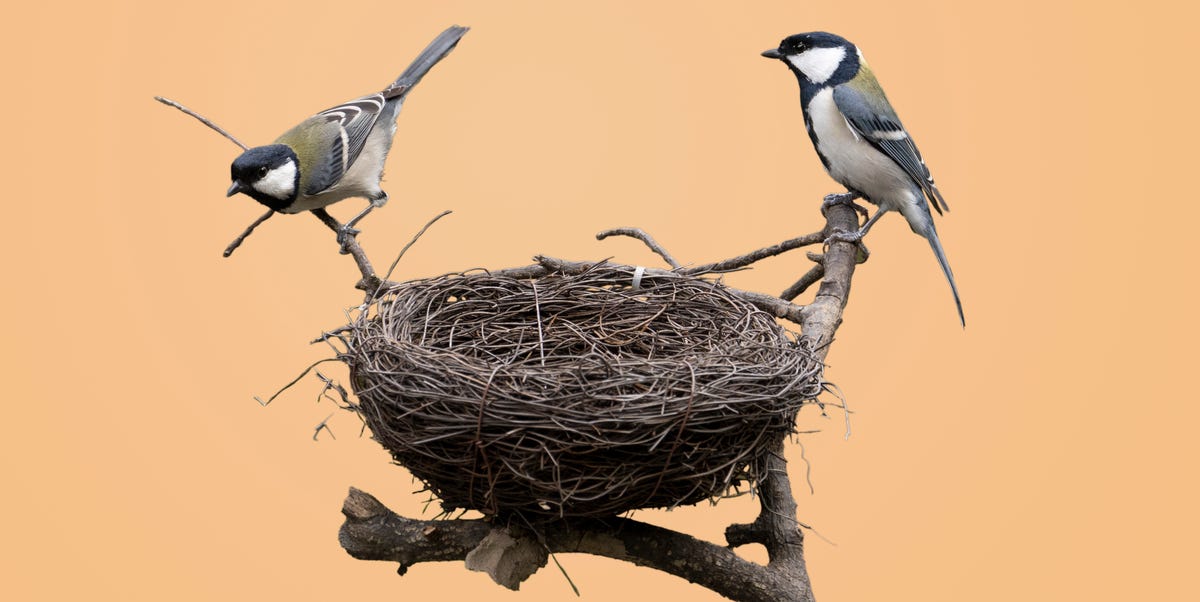
At first glance, a bird nest can resemble yard debris that somehow received planning permission. Twigs stick out. Grass loops wander in several directions. Mud appears wherever mud pleases. Yet this untidy little structure may support eggs, growing chicks, repeated adult landings, wind, rain, temperature swings, and the occasional curious predator.
Birds solve these problems without hands, blueprints, hardware stores, or a customer-service number. Using beaks, feet, local materials, inherited behavior, and experience, they create lightweight structures that manage strength, flexibility, insulation, drainage, camouflage, and ventilation. The humble bird nest is not merely a container for eggs. It is a compact engineering system.
A Temporary Nursery With a Demanding Job
Most birds do not use nests as permanent homes. A nest is usually a temporary nursery built for the most vulnerable part of the reproductive cycle. That limited lifespan shapes the design. The structure does not need to last for decades, but it must work reliably while eggs are incubated and nestlings develop.
Construction also carries an energy cost. Every twig, fiber, and mud pellet must be found, transported, and placed while the adult continues feeding, avoiding predators, and defending a territory. Natural selection therefore favors economy: enough material in the right place, without unnecessary weight or labor.
One Problem Does Not Produce One Blueprint
Bird nests include shallow scrapes, stick platforms, open cups, domes, hanging pouches, cavities, burrows, floating structures, and mounds. Each form responds to a different combination of hazards. A scrape depends heavily on camouflage. A dome adds overhead cover. A cavity uses a tree or rock face as a protective shell. A suspended nest can place eggs beyond the easy reach of climbing predators.
Nest shape is therefore not decoration. It is a practical response to weather, predators, available supports, building materials, and the body of the builder.
Birds Choose Materials by Function
A successful nest rarely asks one material to do every job. Coarse twigs can form a framework. Flexible grasses can bind it. Mud can create a moldable wall. Fine plant fibers, feathers, or fur can soften the cup. Spider silk can attach and stretch. Lichen and moss can disguise the exterior.
Studies of open-cup nests show that these materials may be distributed according to their structural properties. In research on bullfinch nests, material at the base was much thicker, stronger, and more rigid than material higher around the cup. The bird was effectively placing heavier structural components where loads were greatest and lighter pieces where less support was needed.
Natural Composite Construction
Many nests work like composite materials. A rigid or tangled outer layer carries load, while a softer inner lining cushions eggs and chicks. The combined structure performs better than either layer would alone. Human builders use the same broad principle in reinforced concrete, plywood, fiberglass, and laminated panels.
Even a loose-looking twig nest can gain stability from friction. Twigs bend, press against neighboring pieces, and become trapped by geometry. Hundreds of contact points create a load-sharing network. When the branch moves, the structure can settle or flex instead of failing like a brittle bowl. It is organized chaos, but highly employable organized chaos.
The Cup Nest Is More Sophisticated Than It Looks
The familiar cup shape solves several problems at once. Curved walls keep eggs together, support an incubating adult, and distribute force around the rim and base. The close grouping of eggs also helps the parent cover them efficiently.
Thick walls are often assumed to exist mainly for warmth, but research indicates that structural support can be a primary influence on cup-nest dimensions. Insulation matters, especially in cold or windy sites, yet the nursery must first retain its shape. A thermally perfect nest that collapses is simply an insulated complaint.
Drainage, Airflow, and Location
Warmth is only part of the environmental challenge. A dense nest may conserve heat but trap moisture. A loose wall may drain well but allow rapid cooling. Birds balance porosity, lining, wall thickness, shade, surrounding leaves, and exposure to prevailing wind.
The site and the structure operate as one system. A protected branch fork can reduce wind loading. Overhanging foliage can limit direct sun and rain. A raised or porous base can help water escape. In human terms, the bird is designing both the building and its microclimate.
Hummingbirds Build Expandable Micro-Housing
The Ruby-throated Hummingbird offers a remarkable example of adaptive materials. The female builds a tiny cup from plant down, binds it with spider silk, and may add pine resin. She presses the base to make it firmer while leaving the walls flexible. As the chicks grow, the nest stretches with them.
This solves a sizing problem. A nest large enough for almost-fledged chicks would fit tiny eggs poorly and require extra material. A nest sized only for eggs would soon become overcrowded. The elastic wall allows one lightweight structure to serve both stages.
Bits of lichen and moss often cover the exterior, breaking up the outline and helping the nest resemble the branch. Camouflage becomes a passive defense system: avoid being detected, and the parent may never need to fight.
Orioles Weave Suspended Nurseries
Baltimore Orioles build deep, hanging nests from slender fibers. A female begins by anchoring long strands over a branch fork, then pokes, pulls, and tangles additional fibers into a pouch. Grass, bark fibers, wool, hair, and other flexible material may become part of the weave.
The position is as important as the basket. Thin outer branches can support a light nest while making access difficult for heavier predators. A flexible suspension also moves with the branch during wind instead of resisting every gust as a rigid structure.
Construction must occur in a workable sequence. The anchor comes before the chamber. The unfinished framework must support the builder while she expands it. Only later is the interior completed and lined. Human engineers also plan temporary stability because a design must survive construction before it can survive use.
Swallows Practice Reinforced Earthen Construction
Barn Swallows collect mud in their bills, often combine it with grass stems, and shape the mixture into pellets. They establish a small shelf, build up the sides, and line the finished cup with grass and feathers.
Mud supplies moldability and adhesion, while plant fibers help strengthen the matrix and bridge cracks. Humans have used straw-reinforced mud and adobe for similar reasons. Swallows reached the concept without a materials laboratory, although their quality-control department is extremely strict about nearby cats.
Biological Adhesives
Some birds go even further. Certain swiftlets build nests primarily from hardened saliva, placing material with fine control in a process researchers have compared to additive manufacturing. Pelagic Cormorants can use guano to help cement grassy nests to cliff faces. The ingredients may not belong in a home-design magazine, but they perform the required job.
Cavities and Mounds Engineer the Surroundings
Woodpeckers do not need to assemble full walls. By excavating dead or softened wood, they turn the tree itself into a protective chamber. The trunk supplies the shell, windbreak, roof, and visual cover. Wood chips left from excavation can provide a simple floor.
Megapodes use an even more unusual strategy. They build mounds containing soil and organic matter, then rely on heat released during decomposition to warm buried eggs. Adults adjust the mound to influence temperature, effectively managing a biological incubator powered by microbes.
Both designs demonstrate an important engineering idea: sometimes the best structure is created by modifying the environment rather than transporting every component to the site.
Instinct Provides the Plan, but Experience Improves the Builder
Species-specific designs show a strong inherited foundation. Orioles weave, many swallows work with mud, and woodpeckers excavate. Still, nest building is not always a perfectly fixed program. Experiments and observations indicate that handling experience can improve material selection and construction skill.
Weaverbirds become more capable through practice, while zebra finches can change preferences after encountering materials with different structural properties. A bird may tug a fiber, press a wall, sit in the cup, or discard a stem that does not behave correctly. These actions provide immediate feedback without requiring an equation.
Evolution supplies the toolkit; experience helps the bird stop dropping the tools.
Efficiency Is Part of the Marvel
Bird nests are impressive not because they are indestructible but because they are appropriately durable. They use irregular, local, often renewable materials and can weigh very little. Many perform their job for one breeding attempt and later return to the ecosystem.
This is frugal engineering: short supply chains, minimal processing, strategic reinforcement, and no material wasted on a century-long lifespan when the users will fledge in weeks.
Lessons for Human Design
Nests inspire research into tangled-fiber materials, lightweight composites, flexible structures, passive temperature control, and low-energy construction. Their broader principles are equally valuable: use local resources, match each material to a function, build adaptability into the system, tolerate harmless irregularity, and consider what happens after a structure is no longer needed.
Human Debris Can Turn Clever Design Into a Trap
Birds sometimes incorporate fishing line, plastic, yarn, string, hair, and other human-made material. Availability, however, does not guarantee safety. Long fibers can entangle legs and wings. Dryer lint can lose its structure when wet. Pet fur may carry residues from flea treatments.
The most useful assistance is usually indirect: grow native plants, preserve safe nesting vegetation, leave some pesticide-free grass, twigs, leaves, moss, and plant fibers available, and remove plastic litter. Never handle or closely crowd an active nest. Even outstanding engineering cannot protect chicks from repeated disturbance by a curious giant with a camera.
Experience Section: What Nest Watching Reveals
One of the best ways to appreciate bird-nest engineering is to watch construction from a respectful distance. The experience begins with logistics. A robin, swallow, or songbird repeatedly leaves the site and returns carrying one small item. The load may look unimpressive until you remember that the bird must still fly, see, balance, and land accurately while transporting it.
With patience, material inspection becomes visible. A bird may pick up a stem, drop it, test another, and leave with the better candidate. That simple behavior changes the meaning of the finished nest. It is not random debris; each usable piece has passed a field test involving length, flexibility, weight, and manageability.
The shaping process is even more revealing. A cup builder may press its breast downward, rotate in place, pull fibers around the rim, or vibrate its body against the wall. Its body becomes both measuring device and mold. Instead of drawing dimensions, the bird repeatedly fits itself into the structure until the interior is right.
Weather provides a second lesson. After a windy night, the nest may remain secure even when nearby leaves have shifted. Flexibility suddenly makes sense: a structure that moves with its support can survive better than one that fights every motion. Following rain, adults may add new material or reshape an edge. Maintenance is not evidence of bad engineering; it is part of an adaptable system.
Mud builders reveal a different rhythm. Activity may increase when wet soil is available. Each pellet is carried, pressed into place, and blended into the existing wall. Over many trips, a rough patch becomes a durable cup. It resembles time-lapse masonry, except the mason occasionally leaves to catch lunch in midair.
A hanging nest makes construction sequencing especially clear. Early fibers may appear hopelessly loose. Then an anchor develops, a rim takes shape, and the pouch deepens. The bird must cling to unfinished work while improving it. The completed nest becomes a visible record of hundreds of small decisions rather than a single burst of instinct.
The experience also teaches restraint. Active nests should be observed briefly and from far enough away that adults continue normal behavior. Do not trim vegetation, touch eggs, reposition the nest, or block a concealed approach route. Binoculars usually provide a better lesson than a close camera because they preserve the behavior being studied.
Once chicks hatch, the engineering becomes dynamic. The load increases, the occupants move, adults land repeatedly, and the structure may stretch or settle. A nest that seemed roomy around eggs becomes crowded. The best designs accommodate change rather than merely surviving a static test.
The lasting impression is not that every nest is beautiful. Some are lopsided, sparse, or gloriously untidy. The marvel is that beauty is optional while function is nonnegotiable. Each successful nest links material, climate, anatomy, location, and behavior in one compact solution. After watching one take shape, a tangle of grass rarely looks humble again.
Conclusion: Tiny Structure, Enormous Achievement
Birds begin with irregular materials, limited carrying capacity, no hands, and a deadline imposed by reproduction. They finish with structures capable of supporting eggs, growing chicks, adult landings, weather, and predator pressure.
Some nests rely on friction, others on weaving, excavation, mud, saliva, or decomposing vegetation. In every case, the design balances strength, weight, energy, climate, safety, and time. The next time a nest looks like a pile of sticks, remember that it is a lightweight composite structure assembled with biological tools and refined through millions of years of trial and error. The builder also completed the project without losing a single socket wrench.
Note: Observe active nests only from a safe distance and follow local wildlife-protection rules. The welfare of adult birds, eggs, and chicks comes before photography or close inspection.