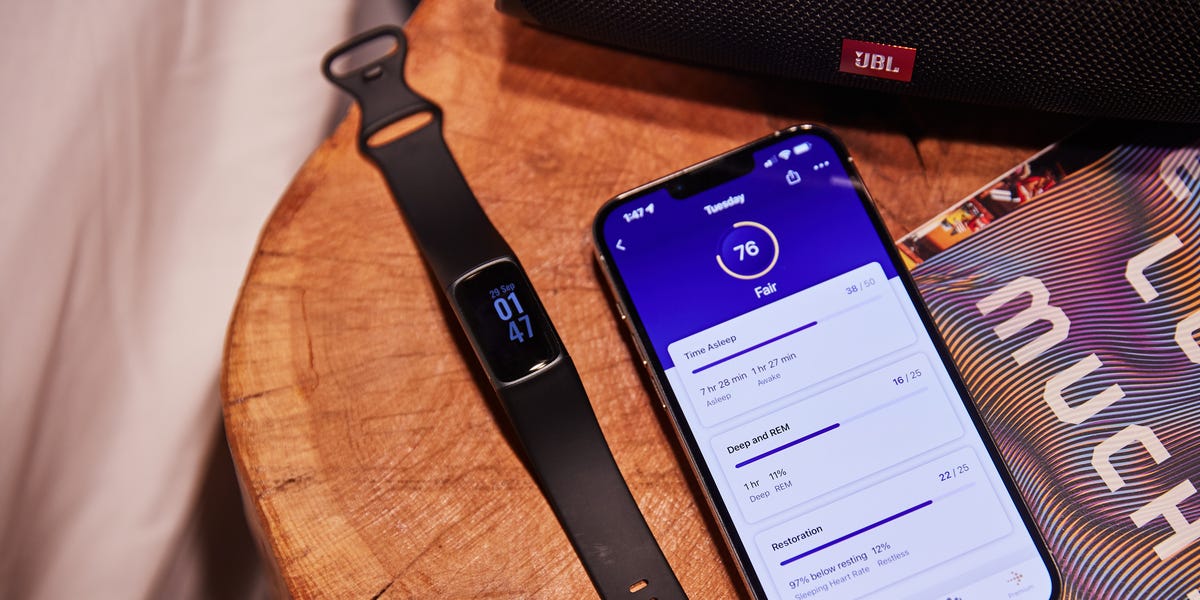
Our phones can translate conversations, recognize faces, edit movies, summon dinner, and display twelve notifications explaining why we should relax. Yet after a few years, this pocket-size supercomputer may struggle to survive a trip to the grocery store without begging for a charger.
That is the frustrating reality of modern electronics: the processor may still be fast, the screen may remain beautiful, and the software may continue working perfectly, but an aging battery can make the entire device feel obsolete. Too often, the gadget does not die because its useful technology has reached the end. It dies because the rechargeable chemical pouch sealed inside it can no longer keep up.
Battery degradation is unavoidable, but premature gadget retirement is not. Better charging habits, accessible repairs, longer software support, and smarter product design can keep perfectly capable electronics useful for years beyond the moment their batteries begin acting dramatic.
The Battery Has Become a Hidden Expiration Date
When people evaluate a gadget, they usually focus on its visible specifications: processor speed, camera resolution, storage capacity, display quality, or the number of artificial intelligence features capable of turning a normal photograph into something vaguely alarming. The battery receives attention mainly as a runtime estimate printed on the product page.
That estimate describes how long the device may operate between charges when it is new. It does not tell buyers how usable the product will be after hundreds of charging cycles. A laptop promising all-day battery life today might become a two-outlet laptop several years later. A smartwatch that once tracked an entire weekend may eventually need a recharge before dinner.
Lithium-ion batteries are consumable components. Their maximum capacity declines as they chemically age, and their ability to provide peak power can also weaken. Apple, Google, Samsung, and Microsoft all describe this loss of capacity as a normal consequence of battery use rather than a software defect.
The problem is not that batteries wear out. Tires, filters, brake pads, and printer cartridges wear out too. The problem is that manufacturers frequently place this predictable maintenance item deep inside a device that was not designed for convenient maintenance.
Why Rechargeable Batteries Inevitably Get Worse
Every Charge Cycle Leaves a Tiny Mark
A rechargeable battery stores energy through reversible chemical reactions. During charging and discharging, ions move between internal electrodes. The process is remarkably effective, but it is not perfectly reversible. Small physical and chemical changes accumulate inside the cell, gradually reducing the amount of energy it can store.
A charge cycle does not necessarily mean plugging in the device once. It generally represents cumulative usage equal to 100 percent of the battery’s capacity. Using 40 percent today and 60 percent tomorrow can add up to one complete cycle.
Manufacturers often use 80 percent of original capacity as a meaningful battery-health benchmark. Apple says batteries in iPhone 14 models and earlier were designed to retain 80 percent capacity after 500 complete cycles under ideal conditions, while iPhone 15 models and later are designed around 1,000 cycles. Google says Pixel 3 through Pixel 8 Pro models should retain up to 80 percent capacity for about 800 cycles, while the Pixel 8a and later target approximately 1,000 cycles. Real results vary with temperature, charging patterns, and everyday use.
Heat Is the Villain Wearing a Fast-Charger Cape
High temperatures accelerate unwanted chemical reactions inside lithium-ion cells. A phone charging beneath a pillow, a laptop baking in a parked car, or a gaming handheld running at maximum power while plugged in can experience more battery stress than a cooler device.
Fast charging is convenient and usually managed by built-in safety systems, but charging at high power can produce additional heat. That does not mean fast charging should never be used. It means users should avoid combining fast charging with already-hot conditions whenever possible. Research and manufacturer guidance consistently identify temperature control as an important part of preserving battery health.
Living at 100 Percent Is Not a Battery Vacation
Modern devices generally stop actively charging when they reach full capacity, so leaving a phone connected overnight does not continuously force unlimited energy into the cell. However, holding a lithium-ion battery near a very high state of charge for long periods can increase chemical stress, especially when heat is present.
This is why phones and computers increasingly offer adaptive charging, optimized charging, or an 80 percent limit. Windows smart charging and supported Surface devices can restrict maximum charge to approximately 80 percent when the system detects prolonged plug-in use. Similar tools are available on many recent phones.
Users do not need to patrol the battery meter like an air-traffic controller. Keeping a device between roughly 20 and 80 percent when convenient can reduce stress, but occasionally charging to 100 percent before travel is entirely reasonable. A battery exists to serve the owner, not to become a demanding electronic houseplant.
How a Weak Battery Makes a Good Gadget Feel Broken
Shorter Runtime Changes How We Use Technology
Battery decline first appears as inconvenience. The phone needs an afternoon top-up. The wireless headphones no longer survive a long flight. The laptop loses 20 percent while displaying a document that is mostly blank space.
Eventually, inconvenience becomes unreliability. The device may shut down under heavy processing, report an inconsistent charge level, or lose power rapidly in cold weather. A gadget that cannot be trusted away from an outlet stops feeling portable, which defeats the central reason many people bought it.
Peak Performance May Decline Too
An aging battery may retain enough energy for light use but struggle to supply sudden bursts of power. Phones, laptops, and wearables use battery-management systems to prevent unstable operation. In some circumstances, the system may reduce performance or shut down to protect the hardware.
From the user’s perspective, the entire product has become slow or unreliable. The processor is blamed, software is deleted, settings are reset, and an innocent wallpaper may be removed for questioning. The actual problem may simply be a battery that can no longer deliver adequate power.
Small Accessories Can Be the Most Disposable
Wireless earbuds, fitness trackers, smart rings, compact speakers, and styluses contain extremely small batteries. Their limited capacity means they may be charged more frequently, while their glued or sealed construction makes replacement difficult or economically unrealistic.
When one earbud lasts 23 minutes and the other lasts 41, owners rarely replace a tiny internal cell. They replace the whole set. The speakers, microphones, antennas, and charging electronics may still work, but the product’s smallest component determines the fate of everything around it.
The Real Problem Is Repairability, Not Chemistry
A worn battery does not have to kill a gadget. In a repair-friendly product, it is simply a part that needs replacement. Older mobile phones often had rear covers that popped off in seconds. Users could install a fresh battery without heating adhesive, removing a fragile display, or performing a ceremony involving suction cups and nervous breathing.
Today’s sealed designs offer benefits. They can create thinner products, improve structural rigidity, reduce rattling, and support water resistance. However, adhesives can complicate disassembly, battery removal, refurbishment, and recycling. Repair specialists have repeatedly documented how glued components increase the time, skill, and risk involved in routine battery replacement.
That difficulty creates an economic tipping point. A consumer may be willing to spend a modest amount on a straightforward battery swap. The decision changes when repair requires specialized tools, shipping, data backup, several days without the device, and a service quote approaching the product’s resale value.
Repair restrictions can also involve unavailable parts, limited documentation, software pairing, warnings about third-party components, or designs that make independent service unusually difficult. The Federal Trade Commission’s report on repair restrictions found little evidence supporting many of the broad justifications manufacturers had offered for limiting repairs.
Repairable design does not automatically require bulky, unattractive hardware. Products such as highly repairable phones and newer modular devices show that batteries can be replaceable with ordinary tools while the product remains modern and compact. The engineering challenge is real, but it is not the same as engineering impossibility.
Is This Planned Obsolescence?
It is tempting to look at a sealed battery and assume a manufacturer deliberately created an expiration timer. Sometimes business incentives certainly favor replacement over repair. Selling a new phone is more profitable than helping someone keep an old one for another three years.
Still, not every aging battery proves a secret corporate plot. Product designers balance thickness, weight, water resistance, safety, cost, charging speed, runtime, and repairability. A larger battery adds weight. A removable enclosure may require more space. A powerful processor can demand more energy. Consumers also reward sleek designs and impressive performance, sometimes while placing repairability near the bottom of the shopping checklist.
The fairest criticism is not that batteries degrade. That is chemistry. The criticism is that predictable degradation is too often paired with designs, policies, and repair costs that turn a replaceable part into a reason to discard the entire product.
The Environmental Price of Battery-Driven Upgrades
Replacing a functional gadget consumes far more than the money shown at checkout. New electronics require mined materials, manufacturing energy, packaging, transportation, and eventually waste processing. Extending the useful life of an existing device delays those impacts and reduces demand for an immediate replacement.
The U.S. Environmental Protection Agency recommends reuse, donation, repair, and responsible recycling rather than placing electronics in ordinary waste streams. Lithium-ion batteries should not go into household garbage or curbside recycling bins because damaged or improperly handled cells can create fires. Devices and batteries should instead be taken to appropriate electronics recyclers, battery collection sites, or household hazardous-waste programs.
Recycling is important, but it is not a magical undo button. A recycled gadget still had to be manufactured, shipped, purchased, and dismantled. Keeping a safe, useful device in service is generally preferable to replacing it early and congratulating ourselves for locating the correct collection box.
How to Keep Battery-Powered Gadgets Alive Longer
Keep Them Away From Excessive Heat
Do not leave electronics in a hot vehicle, on a sunny windowsill, or buried beneath blankets while charging. Remove an insulating case temporarily if the device becomes unusually warm during demanding tasks or high-speed charging.
Use Charging Limits When They Fit Your Routine
An 80 percent charge limit is useful for a laptop that spends most of its life on a desk or a phone that easily lasts all day. Before a flight, emergency, outdoor event, or long commute, charge to 100 percent and enjoy the capacity you paid for.
Avoid Repeated Full Discharges
Modern lithium-ion batteries do not need regular zero-to-100-percent conditioning. Frequent deep discharges can create more stress than partial charging. Plugging in at 30 or 40 percent is not cheating.
Check Battery Health Before Replacing the Device
Review the battery-health menu, cycle count, diagnostic application, or manufacturer service tool available for the product. If performance, storage, cameras, and software support remain satisfactory, request a battery-replacement quote before shopping for an entirely new device. Replacing an aging smartphone battery can restore practical runtime and extend the phone’s useful life.
Buy With Repair in Mind
Before purchasing a gadget, investigate whether replacement batteries, instructions, and authorized or independent repair options exist. Long initial runtime is valuable, but replaceability may matter more over five or six years. Consumer battery-life testing can help identify efficient products, while repair guides reveal whether future maintenance will be practical or resemble microscopic bomb disposal.
What Better Gadgets Should Offer
Manufacturers cannot eliminate chemical aging, but they can stop treating it as the customer’s cue to buy another product. A durable gadget ecosystem should include reasonably accessible battery replacement, published repair instructions, safe diagnostic tools, fairly priced parts, long-term software support, and honest battery-health information.
Products should also be designed so a battery can be removed without destroying the screen, bending the enclosure, or puncturing the cell. Pull tabs, screws, modular assemblies, and serviceable back panels may not look exciting in a keynote presentation, but they become extremely attractive when a three-year-old device needs one ordinary part.
Battery research may eventually deliver safer cells with faster charging, greater energy density, and far longer cycle life. Solid-state designs and new materials are promising, but laboratory breakthroughs still require manufacturing scale, affordability, and proven durability before they transform everyday electronics.
Conclusion: Gadgets Should Outlive Their First Battery
Battery degradation is not a design failure by itself. It is a predictable maintenance need. The failure occurs when a manufacturer builds an expensive, sophisticated product around a consumable component and then makes that component unnecessarily difficult to replace.
Consumers can slow battery aging by controlling heat, using optimized charging features, avoiding repeated deep discharges, and checking battery health before upgrading. Those habits help, but responsibility cannot rest entirely on people who merely wanted a phone rather than an unpaid internship in electrochemistry.
The better future is not a world in which batteries last forever. It is one in which a tired battery means a simple repair, not a funeral for an otherwise excellent gadget.
Common Experiences: The Slow Death of a Perfectly Good Gadget
The decline often begins so quietly that it is easy to blame yourself. A phone that once ended the day with 35 percent remaining now reaches 12 percent during the afternoon commute. At first, the owner assumes a new application is responsible. Background activity is disabled. Brightness is lowered. Location access is restricted. Notifications are trimmed until the smartphone has roughly the social life of a calculator.
For a few weeks, these changes help. Then the battery falls from 40 percent to 18 percent during a video call. The owner starts carrying a charging cable everywhere. A power bank joins the daily bag, adding weight to compensate for a battery that was originally advertised as a triumph of portability.
The phone itself still works. Photographs look good, applications open quickly, and storage is plentiful. Nevertheless, the owner begins browsing new models because reliability matters more than benchmark performance. A relatively inexpensive battery replacement could solve the problem, but uncertainty about cost, water resistance, repair quality, and time without the phone makes buying a new device feel easier.
Laptops follow a similar path. A machine may remain fast enough for writing, accounting, browsing, and video meetings long after its battery has become unreliable. The first warning appears during a meeting when the battery estimate promises two hours and delivers 47 minutes. Soon, every seat in a coffee shop is judged according to its distance from an electrical outlet.
The laptop has not technically become a desktop computer, but it now travels with a charger large enough to qualify as a companion animal. When replacement service is expensive or requires dismantling much of the chassis, the owner begins comparing new laptops despite having no complaint about the current computer’s performance.
Wireless earbuds provide an even more absurd experience. One earbud starts losing power earlier than the other, usually the one needed for an important call. The charging case may also hold less energy, creating three aging batteries inside one tiny product. Replacing those individual cells is rarely presented as a normal consumer service, so perfectly functional speakers and microphones are retired together.
Smartwatches make battery decline feel especially personal because they are worn all day. Charging once every two days becomes charging every evening. Then sleep tracking requires a strategic top-up before bed. Eventually, the watch must be charged twice daily, turning a device designed to simplify routines into another routine requiring management.
Gaming handhelds, cameras, e-readers, Bluetooth speakers, and cordless tools tell the same story in different accents. Their core functions may remain useful for years, yet declining runtime gradually changes the experience from convenient to irritating and from irritating to impractical.
There is also an emotional element. People build habits around familiar devices. Their settings are correct, accessories already fit, files are organized, and every button is where muscle memory expects it. Replacing that device because of one exhausted component feels wasteful because it is wasteful.
The most satisfying outcome is often a battery replacement that makes the gadget feel strangely new. Runtime returns, unexpected shutdowns disappear, and the urge to upgrade fades. No dramatic redesign was required. The camera did not gain six lenses, and the operating system did not acquire another glowing assistant. One worn part was simply replaced, proving that the gadget had not reached the end of its life after all. Its first battery had.