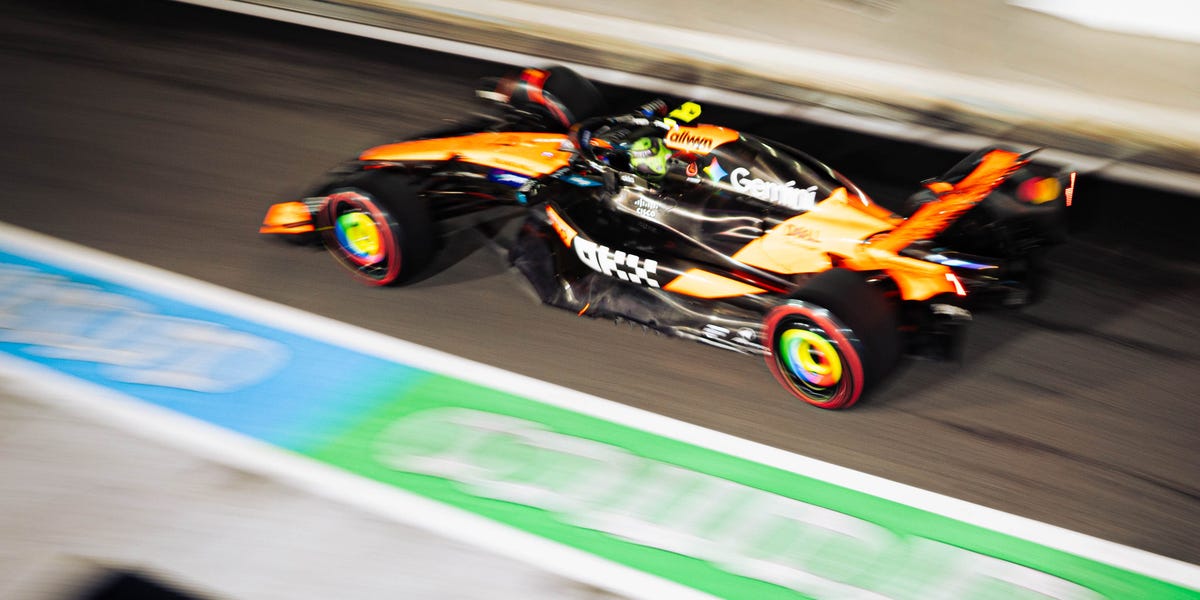
Formula 1 looks like a sport about screaming engines, heroic braking, and drivers calmly saying “the tires are gone” while still setting purple sectors. But behind every dramatic overtake, late pit stop, and radio message that sounds like a weather report written by a mathematician, there is one company trying to keep the entire circus rolling: Pirelli.
As Formula 1’s exclusive tire supplier, Pirelli has one of the strangest jobs in global sports. It must give every team equal equipment, create enough performance variety to make strategy exciting, satisfy the FIA’s safety requirements, help F1 put on a better show, prepare for new regulations, ship thousands of tires around the world, and still absorb the blame when a team’s race strategy ages like milk in the desert sun.
That is not simply tire manufacturing. That is diplomacy with rubber.
So how does Pirelli F1 keep teams, drivers, fans, organizers, and regulators reasonably happy through a long Formula 1 season? The answer is a mix of science, logistics, neutrality, race strategy, data modeling, and a very serious barcode system that deserves more respect than most office printers.
The Unusual Pressure of Being Formula 1’s Only Tire Supplier
In many racing series, tire competition is part of the show. In modern Formula 1, the sport uses a single tire supplier model. That means every team receives tires from the same company, under the same rules, with the same monitored allocation process. Pirelli has held this role since 2011 and will continue as the global tire partner through 2028.
On paper, that sounds simple: make tires, send tires, repeat. In reality, the task is more delicate. If the tires are too durable, races can become processional because everyone can stretch one-stop strategies. If the tires degrade too quickly, drivers complain that they cannot push. If the performance gap between compounds is too small, strategy becomes predictable. If the gap is too large, teams feel boxed into obvious choices. In other words, Pirelli is asked to create a tire that is fast, safe, fair, strategically interesting, predictable enough for engineers, unpredictable enough for fans, and strong enough to survive 200 mph loads.
No pressure. Just please make the world’s most advanced racing championship entertaining without making anyone too angry.
How Pirelli Builds Strategy Into the Tire Range
Formula 1 slick tires are not all the same. Pirelli creates a range of dry-weather compounds, running from the hardest to the softest. For 2026, the official P Zero range consists of five slick compounds: C1, C2, C3, C4, and C5. C1 is the hardest and most durable, while C5 is the softest and offers the most grip at the expense of longevity.
At each Grand Prix, Pirelli nominates three compounds from that range. Fans see them as hard, medium, and soft, with the familiar white, yellow, and red markings. But here is the catch: the “soft” at one circuit may not be the same underlying compound as the “soft” at another. At a high-energy track with brutal corners, the soft tire might be a relatively durable compound. At a street circuit with lower tire stress, the soft tire can be much more aggressive.
Why Three Compounds Matter
The three-compound system is one of Pirelli’s biggest tools for keeping a race weekend balanced. Teams need options. A slower but longer-lasting tire can support a one-stop plan. A faster but fragile tire can encourage an early attack or a late-race sprint. The medium compound usually sits in the “I can be reasonable, but I can also cause trouble” zone.
This variety matters because Formula 1 strategy is built around trade-offs. A driver can push hard and burn through grip, or manage the tires and extend a stint. A team can pit early to undercut a rival, or stay out and hope for a safety car. Without meaningful tire differences, many of those strategic choices disappear. Pirelli’s job is to provide the chess pieces without choosing who wins the chess match.
Keeping Teams Happy Starts With Fairness
Formula 1 teams are not naturally trusting creatures. These are organizations that will argue over millimeters, grams, tire blanket temperatures, track limits, and whether a rival’s front wing is flexing in a spiritually suspicious way. So Pirelli cannot simply say, “Trust us, the tires are fair.” The system has to prove it.
Every tire has a barcode. Those barcodes allow Pirelli and the FIA to track each set and ensure it goes to the correct team. The allocation process is designed so teams receive tires under FIA-supervised procedures rather than through favoritism or guesswork. Once the tires are assigned, they are monitored throughout the weekend. Teams cannot casually swap sets around like socks in a suitcase.
This barcode-based control system is not glamorous, but it is essential. In a sport where the difference between pole position and third place can be a blink, perceived fairness is almost as important as fairness itself. Pirelli keeps everyone calm by making tire identity, allocation, and usage traceable.
The Logistics Are Enormous, Even Before the Racing Starts
Formula 1 is a traveling technology festival. The calendar crosses continents, climates, time zones, and customs paperwork. Pirelli has to support every Grand Prix with slick tires, intermediate tires, full wet tires, engineers, fitting crews, data systems, and equipment.
The numbers are massive. Across a modern F1 season, teams may have access to thousands of slick sets, plus wet-weather tires for weekends when the sky decides to participate. For each event, the tire operation includes transporting, mounting, balancing, scanning, storing, heating, returning, and analyzing tires. The fans see red, yellow, and white sidewalls. Behind the scenes, Pirelli sees inventory management with jet lag.
Why Logistics Affect Happiness
If the right tires do not arrive on time, there is no show. If wet tires are not ready when rain appears, everyone panics. If teams cannot trust the supply chain, they lose confidence before the first practice session. Pirelli’s logistics work keeps the sport functioning quietly, which is the highest compliment any logistics operation can receive. Nobody cheers when the tires arrive correctly. Everybody notices if they do not.
How Pirelli Chooses Tires for Each Circuit
Track selection is where the science becomes fascinating. Pirelli does not pick compounds by vibes, although “Monaco feels soft” would be a charmingly chaotic system. Instead, the company studies track abrasiveness, cornering loads, braking forces, traction zones, asphalt age, expected temperatures, historical degradation, and simulation data from teams.
Some circuits punish the front tires. Others destroy the rears. Some tracks are smooth but traction-heavy. Others are abrasive enough to make a tire engineer stare into the middle distance. Pirelli must select compounds that survive the loads while still creating strategic separation.
For example, a high-speed circuit with long corners can put enormous energy through the tires, especially through one side of the car. A street track may have lower average speed but greater risk from cool surfaces, safety cars, and sudden grip evolution. A desert race can challenge tires with heat during the day and cooler track temperatures at night. Every venue has its own personality. Some are elegant. Some are tire goblins.
Safety Is the Non-Negotiable Priority
Fans love strategy. Drivers love grip. Teams love predictability. But the FIA and Pirelli must put safety above all of it. Formula 1 tires operate under extreme loads, especially at high-speed circuits with aggressive curbs, long corners, and heavy fuel loads early in the race.
When a track presents unusual risks, Pirelli can recommend or support special restrictions. A recent example is Qatar, where tire stint limits were used because of the high loads generated by the Lusail circuit and concerns linked to curb interactions and tire stress. These limits force teams to manage mileage carefully and can effectively require multiple pit stops.
That may annoy strategists who wanted a clean one-stop race, but it protects drivers and preserves sporting integrity. The goal is not to make life difficult. The goal is to make sure nobody discovers a tire’s structural limit at frightening speed.
Why Drivers Sometimes Complain Anyway
Even when Pirelli does everything right, drivers will complain about tires. This is not a scandal. This is basically Formula 1 tradition.
A driver wants a tire that warms up instantly, grips forever, survives abuse, allows flat-out pushing, and never falls off the performance cliff. Unfortunately, that tire would also make strategy boring and might require materials borrowed from a science-fiction asteroid mine. Pirelli has to provide tires that fit F1’s entertainment goals, not just each driver’s dream wish list.
So yes, drivers will say the tire is too sensitive, too slow to warm up, too easy to overheat, or too difficult to manage in traffic. Their comments are valuable because they help shape development. But the perfect tire for one driver may be wrong for the sport. Pirelli must listen carefully without turning every radio complaint into a design order.
How Pirelli Works With Teams Without Playing Favorites
Pirelli engineers work closely with all teams during race weekends. They collect data, monitor tire behavior, explain expected performance windows, and help interpret degradation trends. But they must do this neutrally. One team cannot receive secret tire wisdom that another team does not.
This balancing act is crucial. Teams need enough information to operate safely and competitively. Pirelli needs enough data from teams to improve predictions and future products. But the relationship must remain transparent. In a championship where technical advantage is precious, neutrality is the currency that keeps the system trusted.
Data Is the Common Language
The tire conversation in F1 is heavily data-driven. Engineers look at surface temperatures, carcass temperatures, pressure behavior, wear, graining, blistering, energy input, lap time drop-off, and track evolution. Pirelli uses this information to refine future compound choices and improve its pre-race guidance.
This is one reason tire testing matters. Pirelli is permitted to conduct dedicated tire tests outside Grand Prix weekends, with teams helping gather data under controlled rules. These tests are especially important when major regulation changes arrive, such as the 2026 generation of cars with narrower 18-inch tires and new aerodynamic concepts.
The 2026 Challenge: New Cars, New Loads, New Questions
The 2026 Formula 1 regulations bring major changes to the cars. They are designed to be narrower, lighter, and more efficient, while retaining 18-inch Pirelli tires that are themselves narrower than before. That creates a development puzzle. Pirelli must design tires for cars that teams are still learning to understand.
When tire development overlaps with new chassis and aerodynamic rules, the job becomes more complex. Loads may change. Energy distribution may shift. Racing behavior may evolve. Even the way cars follow each other can influence tire temperature and degradation. Pirelli must prepare a tire range that works across 11 teams, including Cadillac’s arrival as the newest team on the grid.
For 2026, Pirelli’s five-compound slick range is intended to maintain performance while creating more consistent gaps between compounds. That matters because predictable performance gaps help teams build strategy and help fans understand why one tire choice is faster or slower than another.
Wet Tires: The Insurance Policy Nobody Wants to Use Too Much
Wet-weather tires are a special kind of compromise. Intermediates are used for damp conditions or drying tracks. Full wets are designed for heavier standing water. In theory, full wets are heroic. In practice, modern F1 often struggles with visibility in heavy rain, meaning the full wet tire can be ready for conditions in which race control may decide the spray is too dangerous.
Pirelli still has to bring wet tires everywhere because weather does not care about freight schedules. Even if full wets see limited racing mileage across a season, they are essential safety equipment. The trick is developing wet tires with a useful operating window while understanding that race control, visibility, drainage, and circuit conditions all influence whether they actually get used.
Keeping Fans Happy Means Making Strategy Visible
Pirelli’s tire colors are one of the best fan-friendly features in modern F1. White means hard, yellow means medium, red means soft, green means intermediate, and blue means full wet. Even casual viewers can understand that a driver on red tires may have more immediate pace but less durability, while a driver on hard tires may be planning a longer stint.
This visual simplicity hides serious complexity, but that is the point. Fans do not need to know every compound molecule to follow the story. They need to know who is attacking, who is managing, who has pit stop flexibility, and who is about to discover that “Plan C” was named that because Plans A and B have already gone into the gravel.
The Secret to Keeping Everyone Happy Is Not Making Everyone Fully Happy
Here is the funny truth: Pirelli does not keep everyone happy by giving everyone exactly what they want. It keeps the championship functioning by giving everyone a controlled, fair, strategically useful problem to solve.
Teams want consistency, but also opportunities. Drivers want grip, but the sport needs degradation. Fans want action, but not chaos. The FIA wants safety and enforceable rules. Formula 1 wants entertainment and global reliability. Pirelli sits in the middle, making black circles that somehow have to satisfy all of those demands.
The best Pirelli weekends are not necessarily the ones where nobody talks about tires. Sometimes tires should be part of the story. A bold undercut, a long hard-tire stint, a late soft-tire charge, or a wet-dry crossover can define a race. The key is that the tires should create opportunity, not randomness. They should reward understanding, not gambling in the dark.
Experience Section: What Watching Pirelli’s F1 Role Teaches Fans
The more you watch Formula 1 with tires in mind, the more the sport changes shape. At first, a pit stop looks like a car getting new rubber. After a while, it looks like a confession, a threat, a rescue mission, or a chess move wearing wheel guns.
One of the best viewing experiences is tracking tire age during a race. A driver on ten-lap-old mediums may look safe until a rival pits for fresh hards and begins closing by eight tenths per lap. Suddenly the timing screen becomes a thriller. The question is no longer “Who is ahead?” but “Who will be ahead after the tire life cycles play out?” That is where Pirelli’s influence becomes most visible.
Another useful habit is listening to driver radio messages with a little skepticism and a little sympathy. When a driver says the tires are finished, they may be genuinely struggling. They may also be managing expectations, pressuring the pit wall, or trying to convince rivals that they have less pace than they really do. Formula 1 tires are physical objects, but tire talk is also poker.
Fans can also learn a lot by watching practice sessions. Practice is not just a warm-up show before qualifying. Teams use long runs to understand degradation, compare compounds, test fuel loads, and estimate race pace. If several teams struggle with graining on the medium tire during Friday practice, that can shape the entire Sunday strategy. If the hard tire warms up slowly, an undercut may become riskier. If the soft tire collapses after a few laps, it may only be useful for qualifying or a late safety car sprint.
Attending a race in person makes the tire story even clearer. From the grandstands, you can often hear when a driver starts sliding more at corner exit. You can see a car become less precise as rear grip fades. You can feel how track temperature changes when clouds roll in or the sun drops lower. Television gives you data; being there gives you texture. Together, they reveal why Pirelli’s job is so complicated.
For newer fans, the easiest way to enjoy tire strategy is to pick one driver who starts on a different compound than the cars around them. Follow that driver for the first stint. Are they attacking early? Saving tires? Pitting before everyone else? Extending the stint? That single comparison can make the race much easier to understand.
For long-time fans, Pirelli’s role is a reminder that Formula 1 is not just about absolute speed. It is about usable speed. The fastest car over one lap may not be the fastest over a 25-lap stint. The best driver may be the one who can keep the front tires alive while still pressuring the car ahead. The smartest team may be the one that sees tire behavior two laps before the rest of us notice anything.
That is why Pirelli’s tires are not background props. They are part of the plot. They create tension, force decisions, expose weaknesses, and reward preparation. When the system works, every team has the same basic equipment, but not every team extracts the same result. That is exactly what Formula 1 wants: fairness at the start, difference at the finish.
Conclusion
Pirelli F1 keeps everyone happy throughout a Formula 1 season by accepting an impossible assignment and turning it into a repeatable system. It designs compound ranges that create strategy, uses FIA-supervised allocation to protect fairness, manages huge global logistics, supports teams with data, adapts to new regulations, and puts safety first when circuit conditions demand caution.
The company’s success is not measured only by lap records or dramatic pit stops. It is measured by whether teams trust the product, whether drivers can race safely, whether fans can follow the strategy, and whether the championship remains competitive without turning tires into a political civil war every Sunday.
In the end, Pirelli’s F1 job is not simply to make tires. It is to make the sport work. And for a championship built on speed, pressure, precision, and occasional radio drama, that is a pretty impressive way to keep everyone rolling.
Note: This article is written in original American English for web publication and is based on current publicly available Formula 1, FIA, and Pirelli motorsport information.