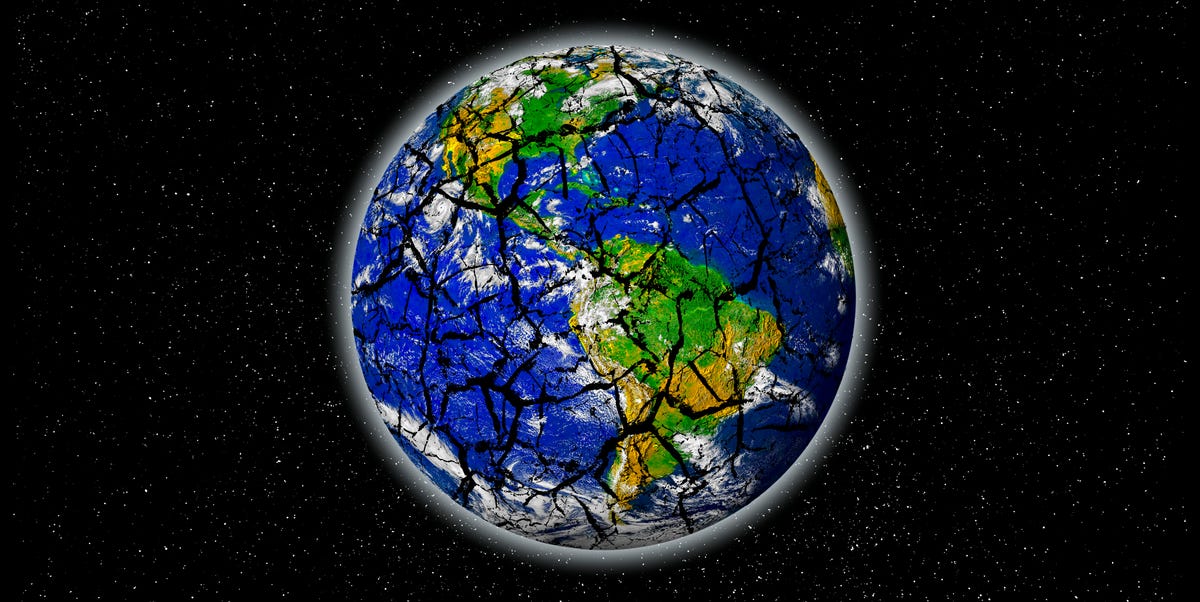
If the phrase “the ground is giving way” sounds dramatic, that is because it is dramatic. It is also, in many places, annoyingly literal. Across the United States and around the world, the land beneath roads, homes, farms, pipelines, beaches, and entire neighborhoods is sinking, cracking, slumping, eroding, or washing away. Sometimes the shift is sudden, like a sinkhole swallowing a chunk of pavement. Sometimes it is slow enough to be mistaken for bad luck, old infrastructure, or a crooked foundation. But make no mistake: the surface of the Earth is changing in ways people can see, feel, and pay for.
This is not one single disaster movie problem with one evil villain twirling a mustache underground. It is a stack of connected processes. Groundwater pumping can compact the land from below. Rising seas can chew away coasts from the side. Heavier rains can strip topsoil from above. Thawing permafrost can turn firm ground into mush. In karst regions, water can dissolve rock until the surface suddenly drops out like a trapdoor with commitment issues.
In other words, the planet is not falling apart everywhere at once, but in many places it is becoming less stable, less predictable, and much more expensive to ignore. That makes this story bigger than geology. It is about climate, water, development, farming, engineering, insurance, and the humbling realization that concrete does not automatically win an argument with physics.
What “Crumbling” Actually Means
When people hear that the Earth’s surface is crumbling, they often picture apocalyptic fissures opening down Main Street. That can happen, but the more common reality is sneakier. Crumbling can mean land subsidence, when the ground slowly sinks because support below the surface is lost. It can mean erosion, when wind, water, waves, or runoff strip away soil and sediment. It can mean coastal retreat, when shorelines move inland as waves and higher water levels nibble away at the edge. It can also mean collapse in places where underground rock has dissolved, creating caves or voids that can no longer hold up the surface.
The tricky part is that these processes often overlap. A coastal city might be sinking because groundwater is being pumped out while the ocean rises and flooding becomes more frequent. A farming region might lose topsoil to erosion while also compacting its soils with heavy machinery and drought stress. A cold region might suffer thawing permafrost, which destabilizes roads, buildings, and slopes at the same time. The result is a patchwork of local problems with global consequences.
Land Subsidence: The Silent Drop
Subsidence is one of the clearest examples of the ground literally lowering beneath our feet. It happens when sediment or rock underground loses support and compresses. In many places, the main culprit is groundwater extraction. Pump water out of an aquifer long enough, and the sediments that held that water can compact. Once that structure is squeezed, the land above it can settle. Slowly, quietly, relentlessly.
This is why subsidence is often called a “slow-motion disaster.” It does not always announce itself with a boom. Instead, it leaves clues: cracked walls, warped roads, misaligned doors, buckled sidewalks, stressed bridges, broken pipes, weird drainage, and floodwater that suddenly seems to have a personal grudge against your neighborhood.
Recent research has pushed this issue into sharper focus. In 2025, scientists reported that all 28 of the most populous U.S. cities are sinking to some degree. That does not mean every block is vanishing into the Earth like a magician’s trick gone wrong. It means vertical land movement is widespread enough to matter for infrastructure, flood risk, and urban planning. And when different parts of a city move at different speeds, the stress on buildings, roads, rails, and buried utilities can be enormous.
Why Cities Sink Faster Than We’d Like
Cities are heavy. They also demand huge amounts of water. Add dense development, paved surfaces, altered drainage, and aging infrastructure, and you have a recipe for ground stress. In some places, oil and gas extraction, mining, or the drainage of organic soils also add to the problem. Coastal cities get a double headache: even modest sinking makes sea-level rise feel worse, because relative water levels increase faster when the land itself is dropping.
That is why a city can seem to flood “more than it used to” even if residents do not feel like the ocean has changed all that much. If the land is sinking at the same time the water is rising, the math gets ugly fast.
Coastal Erosion: Where the Map Shrinks in Real Time
There is something especially unsettling about watching the edge of the land move backward. Coasts do naturally shift, of course. Beaches migrate, barrier islands reshape themselves, bluffs collapse, and storms redraw shorelines. But sea-level rise and repeated flooding increase the pressure. Higher water allows waves and storm surge to reach farther inland, attack dunes more often, and undermine cliffs, roads, and homes.
This is where the phrase “crumbling under our feet” becomes almost painfully literal. In some coastal communities, people can point to places where there used to be sand, vegetation, parking lots, or even entire structures. The line between land and water starts behaving less like a border and more like a negotiation that the land is losing.
NOAA’s long-term outlook has made this impossible to shrug off. Even what sounds like a modest rise in sea level can dramatically increase nuisance flooding, shoreline erosion, and infrastructure damage. Small changes in average water height can produce big changes in how often roads flood, septic systems fail, and seawalls get battered. When you add sinking land to the mix, the coastline is not just getting wetter. In some places, it is effectively getting shorter.
Why Some Coasts Are More Fragile Than Others
Not every shoreline responds the same way. Sandy coasts can retreat quickly because sand is mobile and storms can move it in huge volumes. Delta regions face special danger because they are built from loose sediments that can compact over time, especially when rivers are engineered, sediment supply is interrupted, or groundwater is overused. Marshes and wetlands can help buffer waves, but they need room and enough sediment to keep pace. When they lose either one, they can drown or erode, taking a major natural defense system with them.
Sinkholes and Karst: When the Ground Pulls a Disappearing Act
Then there are the places where the land does not just settle. It fails. Karst landscapes form where water dissolves soluble rock such as limestone, gypsum, or marble. Over time, that can create caves, channels, and underground voids. If the material above those voids can no longer hold, the surface can collapse into a sinkhole.
Sinkholes are the reason many people suddenly become amateur geologists the moment a parking lot caves in on the evening news. They can develop naturally, but human activity often makes them more likely or more severe. Groundwater pumping, altered drainage, heavy construction, and changes to surface water flow can all increase the risk. So yes, sometimes a sinkhole is a geological process. Other times it is geology reacting to the way humans have rearranged the plumbing.
What makes sinkholes so unnerving is the element of surprise. You can live above a vulnerable landscape for years with no obvious problem, then a crack appears, a depression deepens, and the ground that once seemed dependable starts feeling like a bad promise.
Permafrost Thaw: Solid Ground Goes Soft
In colder regions, another form of surface breakdown is accelerating: permafrost thaw. Permafrost is ground that stays frozen for at least two years straight, often much longer. When it thaws, the ice in the soil melts, and the ground can slump, collapse, or erode in a process often called thermokarst. That once-stable terrain can turn lumpy, boggy, unstable, and expensive to build on.
This matters far beyond the Arctic. Roads, pipelines, buildings, and airstrips in northern regions depend on frozen ground staying frozen. When that foundation softens, infrastructure deforms. Slopes fail. Drainage changes. Lakes drain or form in new places. Carbon stored in frozen soils can also be released, adding yet another climate feedback to an already overloaded system. The ground does not merely thaw; it changes character.
If coastal erosion is the map shrinking from the edges, permafrost thaw is the interior turning unreliable from within. Either way, human systems built for yesterday’s ground conditions are now being introduced to tomorrow’s physics. It is not a gentle introduction.
Soil Erosion: The Quiet Loss That Feeds Bigger Failures
Not all crumbling looks spectacular. Sometimes it looks like dirt leaving one field, one ditch, one streambank, or one construction site at a time. Soil erosion may not generate viral footage as often as sinkholes do, but it can be just as serious. Topsoil is one of the most valuable thin layers on Earth. Lose enough of it, and farms become less productive, rivers get choked with sediment, habitats degrade, and runoff gets dirtier and faster.
Land development can worsen the problem by replacing absorbent surfaces with pavement and roofs. Agriculture can contribute when soil is left exposed, slopes are poorly managed, or extreme rain overwhelms protective practices. Construction sites, roads, and stormwater systems can also accelerate sediment loss if they are not designed carefully. That stripped soil has to go somewhere, and “somewhere” is often a stream, a wetland, an estuary, or a neighbor’s problem.
Here is the deeper issue: erosion is not just about losing dirt. It is about losing stability. Soil helps anchor vegetation, absorb water, support crops, regulate runoff, and cushion landscapes against extreme weather. Remove it, and the land becomes more vulnerable to flooding, landslides, drought stress, and long-term ecological decline. It is the environmental equivalent of removing tiny screws from a bridge and hoping the rest of the structure will stay chill about it.
Why Human Activity Keeps Making This Worse
Nature has always moved Earth around. Rivers migrate. Coasts retreat. Mountains wear down. The problem is that modern society has become astonishingly good at speeding up the wrong parts of that process. We pump aquifers faster than they recharge. We pave land so water runs off instead of soaking in. We build on floodplains, on soft sediment, on karst terrain, on thaw-prone soils, and on coasts that were trying to send us hints the whole time.
Climate change adds fuel to the whole mess. Rising seas raise the baseline for erosion and flooding. More intense downpours increase runoff and slope failure. Heat and drought can weaken soils and vegetation. Permafrost thaw destabilizes northern ground. Stronger storm impacts can turn small vulnerabilities into expensive disasters. The surface of the Earth is not simply “crumbling” because geology is rude. It is crumbling faster in many places because climate stress and land-use decisions are colliding.
What Can Actually Be Done
The good news is that this is not hopeless. The bad news is that it is not solved with one inspirational slogan and a decorative shovel. Real solutions depend on the cause. In subsiding areas, managing groundwater more carefully is essential. In coastal zones, that may mean combining shoreline protection, wetland restoration, smarter zoning, and, in some cases, retreat from the most exposed places. In erosion-prone landscapes, better soil management, stormwater design, vegetation cover, and construction controls matter. In karst regions, mapping and planning can reduce the odds of building something important over a geological prank. In permafrost regions, infrastructure may need redesign, relocation, or a hard conversation with reality.
The bigger point is that ground stability should be treated as infrastructure, not background scenery. We plan for roads, bridges, water lines, and electric grids. We should plan just as seriously for the land those systems depend on.
Conclusion: The Planet Is Giving Us Feedback
The surface of the Earth is literally crumbling under our feet in more ways than most people realize. It happens on coasts, in cities, on farms, in cold regions, and in landscapes shaped by soluble rock and overdrawn water. Sometimes the warning arrives as a cracked wall. Sometimes it arrives as a vanished beach, a flooded street, a slumping road, or a field losing its best soil after a hard rain. Different setting, same message: the ground is not as fixed as we like to pretend.
The lesson is not to panic every time you see a crack in the sidewalk. The lesson is to stop treating the land as inert. It is active, responsive, and deeply affected by how we use water, build cities, farm land, and heat the atmosphere. The Earth is still doing Earth things. The trouble is that we have made some of those things faster, harsher, and more expensive. And once the ground starts billing us for denial, the invoice is rarely small.
Experiences From a World Where the Ground Won’t Sit Still
One of the strangest parts of living through land change is how ordinary it can look at first. A homeowner notices that a bedroom door suddenly sticks in July, then again in October, then never quite closes right after that. A hairline crack crawls up the corner of the living room wall. Outside, the walkway tilts just enough for rainwater to collect in a shallow puddle that was never there before. None of it screams disaster. It just feels off, like the house has developed a quiet opinion about gravity.
In a coastal town, the experience is different but no less personal. People remember where the dunes used to be. They remember the old access path to the beach, the row of grass that held the sand in place, the stretch where kids played without waves reaching their towels. Then a few storm seasons pass, several high-tide floods arrive, and the shoreline starts behaving like it has been put on fast-forward. The walk to the water gets shorter, but in the least fun way possible. A road floods more often. Saltwater lingers where it never used to. The landscape begins to feel less like home and more like a warning label.
Farmers often experience crumbling ground as loss by increments. A hard rain cuts tiny channels into a field. Then those channels deepen over time. Topsoil that took years to build moves downhill in a single storm and ends up in a ditch or creek. Crops still grow, but some patches struggle more than they used to. Water runs off faster. Inputs cost more. Yields feel less dependable. There is no dramatic collapse, just the slow realization that the land is working harder to do the same job because some of its strength has literally washed away.
In places affected by subsidence, public infrastructure starts acting haunted. A street that was resurfaced not long ago ripples again. Storm drains stop draining well because the grade has subtly changed. Utility crews return to the same block more often. Bridge approaches bump harder. Parking lots crack in patterns that look random until someone overlays a map of the geology and the pumping history. Suddenly the “random” part disappears.
And in the far north, where permafrost thaw is reshaping daily life, the experience can be startlingly physical. Ground that once felt solid under boots softens. Roads buckle. Pilings shift. Trails turn boggy. The land becomes uneven in a way that changes how people move, build, maintain, and plan. Stability becomes seasonal, then conditional, then uncertain.
What ties all these experiences together is not just damage. It is the emotional jolt of discovering that the ground is not a permanent fact. We build our lives with an unspoken assumption that the surface below us will keep doing its one basic job: stay put. When it does not, even slightly, everything else feels more fragile. That may be the most important truth in this whole story. The crumbling is geological, yes. But the experience of it is deeply human.