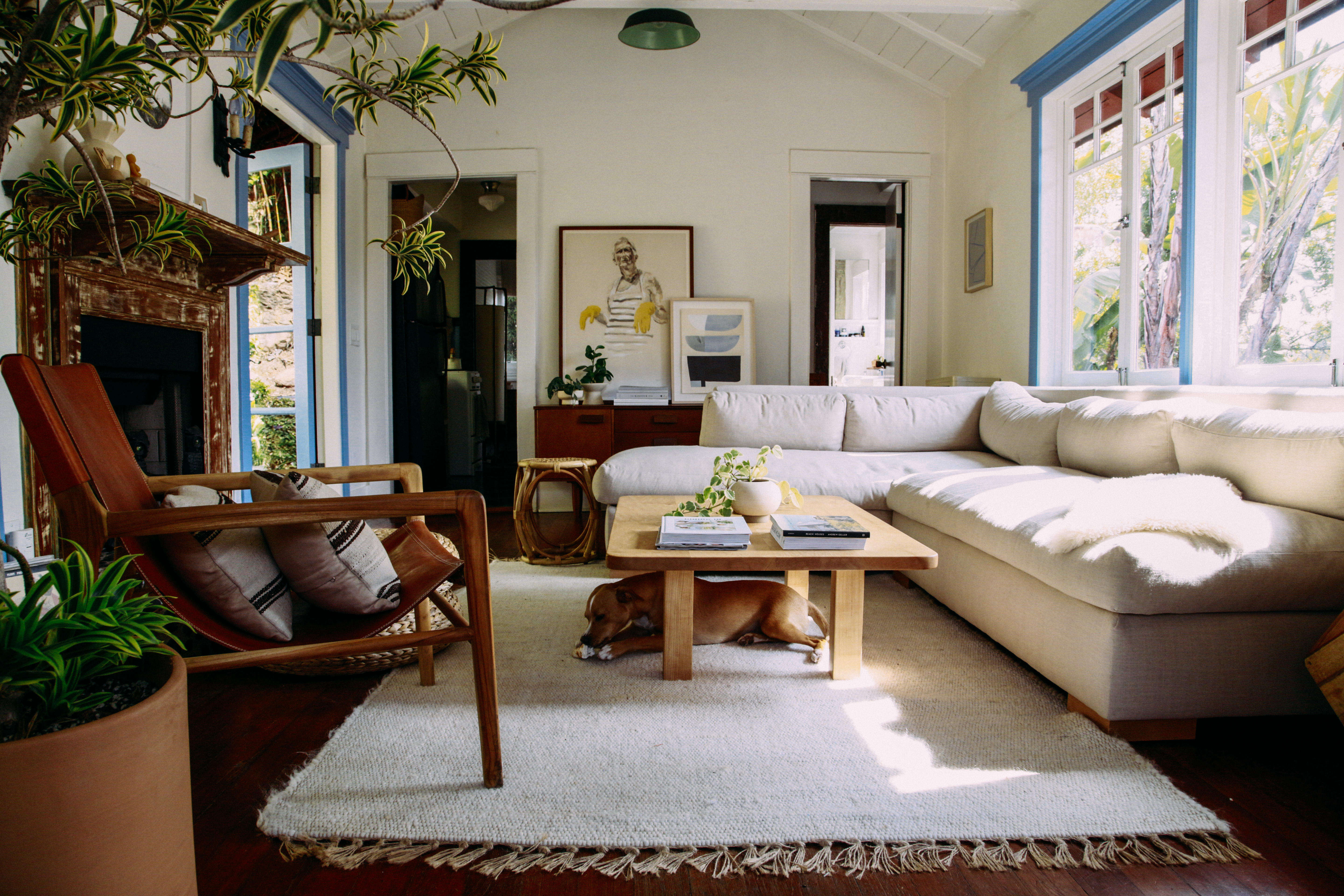
A celebrity home tour usually arrives with a predictable supporting cast: a marble island the size of Rhode Island, a swimming pool that requires its own ZIP code, and at least one chair nobody is permitted to sit in. Actress Jodi Balfour’s Los Angeles rental bungalow offers a much more useful plot twist.
Known to Netflix viewers for portraying Jackie Kennedy in The Crown, Balfour lived with her partner at the time, Alex Ashbaugh, in a 500-square-foot bungalow in Los Angeles’s Silver Lake neighborhood. The 1914 home was rented from a friend after the couple abruptly left an apartment in Santa Monica that measured more than 2,000 square feet. While preparing another house in Highland Park, they turned the tiny rental into an airy, personal retreat rather than treating it like a decorative waiting room.
The result proves that successful budget rental decor is not about disguising a small home as a mansion. It is about editing carefully, protecting walking space, using furniture more than once, and spending money only where it meaningfully improves daily life.
Why This 500-Square-Foot LA Bungalow Feels Larger
The Design Began With Real Life, Not a Shopping List
Balfour and Ashbaugh regularly entertained friends and family, so generous seating was a priority. Instead of filling the living room with several disconnected chairs, they commissioned an armless L-shaped sofa designed to follow the line of the windows. The sectional provided abundant seating without blocking the view or interrupting movement through the room.
That choice captures the bungalow’s central lesson: decide what the home must do before deciding what it should contain. A renter who cooks every evening needs preparation space. Someone who works remotely needs a dependable desk. A frequent host needs flexible seating. Without those priorities, even a beautiful room can become an expensive obstacle course.
Editing Became a Form of Architecture
Moving from more than 2,000 square feet into 500 demanded serious downsizing. The couple kept objects that were useful, personally meaningful, or genuinely loved. Ceramics, original artwork, books, and carefully selected furniture survived the move; decorative passengers traveling without a ticket did not.
In a compact home, decluttering does more than tidy the shelves. It reveals the architecture. Windows appear larger, passageways widen, and individual objects gain visual importance. One striking ceramic vessel can make a stronger impression than twelve small accessories competing for elbow room.
Clear Passageways Preserve the Home’s Natural Flow
The bungalow had very few interior doors, with one room opening almost directly into the next. Rather than inserting permanent barriers, the couple preserved this circular flow. The uninterrupted sightlines helped the entire rental feel connected and more spacious.
This principle is especially valuable in small apartments: circulation is part of the floor plan. A coffee table that forces everyone to shuffle sideways is not merely inconvenient; it visually shrinks the room. Maintaining an obvious walking route makes a compact layout feel calm instead of congested.
Budget Rental Secrets Hidden in the Living Room
Make the Television a Supporting Character
Although Balfour worked in television, she did not want the screen directing the furniture. The TV was mounted around a corner where it could be watched comfortably without becoming the first object visible from the entrance.
Renters can apply the same idea without hiding electronics inside costly cabinetry. Position a screen away from the primary sightline, place it on a low-profile console, or balance it with artwork and shelving. The goal is not to pretend television does not exist. It is to stop the television from behaving like the room owns you.
Use a Neutral Foundation, Then Add Earthy Accents
The rental came with vivid blue trim inspired by the homeowner’s travels in Greece. Rather than fighting the existing color, Balfour connected it to a restrained backdrop of neutrals and warm accent shades, including rust, mustard, and green.
A limited palette is one of the most effective small-space decorating tools because it creates visual continuity. Neutral does not have to mean a bowl of cold oatmeal. Linen, leather, pale wood, woven rattan, handmade pottery, and leafy plants introduce texture and depth without making a room appear crowded.
Treat Plants Like Living Sculpture
Plants of different shapes and heights were placed throughout the bungalow in ceramic pots. A spreading Song of India tree brought movement to the living room without adding another heavy piece of furniture.
Greenery is particularly useful in a rental because it supplies color, height, and personality without permanently changing the property. One tall plant can animate an empty corner, while a trailing plant can soften a high shelf. The only bad bargain is purchasing a jungle’s worth of plants before checking whether the room receives enough light. A brown botanical collection is certainly personal, but perhaps not in the intended way.
Let Books and Art Tell the Story
Books were used as both reading material and decoration, while original artwork introduced character throughout the home. Instead of attaching every piece to the walls, some works were leaned against surfaces. This renter-friendly approach reduced holes, allowed displays to evolve, and created a relaxed, collected atmosphere.
Leaning art works best on mantels, sideboards, sturdy shelves, and low cabinets where frames cannot be easily knocked over. Larger pieces may also be placed on the floor, provided they are stable and safely positioned away from children, pets, or enthusiastic vacuum cleaners.
Small-Space Solutions in the Entry and Kitchen
A Simple Bench Created an Entire Room’s Worth of Functions
The bungalow’s entry already had a wall shelf. Adding a maple bench transformed the modest area into a place to put on shoes, open a laptop, drop a bag, or provide an extra seat during gatherings.
This is multipurpose furniture at its most convincing. The bench does not contain twelve hinges, convert into a submarine, or require an instructional video. It simply performs several everyday jobs while occupying one narrow strip of floor.
Custom Does Not Automatically Mean Expensive
In the galley kitchen, Ashbaugh and a friend built a narrow wooden table to fit between the refrigerator and stove. It supplied additional preparation space, included a storage shelf, and concealed waste bins underneath. A matching handmade coffee table helped unify the bungalow.
A basic custom piece can sometimes be more economical than buying a fashionable product that almost fits. For awkward gaps, renters can measure the available area and consider a DIY shelf, slim console, rolling cart, or simple carpenter-built table. The secret is to keep the design straightforward and use common materials rather than requesting a hand-carved mahogany command center.
Hardware-Store Basics Can Be Surprisingly Handsome
Simple nails and screw hooks above the kitchen sink held scrub brushes, potholders, and utensils. These inexpensive additions used vertical space and kept frequently needed tools within reach.
Before drilling, tenants should review the lease and request permission where necessary. Small holes are often easy to repair, but rental rules vary. Adhesive hooks can work for lightweight items, although weight limits and removal instructions deserve more respect than most people give them at 11:45 p.m. on move-out night.
Bedroom Privacy Without Sacrificing Openness
Use a Folding Screen Instead of Building a Wall
The open layout helped the bungalow feel larger, but it also exposed the sleeping area when guests visited. A freestanding folding screen solved the problem only when privacy was needed. The rest of the time, it could remain open or be moved aside.
Portable dividers are ideal for renters because they define zones without construction. A folding screen, open bookcase, curtain, or garment rack can separate a bed from a living area while preserving flexibility. Designs with gaps or woven panels maintain light better than solid, ceiling-height barriers.
Replace Bulky Nightstands With Small Shelves
Compact wall shelves stood in for traditional bedside tables. They provided enough room for essentials without consuming valuable floor space.
The same strategy works beside beds, sofas, and entry doors. A shallow shelf can hold a phone, glass of water, keys, or reading material. Renters who cannot mount shelves can try a narrow stool, a small C-table, or a slim rolling cart that can migrate wherever it is most useful.
Spend on the Items You Touch Every Day
The bedroom included quality linen bedding, while attractive towels and pillows brought comfort to other areas. These were portable investments that could move to a future home.
This provides a sensible budget rule: save on temporary solutions and spend selectively on daily-contact items. Good sheets, supportive seating, a comfortable mattress, and durable cookware often provide more value than a decorative object purchased because an algorithm whispered, “Only three left.”
How the Patio Became Bonus Square Footage
Doors and windows connected the bungalow to a secluded patio, allowing the exterior to function as an extension of the living area. Much of the outdoor furniture came from IKEA, showing that a welcoming retreat does not require custom teak furniture or a professional landscape architect.
In Southern California, indoor-outdoor living is practical for much of the year, but the concept can be adapted elsewhere. A balcony may hold a folding chair and compact table. A front porch can become a reading spot. Even an open window beside a cluster of plants can strengthen the connection between a rental and its surroundings.
Portable lanterns, washable textiles, stackable stools, and weather-resistant seating can create an outdoor room on a modest budget. The best setup is one that is easy enough to use on an ordinary Tuesday, not only during a photoshoot involving seventeen decorative lemons.
Where to Save and Where to Spend
The bungalow succeeded because inexpensive and premium elements were mixed according to purpose rather than status. Mass-market ottomans and outdoor furniture coexisted with original artwork, custom seating, handmade tables, and quality textiles.
Save Money On
- Hooks, utility shelves, baskets, and simple storage accessories
- Movable stools and occasional seating
- Secondhand books, frames, side tables, and decorative ceramics
- Outdoor furniture that may face weather and frequent moving
- DIY solutions for unusually narrow gaps
Consider Spending More On
- A sofa with the correct dimensions and comfortable support
- A sufficiently large rug that visually anchors the seating area
- Bedding, towels, and other frequently used textiles
- Original art or meaningful objects that will move with you
- Flexible furniture that can function in several future homes
A custom item is worthwhile only when it solves a genuine layout problem. Measure doorways, windows, traffic paths, and available wall lengths before ordering anything. Furniture looks surprisingly petite in a showroom and suspiciously aircraft-carrier-like once delivered to a 500-square-foot rental.
How to Re-create the Look Without a Celebrity Budget
Start With a Zero-Dollar Edit
Remove everything from the room that no longer serves its intended purpose. Test new furniture arrangements before purchasing organizers. Relocate artwork, rotate books, group ceramics together, and clear major sightlines. The cheapest square footage is the space you recover from objects you no longer use.
Choose One Flexible Piece for Each Zone
Place a bench in the entry, an ottoman in the living room, a rolling cart in the kitchen, or a folding screen near the bed. One versatile object usually improves a small home more than a collection of specialized furniture.
Build a Cohesive Color Story
Work with the rental’s permanent finishes rather than attempting to ignore them. Select two or three neutrals, then repeat a small group of accent colors in pillows, rugs, artwork, pottery, and plants. Repetition creates intention even when the pieces come from different stores, decades, or curbside encounters.
Keep More Floor Visible
Use leggy furniture, wall shelves, raised planters, and compact tables to preserve visible floor area. Avoid placing storage boxes along every wall. Even practical items create visual noise when every inch of the perimeter becomes a warehouse aisle.
Decorate Gradually
A collected home is assembled through observation, not one panicked weekend at a big-box store. Live in the rental long enough to learn where bags accumulate, which corners remain dark, and how people naturally move through the rooms. Then solve those specific problems.
The Experience of Applying These Ideas in a Real Rental
Imagine beginning on a Saturday morning with a small living room that feels mysteriously full despite containing only a sofa, coffee table, television stand, two chairs, several baskets, and enough miscellaneous accessories to open a modest gift shop. The first experience is not glamorous. It involves moving objects, discovering dust colonies, and asking difficult questions about three nearly identical side tables.
Once unnecessary pieces leave the room, the atmosphere changes immediately. Natural light reaches farther across the floor. The windows become visible as architectural features rather than narrow gaps behind furniture. The remaining objects begin to look more deliberate, even though nothing new has been purchased.
The next step is measuring. Mark the main walking route from the entrance to the kitchen with painter’s tape. Open every cabinet and door to confirm that furniture does not interfere. Try moving the sofa a few inches, shifting the rug, and placing a chair at an angle rather than automatically pressing everything against the walls. Small adjustments can create a surprising amount of breathing room.
By Saturday afternoon, the entry receives a bench or slim stool. A basket beneath it catches shoes, while a tray on the existing shelf handles keys and mail. The area suddenly feels like an entryway, even though no construction has occurred. More importantly, bags stop migrating to the living-room floor like leather sea turtles.
Sunday is devoted to personality. A tall plant occupies an empty corner. Two favorite artworks lean on a cabinet, layered with a smaller framed photograph. Books are grouped by subject rather than scattered across five surfaces. A rust-colored pillow and green ceramic pot connect the furnishings to a simple palette.
The first evening in the edited space is when the practical benefits become noticeable. It is easier to walk from room to room. Cleaning takes less time because fewer objects must be lifted and rearranged. The home also feels quieternot acoustically, perhaps, but visually. Every surface is no longer shouting for attention.
The real test comes when friends visit. A bench becomes extra seating, an ottoman turns into a drinks table, and lightweight stools move wherever needed. The television remains accessible but does not dominate the gathering. Guests can circulate without apologizing to a lamp every three minutes.
Afterward, resetting the room is simple because each object has a designated home. This is the experience Balfour’s bungalow illustrates so effectively: good small-space design is not primarily about how a room photographs. It is about how quickly the room recovers from real life.
Over the following weeks, further needs become clear. Perhaps a narrow kitchen cart would reduce crowded countertops, or a folding screen would make the sleeping area feel more private. These purchases can be made deliberately because they respond to observed habits rather than decorative anxiety.
The experience also changes the way a renter shops. Instead of asking, “Is this beautiful?” the better questions become, “Where will it live, what will it do, and would I take it to another home?” A beautiful object with no role may remain at the store. A simple bench that works as seating, storage, and a laptop perch becomes the smarter luxury.
That shift is the bungalow’s most valuable budget secret. A small home does not require constant compromise. It requires sharper choices. When every item earns its place, 500 square feet can feel more generous than a poorly planned home four times the size.
Conclusion: A Rental Can Be Temporary and Still Feel Personal
Jodi Balfour’s Silver Lake bungalow was not successful because every object was inexpensive or because the interior followed one rigid decorating style. It worked because the layout reflected how its residents actually lived. Hosting shaped the seating plan. Limited space encouraged careful editing. Artwork, books, ceramics, plants, and textiles supplied personality without permanent remodeling.
For renters, the takeaway is encouraging: ownership is not a prerequisite for thoughtful design. Preserve clear pathways, use portable pieces, build around daily priorities, and combine humble basics with a few lasting investments. A rental may belong to someone else on paper, but it can still feel unmistakably like home.
Note: This article is based on the documented 2018 tour of Jodi Balfour’s Silver Lake rental and design guidance synthesized from Remodelista, Netflix Tudum, The Organized Home, Apartment Therapy, Better Homes & Gardens, HGTV, The Spruce, Architectural Digest, Real Simple, House Beautiful, Good Housekeeping, and Dwell. Rental permissions, product availability, and installation requirements may vary.