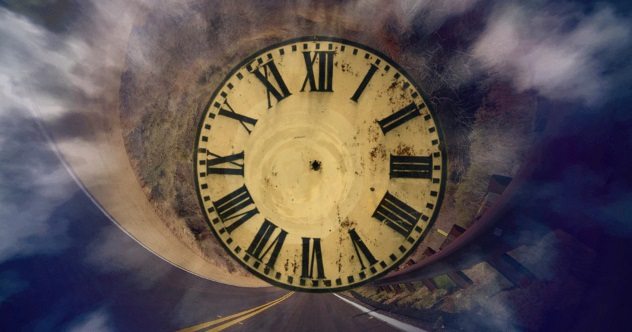
Time travel has a special talent for making perfectly sensible adults argue about whether they should warn their younger selves about bad haircuts, questionable tattoos, or that one “brilliant” investment tip from a cousin. But beneath the sci-fi jokes, time travel is tied to real physics. Einstein’s theories show that time is not a universal wall clock hanging over the cosmos. Speed and gravity can change how quickly time passes for different observers.
That does not mean your microwave has a hidden setting for “Tuesday, 1997.” It does mean that some forms of travel into the future are real, while travel into the past remains trapped in a maze of equations, paradoxes, and very expensive imaginary hardware. Below are 10 out-of-this-universe ideas about time travel, ranging from experimentally confirmed effects to wild theoretical concepts that make a DeLorean look almost financially responsible.
1. Ride a Near-Light-Speed Starship Into the Future
The most scientifically grounded time-travel idea is also the least convenient for anyone who dislikes cramped seating: travel at an enormous fraction of the speed of light. According to special relativity, a fast-moving clock runs more slowly relative to a clock that remains behind. This is called time dilation.
Imagine astronauts leaving Earth in a spacecraft traveling close to light speed. Their onboard clocks, heartbeats, birthdays, and snack breaks would pass normally from their perspective. But when they returned to Earth, far more time could have passed for everyone else. They would effectively arrive in Earth’s future.
This is not just theoretical party conversation. Atomic-clock experiments have confirmed that motion changes the rate at which time passes. GPS satellites must account for relativistic effects or their location calculations would drift badly. So yes, your phone’s map app quietly performs a tiny bit of Einstein-approved timekeeping every day.
2. Spend Time Near a Black Hole
Gravity also affects time. The stronger the gravitational field, the more slowly time passes relative to a person farther away. This is known as gravitational time dilation, and black holes are nature’s most dramatic example of the effect.
In theory, a traveler orbiting safely near a supermassive black hole could experience less time than people living far away from that intense gravity. The traveler might return to find that decades or centuries had passed elsewhere. It is the ultimate “sorry I missed your birthday” excuse, though probably not one your family would accept without peer-reviewed documentation.
There is an enormous catch: getting close to a black hole is not like visiting a scenic overlook. Black holes have extreme gravity, radiation hazards, and an event horizon beyond which nothingnot even lightcan escape. A black hole may slow your relationship with time, but it is not a friendly cosmic elevator.
3. Use a Wormhole as a Shortcut Through Space-Time
Wormholes are hypothetical tunnels connecting distant locations in space-time. Picture the universe as a sheet of paper. Instead of crawling across the page from one corner to another, you fold the paper and poke a tunnel through both layers. Congratulations: you have created the world’s most confusing subway system.
General relativity contains mathematical solutions that resemble wormholes. In some versions, the two ends of a wormhole could connect not only distant places but also different times. Move one wormhole mouth at high speed or place it near intense gravity, and time dilation could cause the mouths to become out of sync. Enter one end, and you might emerge from the other at an earlier time.
Unfortunately, nobody has found a wormhole, built one, or figured out how to keep one open for travelers. Many models require “exotic matter” or negative energy conditions that have not been shown to support a usable human-sized tunnel. A wormhole is still more physics thought experiment than vacation route.
4. Follow a Closed Timelike Curve
A closed timelike curve, often shortened to CTC, is one of physics’ strangest ideas. In simple terms, it is a path through space-time that eventually loops back to its own past. You keep moving forward locally, yet the curve brings you back to an earlier moment.
General relativity allows such curves in certain mathematical situations. That is the important phrase: mathematical situations. Nature has not sent us a postcard saying, “Greetings from the CTC neighborhood; traffic is terrible in 1884.”
CTCs create the famous grandfather paradox. What happens if a traveler goes back and prevents the event that caused the trip? One possible answer is the self-consistency principle: events along the loop must remain consistent, so the traveler can participate in the past but cannot alter it in a contradiction-producing way. The universe, under this idea, becomes an extremely strict editor.
5. Build a Tipler Cylinder
The Tipler cylinder sounds like an appliance designed by someone who read too much physics and not enough product-safety literature. It is a theoretical object: an enormously dense cylinder spinning incredibly fast. Certain mathematical models suggest that its rotation could twist space-time enough to create paths leading into the past.
The problem is that the cylinder would need to be extraordinarily massive, extraordinarily long, and rotating at an absurd rate. In many idealized versions, it would need to extend infinitely. Since infinite construction projects tend to exceed most homeowner association budgets, the Tipler cylinder remains a conceptual curiosity rather than a weekend DIY project.
Its real value is philosophical. It shows that Einstein’s equations can produce surprising space-time geometries, while reminding physicists that a mathematically valid solution is not automatically a physically buildable machine.
6. Surf Around a Cosmic String
Cosmic strings are hypothetical one-dimensional defects that may have formed in the early universe. They are not strings like shoelaces or guitar strings. They would be astonishingly thin but could carry immense mass and tension, warping the space around them.
Some time-travel proposals imagine two cosmic strings moving past one another at extreme speeds. Their combined gravitational effects might distort space-time in a way that creates a route to the past. It is a spectacular idea, especially because it requires objects that may stretch across astronomical distances.
The downside is simple: cosmic strings have not been confirmed to exist. Even if they do exist, finding two, arranging them correctly, and avoiding becoming space debris would require technology so advanced that “interstellar traffic cone” may become a future career path. NASA describes cosmic strings as hypothetical early-universe defects, not established cosmic infrastructure.
7. Try a Warp Drive Without Moving Faster Than Light Locally
The Alcubierre warp-drive concept imagines a spacecraft inside a bubble of warped space-time. Instead of the ship racing through space faster than light, space itself contracts in front of the vessel and expands behind it. The ship rides the bubble like a surfer standing on a wave made of geometry.
Why does this matter for time travel? In relativity, faster-than-light travel can lead to cause-and-effect problems. Different observers may disagree about the order of events, opening the door to messages arriving before they were sent. A warp drive might appear to bypass the usual speed limit while keeping the ship locally at rest inside its bubble.
But the proposal is loaded with giant warning labels. Most versions require exotic negative energy, huge energy demands, and physical conditions nobody knows how to create. The idea is brilliant, but it is closer to a blueprint from a theoretical-physics sketchbook than an upcoming airline route.
8. Use Quantum “Time Travel” Protocols
Quantum physics often sounds as though reality has hired a magician with a doctorate. Researchers can create experiments and mathematical protocols that behave as if information has interacted with an earlier state. Some quantum-computing experiments even use language inspired by wormholes and time travel.
That does not mean a quantum computer can send your grocery list to last Thursday. Quantum teleportation does not move usable information faster than light because it still requires ordinary classical communication. Entanglement creates powerful correlations, but it does not hand us a causality-breaking text-message service.
Still, quantum time-travel models are valuable. They help physicists test ideas about causality, measurement, and the boundaries between quantum mechanics and gravity. In 2022, researchers used a quantum processor to study dynamics mathematically connected to traversable-wormhole behavior. It was not a hole in space-time; it was a clever laboratory simulation of related physics.
9. Jump to Another Branch of Reality
One way to dodge time-travel paradoxes is to assume the past cannot be changed because changing it creates a different branch of reality. Under this broad multiverse-style idea, going back in time would not rewrite your own history. Instead, you might enter a new timeline where events unfold differently.
In that version of reality, you could warn a younger version of yourself about the haircut, save the sandwich from being dropped, or stop a fictional disaster. But your original timeline would remain untouched. You would not erase your own departure because you would be affecting a separate branch.
This idea is popular in movies because it gives writers room to cause chaos without destroying the plot in the first ten minutes. Scientifically, however, there is no confirmed method for visiting alternate timelines. The multiverse remains a family of speculative ideas, not a travel agency with a confusing refund policy.
10. Look Through a Telescope and Visit the Past
The most accessible form of time travel is already happening every time astronomers look into deep space. Light moves at a finite speed, so looking at distant objects means seeing them as they were when their light began its journey.
When you look at the Moon, you see it a little more than a second in the past. When astronomers observe distant galaxies, they can see light that has traveled for billions of years. Powerful telescopes are therefore genuine time machines for observation, even if they are disappointingly bad at delivering you to ancient Rome.
NASA’s Webb observations allow scientists to study light from very early galaxies, offering a view of the universe as it existed long before Earth formed. This is not backward travel for people, but it is an extraordinary way to witness cosmic history.
Why Time Travel Keeps Pulling Us In
Time travel is irresistible because it combines science, regret, hope, and the human urge to hit “undo” after sending an awkward message. Physics gives us real examples of time behaving differently under speed and gravity, but it does not currently provide a safe route to yesterday.
The wildest time-travel conceptswormholes, cosmic strings, closed timelike curves, rotating cylinders, and warp bubblesteach us something useful even when they remain impossible to build. They reveal how deeply strange space-time can be and how careful science must be when math offers possibilities that nature may refuse to permit.
What Time Travel Might Feel Like: A 500-Word Cosmic Experience
Imagine stepping into a time machine expecting flashing lights, dramatic music, and a dashboard full of buttons labeled “DO NOT PRESS.” Instead, the first thing you notice is silence. No thunder. No spinning tunnel. No friendly robot handing you a waiver. Just the uneasy feeling that the seconds around you have stopped behaving like seconds.
Suppose your journey begins aboard a near-light-speed starship. You watch Earth shrink into a blue spark, then a pale dot, then a memory framed by blackness. Your ship’s clock ticks normally. You eat breakfast, exercise in a narrow corridor, complain about recycled air, and celebrate a birthday with exactly one candle because open flames in space are frowned upon by everyone, especially engineers.
Years later, you return home. For you, perhaps a decade has passed. For Earth, a century may have slipped by. The cities look familiar from orbit, but the coastlines may have shifted, languages may have evolved, and your favorite coffee shop may now be a museum exhibit titled Ancient Beverage Rituals of the 21st Century. You have traveled forward in time, but the emotional cost arrives with the luggage.
A trip near a black hole would feel stranger still. From a safe orbit, the universe outside might appear to speed up. Distant stars would move through their lives while your own clock seemed stubbornly slow by comparison. Of course, “safe orbit near a black hole” is doing an enormous amount of work in that sentence. It is like saying, “Enjoy a peaceful picnic beside a volcano, provided the volcano signs a behavior contract.”
Now picture a wormhole. You enter one mouth on a quiet Monday morning. The tunnel is not necessarily a glowing blue hallway, despite science fiction’s impressive commitment to neon. In theory, it would be a warped region of space-time where directions lose their everyday meaning. Forward could point sideways. Distance could behave like a badly folded map. Your ship might travel only a few miles internally while crossing light-years externally.
If the wormhole’s mouths were separated in time, the exit could open onto an earlier date. That is when every practical problem becomes ridiculous. Do you meet your younger self? Do you avoid them? Do you bring proof that you are really from the future, or do you simply show up holding a smartphone that has no charger anyone recognizes?
The most unsettling part of time travel would not be the machinery. It would be the uncertainty. Every familiar rule would feel fragile. Cause and effect, memory, identity, and choice would all become questions rather than foundations. A joke told before its punchline might be less confusing than a life lived before its own decisions.
And yet, that uncertainty is why time travel remains so captivating. It lets us imagine second chances, impossible reunions, and front-row seats for the universe’s greatest moments. Real physics may not give us a path to the past, but it gives us something almost as powerful: the knowledge that time is stranger, richer, and more flexible than common sense ever guessed.
Note: This article is for educational and entertainment purposes. Relativistic time dilation is experimentally supported, while wormholes, cosmic strings, closed timelike curves, warp drives, and alternate-timeline travel remain theoretical or speculative ideas. The scientific background synthesized here draws on material from NASA, NIST, Caltech, MIT, the American Physical Society, the U.S. Department of Energy, IBM Quantum, and National Science Foundation research resources.