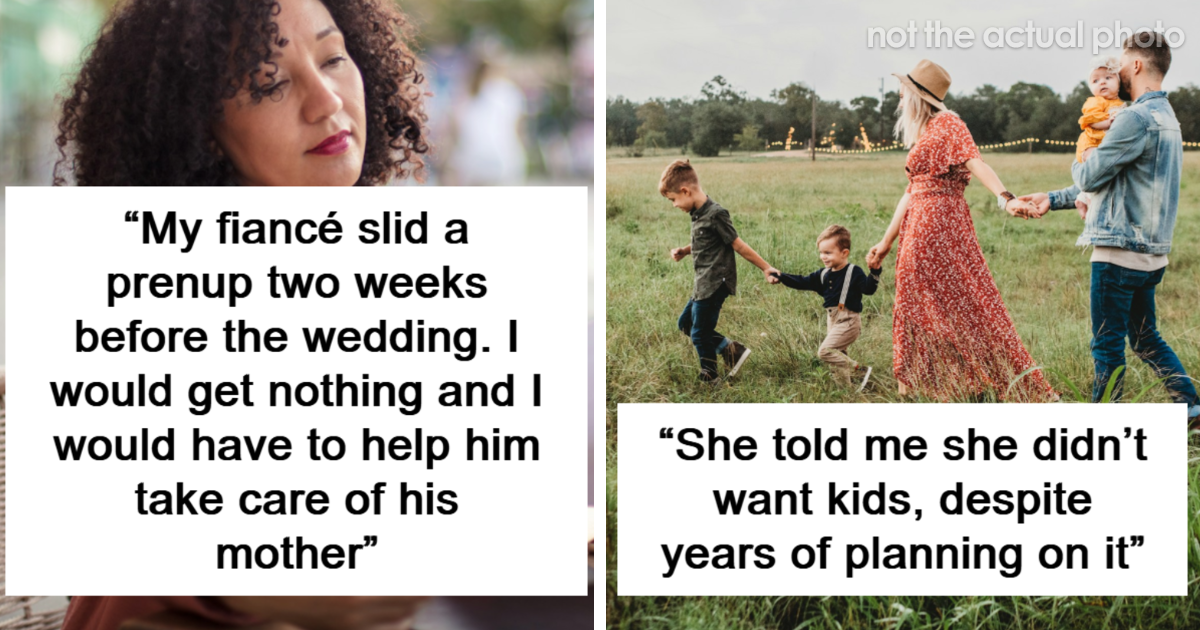
Weddings are supposed to be the grand finale of a love story: the flowers, the vows, the cake, the uncle who thinks the dance floor is his personal Super Bowl halftime show. But every now and then, the fairytale trips over its own train, lands face-first in the fondant, and never makes it to “I do.”
That is exactly why stories about canceled weddings spread like wildfire online. People cannot look away from a groom caught cheating days before the rehearsal dinner, a bride who discovers a nightmare prenup 48 hours before the ceremony, or a family feud so absurd it torpedoes the entire event over a dress code. The drama is entertaining, yes, but it is also revealing. Behind every spectacular pre-wedding collapse is usually something much less glamorous: dishonesty, money stress, family control, emotional manipulation, or the terrifying realization that a person was heading toward marriage by momentum instead of conviction.
In a viral collection of 49 stories about weddings that never happened, one detail stood out like a champagne glass shattering in a silent room: these were not random accidents. They were warnings that finally became impossible to ignore. Some were messy, some heartbreaking, some almost darkly funny. But taken together, they expose a bigger truth about modern relationships: wedding planning does not create every problem, but it is very good at putting existing problems under stadium lighting.
Why Wedding Planning Turns Small Cracks Into Giant Sinkholes
There is a reason pre-wedding disasters feel so explosive. A wedding is not just a party; it is a pressure cooker. The average wedding in the U.S. now costs tens of thousands of dollars, and that number can soar depending on location, guest count, season, and how ambitious a couple gets with the words “custom cocktail hour.” When that much money, family expectation, and emotional symbolism pile onto one event, every unresolved issue suddenly matters more.
Planning also forces couples into conversations they may have postponed for months or even years. How will we handle money? Whose family gets more say? Do we want children? Where will we live? What happens when one person’s mother starts treating the seating chart like a military operation? Those questions are not decorative. They are structural. If a relationship cannot survive them, the floral arch is not the real problem.
That is also why so many people in canceled-wedding stories say some version of the same sentence: I should have paid attention sooner. Research on ending engagements has found that many people do not so much choose marriage as slide toward it. They get engaged, book vendors, send invites, move in together, announce things publicly, and suddenly leaving feels harder than staying. The wedding date becomes a train on a track, and the person having doubts starts hoping that certainty will magically appear at the next station. Spoiler: it often does not.
What The 49 Wedding Disasters Really Had In Common
1. Cheating Has Terrible Timing, But Great Clarity
The headline quote about a groom meeting a girl at the club is shocking, but the underlying theme is painfully familiar. In the most brutal pre-wedding collapses, infidelity is not just a side plot. It is the whole truth finally crashing through the door. In one story, a woman turned up sobbing at the rehearsal dinner rental and confessed she had been having an affair with the groom for months. In another, a partner came home from a trip, refused eye contact, and the wedding died before the invitations even went out. Romance did not fail because the centerpieces were wrong. It failed because trust was already gone.
That matters because relationship experts consistently point to repeated deceit, jealousy, and a history of infidelity as major red flags. Marriage does not erase betrayal. It just adds legal paperwork and a registry.
2. Money Problems Wear Many Tuxedos
Some wedding cancellations look dramatic on the surface but are really financial stories in disguise. A lopsided prenup. Hidden assets. Hidden debt. A family member paying for the wedding and using the checkbook like a joystick. A couple realizing they booked a giant event when what they actually wanted was something small, sane, and not emotionally funded by panic.
Money fights are rarely just about money. They are about power, transparency, values, and whether two people can make decisions as a team. If one person is spending recklessly, hiding information, or treating financial support as leverage, wedding planning tends to expose it fast. Nothing says “future marital harmony” quite like discovering your dream ceremony comes bundled with manipulation and a spreadsheet from hell.
3. Family Drama Is Not a Side Dish
If you have ever suspected that weddings are part love story, part diplomatic summit, congratulations: you are a realist. Some of the most memorable pre-wedding implosions are not caused by the couple alone, but by the ecosystem around them. A future in-law steamrolling decisions. Parents weaponizing guest lists. Relatives inviting extra people without permission. One family insisting on black tie while the other is still trying to locate a decent navy suit.
What sounds petty from the outside often signals something deeper. Family conflicts during wedding planning usually reveal boundary problems, loyalty tensions, and old emotional habits that will not disappear after the honeymoon. If a couple cannot stand together while choosing a seating chart, it is fair to ask how they will stand together through mortgages, parenting, layoffs, or Thanksgiving.
4. Some Red Flags Are Mistaken for Romance Until It Is Too Late
Not every doomed wedding begins with obvious betrayal. Some begin with intensity that is mistaken for devotion. Too many gifts. Too much pressure. Too much future talk too fast. Too much “Why do you need to see your friends tonight?” disguised as love. Experts describe behaviors like love bombing, isolation, controlling tendencies, and boundary violations as serious warnings, not quirky personality traits.
And yet people stay. Because attention can feel flattering. Because control can look like protection in the beginning. Because jealousy gets marketed as passion by terrible movies and worse exes. Then the wedding planning starts, and suddenly the controlling partner has opinions about the budget, the guest list, your clothes, your family, your schedule, your phone, and somehow also your oxygen intake. Funny how that happens.
5. Cold Feet Are One Thing. Chronic Dread Is Another.
Here is the part that makes many of these stories genuinely sad: not every canceled wedding involved a villain. Some involved a person who simply realized, very late, that their heart was yelling what their mouth had been too polite to say. They loved the other person, maybe. They wanted to want the marriage, definitely. But once the reality of forever started feeling real, the answer was not joy. It was panic, numbness, grief, or a sinking sense that this would be a lifetime of pretending.
That distinction matters. Normal nerves sound like, “I hope the day goes well.” Serious doubt sounds like, “I do not think I should marry this person.” One is stage fright. The other is your nervous system filing a complaint.
6. Planning Stress Often Reveals Unequal Partnership
Another pattern running through wedding-fail stories is imbalance. One person does all the planning, all the emotional labor, all the compromising, all the smoothing-over, while the other contributes shrugging, blame, or strategic incompetence. By the time the save-the-dates go out, resentment has moved in and unpacked.
This is why wedding planning can be oddly useful, even when it is miserable. It shows you how decisions get made. Who takes initiative. Who disappears when things get hard. Who assumes the other person will carry the invisible load. If one partner treats the entire event like an optional group project, that is not just annoying. It is data.
7. Sometimes the Wedding Dies, and the Relationship Was Never the Problem
Not every story in the collection was about emotional collapse. Some weddings were knocked off course by outside events: the pandemic, weather disasters, logistical catastrophes, or timing that was pure cosmic trolling. In those cases, the relationship sometimes survived just fine. The ceremony did not. That distinction is important because not every canceled wedding equals a failed partnership.
Still, even those stories reveal something useful. Couples who adapt well tend to communicate well, problem-solve together, and keep perspective. Couples who do not? They often discover that the wedding was holding together more than just the event.
Why People Secretly Love Reading These Stories
Let’s be honest: part of the fascination is chaos. Humans are curious creatures, and few things grab attention faster than a love story swerving into a ditch at high speed. But there is more to it than gossip. Stories about weddings crashing before the ceremony reassure people that backing out is allowed. Painful, expensive, embarrassing, yes. But allowed.
For people already having doubts, these stories function like borrowed courage. They say: better a canceled venue than a miserable marriage. Better a lost deposit than a decade of lying to yourself. Better one terrible phone call than years of trying to build a stable life on top of known instability.
That is what makes the wildest stories more than internet popcorn. They are cautionary tales with good tailoring.
The Real Lesson Hidden Inside All 49 Train Wrecks
If there is one takeaway from these doomed weddings, it is this: a wedding is not proof that a relationship is healthy. It is just proof that a date was set and deposits were made. What matters is whether trust exists, whether both people can communicate honestly, whether boundaries are respected, whether money is discussed openly, and whether family influence stays influence instead of becoming occupation.
That may sound unromantic, but it is actually the opposite. Real romance is not grand gestures with a secret side of control. It is being able to tell the truth before the invitations are printed. It is being able to say, “This doesn’t feel right,” without being shamed into silence. It is choosing clarity over spectacle.
And yes, calling off a wedding can be brutal. Families get upset. Money gets lost. People gossip. Somebody has to deal with the cake. But compared with marrying the wrong person, it is often the cheapest disaster available.
Extra Experiences Related to Weddings That Fell Apart Before the Big Day
Experience 1: The bride who confused relief with grief. One common experience in stories like these is how strange the emotional aftermath feels. People expect nonstop sadness after a wedding is canceled, but many describe something more complicated: grief wrapped around relief. They cry over the embarrassment, the money, the questions from relatives, and the future they had pictured. But underneath it, there is an undeniable exhale. The noise stops. The pretending stops. And for the first time in months, maybe years, they can hear themselves think. That emotional split is powerful because it often confirms the decision was the right one. If a canceled wedding feels devastating but also freeing, that freedom usually means the relationship was carrying more dread than love.
Experience 2: The guest who saw the signs before the couple did. Friends and family often say the same thing after the dust settles: “I had a feeling something was off.” Maybe the groom never seemed interested. Maybe the bride became anxious, withdrawn, and impossible to reassure. Maybe every conversation about the wedding turned into an argument about money, mothers, or moving. The strange part is that outsiders sometimes recognize the pattern faster than the couple, because they are not trapped inside the momentum. They are not the ones staring at nonrefundable invoices or trying to explain to 120 people why the florist suddenly matters more than trust. From the outside, a doomed wedding can look obvious long before the people inside it can admit that truth.
Experience 3: The person who stayed too long because of the cost. Another recurring experience is financial paralysis. Once deposits are paid, outfits are ordered, flights are booked, and relatives are posting countdowns online, people start doing dangerous math. They think: We’ve already spent too much to back out now. But sunk-cost thinking keeps people in terrible situations all the time. Many who canceled late say the money loss haunted them for a while, but the idea of marrying anyway haunted them more. A few thousand dollars in lost deposits can sting. A legally bound life with someone dishonest, controlling, or emotionally absent can drain years. The short-term pain feels huge in the moment because it is immediate. The long-term cost is harder to picture, but much heavier.
Experience 4: The couple who canceled the big wedding but saved the relationship. Not all stories end with a breakup. Some couples realize they are not failing at love; they are failing at performing a version of marriage that does not fit them. They cancel the giant ballroom event, lose some deposits, disappoint a few opinionated relatives, and then do something radically sensible: they regroup. They talk honestly. They scale things down. Sometimes they elope. Sometimes they wait a year. Sometimes they never have a wedding at all, and they end up happier for it. These stories matter because they remind us that a canceled wedding is not automatically a ruined life. Sometimes it is simply a correction. Sometimes the crash is not the relationship burning down. It is the fantasy burning down, so the real relationship can breathe.
Experience 5: The person who looked back and wished they had canceled. For every story about someone who escaped in time, there is another hovering in the background: the person who saw the red flags, walked down the aisle anyway, and paid for that decision later. Those stories are quieter, but they add weight to every last-minute cancellation. The person who ignored the cheating rumor. The one who laughed off the controlling behavior. The one who thought marriage would magically fix the imbalance, the resentment, the lying, the family interference, the loneliness. It rarely does. That is why these wedding crash-and-burn stories hit so hard. They are not only about spectacle. They are about the narrow moment when someone chooses between a humiliating ending and a slower, sadder one. The people who cancel in time are not always the unlucky ones. Quite often, they are the lucky ones who listened.
Conclusion
The internet loves a wedding disaster because it is outrageous, awkward, and impossible to scroll past. But the deeper reason these 49 stories land so hard is that they strip away the satin and show what marriage decisions really are: choices about trust, honesty, safety, compatibility, and courage. Sometimes the bravest love story is not the one that ends at the altar. It is the one that stops before the vows, tells the truth, and saves a life from becoming a long-form regret.
In other words, if the groom met a girl at the club, the bride found a bonkers prenup, the in-laws turned the event into hostage negotiations, or your entire body is screaming “absolutely not,” there is still time to exit. The flowers may wilt. The gossip may bloom. But at least the marriage never has to become the real disaster.