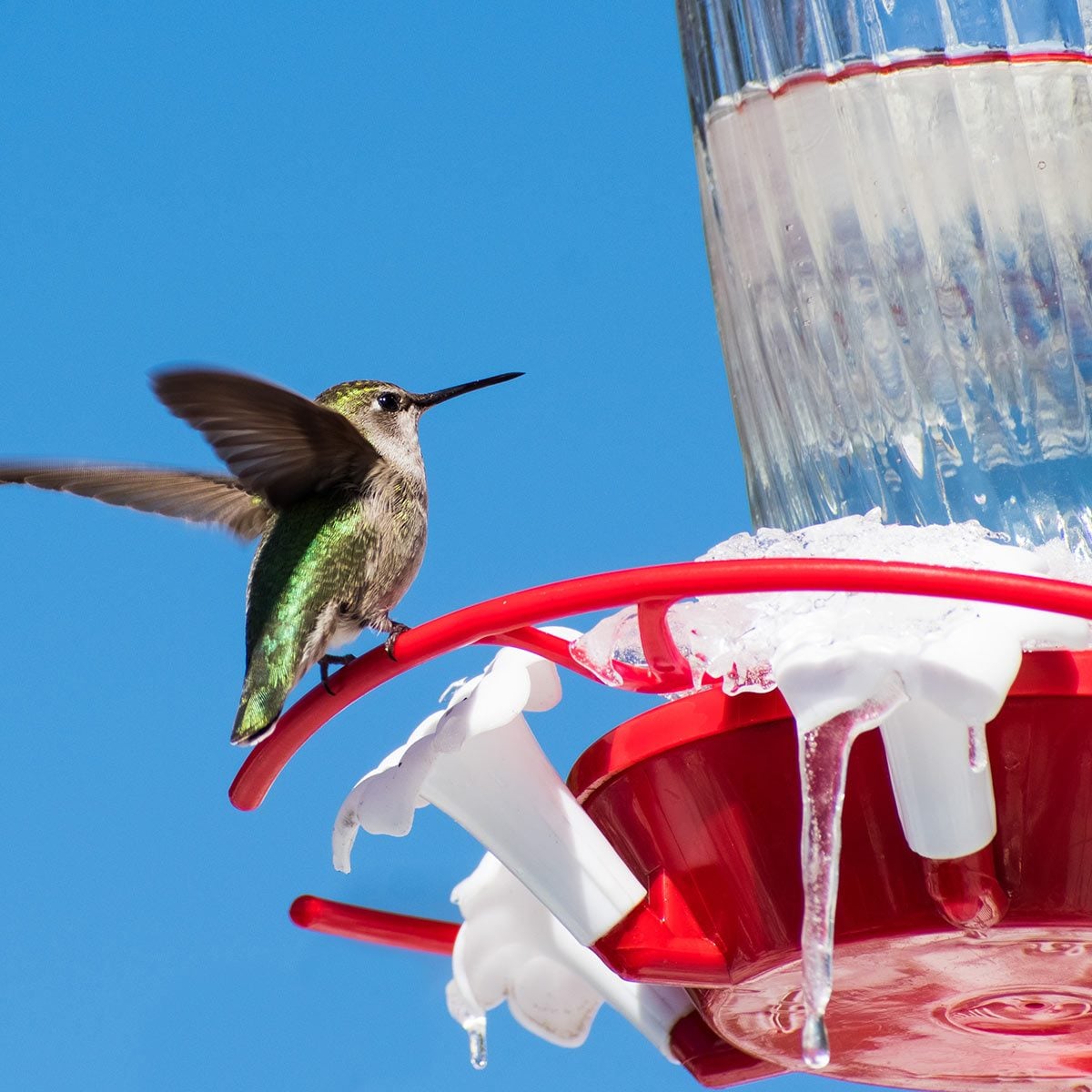
One day your backyard feeder sounds like a tiny airport, complete with territorial arguments and wings moving too fast for the human eye. Then autumn arrives, the flowers fade, and the hummingbirds seem to vanish. So, where do hummingbirds go in the winter?
Most hummingbirds that breed in the United States and Canada migrate south to Mexico or Central America. However, the answer varies by species and location. Some travel thousands of miles, some make shorter seasonal movements, and a few remain in parts of the United States throughout winter. These birds may weigh about as much as a penny, but their travel plans would exhaust a touring rock band.
The Quick Answer: Where Do Hummingbirds Spend the Winter?
Most migratory hummingbirds spend winter in Mexico, with some continuing into Guatemala, Belize, Honduras, Costa Rica, Panama, and other parts of Central America. Their winter habitat may include tropical forests, mountain woodlands, shrubby clearings, gardens, and areas where nectar-producing flowers and insects remain available.
Ruby-throated Hummingbirds from eastern North America generally winter from southern Mexico through Central America. Rufous, Calliope, Black-chinned, Broad-tailed, and several other western species primarily winter in Mexico. Meanwhile, Anna’s Hummingbirds are year-round residents across much of the Pacific Coast, including California and parts of Oregon, Washington, British Columbia, and the Southwest.
A small but increasingly noticeable number of hummingbirds also spend winter along the Gulf Coast and in parts of the Southeast. These winter visitors may include Rufous, Black-chinned, Ruby-throated, Allen’s, Calliope, and Buff-bellied Hummingbirds. A hummingbird seen in Louisiana or Florida in January is not necessarily lost, although identifying it may require more than squinting through the kitchen window.
Do Hummingbirds Migrate or Hibernate?
Hummingbirds migrate; they do not hibernate for the entire winter. A bird that disappears from a northern yard has probably headed south rather than crawled into a miniature sleeping bag behind the garage.
However, hummingbirds can enter a temporary energy-saving state called torpor. During torpor, a hummingbird’s body temperature falls, and its breathing, heart rate, and metabolism slow dramatically. This usually happens overnight, particularly during cold weather or when food is limited.
Torpor is more like a nightly emergency power mode than true seasonal hibernation. By reducing energy use while it cannot feed, the bird can survive cold nights that would otherwise burn through its limited reserves.
What triggers hummingbird migration?
Migration is influenced by seasonal changes in daylight, internal biological rhythms, food availability, weather, and the bird’s physical condition. A declining number of flowers may encourage departure, but hummingbirds do not simply wait until the neighborhood nectar supply is empty.
Each species follows an inherited seasonal schedule. Even young hummingbirds making their first fall migration can travel without following their parents. Many migrate alone, stopping frequently to feed and rebuild fat reserves.
Where Different Hummingbird Species Go in Winter
Ruby-throated Hummingbirds
The Ruby-throated Hummingbird is the familiar summer hummingbird across most of the eastern United States and southern Canada. Nearly all leave their breeding range in fall and spend winter in southern Mexico or Central America, with some reaching Costa Rica or Panama.
To get there, Ruby-throated Hummingbirds may follow the Gulf Coast through Texas and Mexico. Others make a remarkable nonstop flight across the Gulf of Mexico. The overwater route can cover approximately 500 miles and take roughly 18 to 22 hours, depending on wind and weather.
Before attempting the crossing, a bird may substantially increase its body mass by feeding intensely. In human terms, this is less like packing snacks for a road trip and more like turning your own waistline into the gas tank.
A limited number of Ruby-throated Hummingbirds remain in southern Florida, along the Gulf Coast, or near the southern Atlantic Coast during winter. Many of these birds probably bred farther north and chose a shorter migration.
Rufous Hummingbirds
Rufous Hummingbirds undertake one of the most impressive migrations relative to body size. Some breed as far north as southeastern Alaska and northwestern Canada, then travel nearly 4,000 miles to wintering areas in Mexico.
Their annual route often forms a broad loop. In spring, they move north along the Pacific Coast, following early blooms. In late summer and fall, many travel south through mountain meadows and the Rocky Mountains, where late-season flowers provide fuel.
Although Mexico is the primary winter destination, some Rufous Hummingbirds head southeast and spend winter along the Gulf Coast or elsewhere in the southeastern United States. This is why a rusty-colored hummingbird may suddenly appear at an Alabama or Louisiana feeder long after local Ruby-throats have departed.
Black-chinned Hummingbirds
Black-chinned Hummingbirds breed across much of the western United States. Most winter in western Mexico, but some now migrate through or remain along the Gulf Coast. Their flexible habitat preferences allow them to use river corridors, desert communities, urban gardens, and wooded areas.
Calliope Hummingbirds
The Calliope Hummingbird is North America’s smallest hummingbird and one of the world’s smallest long-distance migrants. Its annual oval-shaped route may total about 5,000 miles. Calliopes usually travel north near the Pacific Coast in spring and return south through the interior West and Rocky Mountains before wintering in Mexico.
Broad-tailed Hummingbirds
Broad-tailed Hummingbirds breed in high-elevation forests and mountain meadows across the western United States. Most migrate to Mexico for winter. Their seasonal schedule is closely connected to the brief mountain flowering season, so they cannot afford to dawdle when autumn begins closing the floral buffet.
Allen’s Hummingbirds
Migratory Allen’s Hummingbirds that breed along the coast from southern Oregon into California generally winter in central Mexico. However, populations around Los Angeles and the Channel Islands are largely year-round residents.
Anna’s Hummingbirds
Anna’s Hummingbirds are the best-known winter residents in the western United States. They commonly remain along the Pacific Coast throughout the year and have expanded northward in recent decades. Gardens, ornamental flowers, feeders, and relatively mild urban climates may help support this expanded range.
Some Anna’s Hummingbirds make local or elevational movements rather than long international migrations. They may shift to areas with better flowers, warmer microclimates, or more reliable food, but they do not all pack up for Mexico when the first decorative pumpkin appears on a porch.
Where Hummingbirds Go in Winter by U.S. Region
Eastern and Midwestern United States
Most Ruby-throated Hummingbirds leave the Northeast, Midwest, and interior Southeast between late summer and fall. Their general destination is Mexico or Central America. Migration timing varies, with adult males often departing before females and juveniles.
Pacific Coast
Anna’s Hummingbirds may remain all winter from California north into parts of Oregon, Washington, and British Columbia. Allen’s Hummingbirds may also remain in portions of Southern California, while migratory individuals travel to Mexico.
Southwestern United States
The Southwest can host hummingbirds during every month of the year, although the species mix changes seasonally. Anna’s and Costa’s Hummingbirds may remain in suitable areas, while several migratory species move into Mexico.
Gulf Coast and Southeast
Coastal Texas, Louisiana, Mississippi, Alabama, and Florida can support scattered winter hummingbirds. Some are expected regional residents, while others are western species that have traveled southeast. Because females and immature hummingbirds can look frustratingly similar, experienced banders or birders may be needed for a reliable identification.
How Do Hummingbirds Survive Such Long Winter Journeys?
They build substantial fat reserves
Before migration, hummingbirds enter a period of intense feeding. Nectar supplies rapidly usable carbohydrates, while insects contribute protein and other nutrients. A bird preparing for a demanding flight may gain a large percentage of its usual body weight.
They follow natural nectar corridors
Migration routes are shaped partly by seasonal waves of blooming plants. Along the Pacific Coast, mountain ranges, desert washes, and Gulf Coast, patches of flowers function like linked fueling stations. When habitat is lost or flowering schedules shift, those stations may become farther apart.
They use favorable winds
Hummingbirds can adjust their travel to take advantage of helpful winds. A tailwind saves valuable energy, particularly before an open-water crossing. Strong headwinds or storms can delay migration and force birds to stop in unexpected places.
They rest more than people assume
Although hummingbirds are famous for frantic hovering, they spend plenty of time perched. Hovering is energetically expensive, so resting between feeding sessions helps conserve fuel. Even the world’s tiniest frequent flyers understand the value of sitting down occasionally.
Should You Leave Hummingbird Feeders Up in Winter?
Leaving a feeder outside will not prevent a healthy migratory hummingbird from leaving. Migration is controlled by powerful seasonal and biological cues, not by one convenient container of sugar water.
In northern regions, keeping a feeder up for at least two weeks after the last regular sighting can help late migrants. Some birders leave one feeder available even longer in case an unusual western hummingbird appears.
In areas with year-round hummingbirds, winter feeders can provide useful supplemental energy. They are especially valuable during freezing weather, prolonged rain, or seasonal gaps in flowering. A feeder is not a complete diet, however. Hummingbirds still catch insects and visit natural nectar sources.
Use the correct hummingbird nectar recipe
Mix one part plain white granulated sugar with four parts water. Stir until the sugar dissolves, allow the solution to cool when heated, and fill a clean feeder.
Do not add red dye. Avoid honey, brown sugar, raw sugar, corn syrup, artificial sweeteners, and other creative kitchen experiments. Hummingbirds need a safe energy source, not a tasting menu.
Keep winter feeders clean and usable
Replace nectar and clean the feeder regularly. Smithsonian guidance recommends changing the solution about every other day, while other wildlife authorities advise adjusting the schedule according to temperature and spoilage risk. Warm weather requires especially frequent cleaning because sugar water can ferment or develop mold quickly.
During freezing weather, rotate two feeders, bringing one indoors to thaw while the other remains outside. Small feeder heaters designed for hummingbird feeders may also help. Never use unsafe electrical arrangements, open flames, or high-powered heat lamps near the feeder.
When Do Hummingbirds Leave and Return?
Fall migration can begin surprisingly early. Adult male Rufous Hummingbirds may start moving south in July, while many Ruby-throated Hummingbirds leave northern areas during August and September. Females and young birds often follow later.
Along the Gulf Coast, southbound migration can continue well into October. Individual birds may appear later due to weather, age, health, species-specific routes, or a decision to winter in the region.
Northbound Ruby-throated Hummingbirds may reach the Gulf Coast from late February into March. They spread northward through April and May. Western species follow their own schedules based on latitude, elevation, snowmelt, and flower availability.
Are Hummingbird Winter Ranges Changing?
Bird observations suggest that some hummingbird species are spending winter in the United States more frequently than they did in the past. Warmer temperatures, urban gardens, feeders, ornamental plants, and changes in natural flowering patterns may all contribute.
That does not mean every late hummingbird is benefiting from climate change or that feeders alone are rewriting migration. Bird distribution is complicated, and greater public participation in bird reporting also helps scientists detect visitors that might once have gone unnoticed.
Changing climate conditions can create both opportunities and risks. A warmer region may become suitable for winter survival, but extreme freezes can still occur. Shifts in flowering times may also separate migrating birds from the nectar sources they historically encountered along their routes.
Frequently Asked Questions About Hummingbirds in Winter
Do all hummingbirds fly south for winter?
No. Most species that breed in northern North America migrate south, but Anna’s Hummingbirds and some Allen’s, Costa’s, Buff-bellied, and other hummingbirds may remain in suitable parts of the United States.
Can hummingbirds survive snow?
Yes, some can survive brief periods of snow and freezing weather by finding reliable food, sheltering from wind, and using torpor at night. Extended severe weather is more challenging, particularly when nectar becomes inaccessible.
Do hummingbirds migrate together?
Hummingbirds generally migrate alone rather than in organized flocks. Multiple birds may gather where food is abundant, but that does not mean they are traveling as a coordinated group.
Will a feeder stop hummingbirds from migrating?
No. A maintained feeder supports birds that are preparing to migrate, passing through, or naturally spending winter nearby. It does not cancel their instinctive migration schedule.
What should I do if I see a hummingbird in December?
Keep a clean feeder available, take clear photographs when possible, and report the observation through a recognized community-science platform or local birding organization. Do not attempt to capture the bird unless a licensed wildlife rehabilitator provides instructions.
A Backyard Birder’s Winter Hummingbird Experience
The following field-style account combines common, realistic experiences reported by backyard birders in regions where winter hummingbirds occur.
The first surprise often arrives after the feeder has supposedly closed for the season. The garden is brown, the patio chairs are stacked, and the last local hummingbird was seen weeks ago. Then, on a cold November morning, a sharp metallic chatter comes from the bare branches. A tiny bird darts toward the feeder, hovers for a second, and drinks as though it has been reviewing the restaurant online for several days.
The immediate reaction is usually excitement followed by mild panic. Should the feeder still be outside? Is the bird stranded? Has someone accidentally convinced it to skip migration?
The best response is calm observation. The feeder is washed, fresh nectar is prepared at the standard one-to-four ratio, and the bird is watched from indoors. Its plumage may look greenish above and pale below, with rusty coloring near the tail. That combination suggests a possible Rufous or Allen’s Hummingbird, but females and young birds can be difficult to separate without expert study.
Over the next few days, a routine develops. The hummingbird appears shortly after sunrise, feeds repeatedly, and then disappears into nearby trees. It returns during the warmest part of the afternoon and again before dusk. Between visits, it is probably catching tiny insects and resting in protected vegetation rather than hovering nonstop like a windup toy with poor financial planning.
When the first freeze is forecast, the practical side of winter hummingbird care becomes obvious. Sugar water can freeze, especially in exposed feeders. One feeder is brought indoors overnight while another is prepared for the morning. At sunrise, fresh liquid nectar goes outside before the bird begins its first feeding rounds.
The hummingbird arrives looking puffier than it did in mild weather. Fluffed feathers trap insulating air, making the bird appear larger. It feeds quickly and perches in a sunny, sheltered spot. After especially cold nights, its first visit may occur later than expected because a bird emerging from torpor needs time to warm its body and return to normal activity.
Keeping notes adds another layer to the experience. The observer records arrival times, temperatures, feeding frequency, weather, and visible markings. Photographs capture the shape of the tail and the distribution of rusty feathers. These details can be shared with an experienced birder, hummingbird bander, or local ornithological group.
The greatest lesson is that winter hummingbird care involves more cleaning than cuddling. The bird remains wild. It does not need to be brought indoors, handled, or “rescued” simply because the temperature drops. What it may benefit from is a dependable feeder, natural shelter, pesticide-free vegetation, and a human who remembers that sugar water does not stay fresh forever.
Sometimes the visitor remains for weeks. Sometimes it vanishes after two mornings, continuing toward a winter range farther south. That disappearance can feel disappointing, but it is usually good news. Migration is supposed to continue.
Then spring arrives. Native flowers open, insects become abundant, and the familiar buzz returns to the yard. Whether the new arrival is the same individual cannot usually be known without banding data. Still, the experience changes how a person sees the empty winter garden. It is no longer truly empty. It is part of a continental travel network, one rest stop in a journey connecting northern forests, suburban flower beds, Gulf Coast woodlands, Mexican mountains, and Central American tropics.
That is perhaps the most memorable part of watching hummingbirds through the seasons: a feeder may hang outside one ordinary kitchen window, but the bird visiting it belongs to a much larger map.
Conclusion
So, where do hummingbirds go in the winter? Most North American migrants travel to Mexico and Central America, where flowers, insects, and milder conditions help sustain them until spring. Ruby-throated Hummingbirds may cross or circle the Gulf of Mexico, while Rufous and Calliope Hummingbirds complete enormous looping migrations across western North America.
Not every hummingbird leaves the United States. Anna’s Hummingbirds remain along much of the Pacific Coast, and several species may winter in the Southwest, Florida, Texas, or along the Gulf Coast. Clean feeders can safely support these residents and late migrants without preventing them from continuing their journeys.
The next time your hummingbirds disappear in fall, picture them not as gone, but as travelingfollowing flowers, favorable winds, and ancient instincts toward another season.