Ventriloquists are one of those entertainment species that should have gone extinct somewhere between vaudeville curtains, rotary phones, and dinner jackets with mysterious satin lapels. And yet, here they are: on talent shows, in Las Vegas theaters, across TikTok feeds, at comedy clubs, in museums, and occasionally in our nightmares when a wooden face appears to know too much.
The funny thing is that ventriloquism has survived because it keeps doing something culture cannot resist: making the impossible feel personal. A performer sits beside a puppet, barely moves their lips, and suddenly an object has timing, opinions, attitude, and possibly a better career plan than the human holding it. That mixture of skill, comedy, illusion, and emotional weirdness gives ventriloquists a strange advantage in a world overflowing with digital entertainment.
So yes, ventriloquists are here to stay. Whether we like it or not, the dummy is not done talking.
The Oldest New Trick in Show Business
Ventriloquism is often treated like a dusty novelty act, but its roots reach deep into performance history. Before it became associated with comedy clubs and talking dolls, the ability to “throw” the voice was linked to mystery, spirituality, and stage illusion. Over time, it moved from eerie demonstrations into popular entertainment, especially in Europe and the United States, where audiences embraced the ventriloquist as a variety-show staple.
By the 18th and 19th centuries, ventriloquism had become a recognizable stage craft. Later, vaudeville gave it a perfect home. The format rewarded quick jokes, memorable characters, physical comedy, and acts that could grab attention within seconds. A ventriloquist with a sharp puppet could do all of that without needing a full set, a band, or a collapsing pianoalthough one assumes someone tried the piano.
The art form’s real American breakthrough came with performers like Edgar Bergen and his famous character Charlie McCarthy. Bergen’s success on radio remains one of the great paradoxes in entertainment history: a ventriloquist became a star on a medium where nobody could see whether his lips moved. That sounds like selling sunglasses in a cave, but it worked because the real product was character comedy. Charlie McCarthy was not just a dummy; he was a personality.
Why the Brain Falls for the Trick
The secret behind ventriloquism is not only in the mouth. It is also in the audience’s brain, which is surprisingly eager to help with the scam. When people see a puppet’s mouth moving while hearing a voice, the brain tends to connect the sound with the visible movement. This is known as the ventriloquism effect, a real audio-visual illusion studied by researchers interested in how humans combine sight and sound.
In other words, the ventriloquist does not have to perfectly relocate sound like a wizard with a union card. The performer creates enough visual and vocal evidence for the audience’s perception to finish the job. The puppet turns its head, blinks, snaps back with a punchline, and our brain says, “Fine, the wooden raccoon is talking. I have emails to worry about.”
This is one reason ventriloquism still works in the age of CGI. High-tech effects can create dragons, alien planets, and superheroes who survive things that would inconvenience a toaster. But ventriloquism happens live, in front of us, with obvious limitations. The charm is that we can see the trick and still enjoy being fooled.
The Puppet Is the Perfect Comedy Weapon
Comedy thrives on contrast, and ventriloquism is built from contrast. There is a human and a puppet. A straight man and a troublemaker. A calm performer and a tiny chaos goblin with eyebrows. This creates an instant comic structure that audiences understand before the first joke lands.
The puppet can say what the performer cannotor at least what would sound harsher coming directly from the performer. It can be childish, cranky, vain, clueless, flirtatious, grumpy, dramatic, or aggressively confident despite having no lower body. The dummy becomes a mask, and masks have always been powerful in comedy.
That setup also lets ventriloquists perform dialogue without needing another actor. A skilled performer can create rhythm, conflict, interruption, misunderstanding, and emotional reversal alone. It is stand-up comedy, acting, puppetry, and voice performance rolled into one compact package. Add singing, impressions, or improv, and the act becomes even harder to dismiss.
Modern Ventriloquists Keep Proving the Market Exists
Anyone who claims ventriloquism is dead has not been paying attention to television competitions, touring comedy, or Las Vegas. Terry Fator won national attention on “America’s Got Talent” in 2007 and turned his combination of ventriloquism, singing, impressions, and character comedy into a long-running entertainment career. Darci Lynne brought youthful energy and strong vocals to the craft when she won the same show a decade later. Paul Zerdin also showed that ventriloquism could still capture mainstream talent-show audiences.
Then there is Jeff Dunham, whose touring success has made him one of the most commercially visible ventriloquists of the modern era. Whether viewers love his style or debate it, the business lesson is obvious: audiences will still buy tickets to watch a performer argue with a suitcase full of personalities.
This matters for SEO and culture alike because the phrase “ventriloquists are here to stay” is not just a nostalgic claim. It is supported by current entertainment patterns. Ventriloquists continue to appear on major stages, stream comedy specials, build social media followings, and tour internationally. The puppet may be old-school, but the distribution model is extremely modern.
Short-Form Video Accidentally Rebuilt the Variety Show
For decades, people said variety entertainment was dead. Then the internet invented a tiny slot machine called the social feed, and suddenly jugglers, magicians, singers, dancers, comedians, impressionists, and ventriloquists were back in the same endless lineup. TikTok, Instagram Reels, YouTube Shorts, and similar platforms reward acts that can communicate visually in three seconds. Ventriloquism is built for that.
A puppet’s face is a scroll-stopper. A talking object creates immediate curiosity. Viewers do not need a long setup to understand the premise: that thing should not be talking, but it is, and now it has opinions about dating, grocery prices, or the emotional burden of living in a trunk.
Short-form platforms also allow younger ventriloquists to test characters quickly. Instead of waiting years for a television booking, performers can upload clips, study reactions, refine voices, and build niche audiences. The result is a new generation that treats ventriloquism less like a museum piece and more like a flexible comedy format.
Why the Creep Factor Actually Helps
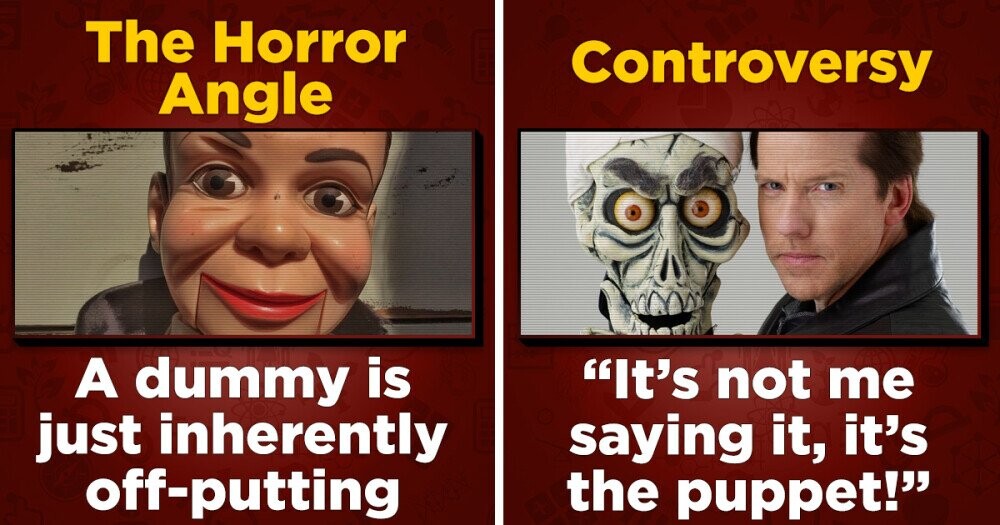
Let us address the tiny wooden elephant in the room: some people find ventriloquist dummies creepy. Their glassy eyes, frozen smiles, and suspiciously patient posture can trigger the same discomfort people feel around almost-human dolls, mannequins, or robots. The uncanny quality is real, and performers know it.
But creepiness is not always a disadvantage. In entertainment, discomfort can become fascination. Horror films have used dolls and dummies for years because audiences are drawn to objects that seem almost alive. Ventriloquism plays with that same tension but usually redirects it into humor. The puppet looks unsettling, then complains about airport food, and the fear becomes laughter.
That emotional switch is powerful. Ventriloquists do not merely avoid the uncanny valley; they build a little comedy condo inside it. The audience may begin by thinking, “That dummy is staring into my financial future,” but a good act turns unease into delight.
Ventriloquism Is Handmade in a Digital World
Another reason ventriloquists endure is that the craft feels handmade. The audience can sense the training behind the trick: lip control, breath support, timing, puppet manipulation, voice separation, character writing, and improvisation. In an era when many performances are filtered, edited, auto-tuned, or algorithmically polished, ventriloquism offers visible human effort.
That does not mean it rejects technology. Modern ventriloquists use microphones, lighting, video clips, social media, streaming platforms, and sometimes custom-built figures with sophisticated mechanics. But the core effect remains beautifully analog. A person gives life to an object through skill. That simplicity is refreshing.
The best ventriloquist acts also remind audiences that imagination is a group activity. The performer starts the illusion, but the crowd completes it. Everyone agrees, temporarily, that the puppet has agency. It is theater in miniature, with a lap-sized co-star who never demands a dressing room but may require a comb.
The Museum Factor: A Culture With Memory
Ventriloquism has something many novelty acts do not: an organized cultural memory. Vent Haven Museum in Kentucky preserves figures, photographs, and memorabilia connected to the art form. Its existence proves that ventriloquism is not only a performance technique but also a collectible, historical, and artistic tradition.
That matters because art forms survive when they have communities. Ventriloquists learn from older performers, attend conventions, study recordings, exchange techniques, and preserve classic figures. The craft is passed down through books, videos, workshops, clubs, and now online tutorials. A beginner today can study the old masters, watch contemporary performers, and practice in front of a phone camera before ever stepping onstage.
This continuity gives ventriloquism resilience. Even when the mainstream looks away, the community keeps the art alive until the next wave of public interest arrives. The dummy waits. Patiently. Too patiently.
Why Audiences Still Want Talking Puppets
At its heart, ventriloquism survives because audiences love characters. We love sidekicks, mascots, animated objects, alter egos, and fictional personalities who say the things we secretly think. A ventriloquist dummy is all of those at once.
The puppet can be a childlike truth-teller, a sarcastic elder, a diva, a monster, a bird, a dog, a jalapeño, or something that looks like it escaped from a civic theater basement. Its artificiality is not a flaw. It is the point. Because the puppet is clearly not real, it has permission to be more direct, more ridiculous, and often more emotionally honest than a normal human character.
For families, ventriloquism can feel accessible and clean without being boring. For adults, it can be clever, satirical, strange, or surprisingly sophisticated. For performers, it offers endless room for invention. A single new voice or puppet design can create an entire world.
Challenges Facing Ventriloquists Today
Of course, ventriloquism is not guaranteed an easy future. The art form carries baggage. Some older routines relied on stereotypes or broad characterizations that modern audiences may reject. A performer who wants longevity has to update the writing, deepen the characters, and avoid treating the puppet as a license for lazy jokes.
There is also the problem of novelty. Once the audience accepts that the puppet talks, the act still needs strong material. Technical skill may earn applause, but jokes, story, personality, and timing earn repeat fans. The best modern ventriloquists understand that the dummy is not the act. The relationship is the act.
That is why the future belongs to performers who combine classic technique with fresh writing. The mouth trick gets attention. The character keeps it.
Experiences That Explain Why Ventriloquists Still Work
Anyone who has watched a strong ventriloquist perform live understands that the experience is different from seeing a clip online. In person, the illusion becomes social. You are not only watching the puppet; you are watching the audience watch the puppet. People lean forward, laugh at interruptions, and sometimes answer the dummy as if it were a real cast member. That shared suspension of disbelief creates a playful atmosphere that is hard to duplicate with ordinary stand-up.
At a family show, children often accept the puppet immediately. They do not waste time debating technique. If the turtle is talking, the turtle is talking. Adults, meanwhile, may begin by analyzing the performer’s lips, then slowly give up and enjoy the scene. That surrender is part of the fun. The audience knows it is being fooled, but it appreciates the craftsmanship behind the fooling.
In comedy clubs, ventriloquism can create surprise because audiences may arrive with low expectations. Some expect corny jokes and dusty stage patter. Then a skilled performer delivers sharp timing, fast character switches, or a musical number with a puppet singing better than most people in karaoke bars. The room changes. Skepticism becomes respect, and respect becomes laughter.
There is also a unique emotional effect when a puppet becomes vulnerable. A dummy can admit fear, jealousy, loneliness, or embarrassment in a way that feels safe because the moment is buffered by comedy. The audience laughs, but it also recognizes something human. That is the strange magic of ventriloquism: the least human figure onstage can sometimes say the most human thing.
Behind the scenes, the experience of learning ventriloquism is humbling. Beginners quickly discover that “not moving your lips” is only the entry-level headache. They must learn substitute sounds, vocal placement, puppet focus, eye direction, hand control, joke structure, and timing. A puppet that merely flaps its mouth is not alive. It needs reactions, pauses, posture, mood, and intention. The performer has to act twice at the same time while pretending that half the conversation is out of their control.
This difficulty is exactly why the craft survives. When something is hard to do well, audiences notice. In a digital culture full of shortcuts, ventriloquism still requires practice. It rewards patience. It allows awkwardness to become art. It turns a case, a figure, and a voice into a full performance.
So, whether the viewer is delighted, confused, mildly creeped out, or checking to make sure the puppet did not blink first, the experience remains memorable. Ventriloquists endure because they create a tiny impossible relationship right in front of us. And as long as people enjoy jokes, illusions, characters, and the occasional wooden side-eye, ventriloquists will keep finding a stage.
Conclusion: The Dummy Gets the Last Word
Ventriloquists are here to stay because the art form is older, smarter, and more adaptable than its critics assume. It has moved from mystery to vaudeville, from radio to television, from Las Vegas to talent competitions, and from theater seats to phone screens. Each time the culture changes, ventriloquism finds a new way to sit beside it and talk without moving its lips.
The appeal is not only nostalgia. It is psychology, comedy, craftsmanship, and character design working together. A good ventriloquist does not simply make a puppet speak. They make an audience agree to believe, laugh, and sometimes feel a little uneasy in the best possible way.
That is why ventriloquism will not disappear. It may look old-fashioned. It may make some people nervous. It may involve more tiny bow ties than strictly necessary. But as long as humans enjoy being fooled by something they can see with their own eyes, the ventriloquist and the dummy will remain a stubborn, funny, oddly lovable team.