Note: This article is written for web publishing and is based on publicly available information from official music-industry updates, entertainment interviews, chart coverage, and artist-profile references.
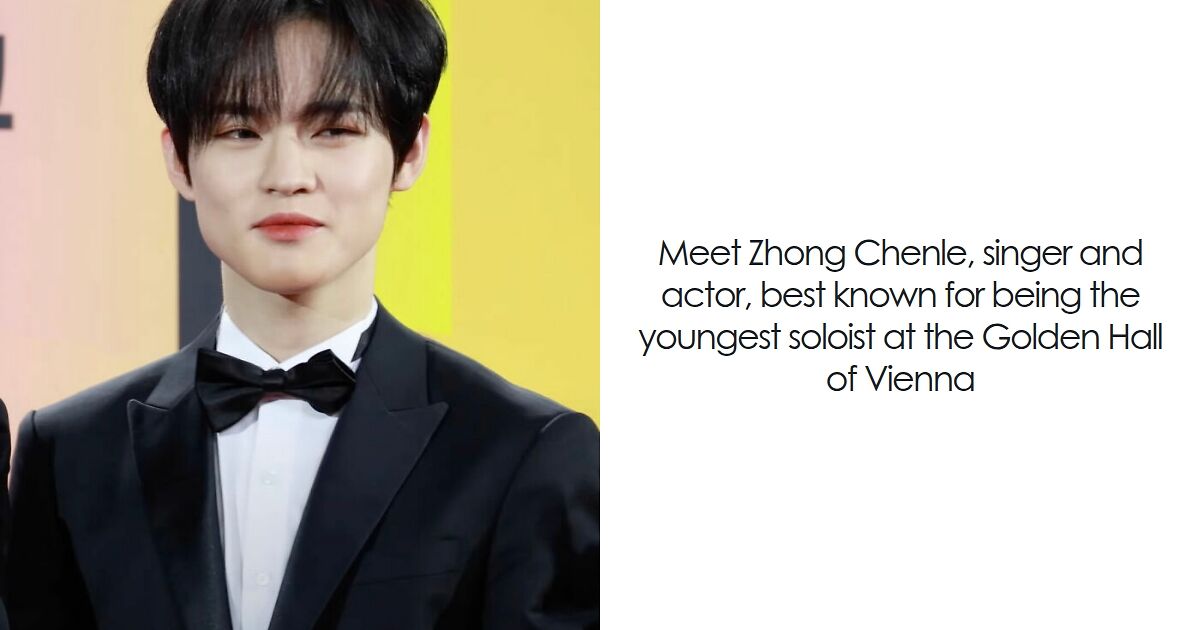
Zhong Chenle, known professionally as Chenle, is one of those performers who makes the phrase “born to sing” feel less like a dramatic fan slogan and more like a practical résumé line. Born in Shanghai, China, on November 22, 2001, Chenle began performing long before most people figure out how to keep a houseplant alive. He first gained attention as a child singer, later moved into the K-pop world through SM Entertainment, and became widely recognized as a main vocalist of NCT Dream, one of the most successful units under the broader NCT system.
Chenle’s career is fascinating because it does not follow the usual idol-origin story. He was not simply discovered, trained for years, and introduced to the public as a blank slate. By the time he joined SM Entertainment, he already had stage experience, solo releases, television appearances, and the kind of vocal confidence that usually comes from many years of performing in front of real audiences. In other words, Chenle entered K-pop not as a beginner, but as a young artist with a history.
Quick Facts About Chenle
- Full name: Zhong Chenle
- Stage name: Chenle
- Birthdate: November 22, 2001
- Birthplace: Shanghai, China
- Nationality: Chinese
- Known for: Main vocalist of NCT Dream, member of NCT and NCT U
- Agency: SM Entertainment
- Notable strengths: Clear high notes, emotional delivery, bright tone, multilingual performance ability
Early Life In Shanghai
Chenle grew up in Shanghai, a city with a deep cultural life and a fast-moving entertainment scene. From a young age, he showed strong musical ability, especially in singing. While many future idols spend childhood preparing quietly in academies, Chenle’s early development was much more public. He appeared on Chinese television programs, performed on stages in China and abroad, and built a reputation as a talented child vocalist.
One of the most frequently mentioned moments from his pre-debut years is his performance at the Golden Hall of Vienna, where he was recognized as a remarkably young solo performer. That story has followed him for good reason: it shows that Chenle was not just cute-kid talented. He had the discipline, pitch control, and stage courage to stand in serious musical spaces before he was old enough to legally panic about taxes.
Before joining SM Entertainment, Chenle also released music in China and held solo activities. This matters because his musical foundation did not begin with K-pop choreography or idol branding. His roots were closer to traditional vocal performance, children’s music, Mandopop, and live singing. Later, that background would help shape his role in NCT Dream, where his clean tone and strong upper register became essential pieces of the group’s sound.
Joining SM Entertainment And Moving Toward K-Pop
Chenle joined SM Entertainment in 2016, reportedly training for a relatively short period before debuting. That short training timeline is one of the reasons fans often describe him as unusually prepared. K-pop training is famously intense, covering dance, vocals, language, stage presence, media skills, and the mysterious art of looking calm while cameras appear from every angle. Chenle had to adjust quickly, but his prior stage experience gave him a valuable advantage.
The transition was still significant. Moving from China to South Korea meant learning a new working environment, adapting to Korean-language performance, and joining a group concept built around youth, energy, and growth. Chenle was only fourteen when he debuted with NCT Dream, which makes his early K-pop years even more impressive. At an age when many teenagers are still negotiating bedtime rules, he was preparing music-show stages, recording songs, and becoming part of a major international entertainment project.
Debut With NCT Dream
Chenle debuted with NCT Dream in August 2016 through the single “Chewing Gum.” The original lineup included Mark, Renjun, Jeno, Haechan, Jaemin, Chenle, and Jisung. At the time, NCT Dream was introduced as the youngest and most youthful unit of NCT, with a bright teen concept that leaned into school-age charm, playful visuals, and energetic choreography.
“Chewing Gum” was cheerful, colorful, and instantly memorable. It was also a surprisingly clear mission statement: NCT Dream would not simply copy the tougher image of many boy groups. Instead, the group started with a sound and image connected to youth, freshness, and optimism. Chenle’s voice fit that concept beautifully. His tone added brightness without becoming thin, and his lines often gave the music a clean lift.
As NCT Dream matured, so did Chenle’s role. He became more than the young vocalist with a dolphin-like laugh that fans lovingly quote. He developed into one of the group’s emotional anchors, especially in songs that require warmth, clarity, and control. Whether the track is playful, dramatic, sentimental, or polished for arena-sized stages, Chenle’s vocals help connect the song’s emotional center to the listener.
Vocal Style: Why Chenle Stands Out
Chenle’s voice is often described as bright, ringing, and emotionally direct. He is not the type of singer who needs to overdecorate every phrase. Instead, his strength lies in clean projection, stable pitch, and a tone that can cut through dense production. In K-pop, where songs can be layered with synths, harmonies, ad-libs, rap breaks, and enough sound effects to wake the neighbors, that clarity is a serious advantage.
His upper register is one of his signature tools. Chenle can deliver high notes with an open, youthful brightness, but he also knows how to soften his delivery when the song calls for tenderness. This flexibility is important in NCT Dream’s discography, which moves from bubblegum pop to hip-hop-influenced tracks, R&B, EDM, synth-pop, ballads, and moodier experimental material.
Another key part of Chenle’s appeal is his emotional honesty. He often sounds sincere rather than theatrical. That may seem like a small distinction, but it is a major reason listeners connect with his parts. In sentimental songs, his voice can feel intimate. In bigger choruses, it becomes expansive. In lighter tracks, it adds sparkle. Basically, Chenle’s vocal tone is like good lighting in a room: you might not always notice it first, but everything works better because it is there.
Major Career Highlights With NCT Dream
“My First And Last” And Early Recognition
After “Chewing Gum,” NCT Dream continued building momentum with releases such as “My First and Last” and “We Young.” These songs helped establish the group’s identity as a fresh, youthful act with strong performance skills. “My First and Last” became especially important because it helped NCT Dream earn early music-show recognition and showed that the unit had commercial potential beyond being a cute side project within NCT.
“Boom” And A More Mature Image
By 2019, NCT Dream had started shifting into a more mature sound. “Boom” marked a turning point in their image. The song was sleeker, darker, and more confident than their earliest work. For Chenle, this era showed that his voice could adapt to a sharper concept. He was no longer just contributing brightness; he was helping shape the group’s more sophisticated vocal color.
The Fixed Unit Change
NCT Dream was originally created with a graduation-style concept, meaning members would eventually leave the unit as they got older. Fans, however, grew deeply attached to the original lineup. In 2020, the group’s system was reorganized, allowing NCT Dream to continue as a fixed unit. This was a huge moment for the group and for Chenle’s long-term career. It meant the chemistry built from childhood and adolescence could continue developing instead of being interrupted by a concept that sounded tidy on paper but emotionally chaotic in real life.
“Hot Sauce” And The Million-Seller Era
In 2021, NCT Dream released their first full-length album, “Hot Sauce.” The album became a major commercial milestone and confirmed the group’s transition from promising young unit to top-tier K-pop act. “Hot Sauce” carried bright energy, bold production, and a confident adult edge while still preserving the group’s playful DNA.
For Chenle, the “Hot Sauce” era highlighted his importance in balancing NCT Dream’s sound. The album moved through different genres and textures, and his vocals helped connect the more experimental elements with melodic accessibility. He could sound powerful without overwhelming the arrangement and sweet without becoming overly soft. That balance is part of what makes him so useful in a group with multiple strong personalities and voices.
“Glitch Mode,” “ISTJ,” And Continued Growth
NCT Dream followed with more high-impact releases, including “Glitch Mode” in 2022 and “ISTJ” in 2023. These albums pushed the group deeper into a polished, high-concept sound. “Glitch Mode” leaned into futuristic energy, while “ISTJ” played with personality-type language and a bright, clever pop framework. Chenle’s vocal presence remained steady through these shifts, proving that he could support both energetic title tracks and smoother B-sides.
One particularly meaningful example is “Like We Just Met,” a song from the “ISTJ” album that included member participation in writing. Chenle was among the members credited, showing his growing involvement beyond simply recording assigned lines. That kind of participation matters for long-term artistry because it reflects a move from performer to contributor.
“Dream()scape,” “Dreamscape,” And Touring
In 2024, NCT Dream entered another major phase with the “Dream()scape” EP and The Dream Show 3: Dream()scape world tour. The project leaned into darker and more mature themes, showing how far the group had traveled from hoverboards and school uniforms. The tour also demonstrated the physical demands of their career. Chenle has spoken in interviews about stamina, vocal care, warm water, throat spray, and even the importance of humidifiers for protecting his voice while traveling. Glamorous? Yes. Also very “professional singer who knows dry hotel air is the true villain”? Absolutely.
The later “Dreamscape” album continued that evolution, expanding the group’s sound and including English-language material such as “Rains in Heaven.” For an artist like Chenle, who moves between Mandarin, Korean, and global pop contexts, these multilingual and international projects reinforce his role as a bridge between markets and audiences.
NCT U And Broader NCT Activities
Chenle is also associated with NCT U, the rotational unit within NCT that forms different member combinations depending on the song. His participation in NCT U allowed him to show another side of his artistry outside the familiar NCT Dream format. One of his notable NCT U-related moments came through “From Home,” a multilingual ballad that emphasized NCT’s international identity and highlighted vocalists from different backgrounds.
“From Home” is especially relevant to Chenle’s story because it reflects themes that fit his own career: movement across countries, language, identity, and belonging. His voice adds emotional sincerity to music that is not just about performance but also about connection. In a large group system like NCT, where concepts can become complicated enough to require a corkboard and red string, Chenle’s vocal identity remains easy to recognize.
Solo Work And “Lucid”
In 2025, Chenle returned to Chinese-language solo music with the special album “Lucid,” a project connected with Tencent Music Entertainment and SM Entertainment. The release was significant because it linked his current idol career with the Mandarin-language foundation of his childhood. Rather than feeling like a random side quest, “Lucid” made sense as a full-circle moment.
The project included Mandarin-language tracks such as “Lucid,” “Tear Bridge,” and “Cosmic Joke,” with “Tear Bridge” reinterpreting a well-known song connected to Taiwanese popular culture. The album allowed Chenle to emphasize emotional singing, Chinese-language expression, and a more personal artistic direction. For fans who knew his pre-debut history, it felt like a grown-up continuation of the child singer who once performed across China and abroad. For newer fans, it served as a reminder that Chenle’s career did not begin when he appeared in an NCT teaser. The archive is deep.
Public Personality And Fan Appeal
Chenle’s appeal is not limited to vocals. Fans often point to his humor, confidence, and blunt honesty as major parts of his charm. He has a famously bright laugh, a quick sense of humor, and a relaxed way of speaking that can make interviews feel less polished and more human. In a highly managed entertainment industry, that naturalness stands out.
He is also known for his love of basketball, especially his admiration for Stephen Curry and the Golden State Warriors. This sports enthusiasm has become part of his public image, giving fans another way to connect with him beyond music. Chenle’s basketball references are not just casual trivia; they reflect his competitive side, his love of movement, and his interest in performance outside the stage. Whether he is singing high notes or discussing a jump shot, the energy is unmistakably Chenle.
Another beloved fan topic is “Chenle ramen,” a spicy ramen variation associated with him that became popular among fans. It is a small but memorable example of how idol culture works: a singer mentions food, fans try it, the recipe spreads, and suddenly a bowl of noodles becomes part of an artist’s mythology. Somewhere, a marketing department is weeping with envy.
Why Chenle Matters In K-Pop
Chenle’s importance lies in the combination of early training, cross-cultural fluency, vocal reliability, and long-term growth. He represents a generation of K-pop artists whose careers are not limited by national borders. Born in China, active in South Korea, followed by fans around the world, and capable of performing in multiple languages, Chenle is part of the global structure that defines modern K-pop.
He also matters because his career shows the value of patience. Chenle did not become a fully formed adult artist overnight. Fans watched him grow from a teenage vocalist into a confident performer with stronger technique, clearer artistic instincts, and a more grounded public presence. That kind of visible growth is one of NCT Dream’s greatest strengths as a group, and Chenle is a central example of it.
Career Timeline
- 2001: Zhong Chenle is born in Shanghai, China.
- Childhood: Begins singing and performing publicly in China.
- Early 2010s: Releases music and appears on television as a young performer.
- 2016: Joins SM Entertainment and debuts with NCT Dream through “Chewing Gum.”
- 2017: NCT Dream gains stronger recognition with “My First and Last.”
- 2019: “Boom” marks a more mature turning point for NCT Dream.
- 2020: NCT Dream’s graduation system is reorganized, strengthening the group’s long-term future.
- 2021: “Hot Sauce” becomes a major commercial breakthrough.
- 2022: “Glitch Mode” continues the group’s million-seller momentum.
- 2023: “ISTJ” showcases NCT Dream’s polished pop identity and member growth.
- 2024: “Dream()scape,” “Rains in Heaven,” and major touring expand the group’s global reach.
- 2025: Chenle releases the Chinese-language special album “Lucid.”
Experiences And Lessons From Chenle’s Career Journey
One of the most interesting experiences connected to following Chenle’s career is watching how early talent becomes adult artistry. Many child performers are impressive because they are young. The audience sees a small person with a big voice and reacts with surprise. But the harder part comes later, when the performer has to grow beyond the “prodigy” label. Chenle’s journey shows that childhood success is not a finish line; it is only the opening chapter. The real test is whether the artist can keep improving after the novelty fades.
Chenle’s experience also reflects the emotional complexity of international entertainment careers. He left China as a teenager to work in South Korea, joining a group with members from different backgrounds and a system that was still experimenting with its own structure. That kind of environment requires adaptability. It is not just about singing well. It is about learning new professional expectations, communicating across languages, understanding different fan cultures, and staying consistent under pressure. Chenle’s calm confidence today makes more sense when viewed against that demanding background.
For fans, Chenle’s career offers the experience of watching long-term growth in real time. NCT Dream’s original concept was built around youth, which means the audience did not just witness musical comebacks; they witnessed adolescence, change, awkward phases, improved skills, and shifting identities. Chenle’s vocals became stronger, his stage presence became more relaxed, and his personality became increasingly visible. That kind of evolution creates loyalty because fans feel they have grown alongside the artist.
There is also a practical lesson in how Chenle treats performance as craft. His comments about taking care of his throat, managing stamina, drinking warm water, and using humidifiers may sound ordinary, but they reveal a professional mindset. Singing is not magic. It is physical work. The voice needs rest, hydration, technique, and care. Chenle’s attention to these details reminds aspiring singers that talent is only useful when maintained. Even the brightest vocal tone needs a water bottle and a sensible sleep schedule. Tragic, but true.
Another experience worth noting is how Chenle balances individuality with teamwork. In NCT Dream, he is part of a group identity, sharing lines, choreography, interviews, tours, and achievements. Yet he still maintains a distinct presence through his voice, humor, basketball obsession, Mandarin-language background, and solo work. That balance is difficult. Too much individuality can disrupt a group; too little can make an artist disappear into the formation. Chenle manages to stand out without pulling attention away from the team.
Finally, Chenle’s story is inspiring because it shows that a global career can still feel personal. His path stretches from Shanghai to Seoul, from children’s stages to arena tours, from Mandarin songs to K-pop hits, from “Chewing Gum” to “Lucid.” Yet the through-line remains simple: a singer with a bright voice kept choosing music, stage after stage. That is the heart of Chenle’s career. Not hype, not mystery, not a perfectly edited highlight reel, but steady growth powered by talent, discipline, and a personality loud enough to be heard even before the microphone turns on.
Conclusion
Chenle’s biography is more than a list of dates and releases. It is the story of a Shanghai-born child singer who grew into a key vocalist in one of K-pop’s most influential modern groups. From early solo performances to NCT Dream’s global success, from “Chewing Gum” to “Hot Sauce,” “ISTJ,” “Dreamscape,” and “Lucid,” Chenle has built a career defined by clarity, adaptability, and emotional vocal delivery.
His journey stands out because it connects two worlds: the early discipline of a young Mandopop performer and the high-speed evolution of K-pop. Chenle has already lived several career chapters, and he is still young enough that the next ones may be even more interesting. For fans, casual listeners, and anyone studying modern pop careers, Chenle is a strong example of how talent becomes longevity when it is paired with growth, teamwork, and a very serious commitment to vocal health. Respect the humidifier.