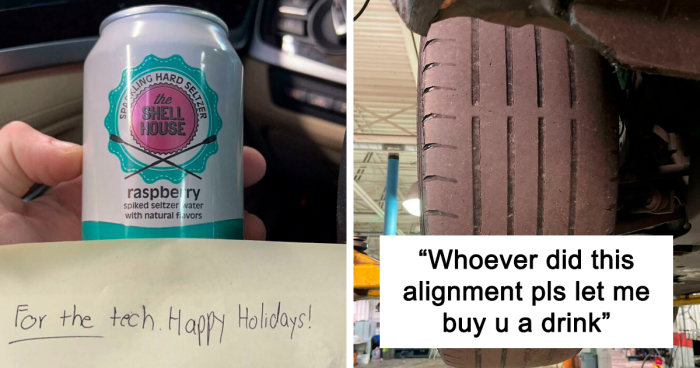
Every auto repair shop has two kinds of days: the regular kind, where someone needs an oil change, and the legendary kind, where a car rolls in sounding like a dishwasher full of forks and the mechanic simply stares into the middle distance. The online mechanic community often called “Just Rolled Into The Shop” exists for exactly those momentscars arriving with problems so strange, dangerous, creative, or confusing that even experienced technicians need a second cup of coffee before speaking.
These stories are funny, but they are also little rolling safety lessons. A bald tire is not just a “budget choice.” A brake rotor worn into a shiny dinner plate is not “probably fine.” A dashboard warning light covered with tape is not a repair; it is an automotive cry for help wearing a blindfold. Behind every shocking shop photo is the same message: cars usually warn us before they fail. We just have to listen before the vehicle starts composing its own funeral music.
This article looks at 30 unforgettable types of customer car conditions that leave mechanics speechless, why they matter, and what everyday drivers can learn from them.
Why Mechanics Get Speechless: It Is Not Just Dirt, It Is Danger
Mechanics see worn parts every day. They expect cracked belts, weak batteries, old fluids, bad sensors, and mystery rattles. What shocks them is neglect that turns a normal repair into a safety hazard. The difference between “needs service” and “how did this make it here?” is usually time. A squeak becomes a grind. A small leak becomes an overheated engine. A tire warning becomes exposed steel belts. A tiny dashboard icon becomes an expensive sentence that begins with “Well, the good news is…”
Reputable automotive safety guidance in the United States consistently emphasizes the basics: inspect tires, maintain proper fluid levels, pay attention to brakes, fix lights, follow the owner’s manual, and do not ignore warning signs. That advice may sound boring, but boring maintenance is how cars avoid becoming internet famous for the wrong reasons.
30 Times Mechanics Were Left Speechless
1. Tires So Bald They Looked Polished
One classic shop shocker is the tire with no tread left, shining like a bowling ball. Tires need tread to move water away from the contact patch. When the tread is gone, traction drops, stopping distance gets longer, and wet roads become a slip-and-slide with paperwork.
2. Brake Pads That Had Completely Vanished
Mechanics often see brake pads worn thin. What leaves them speechless is when the pad material is gone and the metal backing plate is grinding directly into the rotor. At that point, the driver is not braking so much as negotiating with physics.
3. Rotors That Looked Like Ancient Artifacts
A healthy brake rotor has a smooth surface. A neglected rotor may be grooved, cracked, rusted, or worn unevenly. When a rotor looks like it was recovered from a shipwreck, the car has been asking for brake service for a very long time.
4. The “Check Engine Light” Covered With Tape
Some drivers treat dashboard warning lights like annoying pop-up ads. Tape over the light may hide the glow, but it does not hide the problem. A check engine light can indicate anything from a loose gas cap to an engine misfire that can damage the catalytic converter.
5. A Tire Plugged in the Sidewall
Tread-area punctures can sometimes be repaired properly, but sidewall damage is different. The sidewall flexes constantly, and makeshift repairs there are risky. When mechanics see a sidewall stuffed with sealant, plugs, or heroic optimism, they know danger came dressed as thriftiness.
6. Duct Tape Holding the Bumper, Headlight, or Hood
Duct tape is excellent for boxes, temporary household fixes, and giving people false confidence. It is not a structural automotive repair. Loose body panels, lights, and hoods can become road hazards, especially at highway speeds.
7. Zip Ties Doing Suspension Work
Zip ties have their place in a shop, but that place is not replacing bolts, bushings, brackets, or suspension components. If something responsible for steering or stability is secured with plastic ties, the car should not be driven until a real repair happens.
8. A Cabin Air Filter That Became a Mouse Condo
Cabin air filters collect dust, pollen, leaves, and sometimes evidence that a small creature tried to start a family in the HVAC system. Beyond the “nope” factor, clogged filters reduce airflow and can create odors that make every drive smell like a basement with wheels.
9. An Engine Air Filter Packed Like a Garden Bed
The engine needs clean air for proper combustion. When the air filter is packed with dirt, leaves, insects, or debris, performance and fuel economy can suffer. Mechanics know a neglected filter is small in price but big in consequences.
10. Oil That Looked Like Chocolate Pudding
Milky oil can point to coolant contamination, often from a serious internal engine issue. Dark oil alone is not always a disaster, but sludge, glitter, or milkshake-textured oil can make a mechanic pause before delivering bad news.
11. Coolant Replaced With Plain Water Forever
Water can help in an emergency, but it is not a long-term substitute for proper coolant. Coolant helps control temperature, resist corrosion, and protect against freezing. A cooling system full of rusty water tells a mechanic the engine has been living on borrowed time.
12. A Serpentine Belt Cracked Like Dry Pasta
The serpentine belt runs important accessories such as the alternator, power steering pump, and air conditioning compressor. When it is cracked, frayed, or glazed, it can fail suddenly. The repair is usually far cheaper before the belt leaves the chat.
13. Battery Terminals Wearing a Fuzzy Science Project
Corrosion around battery terminals can cause starting problems and electrical issues. Mechanics can clean terminals, test the battery, and check the charging system. Drivers, meanwhile, should resist naming the corrosion and pretending it is a pet.
14. Missing Lug Nuts
Few things make a technician freeze faster than a wheel missing lug nuts. Wheels are not decorative suggestions; they need proper fastening. Missing or loose lug nuts can cause vibrations, damage studs, and in extreme cases, wheel separation.
15. A Spare Tire Older Than the Driver’s Playlist
Spare tires are often ignored until they are needed. A flat, cracked, or ancient spare can turn a minor inconvenience into a tow-truck appointment. Checking the spare, jack, and tools is not glamorous, but neither is standing on the shoulder regretting life choices.
16. Brake Fluid That Looked Like Old Coffee
Brake fluid can absorb moisture over time, which may reduce braking performance and contribute to corrosion. Many vehicles require periodic brake fluid service. If the fluid looks like it belongs in a haunted diner, it is time to check the maintenance schedule.
17. Transmission Fluid With a Burnt Smell
Transmission problems are often expensive, so burnt-smelling or contaminated fluid gets attention quickly. Delayed shifts, slipping, jerking, and strange noises should be inspected early. Waiting until the car refuses to move is rarely a money-saving strategy.
18. A Suspension Part Broken but “Still Driving Fine”
Customers sometimes say a car drives fine while a mechanic is staring at a broken control arm, loose ball joint, or damaged shock. Suspension problems can affect steering, tire wear, braking, and control. “Fine” is not a diagnostic category.
19. Tires Worn Unevenly Down to the Cords
Uneven tire wear often points to alignment, suspension, inflation, or rotation problems. If one edge is down to steel cords while the rest of the tire still has tread, the vehicle has been whispering “alignment” for months.
20. Exhaust Repairs Made With Household Materials
Mechanics have seen exhaust systems patched with cans, straps, wire, tape, and the kind of creativity that belongs in a craft fair, not under a car. Exhaust leaks can be noisy, illegal, and dangerous if fumes enter the cabin.
21. Wiper Blades Reduced to Metal Sticks
Wipers are cheap compared with the chaos of poor visibility in a storm. When the rubber is gone and the metal frame is scraping the windshield, the repair list may include both new wipers and a new appreciation for rain.
22. Headlights Aimed at the Moon
Bad headlights are not always burned out. Sometimes they are cloudy, dim, mismatched, or aimed incorrectly. Good lighting helps drivers see and helps other drivers see them. Blinding everyone like a mobile stadium is not a safety upgrade.
23. A Car Full of Trash Blocking Pedals
A messy interior is one thing. Trash, bottles, tools, or loose objects near the pedals are another. Anything that can roll under the brake pedal can create an emergency. Mechanics are not judging the snack wrappers; they are judging the physics.
24. DIY Wiring That Looked Like Spaghetti
Aftermarket stereos, lights, alarms, and chargers can be installed safely. They can also be installed like a raccoon read half a forum post. Poor wiring can cause shorts, battery drains, blown fuses, or even fire risk.
25. A Fuel Smell Treated as “Normal”
Fuel odors should never be ignored. A leak in the fuel system can be dangerous and should be inspected promptly. If your car smells like a gas station inside or outside, it is not developing character; it is asking for help.
26. A Car Overheating but Still Being Driven
Temperature warnings exist for a reason. Continuing to drive an overheating car can cause serious engine damage. Pulling over safely, shutting the engine down, and getting professional help can be the difference between a repair bill and an engine replacement.
27. A Wheel Bearing Growling Like a Monster
Wheel bearing noise often grows gradually, which is why some drivers adapt to it. A mechanic, hearing the roar on a test drive, may immediately wonder how the driver survived the soundtrack. Bearing issues can affect safety and should be inspected.
28. A Car With Multiple Warning Lights Ignored for Months
ABS, airbag, oil pressure, battery, tire pressure, and temperature warnings all matter. Some lights mean “schedule service.” Others mean “stop now.” The owner’s manual explains the difference, and a qualified technician can diagnose the cause.
29. Rust Where Structure Used to Be
Surface rust may be cosmetic, but structural rust can compromise safety. Frames, brake lines, suspension mounts, and fuel lines deserve careful inspection in regions with road salt or coastal moisture. A car cannot pass a vibe check if the frame is dissolving.
30. The Customer Who Says, “It Just Started Yesterday”
Mechanics hear this often while looking at damage that clearly took months to develop. Maybe the driver only noticed it yesterday. Maybe denial has excellent fuel economy. Either way, the lesson is simple: small symptoms deserve attention before they become large invoices.
What Drivers Can Learn From These Wild Shop Moments
The funniest mechanic stories are usually preventable. Most cars do not go from healthy to horrifying overnight. They give clues: noises, smells, vibrations, leaks, warning lights, poor handling, weak braking, rough starts, or changes in fuel economy. The earlier a driver responds, the cheaper and safer the repair tends to be.
A simple monthly routine can prevent many “Just Rolled Into The Shop” moments. Check tire pressure when the tires are cold. Look for tread wear, cracks, bulges, or nails. Test your lights. Watch for fluid spots under the car. Listen for new sounds. Notice whether the steering pulls, the brakes pulse, or the engine temperature climbs. Read the owner’s manual for service intervals. Yes, the manual is less exciting than a true-crime podcast, but it knows your car better than your cousin who “used to work near a dealership.”
How to Talk to a Mechanic Without Panic
Good communication helps the repair process. Instead of saying “it makes a noise,” describe when the noise happens. Is it during braking, turning, accelerating, starting, or idling? Is it a squeal, clunk, grind, hiss, rattle, or hum? Does it happen when the engine is cold or after highway driving? Details help technicians reproduce the issue and avoid guessing.
It is also smart to keep service records. Receipts, mileage notes, and past repairs help a shop understand the vehicle’s history. If the repair is expensive or complicated, a written estimate and second opinion can help you make a confident decision. A trustworthy shop will explain what is urgent, what can wait, and what is optional.
of Real-World Experience: What These Stories Feel Like From the Shop Side
Ask anyone who has spent time around repair bays and they will tell you: the car is only half the story. The other half is human nature. People are busy. Budgets get tight. Warning lights appear at the worst possible time. A strange noise starts on Monday, but payday is Friday, so the driver turns up the radio and hopes the problem respects the calendar. Sometimes it does. Often, it does not.
The most memorable experiences usually begin with a casual customer statement. “It shakes a little.” “The brakes are kind of loud.” “There is a smell, but only when I drive.” Then the mechanic lifts the car and finds the automotive equivalent of a plot twist. A tire is worn to the cords on the inner edge where the driver never looked. A brake caliper is seized. A wheel has only three lug nuts. A belt is hanging by threads. The customer is surprised; the mechanic is surprised that the customer is surprised.
One common experience is the “noise that went away.” Drivers often think a disappearing noise means the problem fixed itself. In reality, a squealing brake pad can stop squealing when the wear indicator breaks off. A clunk can disappear when a part shifts into a new and worse position. Silence is not always peace; sometimes it is the villain hiding behind the curtain.
Another shop lesson is that cleanliness matters more than people think. A trunk full of loose tools can become a safety issue in a sudden stop. Trash near the pedals can interfere with braking. A dirty engine bay can hide leaks. A cabin packed to the windows can make it difficult for a technician to access parts, inspect the interior, or test-drive the vehicle safely. Mechanics do not expect every car to look showroom fresh, but they do appreciate not having to excavate the driver’s seat like an archaeological site.
There is also the emotional side. Many customers feel embarrassed when a mechanic points out severe neglect. Good technicians know that shame does not fix cars. Clear explanations do. The best shops translate mechanical problems into plain English: “This tire is unsafe because the internal cords are exposed,” or “This brake noise means metal is contacting metal.” When customers understand the risk, they are more likely to approve the right repair instead of gambling on luck.
The biggest experience-based takeaway is simple: a car does not need perfection; it needs attention. You do not have to memorize every system or own a toolbox the size of a refrigerator. You only need to notice changes, check the basics, and schedule service before small issues become dramatic. Mechanics may love sharing unbelievable shop stories online, but most would rather see drivers arrive safely with ordinary problems. Ordinary problems are cheaper, safer, and much less likely to make the internet ask, “How was this thing still on the road?”
Conclusion
The wildest customer car conditions are funny because they are unbelievable, but they are useful because they teach the same lesson again and again: maintenance matters. Tires, brakes, fluids, lights, belts, filters, batteries, and warning lights are not boring details. They are the difference between a normal appointment and a mechanic silently taking a photo for proof.
So, the next time your car squeaks, smells, shakes, flashes, leaks, or starts making a sound like a haunted blender, do not wait for it to become an online legend. Listen early, inspect often, and give your mechanic a chance to fix a small problem before your car rolls into the shop as the day’s main event.
Note: This article synthesizes established U.S. vehicle safety, maintenance, and consumer repair guidance from reputable automotive and consumer organizations, while avoiding copied captions, images, or source-specific text from the original online-group posts.