Note: This article is written for general home-cooking audiences. Traditional Christmas pudding recipes may include adult-handled festive spirits, but family-friendly substitutions such as strong tea, apple cider, orange juice, or grape juice work beautifully. Skip any open-flame presentation and serve safely.
A Royal Dessert That Is Less Fancy Than It Looks
There are holiday desserts, and then there is Christmas pudding: the dark, dome-shaped, fruit-packed classic that arrives at the table looking as if it has survived three centuries, a monarchy, and possibly a family argument over who forgot the gravy. The good news? You do not need a palace kitchen, a footman, or a crown-shaped mixing spoon to make it at home. The Royal Family’s traditional Christmas pudding is surprisingly approachable, provided you accept one charming truth: this dessert is not fast food. It is slow, patient, deeply spiced, and proudly old-fashioned.
For many Americans, the phrase “Christmas pudding” can be confusing. It is not pudding in the snack-cup sense. There is no silky vanilla custard wobbling in a bowl. British Christmas pudding is closer to a steamed fruit cake, rich with raisins, currants, sultanas, citrus peel, breadcrumbs, warm spices, sugar, and suet or vegetarian fat. It is mixed, packed into pudding basins, steamed, stored, matured, reheated, and served with cream, custard, or a sweet sauce. In other words, it is the culinary opposite of panic-baking cookies at 11 p.m. on Christmas Eve.
The royal version became a point of fascination when the royal kitchens shared a traditional recipe for Stir-up Sunday, the Sunday before Advent when families historically mixed their Christmas puddings. The recipe makes two large puddings, which is very royal behavior. One pudding says, “I planned ahead.” Two puddings say, “I have a household staff, or at least a very optimistic freezer.”
What Makes the Royal Family’s Christmas Pudding Special?
The charm of the Royal Family Christmas pudding recipe is that it is traditional without being impossible. The core ingredients are familiar to anyone who has baked holiday fruit desserts: raisins, currants, sultanas, mixed peel, breadcrumbs, flour, sugar, eggs, mixed spice, and suet or vegetarian suet. In the traditional palace-style formula, the mixture also includes festive liquids that deepen the flavor during steaming and aging. For a family-friendly home version, you can swap those liquids for strong black tea, apple cider, orange juice, or a mix of grape juice and citrus zest.
That flexibility is important for American home cooks. Some ingredients are easy to find in the United Kingdom but less common in U.S. supermarkets. Suet, for example, may require a specialty butcher, a British import shop, or an online order. Vegetarian suet is often easier to work with and fits modern dietary needs. If neither is available, very cold grated butter or vegetable shortening can help mimic the richness, though the texture will be slightly different.
Another key detail is the use of breadcrumbs. This is not a flour-heavy cake batter. Breadcrumbs give Christmas pudding its dense but tender structure. They absorb moisture, hold the fruit together, and help create that classic sliceable texture. Think of them as the quiet stage manager of the dessert: nobody applauds them, but without them, the whole production gets wobbly.
The History Behind Stir-up Sunday
Christmas pudding has a history older than many holiday traditions Americans consider ancient. Its ancestors were medieval dishes that mixed meat, grains, dried fruit, spices, and fat. Over time, the savory side faded, sugar became more accessible, and the pudding evolved into the sweet, spiced dessert now associated with British Christmas dinner.
The nickname “plum pudding” can confuse modern readers because the dessert usually contains no plums. Historically, “plum” was often used as a general term for dried fruit, especially raisins and currants. So when you hear “plum pudding,” imagine a dense steamed dessert full of vine fruit rather than a bowl of purple fruit compote.
Stir-up Sunday became part of the tradition during the Victorian era. Families gathered before Advent to stir the pudding mixture, with each person taking a turn and making a wish. Some households added a coin for luck, although modern food safety wisdom says that placing metal objects in dessert is less “quaint tradition” and more “surprise dental emergency.” If you want the symbolism, place a clean decorative coin beside the serving plate instead.
How to Make a Royal-Inspired Christmas Pudding at Home
The royal-style method is simple in concept: mix dry ingredients, add wet ingredients, pack the mixture into greased pudding basins, cover tightly, steam slowly, cool, store, and reheat before serving. The process is not difficult, but it does demand patience. Christmas pudding is a “put on a playlist and clear the afternoon” recipe.
Royal-Inspired Ingredient List for Two Puddings
- Raisins, currants, and sultanas for a classic dried-fruit base
- Mixed candied citrus peel for brightness
- Fresh breadcrumbs for structure
- All-purpose flour for binding
- Demerara or dark brown sugar for caramel depth
- Mixed spice, cinnamon, nutmeg, or allspice for warmth
- Suet, vegetarian suet, grated cold butter, or vegetable shortening for richness
- Eggs to bind the pudding
- Strong tea, apple cider, orange juice, grape juice, or another family-friendly liquid for moisture
The traditional recipe makes two 1-kilogram puddings, which is useful because Christmas pudding stores well. You can serve one on Christmas Day and save the second for New Year’s, a winter dinner party, or that mysterious week after Christmas when everyone eats leftovers in pajamas and calls it “grazing.”
Basic Home Method
Start by greasing two heatproof pudding basins. In a large bowl, combine the dried fruits, mixed peel, breadcrumbs, flour, sugar, spices, and suet or substitute fat. Stir thoroughly so every spoonful contains fruit, spice, and crumbs. In a separate bowl, beat the eggs with your chosen liquid, then pour the wet mixture into the dry ingredients. Stir until everything is evenly moistened.
Spoon the mixture into the prepared basins, leaving a little space at the top. Cover each basin with parchment and foil, pleating the covering slightly so the pudding has room to expand. Tie securely with kitchen string. Place the basins in a large pot with simmering water coming partway up the sides. Cover the pot and steam gently, checking the water level often. Never let the pot boil dry, unless your goal is to create a Christmas memory involving smoke alarms.
After steaming, cool the puddings completely. Replace the coverings with fresh parchment and foil, then store in a cool, dry place or refrigerate if your home is warm. On Christmas Day, re-steam until hot throughout. Turn out onto a plate and serve with custard, whipped cream, vanilla ice cream, or a simple butter sauce.
Why Christmas Pudding Tastes Better When Made Ahead
Christmas pudding is one of those rare desserts that rewards procrastination in reverse. The earlier you make it, the better it becomes. Time allows the fruit to soften, the spices to mellow, and the whole pudding to settle into a deep, rounded flavor. This is why Stir-up Sunday matters. It gives the dessert several weeks to mature before Christmas dinner.
Unlike a fluffy layer cake, which starts aging the second it leaves the oven, Christmas pudding is designed to rest. Its moisture, sugar, fruit, and dense structure help it keep well when properly wrapped and stored. The result is a dessert that tastes intentional rather than last-minute. It is the edible equivalent of someone who sends holiday cards before December 20. Mysterious, impressive, slightly intimidating.
American Kitchen Tips for a Better Pudding
Use a Digital Scale If You Have One
British recipes often use grams, and Christmas pudding is a recipe where accuracy helps. A digital scale makes the process cleaner and more reliable. If you bake often, it is one of the best small kitchen investments you can make. If you do not have one, use careful cup conversions and avoid packing ingredients too tightly unless instructed.
Choose Fruit With Personality
Raisins, currants, and sultanas are classic, but you can add chopped dried apricots, figs, dates, cranberries, or prunes for a more American pantry-friendly version. The goal is not to turn the pudding into trail mix, but a little variation adds texture and brightness. If your dried fruit is very firm, soak it briefly in warm tea or juice before mixing.
Do Not Rush the Steam
Steaming is what gives Christmas pudding its signature dense, moist texture. Baking would dry it out and change the character of the dessert. Keep the water at a steady simmer, not a violent boil. Check the pot every so often and top up with hot water as needed. A slow steam is not glamorous, but neither is scraping burnt sugar from a saucepan while relatives ask whether dessert is “supposed to smell like that.”
Make the Sauce Simple
A royal-style pudding does not need a complicated topping. Custard is classic. Whipped cream is easy. Vanilla ice cream is completely acceptable and, honestly, very good. A warm orange-vanilla sauce can add brightness if you want something festive without making the dessert too heavy.
Common Mistakes to Avoid
The first mistake is making the mixture too dry. Christmas pudding should be thick, but it should not resemble gravel. If the mixture looks crumbly and refuses to come together, add a little more tea, cider, or juice. The second mistake is under-covering the basin. Steam should cook the pudding, not flood it. A secure parchment-and-foil cover keeps the texture right.
The third mistake is serving huge slices. Christmas pudding is rich. A modest wedge is plenty, especially after a holiday meal involving roast meats, potatoes, stuffing, rolls, and the annual debate over who “really” made the cranberry sauce. Serve small portions and offer extra sauce. Guests can always ask for more.
Can You Make It Without Alcohol?
Yes. A Christmas pudding can still taste rich, aromatic, and festive without alcoholic ingredients. Strong black tea adds tannic depth. Apple cider brings fruitiness. Orange juice adds brightness. Grape juice gives sweetness and body. You can also combine tea with orange zest and a spoonful of molasses for a darker, more traditional flavor profile.
This approach is especially useful for family gatherings, school events, mixed-age celebrations, or households that simply prefer not to cook with alcohol. The pudding will not taste exactly like the palace version, but it will still deliver the essential Christmas pudding experience: warm spice, dense fruit, soft crumb, and that wonderful moment when it unmolds in one piece and you briefly feel capable of hosting a state banquet.
How to Serve Christmas Pudding Like You Planned Everything
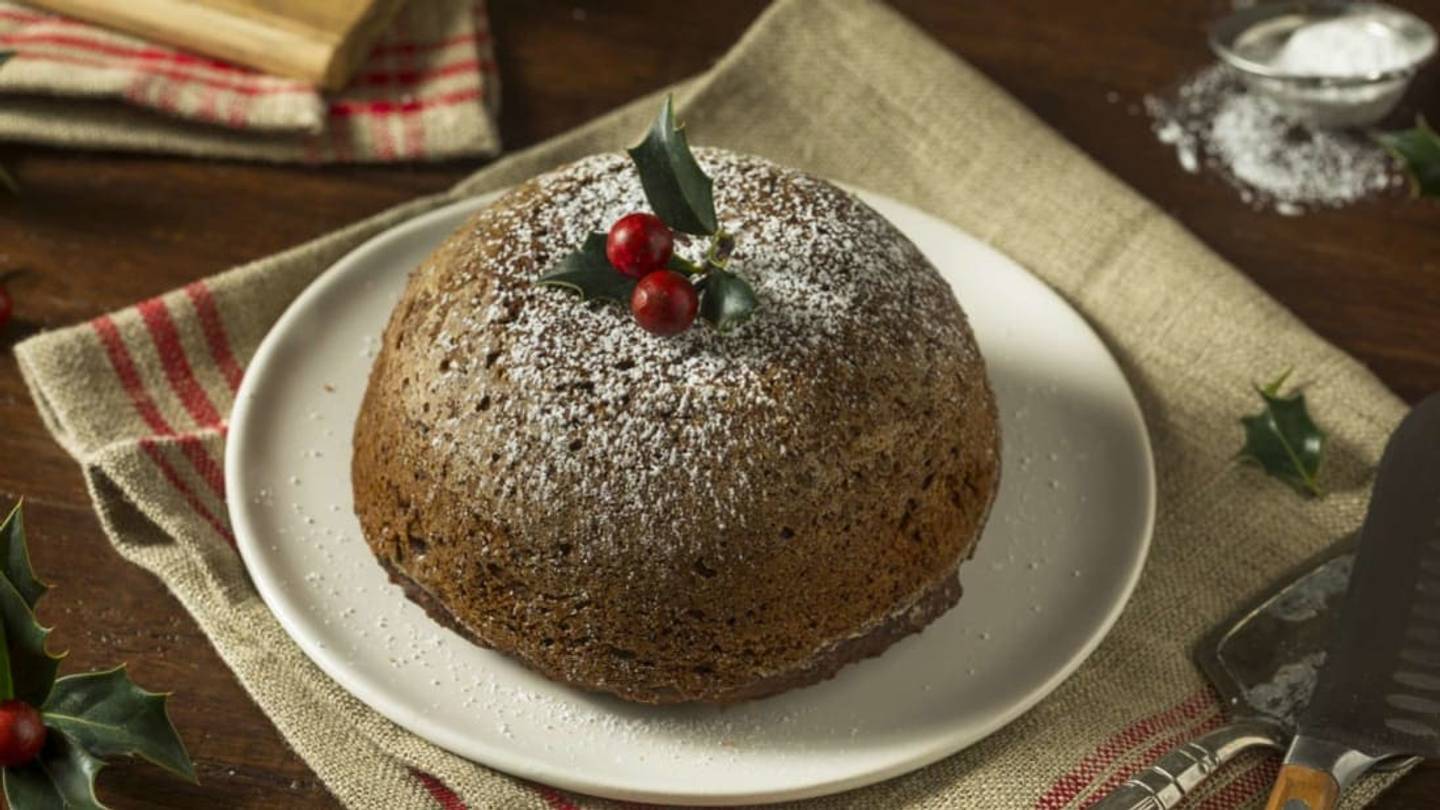
Presentation matters because Christmas pudding is not naturally glamorous. It is brown, round, and humble-looking. Dress it up with a dusting of powdered sugar, orange zest curls, sugared cranberries, or a small sprig of food-safe greenery placed beside the pudding rather than stuck into it. A white serving plate helps the dark pudding stand out.
Serve it warm. Cold Christmas pudding has its fans, but warmth wakes up the spices and softens the texture. Add custard or cream at the table so each person can control the richness. If your guests are new to Christmas pudding, introduce it with confidence. Say, “This is a royal-inspired steamed Christmas pudding,” not “I hope this weird fruit dome worked.” Branding matters.
Why This Old Dessert Still Works Today
The Royal Family’s traditional Christmas pudding appeals because it combines ceremony with practicality. It is made ahead. It serves a crowd. It uses pantry ingredients. It turns simple dried fruit into something dramatic. In a holiday season full of glossy desserts and social-media perfection, Christmas pudding feels refreshingly sturdy. It is not trying to be trendy. It has survived centuries. It does not care what TikTok thinks.
It also invites participation. Someone can stir. Someone can grease the basin. Someone can cut parchment. Someone can stand nearby offering emotional support and eating stray raisins. The recipe becomes less about one perfect dessert and more about the shared ritual of making something together before the holiday rush begins.
Extra Experience: What Making Royal Christmas Pudding at Home Feels Like
Making a royal-inspired Christmas pudding at home is not like whipping up brownies. Brownies are a sprint. Christmas pudding is a cozy winter walk with snacks. The first surprise is how fragrant the mixture becomes before it is even cooked. Once the dried fruit, citrus peel, sugar, breadcrumbs, and spices hit the bowl, the kitchen starts smelling like a holiday market tucked inside a bakery. Cinnamon and nutmeg float up first, then the citrus follows, bright and cheerful, as if the orange peel has been waiting all year for its moment.
The second surprise is the texture. If you are used to cake batter, Christmas pudding mixture can look suspicious. It is chunky, heavy, and packed with fruit. You may wonder whether you are making dessert or preparing a festive brick. This is normal. The magic happens during steaming, when the ingredients soften, bind, and darken into a rich pudding that slices cleanly but stays moist.
The process also teaches patience in a way few modern recipes do. You cannot rush the steam. You cannot microwave your way to tradition. You set the covered basin in the pot, keep the water simmering, and let time do its quiet work. There is something unexpectedly calming about that. In a season full of speed-shopping, delivery tracking, and last-minute wrapping, a slowly steaming pudding feels almost rebellious.
Another memorable part is the make-ahead storage. Once the pudding cools and gets wrapped away, it feels like hiding treasure. You know dessert is already waiting for Christmas Day. That small act removes one item from the holiday chaos list, which is a gift in itself. Future you, the one wearing slippers and trying to remember where the serving spoons went, will be grateful.
Serving it is the big payoff. Unmolding a Christmas pudding creates suspense. Will it release? Will it collapse? Will everyone politely pretend not to notice? A properly greased basin and a gentle hand usually solve the drama. When the pudding lands on the plate as a glossy dome, the room tends to react. Even people who claim they “do not like fruitcake” become curious because Christmas pudding has theater. It looks old-world, celebratory, and just unusual enough to start conversations.
The first bite is dense, fruity, warm, and spiced. It is not light, and it does not pretend to be. It belongs after a holiday meal, served in small slices with something creamy. The best experience comes when you treat it as a tradition rather than just a dessert. Let people stir the mixture. Let someone make a wish. Tell the story of Stir-up Sunday. Explain why “plum pudding” usually contains no plums. Suddenly, the pudding becomes more than food. It becomes a little edible history lesson, but with better sauce.
And that may be the real reason the Royal Family’s Christmas pudding remains so appealing. It makes home cooks feel connected to a tradition much larger than their own kitchen. You are not simply mixing fruit and breadcrumbs. You are joining a long line of winter cooks who believed that a dark, spicy, slow-steamed pudding could make Christmas feel complete. That is a lot of responsibility for a dessert shaped like a cannonball, but somehow, it carries the crown rather well.
Conclusion
You can absolutely make the Royal Family’s traditional Christmas pudding at home, even in an American kitchen and even without hard-to-find tools. The secret is not royal access; it is patience, good dried fruit, warm spices, proper steaming, and enough confidence to embrace a dessert that looks humble but tastes deeply festive. Make it ahead, reheat it gently, serve it with cream or custard, and let the tradition do what it has done for generations: turn a simple holiday meal into something memorable.
Christmas pudding may not be the quickest dessert on the table, but that is exactly why it feels special. It asks you to slow down before the season speeds up. It gives everyone a reason to gather, stir, laugh, and make wishes. And when the pudding finally arrives warm and fragrant on Christmas Day, you get the best kind of holiday reward: a dessert with history, flavor, and just enough royal sparkle to make your dining room feel like a tiny palace.