Note: This article is based on synthesized information from reputable U.S. science, education, conservation, and government sources, including NASA, NOAA, NSIDC, National Geographic Education, U.S. Fish & Wildlife Service, NSF, and polar research institutions.
Introduction: Welcome to Earth’s Coolest Neighborhood
The Arctic is not just a giant freezer at the top of the world. It is an ocean, a climate engine, a wildlife haven, a homeland for Indigenous peoples, and one of the most important environmental regions on Earth. It is also a place where the sun can disappear for weeks, where foxes change coats like fashion influencers, and where sea ice quietly helps regulate the planet’s temperature. Not bad for a region many people imagine as “just snow.”
Located around the North Pole, the Arctic includes the Arctic Ocean basin and northern parts of Alaska, Canada, Greenland, Iceland, Scandinavia, and Russia. Scientists often define it by the Arctic Circle, a line of latitude near 66.3 degrees north. But the Arctic is more than a line on a map. It is a living system where ice, ocean, air, animals, plants, and people are deeply connected.
Below are 10 fascinating facts about the Arctic that reveal why this icy region deserves far more attention than a quick glance on a globe.
1. The Arctic Is Mostly an Ocean, Not a Continent
One of the biggest surprises about the Arctic is that it is centered on an ocean. Unlike Antarctica, which is a continent covered by ice, the Arctic is mainly the Arctic Ocean surrounded by land. That land includes northern Alaska, Canada, Greenland, Norway, Sweden, Finland, Iceland, and Russia.
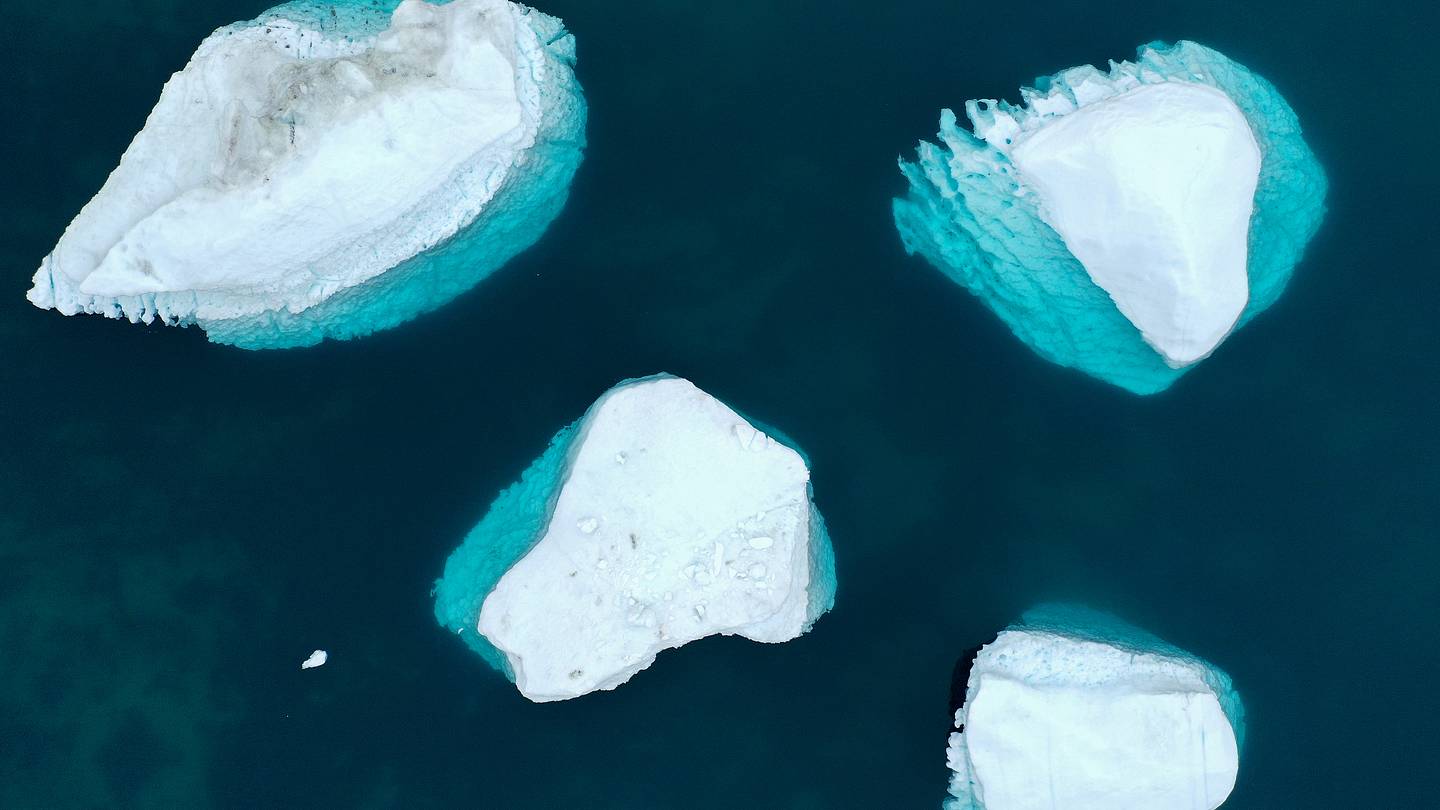
This difference matters. Sea ice floats on ocean water, grows during the dark winter, and melts during the summer. Because it is floating ice, melting Arctic sea ice does not raise sea levels the same way melting land ice does. However, it still has huge climate consequences because sea ice reflects sunlight and helps keep the polar region cool.
Why This Fact Matters
The Arctic’s ocean-based geography makes it especially sensitive to changes in air and water temperature. When the ocean warms, sea ice thins. When sea ice thins, darker ocean water absorbs more sunlight. In other words, the Arctic has its own version of a bad group chat: warming leads to melting, melting leads to more warming, and nobody wants to mute the conversation.
2. The Arctic Has Midnight Sun and Polar Night
Inside the Arctic Circle, the sun behaves in ways that can make your alarm clock question reality. During part of the summer, some Arctic areas experience the midnight sun, when the sun remains above the horizon for 24 hours or longer. In winter, the opposite happens: polar night, when the sun does not rise above the horizon for extended periods.
At the North Pole, this cycle reaches its extreme. The sun can stay above the horizon for roughly half the year and below it for roughly half the year. Farther south in Arctic communities, the periods are shorter, but still dramatic enough to affect daily life, wildlife behavior, sleep schedules, and tourism.
Life Under Strange Light
Imagine eating dinner at midnight while the sky still looks like afternoon. Now imagine winter days where noon feels like late evening. Arctic communities adapt with routines, lighting, outdoor traditions, and plenty of practical wisdom. Nature adapts too: plants rush through short growing seasons, birds time their migrations, and animals take advantage of seasonal light and darkness.
3. Arctic Sea Ice Helps Cool the Whole Planet
Sea ice is one of the Arctic’s most powerful climate tools. Its bright surface reflects a large share of incoming sunlight back into space. Dark ocean water, by contrast, absorbs much more solar energy. This reflectivity, known as albedo, helps regulate temperature in the Arctic and influences climate far beyond the polar region.
When sea ice shrinks, more dark water is exposed. That water absorbs heat, which can delay autumn freeze-up and contribute to additional warming. This is one reason scientists pay close attention to Arctic sea ice extent, thickness, and age.
A Shrinking Ice Shield
Satellite observations since 1979 show a clear decline in Arctic sea ice, especially at the September minimum, when sea ice reaches its smallest annual extent. NASA reports that September Arctic sea ice has been shrinking by more than 12 percent per decade compared with the 1981–2010 average. That is not a tiny “oops.” That is a planetary dashboard warning light.
4. The Arctic Ocean Is the Smallest and Shallowest Ocean Basin
The Arctic Ocean is the smallest of the world’s ocean basins and also the shallowest. It receives large amounts of freshwater from rivers, glaciers, precipitation, and melting ice, which helps make it less salty than many other ocean regions.
Despite its icy reputation, the Arctic Ocean is not lifeless. Cold, nutrient-rich waters support plankton, fish, seabirds, seals, walruses, whales, and polar bears. Microscopic algae can grow under and around sea ice, forming the base of a food web that supports some of the planet’s most specialized animals.
Small Ocean, Big Influence
The Arctic Ocean connects with the Atlantic and Pacific through gateways such as the Fram Strait, Barents Sea, and Bering Strait. Warmer waters entering the Arctic can influence sea ice conditions, marine ecosystems, and ocean circulation. So while the Arctic Ocean may be small by global standards, it has an outsized role in Earth’s climate system.
5. The Arctic Is Home to Wildlife Super-Specialists
Arctic wildlife has mastered survival in conditions that would make most of us immediately search for heated socks. Polar bears hunt seals from sea ice. Arctic foxes grow thick fur and may change color with the seasons. Musk oxen wear shaggy coats built for brutal cold. Caribou migrate across vast landscapes. Walruses use sea ice as a resting platform. Narwhals, sometimes called the “unicorns of the sea,” navigate icy waters with long spiral tusks.
In Alaska’s Arctic National Wildlife Refuge, wildlife includes all three North American bear species: polar bears, brown bears, and black bears. The refuge also supports caribou herds, musk oxen, wolves, wolverines, Dall sheep, and more than 200 bird species that migrate from across the United States and beyond.
Adaptation Is the Arctic’s Secret Skill
Arctic animals are not simply “tough.” They are finely adapted. Many have thick insulation, compact bodies, seasonal camouflage, specialized diets, or migration strategies. But these adaptations evolved for a cold, ice-shaped world. Rapid warming and sea ice loss can disrupt hunting, breeding, migration, and food availability.
6. People Have Lived in the Arctic for Thousands of Years
The Arctic is often described as remote, but it is not empty. Indigenous peoples have lived in Arctic regions for thousands of years, developing deep knowledge of weather, wildlife, ice, travel routes, food systems, and seasonal change. In Alaska, Indigenous communities such as Iñupiat and Gwich’in peoples maintain cultural traditions closely tied to land, sea, and animals.
Across the broader Arctic, more than four million people live in northern regions. Their communities include large cities, small villages, research stations, fishing towns, and Indigenous homelands. The Arctic is not a frozen blank space. It is a lived-in region with languages, histories, economies, and cultural identities.
Traditional Knowledge and Modern Science
Today, Arctic research increasingly recognizes the importance of Indigenous knowledge. Local observations of sea ice, animal movement, river changes, weather patterns, and food safety provide essential insight into rapid environmental change. In many cases, communities notice changes long before satellites and reports turn them into charts.
7. The Northern Lights Are Space Weather You Can See
The aurora borealis, or northern lights, is one of the Arctic’s most famous spectacles. These glowing curtains of green, purple, red, and white light occur when charged particles from the sun interact with Earth’s magnetic field and upper atmosphere.
The sun constantly sends out solar wind, a stream of charged particles. When solar activity increases, Earth can experience geomagnetic storms. Near the polar regions, Earth’s magnetic field guides some of those particles toward the atmosphere, where they collide with oxygen and nitrogen. The result is a sky show that looks like the universe decided to install mood lighting.
Best Conditions for Aurora Viewing
Auroras are usually easier to see in dark, clear skies away from city lights. Winter is popular for viewing because nights are long, but aurora activity depends on solar conditions, not just the season. In northern Alaska, Canada, and Scandinavia, aurora tourism has become a major draw for travelers willing to bundle up like human burritos.
8. Permafrost Is Frozen Ground with a Climate Story Inside
Permafrost is ground that remains frozen for at least two consecutive years. It can contain soil, rock, sand, ice, and ancient organic material from plants and animals that did not fully decompose because of the cold.
As the Arctic warms, permafrost thaws. This can damage roads, homes, pipelines, and other infrastructure because frozen ground that once acted like concrete can become unstable. Thawing permafrost can also release carbon dioxide and methane as microbes break down long-frozen organic matter.
The Frozen Pantry Problem
Think of permafrost as a gigantic freezer full of ancient leftovers. As long as the freezer works, everything stays locked away. When the freezer breaks, decomposition begins. That process can release greenhouse gases, adding another feedback to global warming. Scientists are closely studying how fast this happens, where it happens most, and how much carbon may be released over time.
9. The Arctic Is Warming Faster Than the Global Average
The Arctic is one of the clearest examples of amplified climate warming. NOAA’s recent Arctic assessments show that Arctic temperatures have risen much faster than global averages, with major changes in sea ice, snow cover, ocean temperature, glaciers, and ecosystems.
In 2025, NOAA reported that Arctic surface air temperatures for the October 2024 through September 2025 period were the warmest recorded since 1900. The same report noted that March 2025 marked the lowest annual maximum Arctic winter sea ice extent in the satellite record, while September 2025 was the 10th lowest minimum extent.
More Than a Temperature Number
Warming in the Arctic affects more than thermometers. It changes when rivers freeze and thaw, how much snow remains in spring, where fish and marine mammals move, how storms affect coastal communities, and whether traditional travel routes over ice remain safe. The Arctic is not only getting warmer; it is becoming less predictable.
10. What Happens in the Arctic Does Not Stay in the Arctic
The Arctic may seem far away, but it is connected to the rest of the planet. Sea ice affects climate regulation. Greenland’s ice sheet contributes to global sea level rise when it loses mass. Arctic warming can influence ocean circulation, ecosystems, fisheries, weather patterns, and coastal risks.
Changes in the Arctic also affect global politics and economics. As sea ice retreats, shipping routes, energy resources, fisheries, tourism, and national security interests receive more attention. That makes the Arctic a scientific region, a cultural region, an ecological region, and a geopolitical region all at once.
The Arctic Is a Planetary Early-Warning System
The Arctic often reveals climate changes before many other regions feel them as strongly. That makes it a powerful early-warning system. When sea ice declines, permafrost thaws, glaciers shrink, and ecosystems shift northward, those changes tell a bigger story about Earth’s future.
Experiences Inspired by the Arctic: What It Feels Like to Imagine the Far North
Thinking about the Arctic is one thing. Imagining yourself there is another. The first experience most people picture is cold, of course, but Arctic cold is not just “forgot your jacket” cold. It is the kind of cold that turns breath into a visible cloud, makes eyelashes collect frost, and teaches every exposed finger a memorable lesson in humility.
A traveler standing under the midnight sun might feel as if time has slipped off its usual tracks. The sky glows late into the night, birds keep moving, and the body wonders whether it should sleep or start breakfast. This experience can be strangely energizing. People often describe Arctic summer as dreamlike because ordinary schedules no longer match the light outside. You may look at your watch, see midnight, and still feel tempted to go hiking.
Winter offers the opposite experience. During polar night, darkness becomes a landscape of its own. Yet it is not always pitch-black. There can be blue twilight, moonlit snow, starlight, and sometimes the green shimmer of aurora across the sky. The quiet can feel enormous. Snow absorbs sound, and the absence of sunlight changes how people notice small things: the crunch of boots, the glow from windows, the rhythm of dogsled runners, the smell of warm food after hours outside.
Wildlife watching in the Arctic carries a special kind of excitement because every animal feels like a survival expert. Seeing a musk ox standing against the wind, a caribou moving across tundra, or seabirds nesting along cliffs is a reminder that life here is not delicate in the simple sense. It is resilient, efficient, and perfectly tuned to seasons. Even tiny plants growing close to the ground seem impressive when you realize they survive long winters and race through brief summers.
There is also an emotional experience tied to learning about Arctic change. Beautiful facts about sea ice and polar bears quickly become serious when you understand how fast the region is transforming. The Arctic can inspire wonder and concern at the same time. It is dazzling, but it is not a museum display sealed behind glass. It is changing now, and those changes affect real communities, real animals, and real coastlines.
The most meaningful Arctic experience may be respect. Respect for Indigenous peoples whose knowledge of land and ice has been built over generations. Respect for scientists working in harsh conditions to gather data. Respect for animals that survive with astonishing skill. And respect for the ice itself, which may look silent but plays a loud role in Earth’s climate system.
In that sense, the Arctic is more than a destination. It is a teacher. It teaches patience, because seasons are extreme. It teaches humility, because nature is bigger than human plans. It teaches connection, because ice at the top of the world can influence oceans, weather, and sea levels far away. And yes, it teaches practical fashion wisdom: never underestimate the power of layers.
Conclusion: The Arctic Is Cold, Complicated, and Completely Fascinating
The Arctic is one of Earth’s most extraordinary regions. It is an ocean wrapped in continents, a home for Indigenous cultures, a habitat for specialized wildlife, a stage for the northern lights, and a climate system with global influence. Its sea ice reflects sunlight, its permafrost stores ancient carbon, and its ecosystems support life in conditions that seem almost impossible.
At the same time, the Arctic is changing quickly. Warming temperatures, declining sea ice, thawing permafrost, shifting wildlife ranges, and stronger coastal risks are reshaping the region. Learning fascinating Arctic facts is not just trivia for a science-night victory lap. It is a way to better understand the planet we all share.
So the next time someone describes the Arctic as “just ice,” feel free to politely correct them. The Arctic is ice, ocean, culture, wildlife, weather, science, beauty, and warning signal all rolled into one frosty masterpiece.