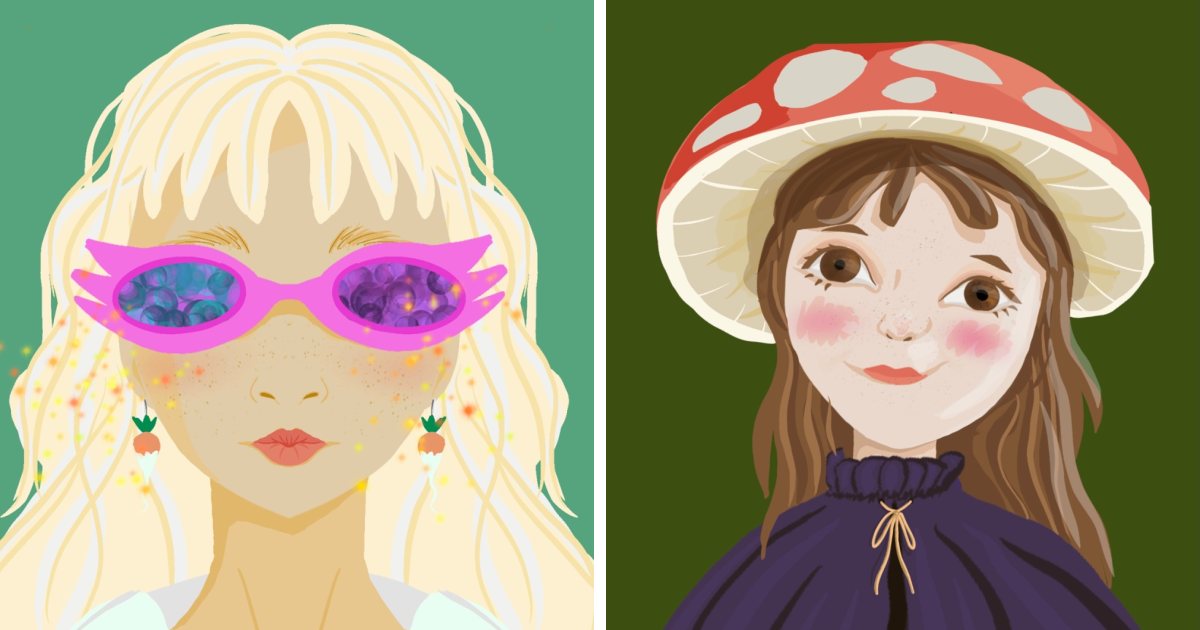
Every artist has a beginning. Sometimes it starts with a sketchbook, a half-dead pencil, and the bold confidence of someone who has no idea how difficult hands are to draw. Other times, it begins online, with a simple post that says, in spirit: “Hi, I made these. Please look at them.” That is exactly the kind of honest creative courage behind “I’m An Aspiring Artist And I Created These Illustrations (13 Pics)”, a small but charming showcase of personal artwork from an artist trying to find their voice one illustration at a time.
The post centers on an aspiring artist named Ali, who shared a set of 13 illustrations with the dream of becoming successful. It is a familiar story for anyone who has ever posted art online and then refreshed the page with the intensity of a detective tracking a missing diamond. But behind the simple act of uploading drawings is something bigger: the bravery to be seen before everything feels perfect.
In today’s digital art world, an aspiring artist does not need a gallery opening, a velvet rope, or a mysterious black turtleneck to begin. A collection of illustrations, a consistent creative habit, and the willingness to share work publicly can become the first step toward building an art portfolio, finding an audience, and developing a recognizable drawing style.
Why Sharing Illustrations Online Matters
Posting artwork online can feel strangely dramatic. One minute you are casually uploading a drawing; the next minute your brain is hosting a full awards ceremony and a courtroom trial at the same time. Will people like it? Will anyone comment? Did you accidentally draw one eye slightly higher than the other? Probably. But that is part of the process.
For an aspiring artist, online sharing is more than a confidence test. It is a learning tool. Each illustration becomes a small experiment in visual storytelling, color, composition, character expression, line work, and personal taste. When an artist shares 13 pictures instead of just one, viewers get to see more than a single lucky sketch. They get a glimpse of range, repetition, progress, and creative personality.
A strong illustration portfolio does not have to be massive. In fact, too many images can overwhelm viewers. A focused set of polished pieces often works better than a digital attic full of every drawing ever made, including the 2017 dragon with questionable anatomy. A 13-piece collection lands in a comfortable middle ground: enough work to show commitment, but not so much that visitors need a snack break halfway through.
The Appeal of a 13-Picture Illustration Series
There is something satisfying about a compact art series. Thirteen illustrations feel personal, digestible, and intentional. It is not a giant portfolio pretending to be a museum wing. It is a window into an artist’s developing world.
For readers, a short collection offers a quick emotional connection. For the artist, it creates a clear milestone: “Here is what I can do right now.” That phrase matters. Not “here is what I will be after ten years of practice,” not “here is what I might make once I finally buy the perfect tablet,” but right now. Art grows when it is allowed to exist before it becomes flawless.
1. It Shows Consistency
One drawing can be a spark. Thirteen drawings suggest a habit. Consistency is one of the biggest signs that an aspiring artist is taking their work seriously. It shows that the artist returns to the page again and again, even when motivation wanders off to make coffee and never comes back.
2. It Reveals Style in Progress
Most artists do not discover their style in a single lightning strike. Style usually arrives through repetition, mistakes, favorite colors, favorite shapes, repeated themes, and the tiny decisions an artist makes without realizing it. A collection of illustrations helps viewers notice those patterns.
3. It Invites Feedback
Feedback can be scary, but it is also useful when it is thoughtful. A public illustration post invites encouragement, questions, and sometimes practical advice. The trick is learning which comments help you grow and which comments should be politely escorted out of your brain.
What Aspiring Artists Can Learn From This Kind of Post
The most important lesson is not “post everything immediately.” The lesson is: do not wait forever. Many beginner artists hide their work because they believe they must first become “good enough.” But art does not improve in a locked folder named “Maybe Someday.” It improves through practice, review, revision, and the occasional awkward public debut.
Sharing a small illustration series can help artists understand how their work communicates. Do viewers respond to the characters? The colors? The mood? The humor? The softness? The strange little creature in the corner that was supposed to be a cat but became a potato with ears? Audience reactions can help artists see what is working.
Build Around Your Best Pieces
A beginner art portfolio should highlight the strongest work, not every piece ever created. If one illustration has better lighting, cleaner line art, or a stronger emotional idea, let it lead. Think of your portfolio like a tiny restaurant menu. You do not need to serve everything you have ever cooked. Just serve what makes people say, “Wait, who made this?”
Tell a Story With the Order
The order of images matters. A 13-picture post can begin with a strong attention-grabbing illustration, move through variety, and end with a memorable final piece. This gives the collection rhythm. It turns “here are some drawings” into a viewing experience.
Add a Short Artist Introduction
A simple introduction can make the artwork feel more human. Viewers like knowing who is behind the drawings. An aspiring artist does not need a dramatic biography involving moonlight, destiny, and a haunted paintbrush. A few honest lines about the artist’s name, goals, inspiration, and where to find more work can be enough.
The Creative Process Behind Beginner Illustrations
Every finished illustration hides a tiny mountain of decisions. Should the character face left or right? Should the background be detailed or simple? Should the color palette be warm and dreamy or bright enough to make your screen file a complaint? Even a simple drawing involves choices about shape, contrast, emotion, and focus.
For many aspiring artists, the process begins with rough sketches. These sketches are often messy, energetic, and full of possibility. They are also where anatomy sometimes goes on vacation. That is normal. Rough sketches are not supposed to be perfect; they are supposed to help the artist explore ideas quickly.
After sketching, the artist may refine the line art, block in colors, add shadows, adjust proportions, and polish the final image. Digital artists might work in layers, experiment with brushes, and revise colors until the piece feels balanced. Traditional artists may use pencil, ink, watercolor, markers, or mixed media. Either way, the goal is the same: turn an idea into something another person can feel.
Why Imperfection Is Part of the Charm
One reason aspiring artist posts are so enjoyable is that they often contain visible growth. The work may not look like a veteran illustrator’s polished commercial portfolio, but that is not a weakness. It is part of the story. Early artwork has energy. It shows curiosity. It says, “I am learning,” which is much more interesting than pretending to have emerged fully formed from an expensive art printer.
Imperfection also makes the art relatable. Viewers can sense when an artist is experimenting sincerely. Maybe the proportions are still developing. Maybe the backgrounds are simple. Maybe the artist is exploring different styles. That visible search for a voice can be more engaging than technical perfection without personality.
How to Turn 13 Illustrations Into a Stronger Art Portfolio
If an aspiring artist has a collection of 13 illustrations, they already have the foundation for a portfolio. The next step is curation. Instead of treating every image equally, the artist can ask: Which pieces best represent my direction? Which ones show skill? Which ones feel most like me?
A good portfolio should be easy to navigate, visually clean, and focused. Viewers should not have to hunt for the art like they are solving a medieval map puzzle. Whether the portfolio lives on a personal website, Behance, Instagram, ArtStation, or another creative platform, the presentation should support the artwork rather than compete with it.
Use Clear Titles and Captions
Short captions can help viewers understand the idea behind each illustration. A caption might mention the character concept, mood, tool, theme, or challenge. This is especially useful for editorial illustration, character design, children’s book art, and concept art, where context adds value.
Show Your Range, But Stay Focused
Range is useful, but too much variety can confuse viewers. If the artist wants to become a children’s book illustrator, the portfolio should include expressive characters, storytelling scenes, animals, settings, and sequential moments. If the goal is concept art, the portfolio might focus on characters, environments, props, and world-building. “I can draw everything” is less powerful than “I know where I am going.”
Keep Improving the Collection
A portfolio is not a museum of the past. It is a living document. As the artist improves, older pieces can be replaced with stronger work. This is not betrayal. The 2021 sketch goblin will understand.
Finding an Audience as an Aspiring Artist
Talent matters, but visibility matters too. Many artists discover that making the work is only half the journey. The other half is helping people find it. That means posting consistently, writing clear captions, using relevant keywords, joining creative communities, and engaging with other artists in a genuine way.
However, artists should avoid treating every post like a desperate billboard. People connect with process, personality, and honesty. Share finished illustrations, but also share sketches, work-in-progress details, lessons learned, and small stories behind the art. Audiences often enjoy seeing the messy middle, because the messy middle is where the magic puts on sweatpants and gets to work.
Practical Tips for Beginner and Aspiring Artists
Creating illustrations is exciting, but improvement comes from structure as much as inspiration. Inspiration is wonderful, but it is unreliable. It arrives dramatically at 2 a.m. and disappears the moment you open a blank canvas. A simple practice routine can keep an artist moving even when inspiration is busy ignoring calls.
Practice the Fundamentals
Composition, perspective, anatomy, color theory, lighting, shape language, and value are the building blocks of strong illustration. They may sound intimidating, but they are learnable. Even ten minutes of focused practice can help over time.
Study Artists You Admire
Studying does not mean copying someone’s work and pretending it fell from the sky. It means analyzing choices. How does the artist use color? How do they guide the eye? How do they simplify forms? What makes their characters feel alive? Study like a detective, then create like yourself.
Finish More Pieces
Unfinished sketches are useful, but finished illustrations teach different lessons. Finishing forces decisions about polish, contrast, edges, texture, and presentation. It also builds confidence. Every completed piece is proof that the artist can carry an idea from “tiny scribble” to “actual thing.”
Ask for Specific Feedback
Instead of asking, “Is this good?” try asking, “Does the pose read clearly?” or “Is the lighting working?” Specific questions lead to better answers. They also protect the artist from vague comments that feel deep but are about as useful as a chocolate teapot.
The Emotional Side of Becoming an Artist
The hardest part of being an aspiring artist is not always the drawing. Sometimes it is comparison. Online, it is easy to see someone younger, faster, and apparently born with a stylus in one hand and a perfect color palette in the other. But comparison often ignores context. You are seeing their highlight reel, not the pile of abandoned sketches behind it.
Every artist develops at a different pace. Some improve quickly in anatomy but struggle with color. Others create beautiful moods but wrestle with perspective. Some people can draw elegant hands, which frankly seems suspicious, but we wish them well. The point is that growth is uneven. That does not mean it is not happening.
Sharing 13 illustrations is a reminder that progress becomes real when artists keep making work. Not when they feel ready. Not when the algorithm claps. Not when every line is perfect. The work itself is the path.
Experiences Related to Creating Illustrations as an Aspiring Artist
Anyone who has tried to build an illustration habit knows that the experience is equal parts joy, confusion, caffeine, and asking, “Why does this face look like it knows my secrets?” The beginning often feels romantic from the outside. People imagine an artist sitting peacefully near a window, sketching while sunlight pours over the desk. Sometimes that happens. More often, the artist is hunched over a tablet at midnight, trying to fix one shoulder that has somehow become a geological formation.
One of the most common experiences for an aspiring artist is learning that ideas are easier in the imagination than on the page. In your head, the character has perfect posture, dramatic lighting, and a background worthy of an animated film. On the canvas, the same character looks like they forgot how elbows work. This gap can be frustrating, but it is also where skill develops. Every attempt trains the eye. Every mistake teaches the hand. Every weird-looking sketch becomes a stepping stone, even if it first looks like evidence.
Another major experience is discovering personal taste. At first, many beginner artists try everything: cute animals, moody portraits, fantasy characters, fan art, landscapes, stickers, comics, and the occasional deeply emotional mushroom. This experimentation can feel scattered, but it is valuable. The artist begins to notice what feels natural. Maybe they love expressive faces. Maybe they enjoy soft colors. Maybe they are happiest drawing tiny creatures with enormous feelings. Over time, these preferences become the foundation of style.
Posting illustrations online adds a new layer to the experience. The first upload can feel terrifying. The artist may spend an hour choosing a caption, five minutes posting, and then three business days wondering whether the internet has collectively shrugged. But even a small response can be motivating. A kind comment, a saved post, or a thoughtful question can remind the artist that the work reached someone. That connection matters.
There is also the experience of learning discipline. Many aspiring artists begin with bursts of motivation, then hit the reality of busy schedules, creative blocks, and tired eyes. Progress often comes from small routines: sketching daily, finishing one illustration per week, studying a new skill each month, or revisiting older work to measure growth. The routine does not have to be dramatic. Nobody needs to train like an art monk on a mountain. Consistency beats intensity when the goal is long-term improvement.
Finally, aspiring artists learn resilience. Not every piece will succeed. Some drawings will fight back. Some ideas will collapse halfway through. Some posts will get less attention than expected. But none of that means the artist has failed. It means they are participating in the real creative process. The artists who grow are not the ones who avoid awkward work; they are the ones who keep making art after the awkward work. A 13-picture illustration series is more than a gallery. It is proof of effort, courage, and the beautiful decision to keep going.
Conclusion
“I’m An Aspiring Artist And I Created These Illustrations (13 Pics)” is more than a simple online art post. It represents the early stage of a creative journey: the moment an artist steps forward, shares their work, and invites the world to look. That step is not small. It requires vulnerability, patience, and the willingness to grow in public.
For aspiring artists, the lesson is clear: make the work, share the work, study the work, and keep improving. A collection of 13 illustrations may not be the final destination, but it can be a powerful beginning. Every professional artist once had early drawings. Every polished portfolio once started as a handful of experiments. Every recognizable style once looked like a question mark wearing shoes.
So if you are an aspiring artist with a folder full of illustrations, consider this your friendly nudge. Choose your strongest pieces. Present them clearly. Tell people who you are. Keep learning. Keep posting. And yes, keep drawing hands, even when they look like confused starfish. Especially then.
Note: This article is an original, publish-ready rewrite based on the topic, real illustration-career practices, and general portfolio guidance. It does not copy the original post, insert source links, or include unnecessary reference placeholders.