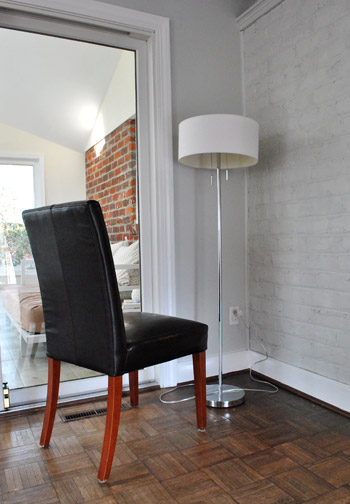
Every home has one odd little moment that accidentally becomes legendary. Maybe it is the hallway where everyone drops shoes as if gravity has a personal vendetta. Maybe it is the kitchen drawer full of batteries, soy sauce packets, and one mysterious Allen wrench. Or maybe, in the case of Sherry’s Lamp-Watching Chair, it is a chair placed so strangely in front of a lamp that it looks like the chair has taken up a new hobby: staring deeply into a lampshade and contemplating electricity.
The phrase sounds like the title of a cozy mystery novel, but it is really a tiny home-decor story with a surprisingly useful lesson. A chair, a lamp, a ceiling, and a few paint swatches can teach us a lot about how people actually decorate: not in perfect magazine-ready steps, but in experiments, pauses, second guesses, awkward furniture positions, and the occasional “what on earth is happening here?” moment.
At its heart, Sherry’s Lamp-Watching Chair is about the funny side of DIY interior design. It reminds us that decorating a home is not only about buying the perfect accent chair or choosing the most elegant floor lamp. It is about testing ideas in real light, living with samples before committing, arranging furniture around real habits, and allowing a room to evolve before making big decisions. In other words, it is about giving your home permission to look weird for a minute so it can look wonderful later.
What Is Sherry’s Lamp-Watching Chair?
The original idea behind Sherry’s Lamp-Watching Chair came from a humorous home-decor moment: a chair was placed in a living room corner facing a lamp, making it appear as though the chair had been assigned to supervise the lighting department. In reality, the chair was not there for lamp appreciation. It was there because Sherry needed a quick way to reach the ceiling and tape up paint swatches.
That tiny scene is relatable because every DIY home project has a stage where the room looks less like “interior design” and more like “furniture lost a bet.” A dining chair migrates to the living room. Painter’s tape appears in places no tape should be. Sample cards are stuck to walls, ceilings, doors, and possibly one unsuspecting family member. The process is messy, but it is also smart. Before committing to ceiling paint, wallpaper, metallic finishes, or a new lighting plan, testing is essential.
The charm of the lamp-watching chair is that it captures the comedy of the in-between phase. It is not the final reveal. It is the behind-the-scenes blooper reel. And frankly, the blooper reel is where most of the useful lessons live.
The Design Lesson Hidden in the Joke
Sherry’s Lamp-Watching Chair may be funny, but it points to one of the most important rules in home decorating: never choose colors, finishes, or lighting based only on how they look in a store. Paint chips under fluorescent store lights are little liars wearing tiny paper suits. A color that looks soft and elegant at noon can turn muddy at dusk. A metallic finish that sparkles on a sample card can disappear when placed on a ceiling. A lamp that seems bright in a showroom may cast odd shadows once it is next to your favorite reading chair.
Testing Paint Where It Will Actually Live
Ceilings are especially tricky because they receive light differently than walls. A ceiling color can make a room feel taller, warmer, moodier, or more enclosed. Light ceiling colors often help a space feel open and airy, while darker or highly saturated colors can create drama but may feel heavy in rooms with standard-height ceilings. That does not mean dark ceilings are forbidden. It simply means they require courage, good lighting, and preferably a household that will not panic halfway through coat one.
Testing several swatches in the actual room is the grown-up version of “measure twice, paint once.” It lets you see undertones, reflectiveness, shadows, and how the color behaves morning, afternoon, and night. If you are considering a metallic ceiling, testing becomes even more important. Metallic paints and wallpapers depend heavily on angle, texture, and light. A champagne shimmer may look luxurious in one direction and oddly beige in another. The ceiling is not being difficult; it is simply auditioning under complicated lighting conditions.
Why the Ceiling Deserves Attention
Most people decorate the four walls and then forget the fifth one. The ceiling sits up there like the quiet kid in class who actually has the best ideas. Painting a ceiling, adding subtle wallpaper, using a pale reflective finish, or highlighting beams can change the entire mood of a room. In a living room with beams, panels, or architectural detail, the ceiling can become a design feature instead of a blank lid.
But the ceiling also has power. Too much contrast can visually lower the room. Too little contrast can feel safe but forgettable. A soft metallic, pale gray, warm white, creamy champagne, or whisper-light green can add personality without making the room feel like it is wearing a hat two sizes too small.
The Chair: More Than a Temporary Ladder
Let us pause for the obvious safety note: a chair is for sitting, not climbing. The lamp-watching chair may be a cute story, but for real projects, use a stable step stool or ladder on level ground. Your ceiling can wait. Your ankles are not decorative accessories.
That said, the chair itself is still the star of the little scene. A chair in a corner beside a lamp is one of the most useful arrangements in home design. It can become a reading nook, a quiet coffee spot, a phone-call corner, a knitting zone, or the official family headquarters for pretending to read while actually scrolling.
How an Accent Chair Changes a Room
An accent chair does more than provide extra seating. It adds shape, texture, color, and purpose. A sofa often dominates a living room, but a single chair can create intimacy. Place it near a lamp and you suddenly have a destination. Add a small side table and the corner becomes useful. Add a throw pillow and the chair starts acting like it has a publicist.
The best accent chair for a lamp-friendly corner depends on the room. A slim slipper chair works well in small spaces. A club chair brings comfort and weight. A wingback chair adds height and drama. A cane or wood-framed chair keeps things airy. Upholstery can soften a room full of hard surfaces, while leather can add polish and durability.
The key is scale. A huge chair in a tight corner can make the room feel crowded, while a tiny chair next to a tall floor lamp can look like it wandered in from a dollhouse. The chair and lamp should feel like friends, not strangers stuck together at a wedding table.
The Lamp: The Unsung Hero of Cozy Living
A lamp can completely change how a room feels. Overhead lighting is useful, but it can be harsh when used alone. Layered lighting creates depth by combining ambient light, task light, accent light, and decorative light. In plain English: do not ask one ceiling fixture to do every job. That is how rooms end up looking like a dentist’s waiting area with throw pillows.
A floor lamp beside a chair is one of the easiest ways to add both function and atmosphere. It provides task lighting for reading, soft glow for evenings, and visual height in a corner. A table lamp can do the same if there is room for a side table. Swing-arm lamps, adjustable floor lamps, and shaded lamps are especially useful because they direct light where it is needed without blasting the whole room.
Choosing the Right Lamp for a Chair
When pairing a lamp with a chair, think about height, shade shape, bulb temperature, and direction. A good reading lamp should cast light over the shoulder or slightly from the side, reducing glare and shadows on the page. The bottom of the shade should generally sit around eye level when seated so the bulb is not glaring directly into your face. Nobody wants to relax in a chair while being interrogated by a light bulb.
Warm white bulbs, often around the cozy end of the color-temperature range, usually work well in living rooms and reading corners. Dimmers are even better because they allow the same lamp to shift from “I am reading a serious novel” to “I am eating popcorn and pretending the laundry does not exist.”
Creating Your Own Lamp-Watching Chair Corner
You do not need a full renovation to borrow the spirit of Sherry’s Lamp-Watching Chair. You need one underused corner, one comfortable seat, one good lamp, and a willingness to move things around until the arrangement feels intentional instead of suspicious.
Step 1: Find the Forgotten Corner
Look for a spot near a window, beside a bookcase, next to a fireplace, or in an awkward living room gap that currently does nothing except collect dust and judgment. Corners are often wasted because they are not big enough for major furniture, but they are perfect for a single-chair moment.
Step 2: Add a Chair With Purpose
Choose a chair that fits the activity. For reading, look for good back support and arms. For conversation, choose something upright and easy to turn toward the room. For lounging, consider a deeper seat or add an ottoman. Comfort matters. A beautiful chair that nobody wants to sit in is just sculpture with legs.
Step 3: Layer the Lighting
Place a lamp close enough to be useful. If the chair is for reading, the light should reach the book or device without making you lean like a confused flamingo. If the chair is more decorative, a softer lamp with a fabric shade can create warmth. Add a dimmer or smart bulb if possible for flexible mood control.
Step 4: Give the Corner a Supporting Cast
A small table, coaster, basket, throw blanket, and pillow can make the corner feel complete. Keep it simple. The goal is cozy, not “tiny furniture showroom trapped in a corner.” A plant can add life, but choose one that suits the available light. A dramatic fiddle-leaf fig in a dark corner is not decor; it is a botanical hostage situation.
What Sherry’s Lamp-Watching Chair Teaches About DIY Confidence
The best part of the story is not the chair, the lamp, or even the ceiling swatches. It is the willingness to experiment. Good rooms rarely happen in one perfect leap. They happen through small tests: moving a chair, taping a swatch, trying a lamp, living with a color, changing your mind, and then changing it again because apparently paint undertones have a secret nightlife.
DIY confidence grows when you stop expecting every decision to be instantly correct. Interior design is a conversation between your taste, your budget, your architecture, your lighting, and your daily life. Sometimes the room whispers. Sometimes it shouts. Sometimes it places a chair in front of a lamp and waits for you to understand.
That is why temporary arrangements are valuable. Before buying new furniture, move what you already own. Before painting the ceiling, tape up samples. Before replacing every lamp, try new bulb temperatures. Before deciding a corner is useless, give it one chair and a purpose.
Common Mistakes to Avoid
Mistake 1: Choosing Paint Too Quickly
Paint should be tested in the room where it will be used. Check it in daylight, evening light, and lamp light. This is especially true for ceilings, metallic finishes, whites, grays, and pale colors with sneaky undertones.
Mistake 2: Relying Only on Overhead Lighting
A single ceiling light can flatten a room. Add floor lamps, table lamps, sconces, or picture lights to create layers. Lighting should support how you live, not make your living room feel like a supermarket aisle.
Mistake 3: Ignoring Traffic Flow
A chair and lamp corner should not block natural walking paths. Leave enough space for people to move comfortably around furniture. If everyone has to shimmy sideways past the chair, the room is not cozy; it is an obstacle course with upholstery.
Mistake 4: Forgetting Safety During DIY Projects
Use proper equipment for reaching ceilings. A stable ladder or step stool is safer than a dining chair, especially when working overhead with tape, paint, or tools. The only thing worse than choosing the wrong ceiling color is explaining to urgent care that you fell while comparing champagne metallics.
Experience Section: Living With a Lamp-Watching Chair Moment
Anyone who has decorated a home long enough eventually has a Sherry’s Lamp-Watching Chair moment. Mine happened in a living room corner that looked harmless until I tried to make it useful. It had an outlet, a window, and just enough space for a chair, which sounds promising. Unfortunately, the first chair I moved there was too wide, too low, and weirdly formal. It looked less like a reading nook and more like a hotel lobby chair waiting for its shift to end.
Then came the lamp experiments. The first lamp was too short, so the shade glowed beautifully at elbow level and did absolutely nothing for reading. The second lamp was tall and dramatic, but the bare bulb glared directly into my eyes. Sitting there felt like being personally questioned by the moon. The third lamp finally worked: warm light, fabric shade, narrow base, just enough height to brighten a book without announcing itself to neighboring counties.
The corner improved slowly. A small table arrived first, mostly because I needed somewhere to put coffee. Then a woven basket appeared for magazines, though the magazines immediately became a decorative lie because everyone used the basket for charging cords. A pillow softened the chair. A throw blanket made it feel intentional. Suddenly the corner had a job. It was no longer dead space. It became the place where people sat during phone calls, read for ten minutes, tied shoes, opened packages, and occasionally stared at the lamp as if honoring the tradition.
The biggest lesson was that comfort beats theory. On paper, the first chair matched the room better. In real life, nobody sat in it. The final chair was not the most glamorous option, but it had the right height, the right angle, and the right relationship with the lamp. That relationship matters. A chair and lamp should create a small pool of invitation. The setup should say, “Come sit down,” not “Please admire this arrangement from a respectful distance.”
I also learned that paint and lighting are inseparable. After changing the lamp bulb from cool white to warm white, the wall color looked softer. The beige stopped feeling dull and started looking calm. The art nearby looked richer. Even the plant looked more expensive, which was impressive because it was mostly surviving on hope. That tiny bulb change did more than a new accessory would have done.
Another experience worth sharing: never judge a corner in the middle of the process. During the testing phase, the room may look ridiculous. Chairs move. Tape shows. Swatches multiply. Lamps migrate like confused birds. But that temporary awkwardness is part of the method. A room has to pass through “hmm” before it reaches “yes.” Sherry’s Lamp-Watching Chair is funny because it catches that exact moment: the strange pause between idea and decision.
In the end, a lamp-watching chair is not really about watching a lamp. It is about paying attention. Paying attention to light. Paying attention to scale. Paying attention to how a room feels at night, not just how it photographs at noon. Paying attention to the small corners that can become favorite places with the right chair, the right lamp, and a little patience. And if the chair appears to be staring lovingly at the lamp for a day or two, let it. Every good decorating story deserves a weird chapter.
Conclusion
Sherry’s Lamp-Watching Chair proves that memorable home design often begins with an odd, funny, unfinished moment. What looked like a chair admiring a lamp was really part of a thoughtful decorating process: testing ceiling paint, studying light, considering finishes, and letting a room evolve before making a final decision.
The lesson is simple but powerful. Do not rush the details that shape how a room feels. Test paint in real light. Use layered lighting. Give neglected corners a purpose. Choose chairs that invite people to sit, not just admire. And when your home looks a little strange mid-project, do not panic. That weird stage may be the exact place where the best idea is forming.
Note: This article is original, publish-ready content synthesized from real interior design, lighting, paint-selection, furniture-arrangement, and DIY safety guidance commonly used by reputable U.S. home improvement and design resources.