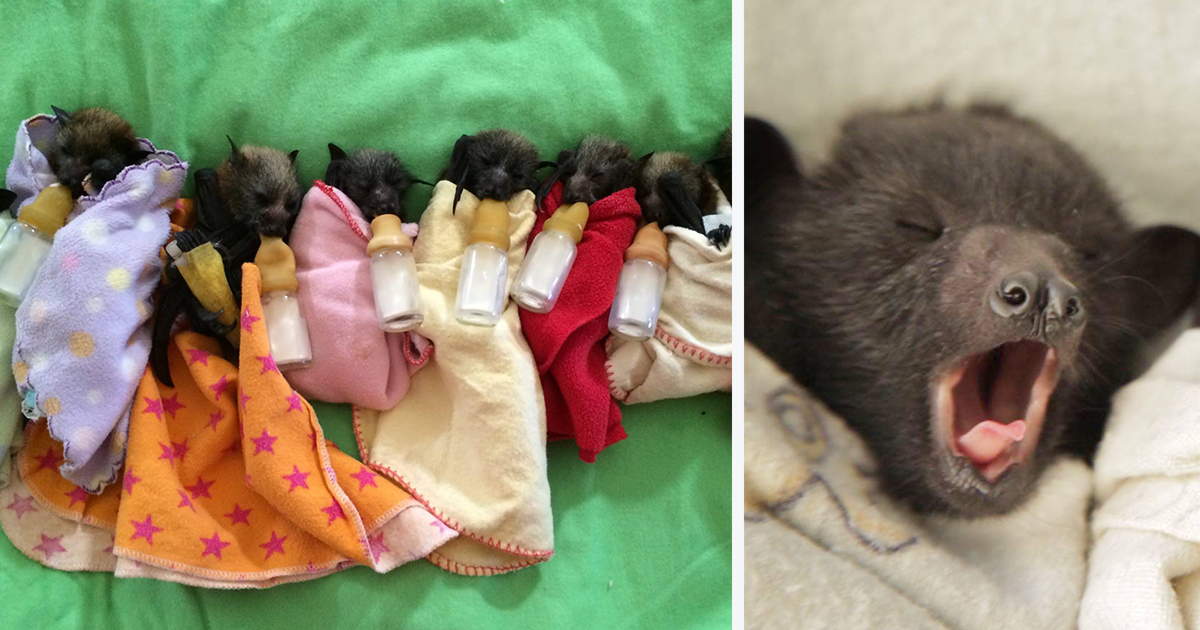
There are animals that seem designed to win the internet: sleepy puppies, dramatic cats, tiny goats wearing sweaters. And then there are orphaned baby bats at an Australian bat hospital, wrapped in little blankets like fuzzy midnight burritos, looking as if they just discovered the world and would like to file a very polite complaint about room service.
At the Australian Bat Clinic & Wildlife Trauma Centre in Queensland’s Gold Coast Hinterland, rescued baby flying foxes receive the kind of around-the-clock care usually reserved for newborns, ICU patients, and houseplants owned by people who read the care tag. These young bats, called pups, may arrive after losing their mothers to tick paralysis, heat stress, storms, disease, or other trauma. Without expert help, many would not survive. With care, warmth, feeding, and rehabilitation, they may one day return to the wild where they belong.
And yes, they are almost illegally adorable. But the bigger story is not just “look at those tiny faces.” It is also about wildlife rescue, climate stress, public health, conservation, and the important role flying foxes play in Australia’s forests. The baby blankets are cute. The mission behind them is serious.
Why Baby Bats End Up In Care
Baby bats are not simply “found alone” in the way a lost sock appears in the laundry. Most orphaned flying fox pups are separated from their mothers because something has gone wrong. In Australia, common causes include heatwaves, storms, barbed-wire entanglement, netting injuries, powerline accidents, dog attacks, car strikes, and tick paralysis. Tolga Bat Hospital, another respected bat rescue facility in Queensland, reports caring for large numbers of flying fox orphans each year, especially spectacled flying foxes.
Flying fox mothers are extremely attentive. A pup clings to its mother’s body and depends on her for milk, warmth, grooming, transportation, and safety. If the mother dies, the pup may remain attached to her body, sometimes for hours. That is why trained wildlife rescuers search colonies after mass mortality events and extreme weather: the quietest babies can be the ones most urgently in need.
The Famous “Baby Bat Burrito” Routine
The internet-famous image of baby bats wrapped in blankets is not a costume party for nocturnal fruit lovers. Swaddling helps mimic the warmth and pressure of a mother’s wings. For a stressed orphan, that snug wrap can create a sense of security while carers feed, clean, weigh, and assess the pup.
Some pups are bottle-fed milk formulas designed for their species and age. As they grow, they gradually transition toward appropriate foods, including fruit and other natural diet items. Their progress is monitored carefully through weight checks, hydration checks, feeding schedules, and behavioral milestones. In other words, behind every adorable photo is a clipboard, a laundry pile, and a volunteer who has probably been awake since the dinosaurs were still considering feathers.
Blankets Are Cute, But They Are Also Practical
Warmth matters. Young mammals lose body heat quickly, and orphaned pups no longer have the body heat of their mother. A wrap can reduce stress, prevent chilling, and make feeding safer. The result looks like a tiny bat spa day, but it is really neonatal wildlife care with a very photogenic wardrobe department.
Meet The Flying Fox: Not A Monster, Not A Rodent
One reason these images are so powerful is that bats have been burdened with centuries of spooky public relations. Halloween decorations did them no favors. But flying foxes are not rodents, and they are not miniature vampires. They are large fruit bats in the genus Pteropus, with fox-like faces, big eyes, and a diet focused on nectar, pollen, blossoms, and fruit.
Australia is home to several flying fox species, including the spectacled flying fox, black flying fox, grey-headed flying fox, and little red flying fox. These animals are highly social, roost in colonies, and can travel long distances at night while feeding. During those nightly flights, they pollinate flowers and disperse seeds, helping forests regenerate. Queensland’s environment guidance describes flying foxes as crucial to native forest health because they move pollen and seeds locally and over long distances.
Why Flying Foxes Matter To Forests
Think of flying foxes as gardeners with wings. They visit flowering trees, collect nectar and pollen, eat fruit, and then carry seeds across the landscape. Some seeds germinate far from the parent tree, which can improve survival and genetic diversity. This is especially important in fragmented habitats where forests need help reconnecting.
In the United States, agencies such as the National Park Service and U.S. Geological Survey also emphasize that bats provide major ecological services, including insect control, pollination, and seed dispersal. While American bat species differ from Australian flying foxes, the broader lesson is the same: bats are not background characters. They are working the night shift for ecosystems.
The Conservation Problem Behind The Cuteness
The adorable baby bat story becomes more complicated when you zoom out. Several Australian flying fox populations face pressure from habitat loss, climate change, extreme heat events, human-wildlife conflict, and injury hazards such as netting and barbed wire. The Australian government has identified population decline as a key issue for threatened flying fox species, including the spectacled and grey-headed flying foxes.
Extreme heat is especially dangerous. Flying foxes can die in large numbers when temperatures rise beyond what their bodies can tolerate. During major heat stress events, adults may fall from trees, mothers may die with pups still attached, and rescuers may be overwhelmed. Each orphaned pup in a blanket is therefore both a rescue success and a reminder that wild colonies are under pressure.
What Happens Inside A Bat Hospital?
A bat hospital does not run like a cartoon cave with hammocks and tiny receptionist desks, although frankly, that would be delightful. Real bat rehabilitation is demanding, regulated, and highly specialized. Carers must understand species-specific nutrition, hygiene, disease prevention, injury management, stress reduction, and release planning.
New arrivals may need emergency warmth, fluids, wound care, and careful observation. Pups are weighed and measured so carers can calculate feeding amounts. Their blankets and feeding equipment must be cleaned constantly. As they grow stronger, pups need socialization with other bats, exercise, sunlight, and opportunities to practice natural behaviors.
Release Is The Goal
The best rescue story does not end with a bat becoming a pet. It ends with the bat returning to the wild. Facilities such as Tolga Bat Hospital describe soft-release programs where orphaned flying foxes are moved in groups to release cages, allowed to adjust to local sounds and smells, and then released when ready. This group-based approach helps young bats transition from nursery care to wild colony life.
Can You Touch A Baby Bat If You Find One?
No. Admire from a safe distance and call trained help. Australian health authorities consistently warn the public not to touch bats, even injured or orphaned ones, because Australian bat lyssavirus can be transmitted through bites, scratches, or saliva exposure. Only trained and vaccinated handlers should handle bats.
This is not because bats are villains. It is because wildlife rescue requires safety rules. If you see an injured bat or a baby bat on the ground in Australia, keep people and pets away, note the location, and contact local wildlife rescue, RSPCA, or the appropriate environment authority. The kindest thing you can do is not scoop it up for a selfie. The bat does not need a TikTok manager; it needs a licensed rescuer.
Why People Fall In Love With Baby Bats
Baby bats challenge expectations. Many people picture bats as creepy, fast-moving shadows. Then they see a pup with shiny eyes, a tiny nose, and delicate wings wrapped in a pastel blanket, and suddenly the brain short-circuits: “Wait. That is a sky puppy.”
This emotional shift matters. Conservation often begins with attention. A person who once feared bats may learn that flying foxes pollinate forests, that pups bond closely with mothers, and that wildlife hospitals depend on donations, volunteers, and public cooperation. Cuteness opens the door; education walks through carrying a clipboard.
How To Help Bats Without Handling Them
You do not need to personally bottle-feed a baby flying fox to make a difference. In fact, unless you are trained and vaccinated, please do not. There are safer and more effective ways to help. Support licensed wildlife hospitals and rescue groups. Choose wildlife-safe fruit-tree netting with holes small enough that fingers cannot pass through. Avoid barbed wire near known wildlife corridors where possible. Keep pets away from injured wildlife. Plant native trees where appropriate. Share accurate information instead of fear-based myths.
For homeowners, one of the biggest practical steps is preventing entanglement. Loose netting can trap flying foxes, birds, reptiles, and possums. Wildlife-safe netting protects fruit while reducing injury risk. That is a win for your mangoes and for the night-shift pollinators trying to do their job.
The Experience: What These Orphaned Baby Bats Teach Us
Spending time learning about orphaned baby bats changes the way you look at wildlife rescue. At first, the images pull you in because they are sweet. A baby flying fox wrapped in a blanket looks like it has been tucked in by a grandmother who owns too many quilts. But the longer you pay attention, the more you notice the discipline behind the softness.
There is the rhythm of care: warm, feed, clean, weigh, record, repeat. There is the patience of volunteers who handle each pup gently, not because the camera is watching, but because stress can affect recovery. There is the quiet science of knowing when a pup is hydrated, when it is gaining properly, when it needs more social time, and when it is ready for the next stage.
The most powerful experience is realizing that rescue is not about making wild animals cute for humans. It is about restoring them to the life they were meant to live. A baby bat in a blanket is charming, but a flying fox released at dusk is the real victory. That moment means the animal can join the night sky, find food, communicate with its colony, and contribute to the forest by carrying pollen and seeds from tree to tree.
These stories also teach humility. A heatwave, a strand of barbed wire, or a poorly chosen net can change the life of a wild animal in seconds. Human choices shape wildlife outcomes more often than we like to admit. The good news is that better choices also help. Safer netting, habitat protection, public education, and support for trained rescuers can reduce suffering.
There is also something deeply moving about how many people work behind the scenes for animals most of society misunderstands. Bats are not always easy ambassadors. They are nocturnal, noisy in colonies, and associated with disease in the public imagination. Yet carers show up anyway. They do laundry, prepare feeds, clean cages, answer rescue calls, and give orphaned pups a chance. That kind of compassion is not flashy, but it is heroic in the most practical sense.
Perhaps that is why the baby bat hospital story keeps resurfacing online. It gives people a rare emotional reset. The animal we were taught to fear becomes the animal we want to protect. The “creepy bat” becomes a vulnerable pup clinging to a blanket. The punchline becomes a lesson: nature is often much kinder, stranger, and more interconnected than our stereotypes allow.
So yes, orphaned baby bats at this Australian bat hospital are too adorable. But they are also ambassadors for a bigger truth. Wildlife rescue is cute only on the surface. Underneath, it is science, endurance, public safety, conservation, and care. The blankets get our attention. The bats deserve our respect.
Conclusion
Orphaned baby bats at Australian bat hospitals are internet-famous for a reason: they are impossibly cute, especially when wrapped like tiny flying-fox burritos. But their story is bigger than adorable photos. These pups represent the fragile bond between mothers and young, the growing risks of climate stress and habitat loss, and the extraordinary work of trained wildlife carers. Flying foxes help forests grow by pollinating flowers and dispersing seeds, making them far more than spooky silhouettes in the night sky. The best way to love them is to respect them, support professional rescue groups, use wildlife-safe practices, and never handle a bat unless you are trained and vaccinated.