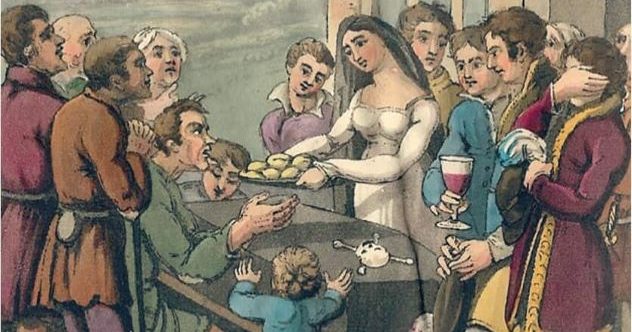
If history had a department for “jobs nobody put on a career-day poster,” the sin-eater would be sitting at the front desk, holding a loaf of bread and looking deeply misunderstood. Sin-eaters were figures in British and Welsh-border folklore who were believed to take on the sins of the dead by eating ritual food connected to the deceased. It sounds like something invented by a gothic novelist after too much tea, but the tradition appears in old folklore accounts, antiquarian writings, local histories, and later cultural retellings.
The strange charm of sin-eaters comes from the way they sit at the crossroads of grief, religion, poverty, superstition, social fear, and community ritual. They were not priests. They were not doctors. They were not funeral directors with a suspiciously carb-heavy business model. They were outsiders asked to do spiritual dirty work when families worried that a loved one might not be at peace.
This article explores ten intriguing facts about sin-eaters, separating the historical evidence from the fog machine of legend. Along the way, we will look at where sin-eating was practiced, what the ritual involved, why bread mattered so much, and why this eerie custom still fascinates readers, writers, historians, and anyone who has ever looked at funeral food and thought, “There is probably a story here.”
1. Sin-Eaters Were Believed to Carry the Sins of the Dead
The central idea behind sin-eating was simple, unsettling, and oddly practical: if a person died with sins still attached to the soul, someone else could ritually absorb those sins through food and drink. The sin-eater ate bread, drank ale, beer, wine, or milk depending on the local version, and symbolically took the spiritual burden away from the deceased.
In folk belief, the food acted almost like a sponge. It was placed near the body, on the coffin, or sometimes on the chest of the deceased. The bread absorbed the sins, the sin-eater consumed the bread, and the dead person was thought to gain rest. Was this official church doctrine? Absolutely not. The church generally frowned at the idea, which makes sense because outsourcing forgiveness to a hungry neighbor was not exactly in the manual.
Still, for rural communities facing sudden death, poverty, fear of damnation, and limited access to formal religious comfort, the ritual offered something emotionally powerful: a sense that one final act could help the dead move on.
2. The Custom Was Strongly Linked to Wales and the Welsh Marches
Sin-eating is most commonly associated with Wales and the English counties along the Welsh border, especially Herefordshire and Shropshire. These borderlands, sometimes called the Welsh Marches, were rich in folk customs, local beliefs, funeral traditions, and stories that traveled from village to village like gossip with a lantern.
The practice is also sometimes connected to parts of Scotland, Ireland, and rural England, though the best-known accounts often point back to Wales and the border counties. Because the evidence is scattered, historians are careful not to claim that every village had a sin-eater waiting behind the hedge. Some accounts may be accurate descriptions of local customs, while others may be exaggerated, misunderstood, or polished into legend by later writers.
That uncertainty is part of the appeal. Sin-eaters are real enough to appear in historical discussion, yet mysterious enough to feel like they might vanish if you look too directly at them.
3. Bread Was the Star of the Ritual
In many descriptions of sin-eating, bread plays the leading role. Not fancy bread, not influencer sourdough, not a loaf with “ancient grains” and a price tag that causes mild dizziness. The bread was usually plain, symbolic, and spiritually loaded.
Food has long been part of mourning rituals. People bring casseroles, bake pies, pour drinks, and gather around tables after death because eating together is one of humanity’s oldest ways of saying, “We are still here.” In sin-eating, however, bread carried a specific ritual function. It was believed to receive the sins of the dead, and once eaten, to transfer them to the sin-eater.
Some traditions included salt, which already had associations with preservation, purity, and protection. A piece of bread placed on salt over or near the body created a compact little symbol: life, death, memory, corruption, cleansing, and hunger all sitting on one plate. If that sounds intense for a snack, welcome to folklore.
4. Sin-Eaters Were Often Poor or Socially Marginalized
One of the saddest facts about sin-eaters is that the role was often linked with poverty. Many accounts describe sin-eaters as poor people who accepted a small payment, food, or drink in exchange for performing the ritual. In some versions, the fee was tiny. The community needed the sin-eater, but it did not necessarily respect him.
This tells us a lot about how societies handle uncomfortable work. The sin-eater performed a service that people feared, desired, and judged all at once. Families might call on him when death came, but afterward they could treat him as spiritually contaminated. He was useful at the threshold between life and death, then pushed back to the edge of ordinary society.
That contradiction gives the sin-eater a tragic quality. He was both helper and outcast, necessary and avoided, invited in during grief and possibly shunned afterward. In modern terms, it was the worst customer-service role imaginable: high emotional pressure, poor pay, and everyone assumes your soul has terrible reviews.
5. The Ritual Was Not Always the Same Everywhere
There was no universal sin-eater handbook. Different regions and storytellers describe different details. In some accounts, the sin-eater sat outside the house. In others, he sat near the corpse or coffin. Sometimes he ate bread and drank ale. Elsewhere, milk, wine, or other food appeared in the story.
The words spoken during the ritual also varied. Some versions include an incantation or short statement declaring that the sin-eater now took on the sins of the deceased and granted rest. The exact wording is difficult to verify because much of the tradition survived through oral reports, antiquarian notes, and later retellings.
This variation does not make the custom meaningless. It actually makes it more believable as folklore. Living traditions change from place to place. People adapt rituals to local habits, available food, religious attitudes, and the personality of whoever is brave or desperate enough to perform them.
6. Sin-Eating Shows How Fearful Death Could Be
Today, many people think of death in medical, legal, or emotional terms: hospital paperwork, funeral arrangements, grief counseling, memorial slideshows, and the one relative who always insists on bringing potato salad. In earlier rural communities, death also carried urgent spiritual anxiety.
What if a person died suddenly and could not confess? What if unresolved guilt followed the soul? What if the dead returned restless? What if the living failed in their duty to help? Sin-eating answered these fears with a physical action. Someone came, ate, drank, spoke, and left. The ritual gave shape to invisible worries.
This is why sin-eating is more than a creepy footnote. It reveals how communities tried to manage guilt. Death creates questions that cannot always be answered. Rituals do not erase grief, but they can give people something to do when doing nothing feels unbearable.
7. The Church Usually Did Not Approve
Sin-eating sat awkwardly beside Christian teaching. In Christianity, forgiveness of sins is tied to repentance, confession, divine grace, and religious authority. A paid person absorbing guilt through bread was not exactly the official route. As a result, the practice was often regarded as superstition or improper folk religion.
Yet local religious life has never been as tidy as theology books suggest. People often blend official beliefs with older customs, family traditions, seasonal rituals, and practical hopes. In remote areas, folk practices could continue quietly even when clergy disapproved. A priest might condemn the custom from the pulpit while local families still whispered for the sin-eater when panic arrived at the door.
That tension makes sin-eating historically fascinating. It shows the difference between institutional religion and lived religion. Real people do not always separate doctrine, fear, grief, and habit into neat drawers. Sometimes they put them all on a plate and call it a ritual.
8. Richard Munslow Is Often Called the Last Sin-Eater
One of the most famous names connected to sin-eating is Richard Munslow of Ratlinghope, Shropshire. He died in 1906 and is often described as one of the last known sin-eaters in England. His grave at St. Margaret’s Church has become a point of interest for folklore lovers, local historians, and visitors who enjoy their churchyards with a side order of mystery.
What makes Munslow especially intriguing is that he does not fit the usual image of the poor, nameless village outcast. Some accounts describe him as a farmer and a more respectable community figure. Local tradition suggests that personal tragedy may have shaped his connection to the custom, though details should be treated carefully because folklore has a habit of putting dramatic lighting on every biography.
Munslow’s reputation matters because he gives the sin-eater tradition a human face. Instead of an anonymous figure in a dusty paragraph, we get a name, a place, a grave, and a lingering question: what would make someone agree to carry other people’s spiritual burdens?
9. Historians Debate How Common Sin-Eating Really Was
Here is where the story gets deliciously complicated. Sin-eating is often described as if it were a widespread profession, but the evidence is uneven. Some sources confidently describe the ritual. Others suggest it may have been rare, local, misunderstood, or transformed by literary imagination.
Folklore scholars have to work with imperfect materials: diaries, local legends, antiquarian writings, travel accounts, and later references. These sources can be valuable, but they also come with problems. Writers may misunderstand what they saw. A story may grow in the telling. One unusual event may become “an ancient custom” by the time it reaches print.
So, were sin-eaters real? The safest answer is yes, the tradition has real historical roots, especially in Wales and the Welsh border counties, but many details remain debated. The sin-eater belongs to that wonderful category of history where the fog is not a problem; it is part of the landscape.
10. Sin-Eaters Still Haunt Modern Culture
Sin-eaters have not disappeared. They have simply moved from cottages and churchyards into novels, films, television, podcasts, video games, and online folklore articles. Modern writers love them because the idea is instantly dramatic. A person who eats the sins of the dead? That is not just a premise; that is a whole gothic buffet.
The figure works because it raises timeless questions. Can guilt be transferred? Who pays for peace? Why do communities place their fears onto one person? Is the sin-eater cursed, compassionate, exploited, or heroic? Depending on the story, he can be a monster, martyr, healer, fraud, or tragic professional with the worst lunch schedule in Europe.
In modern culture, the sin-eater often represents emotional labor taken to a supernatural extreme. He absorbs what others cannot bear. That makes the legend surprisingly relevant. Even today, people look for someone to carry blame, resolve guilt, or make grief feel orderly. The old ritual may be gone, but the emotional pattern is very much alive.
Why Sin-Eaters Still Fascinate Us
The sin-eater is memorable because the image is so physical. Many religious and moral ideas are abstract: guilt, forgiveness, redemption, purification. Sin-eating turns those ideas into an action anyone can picture. A man sits near the dead. Bread waits on a plate. The family watches. He eats. Something invisible is believed to move.
That visual simplicity gives the tradition its power. It is eerie, yes, but also strangely tender. A grieving family wants peace for someone they loved. A poor or marginalized person accepts a burden. The community creates a ritual where theology, hunger, fear, and hope all meet for a few minutes.
Sin-eaters also fascinate us because they expose a moral bargain. The deceased may be cleansed, but the sin-eater becomes more stained. The family receives comfort, but someone else pays the spiritual cost. The ritual asks a question that still matters: how often do societies protect themselves by placing pain onto people with the least power?
Common Myths About Sin-Eaters
Myth: Every village had an official sin-eater.
Some older references make the role sound common, but historians are more cautious. The practice appears to have been local and uneven, not a neatly organized profession with business cards and office hours.
Myth: Sin-eaters were accepted spiritual leaders.
Most accounts suggest the opposite. Sin-eaters were often feared, avoided, or looked down upon. People might need them during a funeral but still treat them as spiritually dangerous afterward.
Myth: Sin-eating was approved by the church.
The ritual belonged more to folk belief than official religion. It borrowed ideas about sin, confession, and salvation, but it did not fit neatly into church teaching.
Myth: Sin-eating was only a horror story.
Although modern culture often uses sin-eaters for dark fiction, the tradition also reflects grief, compassion, poverty, and community anxiety. The real story is more human than a simple scare tale.
Experiences and Reflections Related to Sin-Eaters
Reading about sin-eaters feels a little like walking through an old churchyard at dusk: you know you are safe, but your imagination keeps stepping on twigs. The topic has a way of making history feel close. Not the grand history of kings, wars, and treaties, but the intimate history of kitchens, coffins, bread, whispered worries, and neighbors who knew everyone’s business before breakfast.
One of the most powerful experiences connected to learning about sin-eaters is realizing how practical grief can be. Modern people sometimes imagine old folk customs as strange because they sound supernatural. But underneath the ritual is a very recognizable human need. When someone dies, people want to help. They want to say the right words, bring the right food, perform the right gesture, and believe that love can still do something. Sin-eating may seem eerie, but it belongs to the same emotional family as lighting candles, placing flowers, sitting vigil, or keeping a chair empty at the holiday table.
Another striking experience is the discomfort of thinking about the sin-eater as a person rather than a spooky job title. It is easy to picture him as a gothic character, all shadows and silence. It is harder, and more important, to imagine him as someone hungry, poor, grieving, compassionate, pressured, or maybe simply trying to survive. The community’s fear gave him a role, but that role may have deepened his isolation. He carried not just symbolic sins, but the social weight of being useful and unwanted at the same time.
Visitors who go looking for sin-eater history often describe a strange contrast. The places connected to the tradition are not usually dramatic castles or thunderstorm cliffs. They are quiet villages, soft hills, old stones, small churches, and lanes that look peaceful enough to make the whole story feel even stranger. That contrast matters. Folklore rarely lives only in terrifying places. It often grows in ordinary rooms where people face extraordinary emotions.
For writers, sin-eaters offer a rich creative experience because the figure carries built-in conflict. A sin-eater can be feared but needed, cursed but merciful, powerless but spiritually dangerous. For historians, the experience is different but equally compelling: the challenge is to respect the sources without pretending they answer every question. For readers, the appeal may be simpler. The sin-eater gives us a story we can feel immediately. Everyone understands guilt. Everyone understands hunger. Everyone understands the wish that someone could take pain away.
Perhaps that is why sin-eaters remain so memorable. They are not just a weird fact from the dusty attic of folklore. They are a mirror held up to grief, blame, class, religion, and community. And like many mirrors in old stories, they show more than expected.
Conclusion: The Sin-Eater as Folklore, Fear, and Human Need
Sin-eaters occupy one of the strangest corners of funeral folklore, but their story is more than a curiosity. They reveal how communities tried to solve spiritual anxiety with physical ritual. They show how food can become symbolic, how poverty can turn into a grim profession, and how grief can make people reach for customs that official religion may reject.
The ten facts above show that sin-eating was not just about bread, ale, and eerie graveyard atmosphere. It was about responsibility. It was about the fear of unfinished business. It was about the hope that even after death, something could be repaired. Whether we view sin-eaters as historical figures, folk symbols, or gothic legends, they continue to fascinate because they ask a question that has never stopped mattering: what would we do to give peace to the people we love?
And honestly, if history teaches us anything, it is this: never underestimate the emotional power of bread. Sometimes it is dinner. Sometimes it is comfort. And sometimes, at least in folklore, it is carrying the weight of a soul.