Moving newborn kittens sounds simple until you realize the passengers are tiny, fragile, and about as sturdy as warm marshmallows. Add a protective mother cat to the mix, and suddenly this is less “quick relocation” and more “high-stakes nursery transfer.” The good news is that it can be done safely. The better news is that in many cases, the safest choice is not to move them at all unless there’s a real reason.
If the kittens are in immediate danger, if their nesting spot is unsafe, or if you’re relocating a mother cat and litter into a calm indoor room, the process should be slow, warm, clean, and low-stress. Newborn kittens cannot regulate their body temperature well, can go downhill quickly if chilled, and depend heavily on their mother for warmth, feeding, stimulation, and protection. That means your job is not to “rescue dramatically.” Your job is to act like a very boring, very careful moving company.
This guide walks you through exactly how to move newborn kittens in eight practical steps, plus what mistakes to avoid, when to call a vet or rescue, and what real-life kitten moves often look like. Whether you found a litter in your garage, under your porch, or in the world’s least convenient flower pot, here’s how to do it safely.
Why Moving Newborn Kittens Requires Extra Caution
Newborn kittens are delicate for one big reason: they are not miniature adult cats. In the first weeks of life, they rely on external warmth, frequent nursing, and a stable nest. Too much handling, exposure to drafts, separation from mom, or a stressful environment can create problems fast. A rushed move may lead to chilling, missed feedings, maternal stress, or even abandonment if the mother no longer feels the area is safe.
That is why kitten relocation should always have a purpose. Good reasons include a nest that is flooding, exposed to predators, in a busy driveway, inside a hazardous wall space, near machinery, or in a home where the mother and kittens need a safer, quieter confinement area. Bad reasons include “the box is ugly,” “I want a better Instagram angle,” or “the kittens would look cuter in my laundry basket.” The kittens, respectfully, do not care about your interior design vision.
Step 1: Decide Whether the Kittens Truly Need to Be Moved
Before touching a single kitten, pause and assess the situation. If the mother cat is caring for them, nursing them, and the nest is reasonably safe, the best move may be no move. Healthy newborn kittens are usually warm, quiet, sleeping in a pile, and have full little bellies after nursing. A mother cat may leave briefly to eat, drink, or avoid drawing attention to the nest, so her absence for a short period does not automatically mean abandonment.
Move them only if one of these is true:
- The nest is in immediate danger, such as flooding, heavy foot traffic, machinery, vehicles, extreme weather, or predator exposure.
- You are relocating a friendly mother cat and her litter into a secure indoor foster room.
- The kittens are orphaned and require emergency human care.
- The current area is so inaccessible or unsafe that daily monitoring is impossible.
If the kittens are outdoors with a mother cat and you must move them, keep the new location as close as safely possible to the original nest so the mother can still find and claim them. Distance matters. Moving them across the yard can be very different from moving them across town.
Step 2: Prepare the New Nest Before You Move Anyone
Never move newborn kittens first and then start wondering where to put them. That is how people end up standing in a hallway holding a squeaking kitten while opening closet doors with their elbow. Prepare the destination in advance.
What the new nesting area should include
- A small, enclosed, quiet space away from children, dogs, other cats, and household chaos.
- A low-sided box, carrier, crate, or whelping box lined with soft, dry blankets or towels.
- Warmth without direct heat on the kittens. Use a heating pad on low under half the box or a safely warmed disk, always wrapped so they cannot burn.
- Room for the kittens to crawl away from the warm side if needed.
- For the mother cat: food, water, and a litter box placed nearby but not right next to the nest.
The area should feel calm, dim, and private. Think “nursery suite,” not “center stage.” If you are bringing a mother cat indoors, use a room with a door. A bathroom, spare bedroom, or quiet laundry room often works well. Keep the space simple and kitten-proof. Strings, recliners, high shelves, deep pet beds, and curious dogs are not part of a successful newborn setup.
Step 3: Keep the Mother Cat Involved Whenever Possible
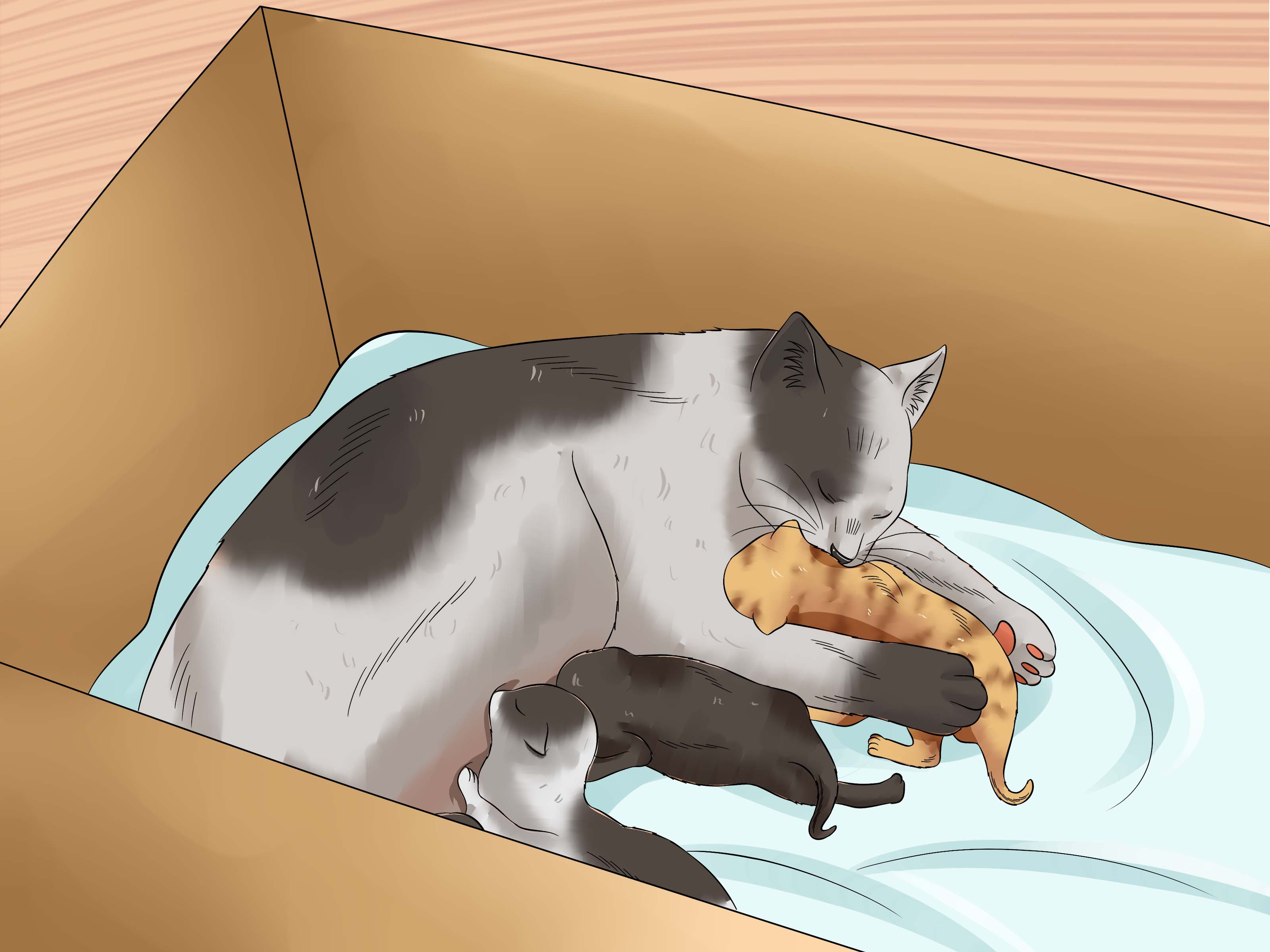
If the mother cat is friendly or at least tolerant, the easiest move is often relocating the entire family unit. Mother cats know how to care for their babies better than we do, and your goal is to support that, not replace it.
If she is indoors, encourage her into the prepared room first if possible. Then move the kittens. If she is outdoors and the nest is unsafe, move the kittens to a nearby safer nesting spot and monitor from a distance so she can rejoin them. Some mother cats will carry their kittens one by one to a new location if they approve of it. Others will stare at you like you have personally ruined civilization. Both reactions are normal.
Do not force heavy interaction with a stressed mother cat. A nervous queen can become defensive after giving birth. Move calmly, speak softly, and keep extra people away. This is not a group project for the neighborhood children.
Step 4: Wash Your Hands and Handle Each Kitten Gently
Old myths say a mother cat will reject kittens if humans touch them. That is generally not true. Still, newborn kittens should be handled only as much as necessary because overhandling adds stress and heat loss. Wash your hands before and after, or wear clean gloves if needed for hygiene.
How to pick up a newborn kitten safely
- Scoop the kitten gently with both hands.
- Support the whole body, especially the chest and belly.
- Keep the kitten level and close to your body for warmth and security.
- Do not dangle, squeeze, or lift by the scruff.
If a kitten feels cold, limp, or weak, warming comes before anything else. Do not feed a chilled kitten. A cold kitten cannot digest properly and needs gentle warming first. That rule is not optional.
Step 5: Move the Kittens One at a Time in a Warm Container
For a short indoor transfer, you can carry kittens one at a time by hand and place them directly into the prepared nest. For longer distances or outdoor-to-indoor moves, use a lined carrier or small box. Add soft bedding and a wrapped heat source if needed, but make sure it is warm, not hot.
Move the entire litter efficiently so no kitten is left behind or separated too long. Count them before and after. Tiny kittens are surprisingly good at hiding in bedding folds, which is impressive and unhelpful.
If you are moving kittens from an unsafe outdoor location to a safer nearby spot for the mother to retrieve or join, keep the container low, stable, and quiet. Do not set the kittens in direct sun, on wet ground, or in an exposed open box. The new nest should be sheltered from wind and weather, and still close enough for the mother cat to locate it easily.
Step 6: Reunite the Family Fast and Reduce Stress
As soon as the kittens are in the new nest, reunite them with their mother if she is part of the move. Then back off. Hovering over a mother cat like a helicopter relative in a hospital waiting room is not comforting. She needs privacy to inspect the new space, settle down, and resume nursing.
Keep the room quiet for the first several hours. Limit visitors. Keep other pets out completely. If the mother is shy, place food and water where she can reach them without feeling exposed. Some cats will settle immediately; others may spend time hiding, carrying kittens around the nest, or meowing while they assess the area. Give her time.
If the mother does not settle, refuses to nurse, or repeatedly tries to move the kittens somewhere unsafe, reevaluate the setup. She may want more privacy, less noise, dimmer light, or fewer interruptions.
Step 7: Monitor Warmth, Nursing, and Weight After the Move
The move is not over just because the kittens are in a new box looking adorable. The next 24 hours matter. Watch for signs that the relocation worked.
Good signs after moving newborn kittens
- The mother returns to or stays with the litter.
- The kittens are quiet, warm, and huddled together.
- Nursing resumes normally.
- The mother is grooming them and allowing them to rest.
- The kittens continue gaining weight.
If you are caring for the kittens indoors, daily weighing with a kitchen scale is one of the smartest things you can do. Healthy neonatal kittens should gain weight steadily. A kitten who is crying constantly, feels cool, separates from the pile, struggles to latch, or fails to gain weight needs immediate attention. Newborn kittens do not have much margin for error.
Also keep bedding dry. Damp bedding chills kittens quickly. Replace soiled towels and blankets often, but keep the overall scent and nest layout familiar enough that the mother still recognizes it as home base.
Step 8: Know When to Call a Veterinarian or Rescue Right Away
Sometimes relocation is the easy part. The harder part is recognizing when the kittens need professional help. Contact a veterinarian, kitten-savvy rescue, or foster coordinator immediately if:
- The mother cat does not return within a reasonable observation period.
- A kitten is cold, limp, weak, or unresponsive.
- A kitten is crying nonstop despite warmth and access to mom.
- You see labored breathing, diarrhea, vomiting, eye or nasal discharge, bleeding, or obvious injury.
- The mother cat appears sick, injured, or unable to nurse.
- The kittens are orphaned and you are not equipped for around-the-clock neonatal care.
If the kittens are orphaned, they may need kitten milk replacer, frequent feedings, stimulation to urinate and defecate, careful warming, and close monitoring. Do not give cow’s milk. Do not improvise with random pantry ingredients. And again, do not feed a kitten who is cold.
Common Mistakes to Avoid When Moving Newborn Kittens
- Moving them unnecessarily: If mom is caring for them and the nest is safe, leave them be.
- Separating them from the mother for too long: Keep the family together whenever possible.
- Using direct heat: Heat lamps, uncovered heating pads, and hot water bottles can burn or overheat kittens.
- Creating a high-traffic nursery: Noise, handling, and other pets increase stress.
- Feeding chilled kittens: Warm first, then feed if safe.
- Assuming silence means everything is fine: Daily observation and weight checks still matter.
- Ignoring mom’s opinion: If she hates the setup, she may try to move the litter again.
Practical Example: Indoor Move vs. Outdoor Safety Move
Indoor move
Your friendly mother cat gives birth in the back of a closet, but the spot is cramped and close to household traffic. You set up a quiet spare bathroom with a nesting box, food, water, litter box, and a wrapped heat source under half the nest. You move the mother into the room, then bring the kittens in one by one, close the door, and leave the family alone to settle. That is a good, controlled move.
Outdoor safety move
You find a litter under a bush beside a busy driveway. The kittens look healthy, and the mother appears to be caring for them, but cars pass within a few feet. You prepare a sheltered box in a quieter corner nearby, move the kittens only a short distance, then monitor discreetly so the mother can rejoin them. That is a reasonable nearby relocation.
Real-Life Experiences and Lessons From Moving Newborn Kittens
People who have moved newborn kittens often describe the same emotional arc: first panic, then a burst of determination, then the sudden realization that these creatures are somehow both very tiny and very dramatic. One common experience starts with a surprising discovery. A homeowner opens the garage cabinet, garden shed, or old storage bin and finds a mother cat glaring from a nest of towels like she has booked the room for the season. In that moment, the first instinct is to scoop up the kittens immediately. But seasoned rescuers learn that the calmest moves usually happen after a pause, not after a panic sprint.
Another common lesson is that mother cats care deeply about privacy. Many people report that once the family is moved into a quiet bathroom or spare room, the mother relaxes faster when everyone simply leaves her alone. Not forever, of course, but long enough for her to sniff the space, circle the nest, settle in, and call the kittens back under her body. Hovering, checking every two minutes, or inviting family members in for a “look at the babies” tour tends to slow the process down. Apparently, postpartum cats do not enjoy open-house events.
Foster caregivers also learn quickly that warmth is everything. A kitten can look merely sleepy when it is actually chilled, and inexperienced helpers sometimes mistake weakness for calmness. People who have done neonatal care often say the biggest turning point in their confidence came when they learned to think in this order: warm, reunite, observe, then intervene more if needed. Not “feed first.” Not “bath first.” Definitely not “let’s take fifteen photos first.” Just warmth and stability.
Many real-world kitten moves also involve compromise rather than perfection. Maybe the mother will not accept the stylish new nesting box you bought, but she loves the plain cardboard one with a familiar blanket. Maybe the ideal guest room is unavailable, so the safest option becomes a quiet bathroom with the shower curtain tied up and the floor covered in washable bedding. Maybe the kittens had to be moved only six feet, not six miles, because that was enough to get them away from a lawn mower path while still keeping the mother oriented. Successful moves are often humble, practical, and slightly improvised.
Perhaps the most valuable experience people share is this: after the move, the best thing you can do is become boring. Keep the room quiet. Refresh food and water. Change wet bedding. Weigh the kittens. Watch for nursing. Then step back. Newborn kittens thrive on routine, warmth, and their mother’s care. Humans tend to want a dramatic ending, but the real win is wonderfully uneventful: a pile of sleeping kittens, a mother cat finally relaxed, and a room so calm it feels like nothing is happening. In kitten care, that is often the happiest ending of all.
Conclusion
If you need to move newborn kittens, the safest strategy is simple: move them only when necessary, prepare the new nest before the transfer, keep them warm, involve the mother whenever possible, and monitor them closely afterward. A quiet, low-stress setup can make the difference between a rocky relocation and a smooth one. When in doubt, keep the family together and get expert help early. With kittens this young, careful beats clever every single time.