Note: This article discusses smart meter bench testing from an educational, legal, and safety-focused perspective. It does not provide instructions for bypassing, altering, defeating, or tampering with revenue meters or utility equipment.
Introduction: When a Smart Meter Refuses to Be a Desk Toy
A smart meter looks like a simple plastic-faced device until you try to wake one up on a workbench. Then it suddenly develops the personality of a stubborn cat. You give it power, you expect a cheerful display, and instead it blinks, sulks, resets, or does absolutely nothing. That is because a smart meter is not just a digital clock with a utility logo. It is a certified measurement instrument, a communications node, a safety device, and sometimes a remote disconnect system packed into one rugged enclosure.
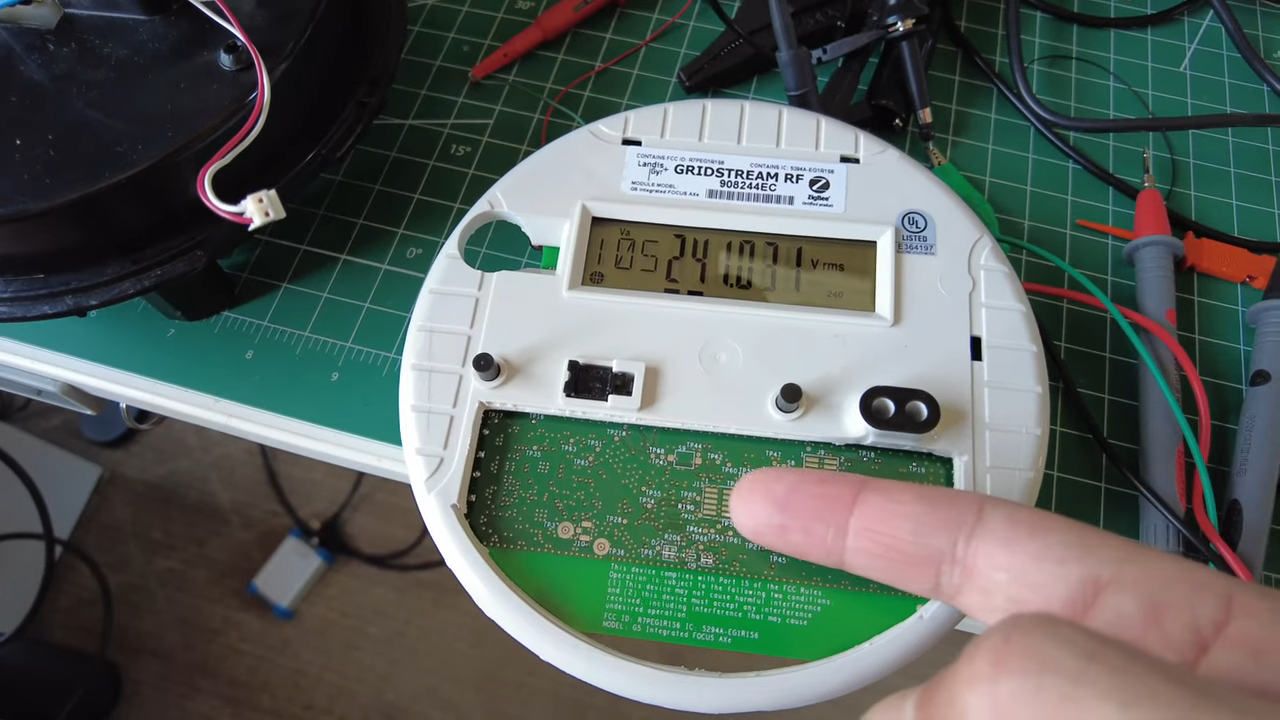
The phrase “tricking a smart meter into working on the bench” sounds mischievous, but in a legitimate electronics context it usually means something much less dramatic: creating a safe lab environment where a decommissioned or authorized meter believes the basic conditions of service are present. That may include appropriate low-voltage logic power, simulated voltage references, expected sensor states, and enough startup signals for the firmware to leave reset mode. In other words, you are not “beating the grid.” You are convincing a retired gadget to stop playing dead long enough to study how it was designed.
Modern smart meters are built around standards, accuracy requirements, tamper detection, and advanced metering infrastructure, commonly called AMI. They measure electricity consumption, record events, communicate with utility systems, and often detect suspicious physical or electrical conditions. That makes them fascinating for engineers, security researchers, repair technicians, and hardware nerds who enjoy reverse engineeringpreferably the kind that does not involve a fire extinguisher, a court date, or explaining to the power company why their meter seal looks like it lost a fight with a screwdriver.
What a Smart Meter Actually Does
A traditional electromechanical meter measured energy with a spinning aluminum disk. A smart meter performs the same core jobmeasuring energy usebut adds digital sensing, calculation, memory, communications, and event logging. Inside a typical electric smart meter, voltage and current signals are sampled by metrology circuitry. A microcontroller or metrology processor calculates values such as voltage, current, active energy, reactive energy, demand, frequency, and sometimes power quality events.
In North American residential service, many meters are designed around split-phase power. The meter is normally installed in a socket connected to utility service conductors, where it can sense line conditions and measure load current. In a lab, that real-world environment is missing. A bench power supply may energize part of the electronics, but the meter may still refuse to fully boot because other expected signals are absent. From the meter’s perspective, the situation looks wrong. And smart meters are specifically designed to notice when things look wrong.
The Main Building Blocks
Although designs vary by manufacturer and model, many smart meters include several common sections. The power supply converts service voltage into internal low-voltage rails for electronics. The metrology front end samples voltage and current. The processor handles calculations, display output, logs, communications, and firmware routines. The communications module may use RF mesh, cellular, power line carrier, or another AMI pathway. Some meters include relays for remote disconnect, optical ports for local reading, batteries or supercapacitors for backup functions, and sensors that detect cover removal, magnetic interference, reverse energy flow, or abnormal wiring.
That combination is why bench testing can be surprisingly tricky. Powering one board does not mean the entire system is satisfied. The metrology chip may expect stable references. The processor may wait for a healthy power-good line. The firmware may check whether the cover switch, voltage sense, relay status, and memory are all in believable states. If one of those conditions fails, the device may lock itself in reset, report an error, or enter a limited diagnostic state.
Why Bench Testing a Smart Meter Is So Difficult
Bench testing an ordinary gadget is usually straightforward: connect the correct voltage, press the button, and hope the magic smoke stays inside. A smart meter is different because it was never designed to behave like a friendly development board. It was designed to live outdoors for years, handle heat and cold, resist tampering, survive electrical noise, measure accurately, and report trustworthy data to a utility.
That means the meter may not treat “power is present” as the same thing as “service conditions are valid.” It may look for multiple confirmations before booting normally. A display might light up briefly, then reset. A communications module might remain silent. A relay might refuse to move. The device may even log the event as suspicious if it detects odd voltage, missing current, an open cover, or an unexpected power sequence.
The Difference Between Powering and Operating
One important distinction is the difference between powering a meter and operating it as a meter. Powering means the internal electronics receive enough energy to wake some circuits. Operating means the meter is in a valid state where metrology, display, memory, and communications behave as intended. A bench setup may achieve the first without achieving the second. That is often where the “trick” comes in: not a criminal trick, but an engineering puzzle about what conditions the device requires before it behaves normally.
For example, a meter might have a low-voltage internal supply that can be energized safely by trained personnel using current-limited equipment. Yet the firmware may still wait for phase-detection signals, voltage-sense input, or proper startup sequencing. Without those signals, the meter is awake enough to complain but not awake enough to be useful. That is the electronic equivalent of getting out of bed, looking at the weather, and going straight back under the blanket.
Legal and Safety Boundaries Matter
Before anyone gets romantic about smart meter hacking, it is worth saying the boring but important part clearly: utility meters are not toys. A meter installed on a home or business is utility equipment, and interfering with it can be dangerous, illegal, and expensive. Tampering with a revenue meter can create shock hazards, arc-flash risks, fire hazards, billing problems, and serious legal consequences. Even a retired meter can contain design features intended for high-voltage environments.
A legitimate bench project should involve only decommissioned, legally obtained, non-service-connected hardware. It should avoid live utility service entirely. It should use isolation, current-limited lab equipment, protective enclosures, appropriate personal protective equipment, and the judgment of qualified professionals. If a project requires guessing around mains wiring, defeating seals, or connecting unknown terminals to household power, the correct technical term is not “experiment.” It is “bad idea wearing safety goggles.”
What This Article Will Not Cover
This article does not explain how to bypass a meter, alter billing, defeat tamper detection, access utility networks, clone credentials, manipulate readings, or connect a meter in a way that could endanger people or property. Responsible research focuses on understanding architecture, safety, standards, diagnostics, and design tradeoffsnot stealing electricity or poking live equipment with heroic confidence and questionable footwear.
How Smart Meters Know Something Is Wrong
Smart meters are built with tamper awareness because their measurements have financial and operational importance. Utilities rely on meter data for billing, outage detection, load planning, demand response, and grid management. If meter data becomes unreliable, the problem is not just one incorrect bill. It can affect forecasting, transformer loading analysis, outage restoration, and distributed energy planning.
Common tamper and event indicators may include cover-open detection, magnetic field detection, reverse energy flow, phase loss, neutral disturbance, clock changes, memory errors, abnormal voltage conditions, and unexpected resets. Some meters log these events locally and report them through AMI networks. Many devices also use cryptographic methods and controlled firmware update processes to reduce unauthorized modification.
For bench work, those same protections can be frustrating. The meter may interpret an innocent lab condition as abnormal because it is abnormal compared with field service. Missing voltage, strange sequencing, no load signature, disconnected sensing paths, or a removed cover can all change behavior. In a way, the meter is doing its job. It is not being rude; it is being professionally suspicious.
Understanding the Bench-Test Goal
A safe bench test usually has a narrow purpose. The goal might be to examine the display, study the internal power architecture, understand how the optical port behaves, document the board layout, analyze metrology design choices, or learn how AMI devices are assembled. A utility lab might perform much more formal testing, including accuracy verification, environmental testing, communications testing, firmware validation, and conformance testing against applicable standards.
For a hobbyist or researcher with an authorized decommissioned meter, the goal should not be “make it lie.” A better goal is “make it wake safely enough to observe.” That shift matters. It keeps the project educational and reduces the risk of crossing legal, ethical, or physical safety lines.
Safe, High-Level Bench Concepts
At a high level, a bench environment may need to emulate parts of the meter’s normal world. That could include stable low-voltage power for logic circuits, believable status inputs, safe simulated sensing conditions, and a controlled way to observe serial, optical, or display output. Professional meter test benches use calibrated sources and loads to verify measurement accuracy. They do not rely on guesswork. They also separate hazardous energy from the operator with proper fixtures, barriers, and procedures.
In educational settings, non-invasive observation is often the best starting point. Photographing boards, identifying major components, reading publicly available datasheets for similar metrology chips, and studying standards can teach a lot without energizing anything. When power is involved, current limiting and isolation become essential, and the experiment should stay far away from active service wiring.
The Role of Metering Standards
Smart meters are not built randomly. In the United States, electricity metering is shaped by ANSI C12 standards, utility requirements, and manufacturer qualification processes. Standards such as ANSI C12.1 and ANSI C12.20 address performance, accuracy classes, testing conditions, and acceptable behavior for metering devices. Other C12-related standards deal with data tables, communication protocols, and interoperability.
These standards matter because meters are revenue instruments. A small error repeated across thousands or millions of customers becomes a very large problem. Accuracy classes such as 0.1, 0.2, and 0.5 are not marketing glitter; they represent performance expectations under defined conditions. A bench experiment that simply lights the display does not prove the meter is measuring accurately. True calibration requires proper equipment, traceable references, and controlled procedures.
Smart Meters as AMI Devices
The “smart” in smart meter often refers to communications as much as measurement. Advanced metering infrastructure allows utilities to collect readings remotely, receive outage notifications, manage service events, and sometimes support demand-response programs. Depending on the deployment, meters may communicate through RF mesh networks, cellular links, power line carrier systems, or point-to-point radio networks.
On the bench, communications can be another source of confusion. A meter may boot but fail to connect because it is outside its normal network. It may search for neighboring nodes, report no signal, or store data for later upload. Some modules are provisioned for specific utility systems and will not behave meaningfully outside them. That is by design. AMI networks are critical infrastructure, not open chat rooms where every retired meter gets to wander in and introduce itself.
Cybersecurity and Privacy Considerations
Smart meters generate data that can reveal patterns of energy use. Fine-grained consumption data may suggest when a home is occupied, when appliances run, or how daily routines change. For that reason, cybersecurity and privacy are important parts of smart grid design. NIST guidance and industry best practices emphasize risk management, authentication, secure update mechanisms, monitoring, and layered defenses.
Bench research should respect those boundaries. Examining hardware architecture is one thing; attempting to access utility credentials, network keys, or private customer data is another. Ethical researchers document findings responsibly, avoid live systems, and coordinate disclosure when legitimate vulnerabilities are found. The goal should be improving safety and reliability, not turning a meter into the world’s least practical burglary assistant.
What Makes the “Trick” Interesting
The interesting part of bench-starting a smart meter is that it reveals how much engineering hides behind an object most people ignore. A meter is expected to wake reliably, measure accurately, remember events, communicate securely, survive weather, resist tampering, and last for many years. When it refuses to operate on a bench, it is not just being difficult. It is exposing the assumptions built into its design.
Those assumptions can include service voltage being present, sensing circuits having valid references, the enclosure being closed, nonvolatile memory passing checks, clocks being sane, communications modules responding, and internal rails rising in the correct order. A bench setup that does not satisfy those assumptions may produce confusing symptoms. The lesson is valuable: embedded systems are rarely just chips and code. They are ecosystems of hardware, firmware, safety requirements, and real-world context.
Practical Lessons for Electronics Learners
1. Embedded Devices Depend on Their Environment
A smart meter teaches that devices are designed for specific operating environments. Remove the environment, and the device may behave strangely. The same idea applies to automotive modules, industrial controllers, medical devices, and appliances. Many embedded systems expect sensors, status lines, power sequencing, and network conditions to match reality.
2. Safety Engineering Is Invisible Until It Stops You
The features that frustrate bench experimentation often exist for good reasons. Reset supervisors, fault detection, tamper logs, isolation barriers, and startup checks protect equipment and users. When a device refuses to run, it may be preventing a hazardous state rather than merely being annoying.
3. Accuracy Is Not the Same as Activity
A glowing screen does not mean a meter is accurate. Real metrology requires calibrated signals, known loads, temperature considerations, and proper procedures. This is a useful reminder for any measurement project: if the instrument is not verified, the number on the display may be decorative confidence.
4. Reverse Engineering Should Have Boundaries
Responsible reverse engineering is about learning, repair, interoperability, and security improvement. It should not harm others, access private systems, or enable fraud. Smart meters make that boundary especially important because they sit at the intersection of personal energy use, utility infrastructure, and public safety.
Experiences Related to Tricking a Smart Meter Into Working on the Bench
The first lesson from any smart meter bench adventure is humility. You can stare at a meter and think, “How complicated can this be?” Then the meter stares back with a blank LCD and answers, “Complicated enough.” Many electronics hobbyists are used to development boards that wake up politely from USB power. Smart meters do not share that hospitality. They were born in meter sockets, raised on utility standards, and trained to distrust weird situations.
One common experience is the half-boot. The meter seems alive for a moment. A display segment flashes, a relay clicks faintly, or a tiny LED gives a hopeful blink. Then everything resets. This can happen when one section of the electronics receives power while another section reports a fault, missing reference, or invalid startup condition. It feels like the device is teasing you, but it is really following its internal checklist. The checklist is not there to make your afternoon longer, although it may succeed spectacularly at that too.
Another experience is discovering how much physical design matters. Smart meters often use layered boards, custom connectors, optical ports, sealed housings, conformal coatings, and ruggedized parts. The layout is shaped by isolation, heat, surge protection, metrology accuracy, and manufacturing efficiency. Even without powering the device, a careful visual inspection can reveal design priorities. Wide spacing may suggest high-voltage isolation. Shielding may hint at radio or noise concerns. Large copper paths may show current flow areas. Small sensing networks may show where the device watches the world.
Bench work also teaches patience with documentation. Exact service manuals for utility meters are not always public, and manufacturer documents may focus on utility operation rather than hobby analysis. That means learners often compare visible components with public datasheets for similar metrology chips, power controllers, memory devices, displays, and communications modules. This type of research is slower than simply copying a wiring diagram, but it builds real understanding. It also keeps the project safer because it encourages observation before action.
A good bench session feels more like detective work than brute force. Instead of asking, “How do I force this thing to run?” the better question is, “What condition is it waiting for?” That mindset leads to safer experiments: checking labels, identifying low-voltage sections, tracing obvious power domains, reading component markings, and understanding system architecture. It also reduces the temptation to connect random wires to random pads, which is how many devices become educational smoke machines.
The most valuable experience may be learning when to stop. If a meter is sealed, active, utility-owned, connected to service, or poorly understood, the correct move is to step away. There is no shame in deciding that a project needs better equipment, better documentation, or a qualified professional. Electronics rewards curiosity, but high-energy electrical systems punish overconfidence. A responsible bench project should end with more knowledge, not a damaged meter, a dangerous setup, or a utility investigator asking why your “science project” has a billing account number.
In the best version of this project, the smart meter becomes a teaching tool. It demonstrates embedded system dependencies, safety design, measurement standards, communications architecture, and the difference between consumer electronics and infrastructure hardware. The meter may be stubborn, but that stubbornness is the point. It shows that reliable measurement is not magic. It is careful engineering wrapped in plastic, sealed with policy, and occasionally determined to make your bench supply feel inadequate.
Conclusion
Tricking a smart meter into working on the bench is less about deception and more about understanding context. A smart meter expects a world of service voltage, sensing references, enclosure states, firmware checks, communication rules, and safety conditions. Remove that world, and the meter may refuse to behave. Recreating parts of that environment safely and legally can teach valuable lessons about embedded systems, metrology, AMI networks, cybersecurity, and responsible hardware research.
The key is to keep the project on the right side of the line. Study decommissioned hardware. Avoid live utility equipment. Do not bypass, alter, or defeat revenue functions. Respect safety standards and privacy concerns. When approached responsibly, a smart meter on the bench is not a shortcut to mischief. It is a compact masterclass in how modern infrastructure devices think, measure, communicate, and protect themselves.