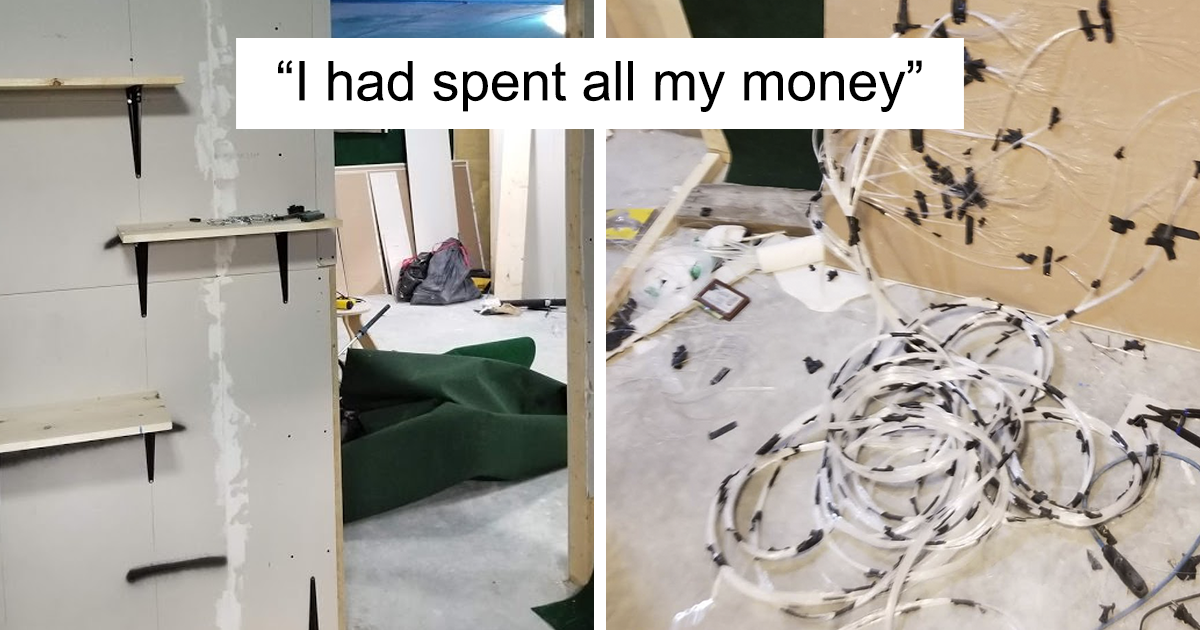
Some love stories do not arrive with roses, violins, or carefully edited engagement photos. Some arrive with drywall dust, carpet scraps, a maxed-out credit card, two energetic Bengal cats, and a basement slowly turning into a miniature jungle. That is what made the story of a man adopting his late brother’s two Bengals so unforgettable. It was not just a home improvement project. It was grief with a hammer in its hand. It was memory built shelf by shelf.
The story first captured hearts online because it had everything the internet claims to love but rarely handles gently: cats, DIY chaos, family loss, and a tribute so sincere it could make even the most emotionally unavailable houseplant tear up. After his brother passed away, Hilton Patton took in the two Bengals, Benji and Nala, and decided to give them more than a place to sleep. He wanted to build them a world. Not a corner. Not a sad scratching post shoved beside the laundry machine. A real indoor cat jungle in the basement, complete with climbing walls, shelves, turf, cozy hideouts, a water feature, and even a starry ceiling inspired by his brother.
For Bengal cats, this was not excessive. It was basically the feline version of moving into a luxury wellness resort with parkour facilities. Bengals are famously athletic, curious, intelligent, and more than a little dramatic. They are the kind of cats who look at a regular living room and think, “Nice. But where is the mountain range?” So when someone builds them vertical space, tunnels, ledges, textures, and places to leap, they are not being spoiled. They are being understood.
A Cat Jungle Built From Love, Not Perfection
One of the most touching parts of this story is that the builder did not pretend to be a professional contractor. He openly admitted he had little experience with the work he was doing. The project involved framing, drywall, shelves, carpeting, turf, electrical planning, optical fiber lighting, speaker wires, and more than a few moments that probably deserved their own blooper reel.
But that honesty is exactly why the story works. The basement jungle was not beautiful because every corner looked showroom-perfect. It was beautiful because every corner had intention. The electrical areas were blocked off so the cats could not hurt themselves. Shelves were placed for climbing and lounging. Walls were carpeted so Benji and Nala could scramble upward like tiny spotted mountain goats. A litter area was planned with cleaning in mind. The space included places to hide, perch, run, scratch, investigate, and simply be cats.
That is the secret ingredient in any meaningful pet space: not money, not perfection, and definitely not owning every tool at the hardware store. The real ingredient is paying attention. What does the animal need? What makes them feel safe? What lets them express their natural behavior? In this case, the answer was a full basement playground that turned grief into a habitat.
Why Bengals Need More Than a Basic Cat Tree
Bengal cats are not ordinary couch ornaments. They are active, muscular, clever cats with a strong need for stimulation. Many Bengal owners describe them as dog-like because they may follow people around, learn tricks, enjoy puzzle games, play fetch, investigate water, and generally behave as if the entire home is an escape room designed specifically for them.
A bored Bengal can become a creative Bengal, and “creative” is sometimes a polite word for “opened the cabinet, knocked over the plant, stole a sock, and is now yelling from the top of the refrigerator.” These cats often need structured play, vertical territory, interactive toys, food puzzles, scratching surfaces, and regular human engagement. Without enough enrichment, indoor cats may develop unwanted behaviors such as excessive vocalizing, destructive scratching, overgrooming, pacing, or litter box issues.
That is why the basement jungle made so much sense. It gave Benji and Nala outlets for climbing, exploring, scratching, hiding, and observing. A Bengal’s body is built for movement, and their brain is built for problems. A well-designed indoor environment gives both something useful to do.
Vertical Space Is Not Decoration; It Is Territory
To humans, a shelf is storage. To a cat, a shelf is real estate. Cats naturally seek high places because height gives them a better view of their surroundings and a sense of safety. In a multi-cat home, vertical space also helps reduce tension because each cat can claim a comfortable perch without having to compete for the same floor-level spot.
In the basement jungle, shelves and wall paths turned empty walls into feline highways. This matters because cats do not only live horizontally. They live in layers. A great cat room thinks upward: wall shelves, ramps, towers, window perches, bridges, hammocks, and climbing posts all add usable territory without requiring a mansion-sized floor plan.
Hiding Spots Help Cats Feel Secure
A good cat jungle is not only about action. It also needs quiet. Cats need hiding places where they can retreat, decompress, or observe without being touched. This is especially important after a major life change, such as losing an owner and moving into a new home.
Benji and Nala were not just getting a fun room. They were adjusting to a new chapter after a painful loss in the family. A wall cave, cozy shelves, covered beds, and tucked-away resting areas can help cats feel in control. And for cats, control is not a luxury. It is emotional oxygen.
How Grief Can Become Care
There is a reason this story resonated with so many people. It is not only about cats. It is about what people do when love has nowhere obvious to go. After a death, grief can feel shapeless. It sits in the room. It follows you to the grocery store. It appears in ordinary moments, like seeing a favorite snack or hearing a song that suddenly punches you in the ribs.
Building something gives grief a task. It does not erase the pain, but it gives your hands a way to carry it. In this story, the cat jungle became a living memorial. Every shelf said, “I remember.” Every safe corner said, “I am still taking care of what you loved.” Every playful leap from Benji or Nala became proof that the brother’s love for his cats had not disappeared. It had changed caretakers.
That is one of the deepest responsibilities of adopting a loved one’s pets. You are not simply feeding animals. You are protecting a bond that existed before you stepped in. You are learning routines you did not create. You are discovering favorite toys, food preferences, odd habits, and the sacred weirdness that makes each pet irreplaceable.
What Makes a Safe Indoor Cat Jungle?
A cat jungle does not need to be huge to be effective. It does need to be safe. Anyone inspired by this story should remember that cats are talented at finding the one dangerous thing in a room and turning it into a hobby.
Secure Every Shelf and Climbing Surface
Cat shelves should be anchored into studs or properly supported. A Bengal launching onto a shelf is not placing a polite teacup on a tray. It is a furry athlete arriving with momentum. Surfaces need to handle jumping, landing, and the occasional sibling chase scene.
Protect Wires, Outlets, and Utility Areas
Basements often contain electrical panels, wires, pipes, vents, storage items, and appliances. These areas should be blocked off or enclosed so cats cannot chew, scratch, climb into, or get trapped behind anything dangerous. In the original jungle project, electrical access was separated to protect the cats, which is one of the smartest details of the entire build.
Choose Cat-Safe Materials
Use durable, low-shed carpeting or sisal for scratching and climbing. Avoid loose strings, staples, exposed nails, sharp edges, toxic adhesives, and small pieces that can be swallowed. If adding plants, choose pet-safe options. Boston ferns, for example, are widely listed as non-toxic to cats, though any plant can still cause stomach upset if a cat decides to eat it like a salad bar with paws.
Plan the Litter Area Like a Human Who Values Peace
For two cats, multiple litter boxes are usually better than one. A common guideline is one box per cat plus one extra when space allows. Boxes should be easy to access, easy to clean, and not placed where one cat can block the other. Ventilation and air filtration can help, but the true miracle worker is still daily scooping. Glamorous? No. Essential? Absolutely.
Enrichment Ideas Inspired by the Basement Cat Jungle
You do not need to turn your basement into a feline theme park to borrow wisdom from this story. Even a small apartment can become more cat-friendly with the right enrichment.
Build a Mini Climbing Route
Install a few staggered wall shelves leading to a perch. Add a cat tree near a window. Place a sturdy cabinet or bookcase where your cat can safely climb. The goal is to create movement and choice. Cats love having routes, not just objects.
Create a “Bird TV” Station
A window perch can provide hours of entertainment. If safe and appropriate, placing a bird feeder outside the window creates natural visual stimulation. Just make sure the window is secure. The cats should enjoy the show, not become part of an unscheduled outdoor documentary.
Use Puzzle Feeders and Hunting Games
Puzzle feeders turn meals into activity. Instead of serving every bite in a bowl, use treat balls, food puzzles, snuffle mats, or hidden kibble games. This encourages cats to work, sniff, paw, and problem-solve. For smart breeds like Bengals, this can make a noticeable difference in behavior.
Rotate Toys Instead of Buying the Entire Pet Store
Cats can lose interest when all toys are available all the time. Keep a small selection out and rotate items weekly. Wand toys, kicker toys, tunnels, crinkle balls, and spring toys can all be useful. The toy your cat ignores today may become the greatest treasure in civilization next Tuesday.
The Emotional Side of Taking In a Loved One’s Pets
Adopting a family member’s pets after a death can be both healing and heavy. The animals may remind you of the person constantly. Their habits may bring comfort one moment and break your heart the next. You may find yourself saying, “He would have laughed at that,” or “She used to love when they did this.”
Pets can grieve, too. Cats may react to the loss of a familiar person or animal with changes in appetite, sleep, vocalization, affection, hiding, or play. Some become clingy. Some withdraw. Some behave almost normally, which does not mean nothing changed. Cats are masters at subtlety. They can be emotionally devastated while still looking like they are judging your laundry technique.
The best support is usually calm consistency. Keep feeding times predictable. Use familiar blankets, beds, toys, or scents when possible. Give the cats time to explore at their own pace. Avoid forcing affection. Let them choose when to come close. For newly adopted cats, especially after loss, a safe room or dedicated quiet space can help them adjust before they gain access to a larger area.
Why This Story Feels So Powerful
The basement jungle is impressive, yes. The climbing walls, turf, starry ceiling, shelves, water area, and cat furniture all make it visually memorable. But the real power is not in the design. It is in the promise behind it.
“I will take care of them.”
That sentence is simple until it is not. It means vet appointments, food costs, litter duty, behavior adjustments, scratches on furniture, fur on clothes, and learning how to love animals who are grieving in their own quiet way. It means accepting that care can be inconvenient and still worth it. It means choosing responsibility when your own heart is already tired.
For Benji and Nala, the jungle gave them exercise and comfort. For Hilton, it gave grief a direction. For everyone who saw the story, it became a reminder that memorials do not always have to be stone, bronze, or framed photographs. Sometimes they can be carpeted walls and a hammock in a basement where two cats still get to feel adored.
Practical Lessons for Cat Owners
This story may be extraordinary, but its lessons are surprisingly practical. First, match the environment to the cat. A low-energy senior cat may want warm beds, ramps, and quiet corners. A Bengal may want climbing routes, games, tunnels, and a schedule that includes play. Good care is not one-size-fits-all.
Second, safety comes before aesthetics. A beautiful room with exposed wires, unstable shelves, toxic plants, or poor ventilation is not a paradise. It is a vet bill wearing a cute hat. Every cat space should be checked from the cat’s point of view: Can they chew it? Swallow it? Fall from it? Get stuck behind it? Pull it down at 3 a.m. because they saw a dust particle move suspiciously?
Third, enrichment should be daily, not decorative. A cat wheel, shelf, or tunnel is only useful if the cat actually engages with it. Owners should observe what their cats prefer. Some love height. Some love boxes. Some love water. Some love wand toys with the seriousness of Olympic athletes. The best enrichment plan is flexible.
Experience-Based Reflections: Caring for Pets After a Family Loss
When someone takes in a loved one’s pets after a death, the first few weeks can feel strangely tender. You may be learning the animals while also relearning your own routines. A cat may sit in the hallway and stare at you as if asking where their person went. You may not have an answer, so you offer dinner, a clean litter box, and a quiet voice. Sometimes that is all love can do for the day.
One useful experience many caregivers discover is that small rituals matter. Feeding the cats at the same time each morning can become a stabilizing act. Brushing them in the evening can become a soft memorial. Sitting near them without demanding attention can build trust. If the cats came with old blankets, beds, or toys, keeping those familiar items around can ease the transition. Scent is powerful for cats, and familiar smells may help them feel that not everything has vanished.
Another lesson is to go slowly with big changes. It is tempting to fix everything at once, especially when grief makes us desperate to do something useful. But cats often prefer gradual upgrades. Add one climbing shelf, then observe. Introduce a puzzle feeder, then see whether it delights or insults them. Move litter boxes carefully. Change food only with veterinary guidance and a slow transition. The goal is not to impress the internet. The goal is to help the cats feel safe.
There is also the emotional surprise of seeing the person you lost reflected in the animals they loved. A Bengal jumping into a sink may remind you of a funny story. A cat sleeping on a hoodie may feel like a message from the past. These moments can hurt, but they can also become bridges. Caring for the pets lets you continue a relationship with your loved one in a living, active way. You are not replacing the person. You are carrying forward one piece of their world.
Building a cat jungle, even a small one, can be part of that healing. A few shelves in a spare room, a window perch, a scratching wall, a cozy cave, and a basket of rotating toys can say, “You belong here.” For inherited pets, that message matters. Their lives changed, too. They did not understand the funeral, the silence, or the boxes being moved. They only understood that familiar things became unfamiliar.
The most meaningful experience is realizing that love does not have to be grand to be real. Some days, love is a basement transformed into a Bengal wonderland. Other days, love is scooping litter when you are exhausted, scheduling a vet visit, or letting a nervous cat hide under the couch without taking it personally. The big gestures inspire us, but the daily gestures keep animals safe. In the end, making someone proud may look less like perfection and more like showing up again and again, with patience, humor, and a lint roller that gave up months ago.
Conclusion
The story of the man who adopted his brother’s two Bengals and built them a basement cat jungle is more than a viral pet project. It is a moving example of how grief can become action, how action can become care, and how care can become a tribute that keeps love alive. Benji and Nala gained a home designed around their needs, but the project also gave their late owner’s memory a place to shine. Literally, in the case of that starry ceiling.
For cat owners, the lesson is clear: indoor cats need more than food and furniture they are not allowed to scratch. They need territory, stimulation, safety, routine, and affection on their own terms. For Bengal cats, that need is even stronger. They thrive when their environment lets them climb, chase, think, explore, hide, and bond.
Not everyone can build a basement jungle. But anyone can build a better life for a cat by paying attention. Add height. Add play. Add comfort. Add patience. And when love feels too heavy to carry, sometimes the kindest thing you can do is build something strong enough to hold a little of it.
Note: This article is original, publication-ready, and based on real feline care, Bengal cat behavior, indoor enrichment, and pet transition guidance. It is not a substitute for advice from a licensed veterinarian or certified feline behavior professional.