Important medical note: This guide is for educational reading only. Always follow the exact instructions from your doctor, nurse, pharmacist, and the current HUMIRA Instructions for Use that came with your medication. Do not try to inject HUMIRA yourself until a healthcare professional has trained you and confirmed that home injections are appropriate for you.
Introduction: The Tiny Pen That Looks Scarier Than It Is
If your doctor has prescribed HUMIRA, also known as adalimumab, you may have had the same first thought many people have: “Wait, I’m supposed to inject myself?” Perfectly normal. Even confident adults can become suspiciously interested in reorganizing the sock drawer when an injection pen appears on the kitchen counter.
The good news is that the HUMIRA Pen is designed for subcutaneous injection, meaning the medicine goes into the fatty layer under the skin, not deep into a muscle. The pen is single-use, prefilled, and built to deliver the dose after you press the activator button. Once you learn the routine, self injecting a HUMIRA Pen often becomes less dramatic than assembling a flat-pack bookshelfand usually involves fewer mysterious leftover screws.
This in-depth guide explains how to self inject a HUMIRA Pen in 15 practical steps, including preparation, site selection, injection technique, aftercare, storage, disposal, and real-life tips that make the process smoother. It is written in plain American English, because nobody needs medical instructions that sound like they were written by a committee of robots wearing lab coats.
What Is HUMIRA and Why Is It Self Injected?
HUMIRA is a prescription biologic medicine containing adalimumab, a tumor necrosis factor blocker, often called a TNF blocker. TNF is involved in inflammation, and blocking it can help treat certain autoimmune and inflammatory conditions. HUMIRA is used for several conditions, including rheumatoid arthritis, psoriatic arthritis, ankylosing spondylitis, Crohn’s disease, ulcerative colitis, plaque psoriasis, hidradenitis suppurativa, and some forms of uveitis, depending on the patient and prescribing plan.
Many people take HUMIRA at home because treatment may be ongoing, and repeated office visits for every injection would be wildly inconvenient. Your dosing schedule depends on your condition, weight, age, other medicines, and your prescriber’s plan. Never copy another person’s schedule, even if they seem very confident in a patient forum. Confidence is not the same thing as a prescription.
Before You Start: Safety Comes First
Before using a HUMIRA Pen at home, make sure your healthcare provider has shown you the correct technique. Ask questions until the process makes sense. A good nurse would rather answer “Where exactly does this go?” for the third time than have you guess while holding a pen full of medication.
Also, call your healthcare provider before injecting if you have symptoms of infection, such as fever, chills, sweats, cough, painful urination, unusual tiredness, open sores, or a wound that is not healing. HUMIRA affects the immune system, so infections matter. Your doctor may also test for tuberculosis or hepatitis B before and during treatment.
Do not use a HUMIRA Pen if it has been frozen, overheated, left in direct sunlight, dropped hard, crushed, expired, or if the liquid looks cloudy, discolored, or full of flakes or particles. A few bubbles may be normal, but questionable liquid is a “call the pharmacist” situation, not a “let’s see what happens” situation.
How to Self Inject a Humira Pen: 15 Steps
Step 1: Choose the Right Time and Place
Pick a calm, clean, well-lit area where you can sit comfortably. A table or counter works well. Avoid rushing, multitasking, or trying to inject while balancing a phone, a coffee mug, and your emotional stability all at once. Give yourself enough time to prepare the pen, wash your hands, clean the skin, inject, and dispose of the pen safely.
Step 2: Take the HUMIRA Pen Out of the Refrigerator
If it is more comfortable, take the HUMIRA Pen out of the refrigerator 15 to 30 minutes before the injection so the medicine can reach room temperature. Keep the caps on while it warms. Do not warm the pen in a microwave, hot water, sunlight, or your hands like you are trying to hatch a tiny plastic egg. Let it warm naturally.
Step 3: Gather Your Supplies
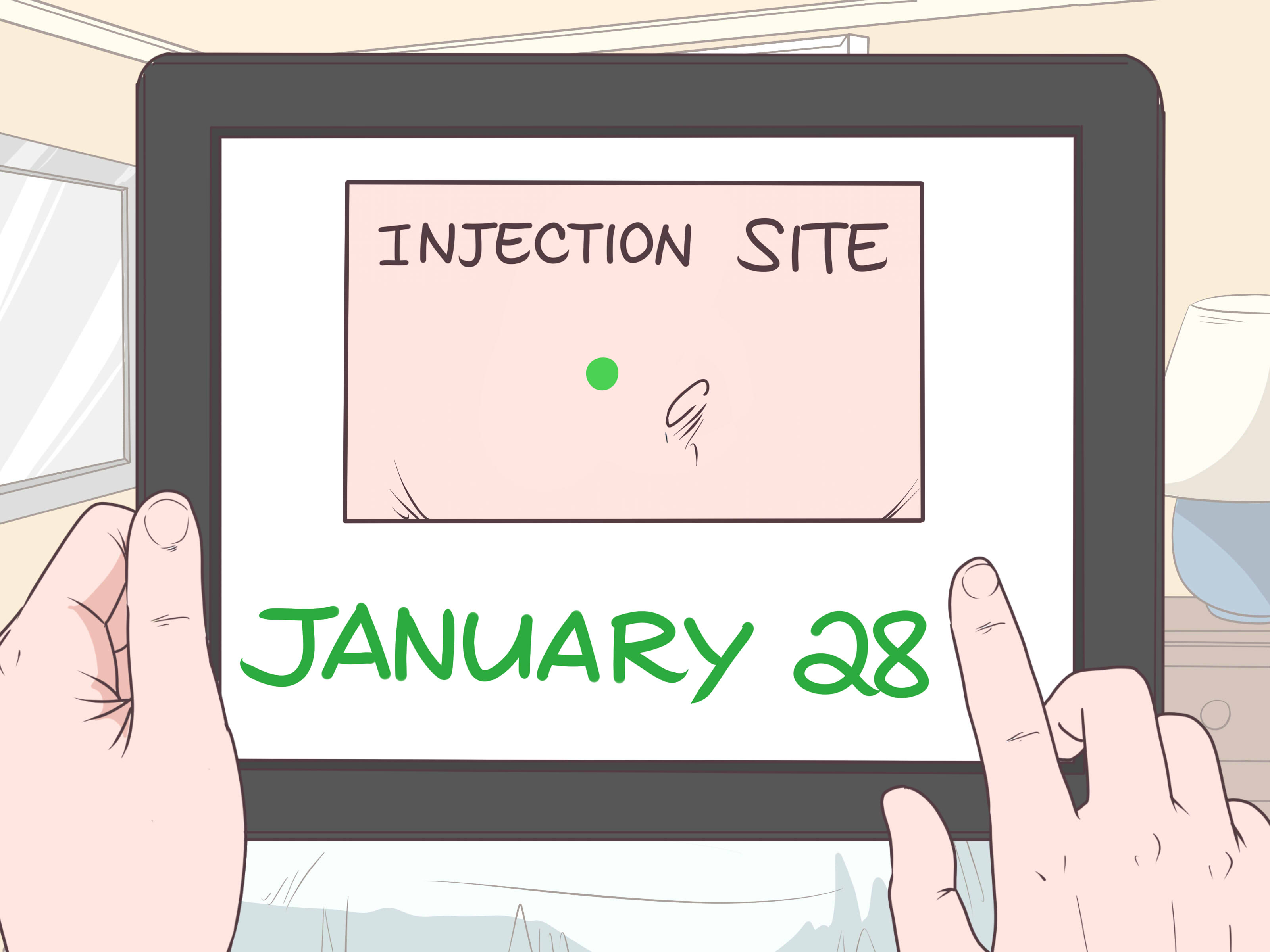
Place everything on a clean, flat surface. You will usually need one HUMIRA Pen, one alcohol swab, one cotton ball or gauze pad, and an FDA-cleared sharps disposal container. Some people also like to keep a calendar, phone reminder, or treatment journal nearby to record the injection date and site.
Step 4: Check the Carton and Pen Label
Make sure the medicine is HUMIRA and that the dose matches what your doctor prescribed. Check the expiration date on the carton, tray, and pen. If anything seems wrong, damaged, opened, or confusing, pause and call your pharmacist. With biologic medication, “probably fine” is not the quality-control system we are aiming for.
Step 5: Inspect the Medicine Through the Window
Look through the viewing window. The liquid should be clear and colorless. Do not use the pen if the medicine is cloudy, discolored, or contains flakes or particles. It is generally normal to see one or more bubbles. Also check that the amount of liquid appears at or near the fill line, depending on the pen design provided to you.
Step 6: Wash and Dry Your Hands
Wash your hands thoroughly with soap and water, then dry them with a clean towel. This step sounds boring because it is boringand also important. Clean hands reduce the chance of introducing germs to the injection site.
Step 7: Choose an Injection Site
HUMIRA is usually injected into the front of the thighs or the lower abdomen. If you use the abdomen, avoid the area within two inches of the belly button. Choose a site that is easy to see and reach. The first time, many people prefer the thigh because it feels more straightforward. Your belly may disagree, but that is between you and your waistband.
Step 8: Rotate Your Injection Sites
Use a different site each time you inject. The new site should be at least one inch away from the previous injection spot. Avoid skin that is tender, bruised, red, hard, scarred, or affected by stretch marks. If you have psoriasis, do not inject directly into raised, thick, red, scaly plaques or lesions.
Step 9: Clean the Skin
Use an alcohol swab to clean the injection site in a circular motion. Let the skin air-dry completely. Do not blow on it, fan it, touch it again, or perform any tiny impatient rituals. Wet alcohol can sting more, and touching the area again can reintroduce germs.
Step 10: Hold the Pen Correctly
Hold the middle of the HUMIRA Pen. Keep your fingers away from the caps until you are ready to remove them. Do not remove the caps early. The pen should not be activated until the injection site is ready and you are prepared to inject.
Step 11: Remove the Gray Cap
When you are ready, pull the gray cap straight off. Do not twist it. After removing it, do not put it back on, because replacing the cap may damage the needle. Do not touch the needle area or let it touch any surface. A small drop of liquid may appear, which can be normal.
Step 12: Remove the Plum-Colored Cap
Pull the plum-colored cap straight off. Do not twist it, and do not put it back on. The HUMIRA Pen is now ready to use. Keep the plum-colored activator button pointed upward until you position the pen on your skin. Do not press the button until the pen is firmly in place.
Step 13: Position the Pen at a 90-Degree Angle
Gently squeeze the cleaned skin to create a raised area. Place the white end of the pen straight and flat against the raised skin at a 90-degree angle. Make sure the pen is positioned so the needle will not inject into the fingers holding your skin. The pen should feel stable, not wobbly.
Step 14: Press the Activator Button and Hold
Press the plum-colored activator button with your thumb or index finger. You will hear a loud click, which means the injection has started. Keep holding the pen firmly against your skin. Continue pressing and holding it in place until the medicine is injected. This may take up to 10 seconds, so count slowly to ten. The yellow marker should fully appear in the window and stop moving when the injection is complete.
Step 15: Remove the Pen and Dispose of It Safely
Slowly lift the pen straight away from your skin. The needle sleeve should cover the needle tip. Do not recap the pen. Place the used HUMIRA Pen immediately into a sharps disposal container. If you see a little blood, press a cotton ball or gauze pad over the site for a few seconds. Do not rub the injection site, even if your hand is emotionally prepared to be helpful.
After the Injection: What Is Normal and What Is Not?
Mild redness, itching, bruising, swelling, or soreness at the injection site can happen. Some people also experience headache, nausea, rash, or upper respiratory symptoms. These side effects are not the full list, and your own risk depends on your health history and medications.
Call your healthcare provider right away if you develop signs of infection, a severe rash, trouble breathing, chest pain, persistent fever, unusual bruising, severe weakness, yellowing of the skin or eyes, or a reaction that worries you. Because HUMIRA changes immune system activity, it is better to report concerning symptoms early than to politely wait while your body sends louder and louder emails.
How to Store HUMIRA Correctly
Store HUMIRA in the refrigerator in its original carton to protect it from light. Do not freeze it. If it has been frozen, do not use it even if it later thaws. When traveling, HUMIRA may be kept at room temperature up to 77°F for a limited time according to the current product instructions, commonly up to 14 days. Once removed from refrigeration for room-temperature storage, write down the date and follow the discard instructions exactly.
Do not store HUMIRA in a hot car, next to a sunny window, in checked luggage without temperature planning, or anywhere your medicine might experience a weather event. Treat it like something expensive, delicate, and mildly dramaticbecause it is.
Common Mistakes to Avoid
One common mistake is removing the caps too early. Keep both caps on until right before the injection. Another mistake is injecting into irritated skin. Tender, bruised, hard, red, scarred, or inflamed areas are poor choices. A third mistake is pulling the pen away too soon. Wait until the yellow marker fully appears and stops moving so you receive the full dose.
People also sometimes forget to rotate sites. Reusing the same small patch of skin can increase irritation. Use a simple rotation pattern: right thigh, left thigh, right abdomen, left abdomen, or whatever schedule your healthcare provider approves. The goal is not artistic symmetry; it is giving your skin a break.
How to Make HUMIRA Injections More Comfortable
Letting the pen warm naturally for 15 to 30 minutes may reduce the cold sting. Make sure the alcohol fully dries before injecting. Relax the muscle near the site, breathe slowly, and keep your hand steady. Some people find it helpful to exhale while pressing the button. Others use a countdown: “Three, two, one, click.” A countdown gives your brain something official to do besides panic.
Do not ice the area unless your healthcare provider says it is okay, and never apply heat to the pen itself. If injections are consistently painful, ask your doctor, nurse, or pharmacist to watch your technique. Small changes in angle, pressure, site choice, or timing can make a big difference.
Traveling With a HUMIRA Pen
Travel requires a little planning. Keep HUMIRA in the original carton when possible, protect it from light, and follow temperature rules carefully. Bring more supplies than you think you need, including alcohol swabs, gauze, and a travel sharps container. Keep medication with you rather than in checked baggage if flying, because checked bags can be exposed to temperature swings and delays.
Before a trip, ask your pharmacist or specialty pharmacy about travel coolers, documentation, refill timing, and what to do if a dose is delayed. If you cross time zones, ask your prescriber how to handle your schedule. Your immune system does not care that your phone automatically changed to Pacific time.
When to Call Your Doctor, Nurse, or Pharmacist
Call your care team if you miss a dose, inject only part of a dose, remove the pen too early, drop the pen, notice damaged packaging, or see liquid that does not look right. Also call if you have an infection, are scheduled for surgery, need vaccines, become pregnant, plan to become pregnant, or develop new symptoms after starting treatment.
If you are ever unsure whether to inject, do not guess. A quick call can prevent a bigger problem. Healthcare professionals answer these questions all the time, and no, yours is probably not the weirdest one they have heard this week.
Real-Life Experiences and Practical Lessons From Self Injecting HUMIRA
The first HUMIRA Pen injection is often the hardest emotionally, not technically. Many patients describe the first dose as a mental hurdle: they understand the steps, they know the pen is designed for home use, and they still stare at it like it just challenged them to a duel. That reaction is normal. Self-injection combines medication, responsibility, and a needle you cannot really see but very much know exists.
A common experience is that the anticipation feels worse than the injection itself. The click can surprise people, especially the first time. Practicing with a nurse or watching an official demonstration can help. Some people rehearse the sequence without removing the caps: wash hands, choose site, clean skin, breathe, place pen, press. The goal is to make the routine familiar before the real moment arrives.
Another practical lesson is that environment matters. Injections tend to go better when the setup is boring in the best possible way. Same table, same time of day, same supply checklist, same sharps container nearby. When the routine is predictable, the brain stops treating injection day like a breaking-news event. A small ritual can help: drink water, sit down, put supplies on a clean towel, play calm music, and give yourself five quiet minutes.
People also learn quickly that site choice is personal. Some prefer the thigh because it is easy to see and control. Others prefer the abdomen because the tissue may feel softer. Neither option is universally best. The best injection site is one that is approved, healthy, easy to reach, and tolerable for you. Keeping a simple injection log can reveal patterns, such as one side being more sensitive or certain spots bruising more easily.
Many users find that confidence builds after the third or fourth injection. By then, the steps feel less mysterious: warm the pen, inspect the liquid, wash hands, clean skin, uncap, place, click, hold, dispose. It becomes a healthcare chore, not a heroic quest. Still, it is worth respecting the process every time. Even experienced patients should not rush, skip inspection, forget site rotation, or casually toss a used pen into household trash.
Emotionally, it can help to remember why you are taking HUMIRA. For many people, biologic therapy is part of a larger plan to control inflammation, reduce symptoms, protect joints or tissues, and improve daily life. The injection is not just a needle moment; it is one step in managing a long-term condition. That perspective can make the process feel less like something being done to you and more like something you are doing for yourself.
Finally, do not underestimate the value of support. A family member, friend, pharmacist, nurse ambassador, or clinic nurse can help you feel less alone. Some patients have someone sit nearby during early injectionsnot to interfere, just to provide moral support and maybe say, “You’ve got this,” at the exact moment your courage tries to leave the room. With training, patience, and a steady routine, self injecting a HUMIRA Pen can become a manageable part of life.
Conclusion
Learning how to self inject a HUMIRA Pen can feel intimidating at first, but the process becomes easier when you break it into clear steps. Prepare your supplies, inspect the pen, choose healthy skin, clean the site, remove the caps only when ready, hold the pen firmly at a 90-degree angle, press the activator button, wait for the yellow marker, and dispose of the used pen safely in a sharps container.
The most important rule is simple: do not freestyle your medication routine. Follow your prescribed dosing schedule, use the official instructions that came with your HUMIRA Pen, and contact your healthcare provider if anything seems unusual. Your goal is not to be fearless. Your goal is to be careful, consistent, and informed. Fearless is optional. Proper technique is not.