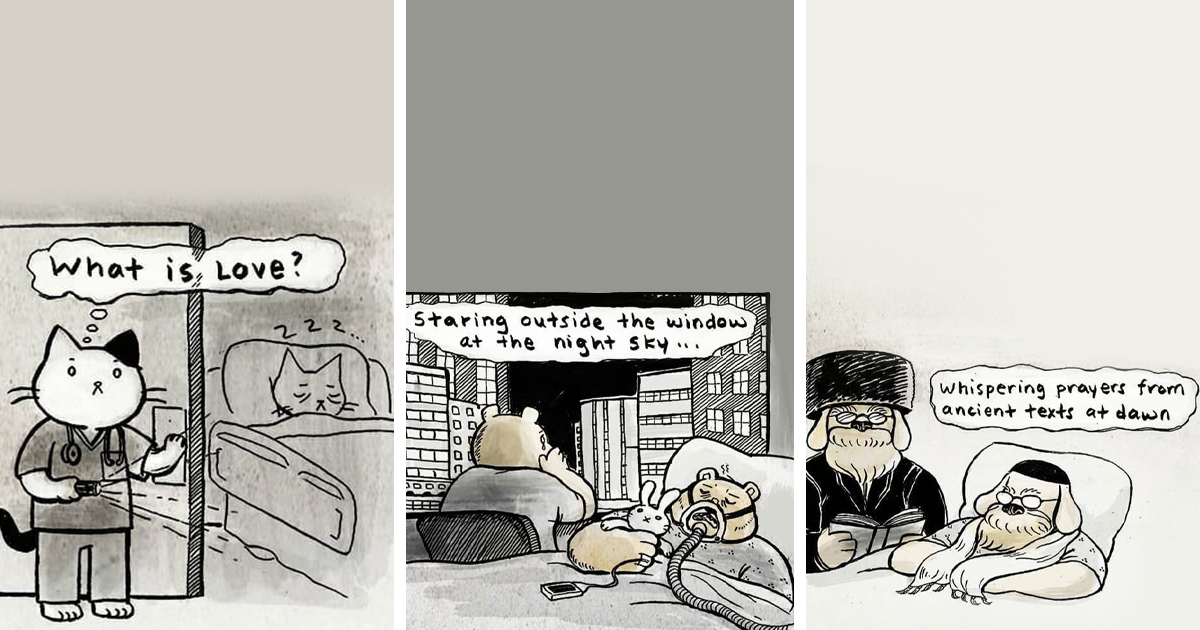
There are two kinds of people in the world: people who think ICU nurses spend their shifts calmly checking charts, and ICU nurses who just laughed so hard their coffee almost became a workplace incident. Kitty Moon’s Nurse Katz comics live right in that glorious gap between public imagination and hospital reality. Through soft animal characters, warm humor, and quick slice-of-life storytelling, the series turns the intense daily life of an ICU nurse into something readers can smile at, recognize, and maybe understand a little better.
The appeal of these relatable ICU nurse comics is not only that they are cute. Plenty of things are cute. A sleepy kitten in a mug is cute. A tiny sticker on a water bottle is cute. Kitty Moon’s work goes further because it gives emotional shape to a profession that often moves too quickly for outsiders to see clearly. ICU nurses work in spaces where alarms, monitors, families, doctors, medications, documentation, and urgent decisions all compete for attention. Somehow, these comics manage to say, “Yes, this is serious,” while also whispering, “And yes, someone still stole my pen.”
Who Is Kitty Moon And What Is Nurse Katz?
Kitty Moon is known as the creator of Nurse Katz, a webcomic series inspired by hospital work and the emotional landscape of nursing. Instead of drawing people in a realistic clinical setting, Kitty Moon often uses animal characters, especially cats, to portray the everyday experiences of caregiving. This creative choice makes heavy topics feel more approachable without draining them of meaning.
The comics are often short, gentle, and expressive. A few panels can capture what a long explanation might flatten: the awkwardness of hospital small talk, the quiet tenderness between nurse and patient, the exhaustion that follows a demanding shift, or the strange comedy of trying to eat lunch while the universe clearly has other plans. Anyone who has worked in healthcare will recognize the rhythm. Anyone who has not might suddenly understand why nurses are so protective of their snacks.
Kitty Moon’s style also fits into a broader tradition called graphic medicine, where comics are used to explore healthcare, illness, caregiving, medical ethics, and the lived experience of patients and clinicians. The beauty of this format is that it does not lecture. It shows. A single expression on a cartoon cat’s face can communicate fatigue, compassion, confusion, and “I have been awake since yesterday” with impressive efficiency.
Why ICU Nurse Comics Feel So Relatable
The intensive care unit is not a normal workplace. It is a high-stakes environment where critically ill patients require close monitoring, rapid response, and constant coordination. ICU nurses often provide hands-on care, communicate with families, work with physicians and respiratory therapists, manage equipment, and notice subtle changes before they become bigger problems. In other words, the job description is basically “be everywhere, know everything, and please do not forget your password again.”
That is why the humor in Kitty Moon’s comics lands so well. The jokes are not random. They come from recognizable pressure points: long shifts, emotional whiplash, family questions, charting, teamwork, burnout, compassion, and tiny moments of absurdity. A nurse might spend one minute handling a serious clinical update and the next minute searching for a missing supply that has apparently entered another dimension.
For readers outside healthcare, daily life of an ICU nurse may sound like a dramatic television episode with better lighting. Kitty Moon’s comics offer a more human picture. They remind us that ICU work is not only about crisis. It is also about routines, relationships, communication, patience, and resilience. It includes the nurse who explains something for the fifth time without losing kindness. It includes the coworker who brings snacks like a hospital-floor fairy godmother. It includes the strange victory of finally sitting down for thirty uninterrupted seconds.
The Humor Behind The Hospital Curtain
1. The Sacred Coffee Ritual
Many nurse comics understand one sacred truth: coffee is not a beverage; it is a survival strategy in a cup. ICU shifts can be long, unpredictable, and mentally demanding. A comic showing a nurse lovingly holding coffee like a tiny emotional support animal may be exaggerated, but only slightly. The joke works because it is familiar. Nurses do not simply drink coffee; they negotiate with it.
2. The Vanishing Pen Mystery
If hospitals had a true-crime division, missing pens would be a top priority. A relatable Nurse Katz panel about a nurse guarding a favorite pen would make perfect sense to anyone who has ever worked a clinical shift. Pens disappear. Badge reels break. Tape rolls migrate. Scissors become folklore. These small frustrations become funny because they happen in an environment where everyone is already juggling a hundred important tasks.
3. Charting: The Final Boss
Documentation is essential, but it can feel endless. ICU nurses record assessments, medications, changes in condition, interventions, communication, and care plans. Comics about charting after a long shift hit a nerve because they reveal a truth: the work is not over when the visible care is done. The computer is waiting. It has questions. It always has questions.
4. Family Communication With Heart
Some of the most meaningful moments in ICU nursing happen during conversations with families. Loved ones may be scared, confused, hopeful, or overwhelmed. Nurses often help translate medical information into language people can hold onto. Kitty Moon’s animal characters soften these moments without making them silly. A small cartoon scene can show how much emotional labor exists behind a calm voice and a reassuring explanation.
What Makes Kitty Moon’s ICU Nurse Comics Different?
The charm of Kitty Moon comics is in the balance. They are cute but not shallow, funny but not dismissive, heartfelt but not syrupy. The animal characters create distance from the harshest edges of hospital life, making it easier for readers to engage with difficult feelings. That distance matters. It lets the comic say something honest without overwhelming the audience.
The artwork also avoids turning nurses into superheroes with perfect posture and endless patience. That is refreshing. Nurses are skilled professionals, but they are also human beings who get tired, hungry, frustrated, delighted, and emotionally moved. A comic can show a nurse looking frazzled beside a mountain of tasks and still communicate respect. In fact, that honesty often increases respect because it shows the real labor behind the role.
Another strength is the way Nurse Katz comics honor small moments. Not every meaningful scene in healthcare involves a dramatic emergency. Sometimes it is a quiet thank-you. Sometimes it is a patient making a tiny improvement. Sometimes it is a team member noticing that another nurse needs a break. Kitty Moon captures the emotional texture of these moments in a way that feels warm, grounded, and deeply observant.
The Real ICU Life Behind The Relatable Jokes
Humor in healthcare often exists because the work is hard, not because the work is easy. ICU nurses face demanding schedules, emotional situations, physical strain, and the constant need to remain attentive. Research and professional organizations have repeatedly pointed to burnout, fatigue, workplace stress, and staffing challenges as serious issues in healthcare. That context matters when reading comics about nursing exhaustion or emotional overload.
But Kitty Moon’s work does not turn nursing into a gloomy lecture. Instead, it shows how nurses find humanity in the middle of pressure. A joke about snacks may sit beside a tender moment with a patient. A silly animal face may carry a surprisingly accurate expression of compassion fatigue. A comic about being tired may still end with warmth because nurses often keep showing up for patients and each other, even when the shift has been a full-contact sport.
This is why healthcare workers often love relatable comics. They create recognition. They say, “You are not the only one.” For ICU nurses, that recognition can feel like a tiny break room for the soul, ideally with better chairs and a fridge that does not contain a suspicious yogurt from three weeks ago.
Why Readers Outside Healthcare Should Pay Attention
Even if you have never worked in a hospital, these comics are worth reading because they translate complex caregiving into everyday emotion. Most people will interact with healthcare at some point as patients, family members, or friends. Understanding the nurse’s perspective can make those experiences more compassionate on both sides.
For example, when a comic shows a nurse answering repeated questions from worried family members, it can help readers see that communication is part of care. When a comic shows a nurse exhausted after a shift, it reminds us that healthcare workers are not machines with stethoscopes. When a comic shows a patient being comforted, it highlights the emotional skill involved in bedside nursing.
That is the quiet power of healthcare comics. They can make invisible labor visible. They can explain without sounding like a textbook. They can invite empathy without demanding that readers become experts in medical terminology. And frankly, if a cartoon cat can help people appreciate ICU nurses more, the cartoon cat deserves a tiny award and maybe a medically approved snack.
How The Comics Reflect Teamwork In Critical Care
The ICU is a team environment. Nurses work with physicians, respiratory therapists, pharmacists, nursing assistants, physical therapists, social workers, chaplains, and many others. A patient’s care plan may involve multiple specialists and constant updates. Good teamwork depends on communication, trust, and shared attention to detail.
Kitty Moon’s comics often feel relatable because they understand that nursing is not done in isolation. A nurse may be the central figure in a panel, but the background is full of relationships: colleagues helping each other, families waiting for updates, patients needing reassurance, and the ever-present hospital system humming behind the scenes. The best ICU nurse comics do not just show tasks. They show connection.
This matters because healthy healthcare workplaces are not built only on individual toughness. They require strong communication, collaboration, leadership, staffing support, and systems that protect workers’ well-being. A comic cannot fix a hospital staffing problem, obviously. If it could, every unit would be ordering framed cartoons by the dozen. But comics can make the human impact of those problems easier to see.
The Emotional Intelligence Of Cute Characters
Using animal characters might seem like a simple stylistic choice, but it does important emotional work. Cats, rabbits, wolves, and other expressive creatures can make readers lower their guard. They allow vulnerability to appear without feeling too exposed. A worried patient drawn as a small animal can instantly evoke tenderness. A tired nurse drawn with drooping ears can communicate exhaustion faster than a paragraph.
This is especially effective for ICU nursing because the setting can be intimidating. Machines, tubes, alarms, and medical language can create distance for readers. Kitty Moon’s gentler visual world makes the emotional truth easier to approach. The result is not a cartoon version of nursing that avoids reality, but a compassionate translation of reality into a form more people can understand.
Why “Relatable” Is More Than A Buzzword
Online, the word “relatable” gets attached to everything from messy desks to refusing to fold laundry. In the case of 23 relatable comics depicting the daily life of an ICU nurse by Kitty Moon, the word actually earns its paycheck. These comics are relatable because they reflect patterns that real healthcare workers recognize: the interrupted meal, the emotional conversation, the shift that somehow contains three days of events, the coworker who keeps everyone laughing, and the deep satisfaction of helping someone through a difficult moment.
They are also relatable because they show contradictions. ICU nursing can be exhausting and meaningful. It can be technical and emotional. It can be serious and absurd. It can make someone feel drained one moment and grateful the next. Kitty Moon’s comics understand that real work is rarely one mood at a time.
Experience Section: What These Comics Teach Us About ICU Nursing
Spending time with comics like Nurse Katz can feel like stepping into the break room after a difficult shift and hearing someone say exactly what everyone was thinking. The experience is comforting because it is specific. General praise for nurses is nice, but specificity is what makes appreciation feel real. It is one thing to say, “Nurses are heroes.” It is another to understand that an ICU nurse may spend hours balancing clinical tasks, family updates, patient comfort, documentation, teamwork, and their own emotional reactions, all while trying to remember where they left their water bottle.
One experience many readers may connect with is the feeling of being responsible for more than people realize. In many jobs, stress comes from deadlines, customers, or performance goals. In ICU nursing, responsibility can feel immediate and personal. A nurse is watching for changes, listening carefully, double-checking details, and communicating quickly when something seems off. Kitty Moon’s comics make that pressure visible without turning every scene into drama. They show the small mental calculations behind the calm face.
Another experience reflected in these comics is the emotional switchboard nurses carry inside them. A shift may include humor with coworkers, concern for a patient, patience with a family member, frustration with a system delay, and relief when something finally improves. That kind of emotional multitasking is hard to explain, but comics are uniquely good at it. A character’s posture, eyes, or silence can suggest what words cannot. Readers do not need a long medical explanation to understand a tired nurse leaning against a wall after a demanding moment.
The comics also highlight the importance of peer support. In real hospital life, coworkers often become the people who understand the exact flavor of the day’s chaos. They know why a small win matters. They know when a joke is needed and when silence is better. They know that bringing someone a snack can be a love language with pockets. Kitty Moon’s work captures that workplace friendship in a way that feels honest and affectionate.
For patients and families, these comics can create a different kind of experience: perspective. A family member waiting in an ICU may naturally focus on their loved one, and that is completely understandable. But seeing nursing life through comics can gently reveal the human beings behind the scrubs. It may encourage more patience, clearer communication, and deeper gratitude. Not the performative kind of gratitude that appears once a year on a mug, but the everyday kind: listening, asking respectfully, and remembering that the nurse has probably answered many urgent questions before breakfast.
Finally, these comics remind us that humor is not the opposite of care. In difficult workplaces, humor can be a pressure valve, a bonding tool, and a way to stay human. Kitty Moon’s comics do not make light of suffering; they make room for hope. They show that even in the ICU, where days can be heavy, there are still small sparks of connection, sweetness, and absurdity. Sometimes the most relatable thing in the world is a cartoon nurse-cat looking exhausted but still choosing compassion. Honestly, same.
Conclusion
23 Relatable Comics Depicting The Daily Life Of An ICU Nurse By Kitty Moon works because it combines cuteness with truth. The comics offer more than quick laughs; they provide a window into the emotional, practical, and often unpredictable world of ICU nursing. Through animal characters and gentle humor, Kitty Moon makes the invisible parts of caregiving easier to see: the fatigue, the teamwork, the tenderness, the pressure, and the weird little moments that keep people going.
For nurses, the comics feel like recognition. For non-healthcare readers, they offer understanding. For everyone else, they are a reminder that compassion is not always loud or dramatic. Sometimes it looks like a tired nurse, a kind word, a shared joke, and a cartoon cat telling the truth better than a thousand motivational posters ever could.