The solar system looks tidy in school posters: the Sun sits in the middle, planets line up like patient marbles, and everything seems to know where it belongs. Then science walks in, flips the poster over, and says, “Actually, we have questions.” Lots of them.
Our cosmic neighborhood is not a solved puzzle. It is more like a garage packed with ancient rocks, icy moons, magnetic tantrums, suspicious gases, sideways planets, and one possible hidden world lurking beyond Neptune like it missed the family photo on purpose. Even after centuries of telescopes and decades of spacecraft missions, some of the biggest solar system mysteries remain stubbornly unsolved.
That is exactly what makes planetary science so addictive. Every answer opens a trapdoor to a deeper question. Why does Venus spin backward? What is releasing methane on Mars? How old are Saturn’s rings? Could ocean moons host life? And why is the Sun’s outer atmosphere hotter than its surface, which sounds like a cosmic oven with broken instructions?
Below are 10 confounding mysteries of our solar system that continue to fascinate scientists, inspire missions, and remind us that space is not just big. It is weirdly, wonderfully complicated.
1. Why Does Venus Spin Backward?
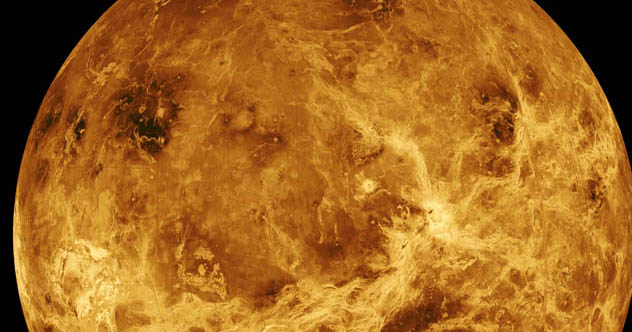
Venus is often called Earth’s twin because the two planets are similar in size and rocky composition. That nickname is generous. Earth has oceans, breathable air, and pleasant sunsets. Venus has crushing pressure, lead-melting heat, clouds of sulfuric acid, and the social charm of a pressure cooker.
One of Venus’s strangest traits is its rotation. Most planets spin in the same general direction as they orbit the Sun. Venus does not. It rotates backward, or retrograde, and it does so painfully slowly. A day on Venus is longer than its year, which is the kind of scheduling problem even the most chaotic calendar app would reject.
The leading ideas
Scientists have several possible explanations. A giant ancient impact may have knocked Venus into its odd spin. Another possibility is that the Sun’s gravity, combined with atmospheric tides from Venus’s thick atmosphere, gradually slowed and reversed the planet’s rotation. The truth may involve several forces working together over billions of years.
This mystery matters because Venus may once have been more Earth-like. Understanding how it became today’s furnace helps scientists study climate evolution, planetary habitability, and the thin line between a living world and a roasted one.
2. What Happened to Venus’s Water?
Venus may not always have been dry. Some models suggest it could have had water long ago, possibly even shallow oceans. Today, however, Venus is one of the driest major worlds in the solar system. So where did the water go?
The most likely explanation is a runaway greenhouse effect. As the young Sun warmed, Venus’s water evaporated into the atmosphere. Water vapor is a greenhouse gas, so more vapor trapped more heat, which evaporated more water, which trapped more heat. It was a climate feedback loop with absolutely no chill.
The escape problem
Once water molecules reached the upper atmosphere, sunlight could split them into hydrogen and oxygen. Lightweight hydrogen escaped into space. Oxygen may have reacted with surface rocks or been stripped away by solar activity. Some research also suggests Venus has an unusually strong atmospheric electric field that may help push charged particles away.
Venus is a warning label in planetary form. It shows that being in the inner solar system can be dangerous if climate feedbacks run wild. That makes Venus essential for understanding not only our past, but also the long-term future of rocky planets.
3. Why Is Mercury Mostly Core?
Mercury is tiny, sun-blasted, and surprisingly dense. For its size, it has an enormous metallic core that takes up a much larger fraction of the planet than Earth’s core does. In other words, Mercury is less like a normal rocky planet and more like a cosmic jawbreaker with a massive metal center.
For a long time, scientists thought Mercury may have been stripped of much of its outer rocky material by a giant impact early in solar system history. Another idea is that the young Sun’s heat vaporized part of Mercury’s original mantle. Both explanations sound dramatic, because apparently Mercury’s origin story required special effects.
MESSENGER made it stranger
NASA’s MESSENGER mission complicated the picture. It found that Mercury contains volatile elements that should have been depleted if the planet had simply been baked or blasted clean. That does not completely rule out violent formation scenarios, but it does mean the answer is not as simple as “big crash, metal planet.”
Mercury’s magnetic field, unusual surface features, and layered core structure continue to challenge models of how rocky planets form close to stars. The smallest planet still has a very large attitude.
4. What Is Really Happening With Mars Methane?
Mars methane is one of the most famous “maybe something interesting, maybe not” mysteries in planetary science. NASA’s Curiosity rover has detected methane near the Martian surface, including seasonal changes and short-lived spikes. But orbiters searching from above have often found little or none.
That disagreement is a scientific headache. If methane is being produced on Mars, something must be making it. On Earth, methane can come from living organisms, but it can also come from geological processes. Mars, being Mars, refuses to make the explanation convenient.
Why scientists are cautious
Methane does not last forever in the Martian atmosphere. Sunlight and chemistry should break it down over time. If methane appears in bursts, scientists need to explain both where it comes from and why it disappears so quickly. Possible sources include reactions between rock and water underground, release from ancient trapped reservoirs, or unknown chemical processes near the surface.
To be clear, methane is not proof of life. It is more like a mysterious footprint in the dust. It might belong to biology, geology, chemistry, or something scientists have not fully understood yet. Mars remains the solar system’s champion of suspicious clues.
5. Did Mars Once Have Long-Lived Habitable Environments?
Ancient Mars looked very different from the dry, cold desert we see today. River valleys, lake beds, minerals formed in water, and sedimentary rocks all point to a wetter past. The big question is not simply whether Mars had water. It did. The better question is how long those environments lasted and whether they were stable enough for life.
Short bursts of water are interesting. Long-lived lakes and groundwater systems are much more exciting because they provide time for chemistry to become complex. NASA rovers have found evidence that places like Gale Crater once had conditions that could have supported microbial life.
The missing atmosphere
The problem is that Mars lost much of its atmosphere. Without a thick atmosphere and strong global magnetic field, the planet became vulnerable to solar wind and radiation. Water either froze, escaped into space, or retreated underground.
The mystery is not just “Was Mars wet?” It is “Was Mars friendly long enough for life to begin?” That question drives modern Mars exploration, including sample collection and laboratory analysis of ancient rocks. Mars may be dead today, but its old diary is still being read page by dusty page.
6. Could Europa’s Hidden Ocean Support Life?
Europa, one of Jupiter’s largest moons, looks like a cracked ice ball from a distance. Up close, it is one of the most intriguing places in the solar system. Beneath its icy crust, scientists believe Europa hides a global saltwater ocean that may contain more liquid water than all of Earth’s oceans combined.
Water alone does not guarantee life, but it does put Europa near the top of the astrobiology wish list. Add tidal heating from Jupiter’s gravity, possible chemical exchange between ocean and rock, and a young-looking icy surface, and Europa becomes very hard to ignore.
The ice shell question
One major mystery is how thick Europa’s ice shell is. If the ice is relatively thin or actively cycling, materials from the surface could reach the ocean, providing oxidants and other useful chemistry. If the shell is extremely thick and stagnant, exchange may be more difficult.
NASA’s Europa Clipper mission is designed to investigate Europa’s habitability during dozens of close flybys after it reaches Jupiter. It will not land, drill, or scoop alien sushi from the ocean. But it will study the moon’s ice, chemistry, geology, and possible plumes in unprecedented detail.
7. What Is Going On Inside Enceladus?
Saturn’s moon Enceladus is small, icy, and ridiculously overachieving. It blasts plumes of water vapor and icy particles into space from fractures near its south pole. Thanks to NASA’s Cassini spacecraft, scientists know those plumes are connected to a subsurface ocean.
The exciting part is not just water. Cassini detected salts, organic molecules, and signs of hydrothermal activity. More recent analysis of Cassini data has strengthened the case that Enceladus contains complex chemistry relevant to habitability.
A tiny moon with big implications
The mystery is how such a small moon stays geologically active. Tidal flexing from Saturn’s gravity likely provides heat, but scientists still debate the details. How long has the ocean existed? Is it global? Does it interact with a rocky seafloor? Could chemical energy support microbes?
Enceladus is especially exciting because it naturally sprays samples into space. Future spacecraft may not need to land. They could fly through the plumes and analyze ocean material directly. That is the space exploration equivalent of a moon handing scientists a sample cup and saying, “Here, test this.”
8. How Old Are Saturn’s Rings?
Saturn’s rings are the most glamorous accessory in the solar system. They are bright, wide, icy, and photogenic enough to make every other planet look underdressed. But scientists still debate a surprisingly basic question: how old are they?
For decades, some researchers thought the rings formed with Saturn more than 4 billion years ago. Others argued they are much younger. Cassini’s final measurements suggested the rings may be relatively young, perhaps only around 100 million years old or so, though the exact timeline remains debated.
The contamination clue
Saturn’s rings are mostly water ice. Over time, dust and micrometeoroids should darken them. Their brightness suggests youth, but ring dynamics are complicated. The rings could be older if some process keeps them fresh, or younger if they formed from a shattered moon, comet, or icy body.
This mystery is not just cosmetic. Ring age tells scientists about Saturn’s history, moon formation, collisions, and how planetary systems evolve. Saturn may have spent most of its life ringless, which feels wrong, like imagining a celebrity before they found their signature hairstyle.
9. Why Is Uranus Tilted Sideways?
Uranus is the solar system’s oddball ice giant. Its axis is tilted by about 98 degrees, meaning it essentially rolls around the Sun on its side. While Earth has seasons because of a modest axial tilt, Uranus took that idea and turned it into performance art.
The most popular explanation is that Uranus was struck by one or more giant impacts early in its history. A collision with an Earth-sized object could have knocked it sideways. But that explanation has complications. Scientists must also explain Uranus’s moons and rings, which orbit around the tilted equator.
A cold planet with hidden questions
Uranus also has a strange magnetic field that is tilted and offset from its center. Its atmosphere, interior heat, and seasonal behavior remain poorly understood because only one spacecraft, Voyager 2, has flown by it. That happened in 1986. In technology years, that is practically the age of stone tablets with antennas.
Many scientists consider a dedicated Uranus orbiter one of the most important future missions. The planet is not boring. It is underexplored, which is different. Uranus has been quietly hoarding mysteries for decades.
10. Is There a Planet Nine?
Beyond Neptune lies the Kuiper Belt, a vast region of icy bodies, dwarf planets, and orbital troublemakers. Some distant objects have unusual clustered orbits, leading researchers to propose that a large, unseen planet could be gravitationally shaping them.
This hypothetical object is often called Planet Nine. It is not Pluto, and it is not officially confirmed. If it exists, it may be several times Earth’s mass and orbit far beyond Neptune. Finding it would be one of the biggest discoveries in modern planetary science.
The case is still open
The evidence is indirect. Astronomers see patterns in distant objects and ask what could cause them. A hidden planet is one possible answer, but observational bias or other gravitational effects could also explain some of the clustering. The challenge is that the outer solar system is enormous, dark, and extremely difficult to search.
Planet Nine is a reminder that the solar system may still contain major surprises. We have mapped the planets, visited dwarf planets, and photographed comets, yet there may be a large world waiting in the dark like it is avoiding group projects.
Bonus Mystery: Why Is the Sun’s Corona So Hot?
The Sun’s visible surface is hot, but its outer atmosphere, called the corona, is far hotter. That seems backward. Normally, moving away from a heat source should make things cooler. The corona did not get the memo.
NASA’s Parker Solar Probe is flying closer to the Sun than any spacecraft before it, collecting data about magnetic fields, plasma waves, and solar wind. Scientists think magnetic reconnection and waves may help transfer energy into the corona, but the full picture is still being refined.
This mystery is not just academic. Solar activity affects space weather, satellites, communications, astronauts, and power grids on Earth. Understanding the Sun is part of understanding the entire solar system, because every planet lives inside the Sun’s extended influence.
Experience Section: What These Solar System Mysteries Feel Like From Earth
Reading about solar system mysteries is one thing. Experiencing them as a curious human on Earth is another. You do not need a spacecraft, a billion-dollar mission budget, or a lab coat with suspicious coffee stains to feel connected to these questions. Sometimes all it takes is a clear night, a pair of binoculars, and the willingness to look up long enough for your phone to feel neglected.
One of the most memorable experiences related to the solar system is watching planets move across the sky over weeks or months. Venus appears as a brilliant evening or morning star, bright enough to make people wonder if they are seeing an aircraft, a satellite, or an alien delivery service running late. Knowing that this beautiful point of light is actually a hostile world with backward rotation and a runaway greenhouse atmosphere adds a strange emotional twist. It looks peaceful. It is not.
Mars creates a different feeling. When it glows red-orange in the night sky, it is easy to understand why people have imagined life there for generations. Through a small telescope, Mars may look tiny and blurry, but the knowledge behind that dot is enormous: dry river valleys, ancient lakes, methane puzzles, dust storms, polar caps, and rovers slowly crawling across its surface. Observing Mars is like staring at a cold case file written in rust.
Saturn is often the showstopper. The first time many people see Saturn’s rings through a telescope, they think the image looks fake. It appears too perfect, like someone stuck a sticker in the eyepiece. Then comes the realization that those rings may be temporary on cosmic timescales. Suddenly Saturn feels less like a permanent icon and more like a beautiful event happening during our brief window of history.
Jupiter brings its own drama. Even modest telescopes can reveal its four largest moons, tiny points of light changing position night after night. Those moons are not decorative dots. Europa may hide a global ocean. Io is volcanically wild. Ganymede has its own magnetic field. Callisto preserves ancient scars. Watching them shift is a small personal version of planetary science in motion.
The outer solar system is harder to experience directly, but imagination fills the gap. Uranus and Neptune are faint, distant, and easy to miss. The Kuiper Belt and Oort Cloud are beyond casual viewing altogether. Yet learning about them changes how the sky feels. Darkness stops being empty. It becomes territory: icy bodies, long-period comets, possible hidden planets, and leftover material from the birth of the Sun.
These experiences matter because they turn abstract science into personal wonder. A mystery becomes more powerful when you can point to the sky and say, “That bright object has a secret.” The solar system is not merely a diagram in a textbook. It is a neighborhood we live inside, a history book written in craters and ice, and a mystery novel where the final chapter has not been published yet.
Conclusion: The Solar System Is Familiar, But Not Finished
The more we explore the solar system, the less it behaves like a simple set of planets orbiting a star. It is a dynamic place filled with ancient collisions, hidden oceans, vanishing atmospheres, magnetic puzzles, strange chemistry, and possible worlds still waiting to be found.
These 10 confounding mysteries of our solar system reveal how much science has achieved and how much remains unknown. That is not a weakness. It is the best part. Every spacecraft, telescope, and laboratory analysis adds a few more pieces to the puzzle. Sometimes those pieces solve a mystery. Sometimes they politely create three new ones.
From Venus’s backward spin to Europa’s hidden ocean, from Mars methane to Saturn’s rings, the solar system keeps reminding us that discovery is not a straight road. It is a winding path through dust, ice, radiation, and surprise. And somewhere out there, perhaps in the darkness beyond Neptune or beneath the ice of a distant moon, the next big answer is waiting patiently for us to become clever enough to find it.