Some family stories arrive quietly. Others kick the door open, spill coffee on the emotional carpet, and ask everyone at the dinner table to take a side. The story of a childfree woman who refused to adopt her younger siblings after both parents passed away belongs firmly in the second category.
At the center of the discussion is a 34-year-old woman who never wanted children. She had built a life abroad, focused on her career, protected her independence, and made peace with the fact that motherhood was not on her personal bingo card. Then tragedy struck. After her parents died, she was asked whether she would adopt her three younger brothers. Her answer shocked relatives: no.
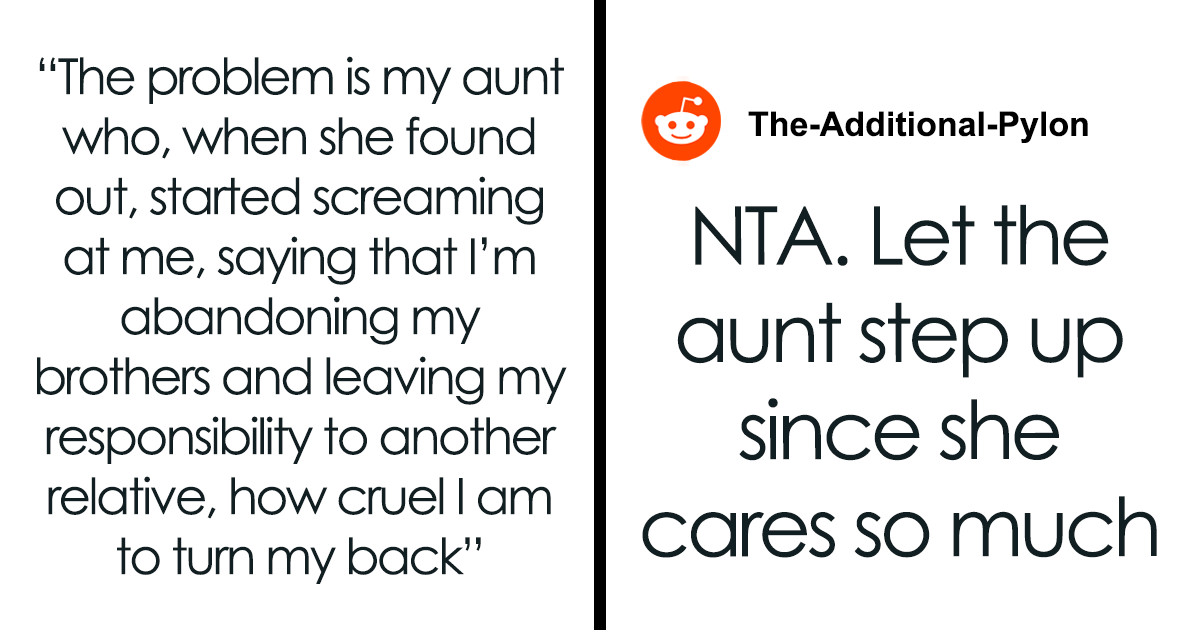
But this was not a cold, dramatic “good luck, boys” exit. According to the story, she offered financial and practical support to whoever became the children’s caregiver. She also spent time with her brothers and participated in therapy to help them process the situation. Still, one aunt accused her of abandoning them, igniting a debate that touches on childfree choices, family duty, grief, adoption, kinship care, and the uncomfortable truth that love does not automatically make someone capable of parenting.
Why This Story Hit Such a Nerve
The headline sounds like a family scandal, but the reason it spread so quickly is simple: it asks a question many people avoid until life forces it onto the table. If your parents died and your younger siblings needed a home, would you be morally required to become their parent?
For some people, the answer is obvious. Family steps up. End of discussion. For others, the answer is more complicated. Becoming a legal guardian or adoptive parent is not the same as helping with rent, groceries, school supplies, or emotional support. It is a full-time, life-altering responsibility. You do not simply “take in” three children the way you take in a houseplant from a neighbor who moved to Phoenix.
The woman’s decision upset relatives because it challenged a familiar expectation: the eldest daughter, eldest sibling, or most stable adult should absorb the family crisis. That expectation often sounds noble from the outside. From the inside, it can feel like being handed a backpack full of bricks and told to smile because “family is everything.”
The Difference Between Helping and Becoming a Parent
One of the most important details in this story is that the woman did not refuse all involvement. She refused adoption. That distinction matters.
Adoption would have made her the boys’ legal parent. It would have meant handling their housing, schooling, medical needs, daily routines, discipline, emotional care, financial planning, and long-term future. It would also have required changing her own career, lifestyle, home structure, and possibly immigration or residency situation, depending on where she lived and where the children lived.
Offering money, visits, emotional support, and coordination is meaningful. It may not satisfy relatives who believe “real love” requires total sacrifice, but it is still a form of care. In many family emergencies, the healthiest solution is not one heroic person doing everything. It is a support system where one adult provides housing, another contributes financially, another handles school meetings, and another helps with transportation, tutoring, or therapy.
Why Childfree Does Not Mean Heartless
The internet loves turning complicated choices into cartoon labels: selfish, saint, villain, hero. But choosing to be childfree does not mean someone dislikes children, lacks compassion, or spends every morning laughing at playgrounds like a Disney villain with better Wi-Fi.
Many adults do not want children because they value freedom, career focus, financial stability, health, travel, relationships, quiet homes, or simply because parenting does not feel right for them. That last reason is enough. Nobody should need a 14-slide PowerPoint presentation titled “Why My Uterus Is Not A Public Utility.”
In this case, the woman reportedly knew early in life that she did not want to raise children. Her younger brothers were born after she had already left home, and although she cared about them, she did not see herself as their parent. That honesty may sound harsh, but it is far better than agreeing under pressure and later becoming resentful, overwhelmed, or emotionally unavailable.
The Hidden Risk of Forced Caregiving
When relatives pressure someone into a caregiving role, they often focus on the children’s immediate need for stability. That concern is valid. Children who lose parents need safety, routine, affection, and trustworthy adults. But stability is not created by guilt alone. A reluctant caregiver may provide a roof but struggle to provide patience, warmth, and emotional steadiness.
Caregiver burnout is real. It can involve physical exhaustion, anxiety, depression, resentment, social withdrawal, and financial strain. Parenting three grieving children would be difficult even for someone who desperately wanted the role. For a person who has carefully built a childfree life, the sudden shift could be emotionally catastrophic.
This is not an argument against family responsibility. It is an argument for realistic responsibility. If a person knows they cannot provide the kind of daily care children need, saying no can be more responsible than saying yes to look good at the next family gathering.
What Kinship Care Really Means
Kinship care refers to children living with relatives or close family connections when parents cannot care for them. It can involve grandparents, aunts, uncles, adult siblings, cousins, or trusted family friends. Child welfare systems often prefer kinship placements because children may stay connected to their family, culture, school, community, and identity.
But kinship care is not magic. Relatives who step in often face sudden expenses, legal paperwork, school enrollment challenges, medical decisions, trauma responses, and family conflict. They may also receive less preparation than traditional foster parents. Grandma may love the kids deeply, but love does not automatically pay for three backpacks, dental appointments, therapy sessions, and a refrigerator that now sounds like it needs a second job.
This is why support matters. If one relative becomes the primary caregiver, others should not simply clap from the sidelines and say, “You’re so strong.” They should ask what bills need paying, which appointments need rides, who can babysit, and how to build a long-term plan that does not crush one adult under the noble-sounding phrase “family duty.”
Why the Aunt’s Reaction Feels Familiar
The aunt in the story reportedly accused the woman of abandoning her brothers. Her reaction may feel familiar because many families assign roles long before anyone agrees to them. One person becomes “the responsible one.” Another becomes “the emotional one.” Another becomes “the one who has money.” When a crisis arrives, the family script starts running automatically.
The problem is that old family scripts often ignore current reality. The woman lived abroad. She had chosen a childfree life. She was grieving. She had career responsibilities. She was not refusing to care in any way; she was refusing to become a parent overnight. The aunt’s anger may have come from fear and grief, but fear does not make guilt-tripping fair.
It is also worth asking a practical question: if the aunt believed so strongly that family must take the boys in, why was the pressure aimed at the childfree sister? Sometimes relatives who shout the loudest about responsibility are standing suspiciously far away from the actual responsibility.
The Legal and Emotional Weight of Guardianship
Guardianship and adoption are not casual favors. Legal guardians may make decisions about where a child lives, where they go to school, and what medical care they receive. Adoption can go even further by permanently changing the legal parent-child relationship. These decisions usually involve courts, social workers, documentation, and a “best interests of the child” standard.
Parents with minor children are often encouraged to name preferred guardians in estate planning documents. But even then, the chosen person should be asked first. Naming someone as guardian without their consent is less a plan and more a surprise party from the underworld.
The viral story shows why these conversations matter. Parents sometimes assume that an adult child, sibling, or relative will “obviously” take over if tragedy strikes. But assumptions are not a safety net. Families need honest conversations about who is willing, who is able, what money is available, and what backup plans exist.
Was She Selfish or Sensible?
The internet largely sided with the woman, and the reason is not hard to understand. She did not disappear. She did not insult the boys. She did not say they were a burden. She recognized her limits and offered support within those limits.
That is not selfishness. That is boundaries.
Boundaries are often unpopular in families because they interrupt the fantasy that love means unlimited availability. But healthy boundaries are not walls; they are doors with locks. They allow people to participate in family life without being swallowed whole by it.
A person can love siblings and still not be the right person to raise them. A person can grieve parents and still refuse to let grief rewrite their entire future. A person can contribute financially and emotionally without signing up for school drop-offs, bedtime routines, emergency dentist visits, and teenage mood swings that could qualify as weather events.
The Children’s Perspective Matters Too
While adults debate morality, the children at the center of the story are the ones experiencing the deepest loss. Losing both parents is devastating. Being discussed as a responsibility, obligation, or burden can add another layer of pain.
That is why the woman’s reported decision to attend therapy with her brothers is significant. Therapy can give children language for grief, anger, confusion, and rejection fears. It can also help adults explain difficult decisions without making children feel unwanted.
A compassionate explanation might sound like this: “I love you. I want to be part of your life. I am not able to become your parent, but I will help make sure you are safe, supported, and cared for.” That sentence is not perfect. Nothing in this situation is perfect. But it is more honest than making a promise the adult cannot keep.
What Families Can Learn From This Situation
This story should not become a simple debate about whether the woman was right or wrong. The better question is: how can families avoid putting children and relatives in this impossible position?
1. Parents Should Name Guardians Early
Any parent with minor children should have a clear plan for who would care for them in the event of death or incapacity. That plan should include legal documents, financial arrangements, and direct conversations with the chosen guardian. The chosen person should not learn about the plan while everyone is wearing black and whispering beside a casserole tray.
2. Relatives Should Discuss Capacity, Not Just Love
Love is important, but capacity matters. Can the potential caregiver afford the children? Do they have space? Are they emotionally prepared? Are they healthy enough? Do they have support nearby? Are they willing?
3. Money Should Be Part of the Conversation
Raising children is expensive. Food, clothing, school supplies, health insurance, transportation, therapy, childcare, and activities add up quickly. A family plan should include life insurance, savings, trusts, or other financial tools whenever possible.
4. The Best Solution May Be Shared Support
Not every caring adult has to become the primary caregiver. One person may provide the home. Another may help pay bills. Another may manage appointments. Another may host weekends. Family care can be a team sport, not a solo marathon in jeans.
Experiences Related to This Topic: When Family Duty Meets Personal Limits
Stories like this resonate because many adults have lived some version of the same conflict. Maybe they were the oldest sibling expected to babysit every weekend. Maybe they became the “second parent” because a mother worked double shifts or a father disappeared emotionally. Maybe they were praised as mature when they were really exhausted. By adulthood, those experiences can shape a person’s relationship with caregiving.
Some childfree adults describe their decision as joyful and peaceful. They enjoy being the fun aunt, generous uncle, trusted mentor, or emergency contact who brings snacks and then returns to a quiet apartment where no one is screaming because a banana broke in half. They may love children deeply, but they know they do not want the daily responsibility of raising them. That self-knowledge can be healthy.
Others arrive at childfree adulthood after years of parentification. They spent childhood cooking dinner, supervising homework, comforting younger siblings, translating adult problems, or managing household chaos. To outsiders, they looked responsible. Inside, they felt robbed of rest. When they finally become adults, the idea of starting over as a caregiver can feel less like love and more like being sentenced to a sequel they never asked for.
There are also relatives who say yes and later discover how hard the role is. An aunt may take in two nephews after a sibling dies, only to realize grief changes everything. The kids may struggle at school, lash out, cling, withdraw, or test every boundary. The caregiver may miss work, drain savings, postpone dating, lose sleep, and feel guilty for needing a break. She may love the children and still cry in the laundry room because the laundry room is the only place nobody asks for string cheese.
On the other hand, many kinship caregivers say the sacrifice is worth it. They find meaning in keeping siblings together, preserving family bonds, and giving children a safe landing. Some adult siblings become legal guardians and build beautiful new family structures. Some grandparents discover unexpected energy. Some aunts and uncles become the stable adults children remember forever.
The point is not that one choice is always better. The point is that caregiving must be honest. A child needs more than a morally impressive adult. A child needs a prepared adult, a supported adult, and ideally an adult who can offer care without quietly drowning.
In the viral story, the woman’s offer to provide money and practical help suggests a middle path. She could not be the boys’ parent, but she could be part of their safety net. That may not satisfy relatives who measure love only by sacrifice, but real families survive on more than sacrifice. They survive on planning, honesty, cooperation, and the courage to say, “Here is what I can do, and here is what I cannot.”
For readers facing a similar situation, the lesson is deeply practical: do not wait for tragedy to decide who becomes responsible for whom. Talk about guardianship. Talk about money. Talk about emotional capacity. Talk about backup plans. It may feel awkward, but awkward is cheaper than chaos.
Conclusion
The story of a childfree woman refusing to adopt her orphaned siblings is not really about whether she loved them enough. It is about whether love should require someone to become a parent against their will. Her decision shocked relatives because it challenged a powerful cultural belief: that family obligation should override personal limits. But limits are not cruelty. Sometimes they are the only way to offer help honestly.
Children deserve stable, willing, well-supported caregivers. Adults deserve the right to acknowledge what they can and cannot provide. In the best version of family, support is not forced from the most convenient person. It is built together, with compassion for the children and respect for the adults asked to care for them.