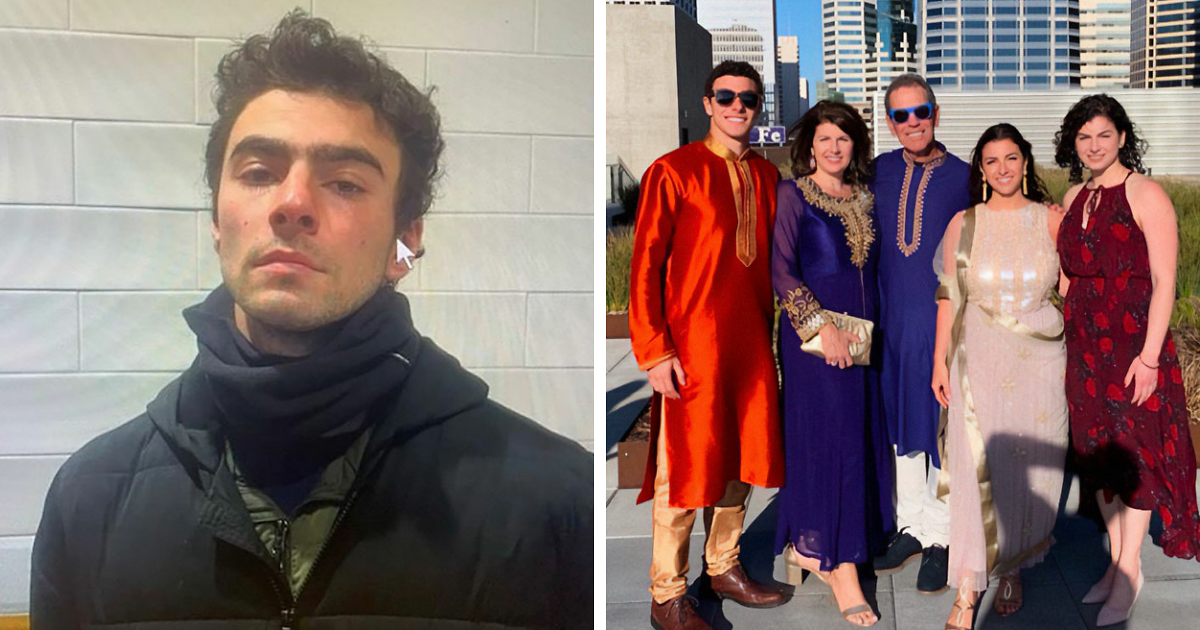
Editorial note: This article discusses pending criminal allegations. Luigi Mangione has pleaded not guilty, and the charges against him have not been proven at trial.
The Luigi Mangione case is the kind of American headline that seems assembled by a very dramatic algorithm: an Ivy League engineering graduate, a slain health insurance CEO, a nationwide manhunt, a McDonald’s arrest, a handwritten notebook, a ghost-gun allegation, andbecause reality apparently enjoys plot twistsa prominent Maryland family fortune tied to resorts, country clubs, real estate, senior care, and local media.
At the center is Luigi Nicholas Mangione, the man accused of killing Brian Thompson, the CEO of UnitedHealthcare, outside a Midtown Manhattan hotel on December 4, 2024. Thompson, who had led UnitedHealthcare since 2021 after years inside UnitedHealth Group, was in New York for an investor event when he was fatally shot. Mangione was arrested five days later in Altoona, Pennsylvania, and has since become a lightning rod for conversations about wealth, privilege, health insurance anger, online radicalization, criminal justice, and the strange modern habit of turning court cases into fandoms before juries even hear evidence.
Who Is Luigi Mangione?
Mangione was born in Maryland in 1998 and grew up in the Baltimore area. Before his name became linked to one of the most closely watched criminal cases in recent memory, his biography looked like a polished résumé: elite private school, valedictorian, University of Pennsylvania engineering degrees, coding experience, and a professional path that included technology work. In other words, the public record did not initially suggest someone drifting toward a national murder case. That contrast is exactly why the story became so gripping.
Reports describe him as a graduate of Gilman School, an all-boys private school in Baltimore, and later the University of Pennsylvania, where he studied computer science and engineering. He was also connected to multiple places before the shooting, including Maryland, Hawaii, Pennsylvania, and New York. Friends and acquaintances have described a period of social withdrawal, especially after back surgery and chronic pain concerns, though none of that proves motive. It does, however, help explain why investigators, reporters, and readers have searched so intensely for the missing bridge between “promising young engineer” and “defendant in a CEO murder case.”
The Family Resort Fortune Behind the Headline
The phrase “heir to a holiday resort fortune” sounds like it belongs on a glossy travel brochure that took a wrong turn into a courthouse. But the family background is real: Mangione comes from a prominent Maryland family associated with real estate development, country clubs, hospitality, senior living, and local business interests.
His late grandfather, Nicholas Mangione Sr., was widely described as a self-made Baltimore-area real estate developer. The family’s holdings have been linked to Turf Valley Resort in Ellicott City, Hayfields Country Club in Hunt Valley, Lorien Health Services, and the radio station WCBM. Luigi’s father, Louis Mangione, has been reported as a key figure in the family business network, including Mangione Family Enterprises and Lorien Health Services.
That background matters because it complicates the public narrative. This was not a suspect portrayed as economically desperate or invisible. Mangione came from a family associated with private education, community influence, and substantial assets. Yet caution is important: “family fortune” does not automatically mean personal control of wealth, guaranteed inheritance, or direct involvement in business decisions. The accurate framing is that Mangione is a scion of a wealthy and prominent Maryland familynot that every dollar in that family network was sitting in his checking account, politely waiting for a Netflix documentary.
What Happened to Brian Thompson?
Brian Thompson was 50 years old and served as CEO of UnitedHealthcare, the insurance arm of UnitedHealth Group. He had worked for the company for about two decades and became CEO of UnitedHealthcare in 2021. On the morning of December 4, 2024, he was shot outside the New York Hilton Midtown while heading to an investor conference.
The killing immediately drew national attention because of who Thompson was and where the shooting happened. A major corporate executive being attacked in a busy Manhattan business district was alarming enough. But the details that followed intensified the story: surveillance footage, reports of shell casings with words associated with insurance-claim criticism, a masked suspect, and an online reaction that was at times shockingly celebratory. The case became not just a murder investigation, but a national mirror held up to American frustration with health care costs and insurance denials.
Charges, Evidence, and Where the Case Stands
Mangione has faced both state and federal proceedings. In New York, he has faced charges including second-degree murder and weapons counts. Earlier terrorism-related murder charges were dismissed by a judge in 2025, but the core second-degree murder case remained. Federally, prosecutors initially pursued charges that could have made the case death-penalty eligible, but in January 2026, a federal judge dismissed the murder and weapons counts tied to the death penalty, leaving federal stalking charges in place.
As of May 2026, one of the most important courtroom developments involved evidence from Mangione’s arrest. A New York judge ruled that a gun and notebook prosecutors say connect Mangione to the killing may be used at his state trial. At the same time, the judge suppressed several other items from an initial backpack search, including a cellphone, passport, wallet, and loaded magazine, finding that the initial search was improper under New York law. That split ruling gave both sides something to argue about, which is basically the legal system’s version of a double espresso.
The gun and notebook ruling is significant because prosecutors are expected to use them to argue motive, planning, and connection to the crime. The defense, meanwhile, can continue challenging the government’s evidence, the sequence of searches, and the way the arrest unfolded. Mangione has pleaded not guilty. His state trial is scheduled for September 2026, with federal proceedings expected afterward.
Why the “Heir” Angle Became So Fascinating
The public fascination with Mangione’s family wealth is not just gossip. It changes how people interpret the case. In many crime stories, the public tries to explain violence through deprivation: poverty, desperation, exclusion, or lack of opportunity. Mangione’s background does not fit that simple mold. He had access to elite schooling, technical education, family connections, and the kind of social capital most people only meet in alumni newsletters.
That does not make guilt more or less likely. It does not replace evidence. But it does create a larger question: why would someone with apparent advantages become associated with an alleged act of political or ideological violence? The answer may never be clean. People are not spreadsheets. Privilege can coexist with anger, illness, alienation, obsession, and distorted thinking. Wealth can cushion life, but it cannot automatically produce emotional stability or moral clarity. A country club membership is not a psychological vaccine.
The resort fortune angle also reveals how quickly modern audiences hunt for symbolism. The accused man’s family owned recreational spaces built for comfort and leisure. The victim ran one of America’s largest health insurance businesses, an industry many consumers associate with denial, paperwork, and financial stress. The contrast is irresistible to online commentators: luxury on one side, medical bureaucracy on the other, and a murder case sitting grimly in the middle.
The Health Insurance Backdrop
After Thompson’s death, public reaction quickly moved beyond one crime scene. Many Americans used the moment to share stories about denied claims, prior authorization battles, rising premiums, surprise bills, and the exhausting experience of trying to get care approved while sick. That anger did not justify violence. It did, however, explain why the killing produced such a disturbing range of reactions online.
Reports and health policy research had already documented serious frustration with the insurance system. In 2024, family health insurance premiums averaged more than $25,000 a year, while single coverage averaged nearly $9,000. A Senate subcommittee report also scrutinized Medicare Advantage prior authorization practices and said UnitedHealthcare’s denial rate for post-acute care rose sharply from 2020 to 2022. For many readers, those numbers were not abstract. They sounded like their parents’ rehab stay, their spouse’s surgery appeal, or their own mailbox full of bills written in the ancient language of “Explanation of Benefits.”
This is where the Mangione case became culturally explosive. The alleged crime was individual. The outrage around it was systemic. People were not only reacting to Thompson or Mangione. They were reacting to years of frustration with health care gatekeeping, corporate profits, and the fear that insurance might fail at the worst moment of a person’s life.
Online Mythmaking and the Danger of Instant Heroes
One of the strangest parts of the case has been the online mythmaking around Mangione. Some social media users treated him like a folk hero before the court process had even reached trial. Others condemned that reaction as morally grotesque. Both responses reveal something uncomfortable about the internet: it is very good at turning real people into symbols and very bad at remembering that murder victims have families.
The “Free Luigi” merchandise, memes, lookalike contests, and fan-style commentary show how quickly public attention can detach from facts. A criminal defendant becomes a character. A victim becomes a logo. A court date becomes content. The result is a digital circus where legal nuance gets trampled by hot takes wearing clown shoes.
Responsible coverage should resist that flattening. Mangione is not a convicted assassin; he is an accused defendant who has pleaded not guilty. Brian Thompson was not merely “a CEO”; he was a person who was killed. The health insurance industry is not beyond criticism; it is a powerful system that affects millions of Americans. Holding all three ideas at once is harder than posting a meme, but it is also more honest.
Experiences and Reflections: Why This Story Feels So Personal to So Many Readers
For many Americans, the Luigi Mangione story does not feel like a distant true-crime headline. It feels uncomfortably close because almost everyone has some experience with health insurance anxiety. Maybe it was a parent waiting for a prior authorization. Maybe it was a pharmacy counter surprise, where a medication suddenly cost more than a weekend vacation. Maybe it was an appeal letter written at midnight, when the patient should have been resting but instead had to become a part-time lawyer, accountant, and detective.
That lived experience helps explain why the case spread so quickly online. People were not simply reading about a shooting. They were reading about a shooting tiedat least in public interpretationto an industry many people already felt had too much power over their bodies, bank accounts, and futures. The story became a container for personal resentment. Into it went old hospital bills, denied scans, canceled appointments, confusing networks, and the quiet rage of being told “not medically necessary” by someone who had never met the patient.
At the same time, Mangione’s family wealth adds another emotional layer. Readers see a man linked to privilege and wonder how privilege failed to prevent collapse. They see resorts and country clubs on one side of the biography and a murder charge on the other. That contrast creates a weird sense of narrative whiplash. It challenges the comfortable idea that success, education, and money always point a life in a safe direction.
There is also a media literacy lesson here. Following this case responsibly means slowing down. A notebook is not a conviction. A family fortune is not a motive. Online applause is not moral truth. A viral post is not a court transcript. The experience of watching this case unfold should remind readers to separate evidence from atmosphere. The atmosphere may be loud, angry, and emotionally satisfying. Evidence is quieter. It arrives in hearings, rulings, testimony, forensic analysis, cross-examination, and jury instructions.
Perhaps the most relatable experience is confusion. Many people can condemn violence without defending the health insurance industry. They can feel sympathy for Thompson’s family while still believing the American health care system needs major reform. They can recognize Mangione’s right to a fair trial while refusing to romanticize murder. That mixed reaction is not hypocrisy. It is what happens when a single criminal case touches several national nerves at once.
Conclusion
The headline “Luigi Mangione, alleged UnitedHealthcare CEO assassin, is heir to family’s holiday resort fortune” captures only the flashiest layer of a much deeper story. Yes, Mangione comes from a prominent Maryland family linked to resorts, country clubs, real estate, senior living, and media. Yes, he is accused in the killing of UnitedHealthcare CEO Brian Thompson. Yes, the case has become a symbol for anger at the American health insurance system. But the most important facts remain legal ones: Mangione has pleaded not guilty, some charges have been dismissed, other charges remain, and the courtsnot social mediamust determine guilt.
The case is powerful because it refuses to fit one neat box. It is a crime story, a wealth story, a health care story, a media story, and a cautionary tale about turning defendants into icons. It asks uncomfortable questions about privilege, pain, ideology, corporate power, and public rage. And like most uncomfortable questions, it deserves more than a slogan.