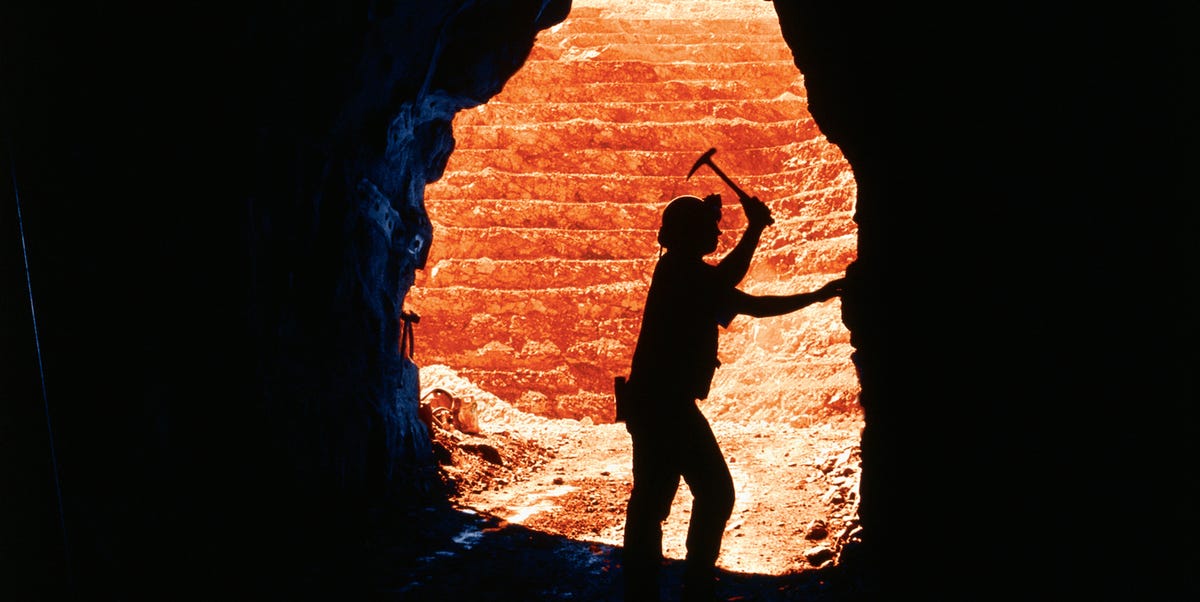
In the frozen goldfields of Canada’s Yukon, miners are digging for treasureand accidentally opening one of the world’s strangest Ice Age archives.
The Klondike’s Other Gold Rush: Ice Age Mummies
In the Yukon, a gold miner can start the morning chasing flakes of gold and end the day staring into the face of an animal that last blinked during the Ice Age. That sounds like the setup for a movie where everyone wears parkas and the plot includes “do not thaw the mammoth,” but it is very real. Across the Klondike goldfields near Dawson City, miners working through frozen ground have repeatedly uncovered ancient mummified animals preserved in permafrost: a baby woolly mammoth, a wolf pup, a caribou calf, a curled-up Arctic ground squirrel, and even mysterious chunks of hair and skin that scientists can identify only with DNA.
The headline almost writes itself: Yukon gold miners can’t stop finding ancient mummified animals. But the story is deeper than a string of weird discoveries. These finds are changing how scientists understand Beringia, the ancient northern landscape that once connected Asia and North America. They are also reshaping the relationship between mining companies, paleontologists, museums, and First Nations communities whose traditional territories hold these remarkable remains.
Gold may be the reason the excavators are out there. Science is the surprise bonus. And sometimes, the bonus has tiny ears, ancient fur, and a name given with cultural care.
Why the Yukon Is a Natural Freezer for the Past
The magic word behind these discoveries is permafrost. Permafrost is ground that stays frozen year-round. In the Yukon’s Klondike region, layers of frozen silt, muck, and sediment can lock away bones, hair, skin, muscle, plant material, insects, and DNA for tens of thousands of years. In most places, ancient animals leave behind bones and teeth. In the Yukon, the cold sometimes preserves the animal itself.
This matters because soft tissue tells stories that bones cannot. Hair can hint at color and seasonal adaptation. Skin and muscle can reveal body shape. Stomach contents, isotopes, and DNA can help scientists reconstruct diet, age, ancestry, environment, and even how an animal may have died. A tusk is impressive. A mummified baby mammoth with skin and hair is a time machine with eyelashes.
The region was part of Beringia during the Pleistocene, the epoch most people casually call the Ice Age. While much of Canada was covered by glaciers, parts of the Yukon remained relatively dry and ice-free. Instead of the dense forests seen in much of the area today, the ancient landscape included cold grasslands known as mammoth steppe. Woolly mammoths, steppe bison, horses, caribou, wolves, giant beavers, scimitar cats, and other animals moved across that open world.
The goldfields are unusually good at exposing this buried world because placer mining requires digging through frozen sediments to reach gold-bearing gravel. In the process, heavy equipment cuts into layers that no paleontologist could easily excavate by hand. The result is a strange but productive partnership: miners do the digging, scientists do the interpreting, and the permafrost keeps delivering ancient surprises like it has a dramatic reveal scheduled every season.
Nun Cho Ga: The Baby Mammoth That Stunned North America
The most famous Yukon mummy in recent years is Nun Cho Ga, a near-complete mummified baby woolly mammoth discovered in June 2022 at Eureka Creek in the Klondike goldfields. Miners working within Trʼondëk Hwëchʼin Traditional Territory uncovered the frozen calf while excavating through permafrost. Trʼondëk Hwëchʼin Elders named her Nun Cho Ga, meaning “big animal baby” in the Hän language.
Nun Cho Ga is considered the most complete mummified mammoth found in North America. That sentence deserves a pause. North America has produced mammoth bones, teeth, tusks, and partial remains, but a near-complete baby mammoth with skin and hair is a different level of scientific jackpot. It is the sort of discovery that makes paleontologists suddenly forget how to speak in normal indoor voices.
Scientists believe Nun Cho Ga lived more than 30,000 years ago, when woolly mammoths roamed the Yukon alongside horses, bison, and other cold-adapted animals. Early reports suggested she was very young, likely about a month old. The preservation was so extraordinary because she appears to have been buried quickly, which protected her body from scavengers and decay before the permafrost locked her in place.
Why Nun Cho Ga Is More Than a Fossil
Nun Cho Ga is not just a scientific specimen. For the Trʼondëk Hwëchʼin, she is connected to land, ancestry, cultural responsibility, and respect. The discovery became a model for collaboration among miners, Yukon government scientists, and First Nations leadership. Instead of treating the mammoth as a trophy hauled out of the earth, the recovery emphasized careful handling, cultural guidance, and shared stewardship.
That approach matters. Ancient remains are not simply “cool stuff from the ground.” They are part of living landscapes and living communities. Nun Cho Ga’s story shows how paleontology can be more respectful, more inclusive, and frankly more human. Also, it is hard not to feel a little humbled by a baby mammoth who spent 30,000 years underground and still managed to bring modern people together.
Zhùr: The Tiny Wolf Pup With a Giant Scientific Story
Before Nun Cho Ga, there was Zhùr, a mummified gray wolf pup discovered in 2016 by a miner near Dawson City. Zhùr means “wolf” in the Hän language. She is one of the most complete ancient wolf mummies ever found, with fur, skin, paws, teeth, and other soft tissues preserved by permafrost.
Scientific study placed Zhùr at roughly 57,000 years old. Researchers determined that she was only about seven weeks old when she died, likely after a den collapse. That detail is sad, but it also helps explain why she was preserved so completely: she was buried quickly in a frozen environment, protected from the usual processes that erase soft tissue from the fossil record.
Zhùr gave scientists a rare look at Ice Age wolf life in northwestern North America. Genetic research helped connect her to ancient wolf populations, while chemical clues from her body suggested that her dietor more precisely, what her mother was eatingmay have included aquatic resources such as salmon. That is a wonderful reminder that Ice Age predators were not cartoon villains sprinting after mammoths all day. Their diets and ecosystems were complex, seasonal, and tied to rivers, fish, and changing landscapes.
Why One Small Wolf Can Matter So Much
Most ancient wolves are known from bones. Bones can tell scientists plenty, but a mummy like Zhùr offers a fuller biography. Her body allows researchers to examine growth, anatomy, preservation, genetics, and ecology in ways that a jawbone alone never could. She is small enough to fit in a display case, but scientifically, she is enormous.
Zhùr also reminds us that not every Ice Age discovery is about gigantic animals. Yes, mammoths are the celebrities. They have tusks, size, and natural brand recognition. But a tiny wolf pup can reveal migration patterns, food webs, climate conditions, and the fragile lives of animals that once shared the mammoth steppe.
The Hester Creek Squirrel: A 30,000-Year-Old Fur Ball With Claws
One of the most wonderfully odd Yukon discoveries looked, at first glance, like a small brown lump. Not exactly the dramatic “behold, ancient beast!” moment one might imagine. Miners had found a compact ball of fur near Hester Creek, and it took X-ray imaging to reveal what was hidden inside: a mummified Arctic ground squirrel, curled up tightly as if still hibernating.
The squirrel is believed to be around 30,000 years old. Researchers nicknamed it “Hester” after the area where it was found. Unlike mammoths and wolves, Arctic ground squirrels still live in the Yukon and Alaska today, which makes the mummy especially interesting. Scientists can compare ancient and modern squirrels to better understand survival, adaptation, and environmental change across deep time.
There is something almost funny about this discovery, in the gentlest possible way. A mammoth announces itself. A wolf pup looks like an animal. The squirrel basically said, “I will be a grapefruit-sized mystery blob until someone brings medical imaging.” It is a perfect example of why paleontology requires patience, technology, and the willingness to take strange lumps seriously.
The Caribou Calf and the Pattern of Rare Finds
In 2016, Yukon miners also uncovered the mummified remains of a caribou calf. The calf was not as complete as Zhùr, but it preserved skin, hair, and soft tissuefeatures rarely found in ancient remains. Alongside the wolf pup, the caribou helped show that the Yukon was entering a new era of permafrost paleontology, where mummified soft tissue finds were no longer isolated miracles.
Caribou are still part of northern ecosystems today, but an Ice Age calf offers a direct physical connection between ancient and modern Arctic life. It helps scientists examine continuity and change: which animals vanished, which survived, and how northern species responded to climate shifts over thousands of years.
The Yukon’s fossil record is not limited to mummies. Miners regularly uncover mammoth tusks, horse bones, bison skulls, antlers, horns, and teeth. In fact, Yukon paleontologists recover thousands of fossils from mining operations each year. Most are not mummified animals with adorable names, but they still matter. Each fossil adds a data point to the giant puzzle of Ice Age Beringia.
Why Gold Miners Keep Finding These Ancient Animals
Gold miners are not out there with tiny brushes and academic field notebooks. They are moving earth, cutting into frozen banks, and exposing sediments that have been sealed away since the Pleistocene. That scale of excavation is exactly why so many discoveries happen in mining areas.
Placer gold mining targets gold that has eroded from bedrock and settled in stream gravels. To reach those gravels, miners often remove overlying frozen sediment. That frozen overburden is where Ice Age bones and mummies can be trapped. In other words, the path to gold often runs straight through an ancient ecosystem.
Modern Yukon miners have become important partners in paleontology because they know when to stop, preserve a find, and call experts. Many routinely set aside bones and fossils for scientists. When something unusual appearsskin, hair, a complete animal, or a body shape that looks suspiciously not-rock-likethe phone calls happen quickly.
A Practical Partnership
This collaboration is practical, not glamorous. The mining season is short. Equipment is heavy. Weather can be unpleasant. Frozen sediment does not care about anyone’s schedule. Still, the system works because miners are often the first people to see these objects after tens of thousands of years. Without mining exposure, many specimens would remain hidden indefinitely. Without scientific care, many would be damaged, thawed, misplaced, or misunderstood.
The best outcomes happen when miners, paleontologists, museums, and First Nations governments communicate early. The goal is not simply to collect. It is to document the location, understand the geological layer, preserve the specimen properly, and respect the cultural and legal context of the land.
What Mummified Animals Teach Us About the Ice Age
Ancient mummified animals are not just spectacular museum pieces. They are scientific archives. A well-preserved body can answer questions about climate, diet, migration, extinction, evolution, and adaptation.
For example, DNA can reveal how ancient populations were related to modern ones. Stable isotopes can suggest what an animal ate. Skin and hair can show physical traits that bones cannot. Sediment around the body can reveal whether the animal lived in grassland, shrubland, forest, wetland, or river environments. Even the position of a body can help researchers infer whether burial was sudden.
These details matter because the Ice Age was not one static frozen postcard. It was a changing world of warming periods, cooling periods, shifting vegetation, migrating animals, and expanding or shrinking habitats. The Yukon’s permafrost captures pieces of that changing world in unusually vivid form.
Extinction, Survival, and Climate Lessons
The Yukon mummies also speak to modern climate concerns. Permafrost preservation depends on cold, stable ground. As northern regions warm, permafrost can thaw, exposing ancient remains but also threatening to destroy them before anyone can study them. That creates a strange race against time. Thawing may reveal more mummies, but it can also accelerate decay.
Studying Ice Age animals helps scientists understand how species responded to past climate change. Some, like woolly mammoths, eventually disappeared from North America. Others, like caribou and Arctic ground squirrels, survived into the present. The difference between extinction and survival is one of the biggest questions in paleontology, and Yukon’s frozen remains offer unusually detailed evidence.
The Human Side of Ancient Animal Discoveries
One reason these stories capture public attention is that they collapse time. A fossil tooth is interesting. A baby mammoth with a recognizable body is emotional. A wolf pup with tiny paws feels less like an object and more like a life interrupted. These animals are ancient, but they are also immediately understandable.
That emotional connection can be useful. It draws people into science. It encourages museums to create better exhibits. It helps students understand deep time not as an abstract number, but as a living world that existed before us. A 57,000-year-old wolf pup is easier to care about than a paragraph explaining the late Pleistocene. No offense to paragraphs; they are trying their best.
At the same time, responsible storytelling matters. These animals should not be treated as curiosities alone. They are part of Indigenous cultural landscapes, scientific collections, and natural history. Their discovery requires respect, careful preservation, and humility. After all, they survived tens of thousands of years underground. The least modern humans can do is not mess up the handoff.
Experiences Related to Yukon’s Ancient Mummified Animals
For readers, the story of Yukon gold miners finding ancient mummified animals can feel like an invitation to imagine standing at the edge of a Klondike mine cut, boots planted in mud, cold air moving across the valley, and an ordinary workday suddenly turning into a meeting with deep time. You do not have to be a miner or a paleontologist to feel the pull of that moment. The experience is part adventure, part science lesson, and part reminder that the ground beneath us is never as quiet as it seems.
One experience connected to this topic is visiting a museum or interpretive center that focuses on Beringia and Ice Age life. Seeing a mammoth skeleton, a reconstructed steppe bison, or a display about ancient wolves gives context to the discoveries. It helps transform the word “permafrost” from a cold scientific term into a living archive. Visitors can begin to understand how animals migrated across the north, how First Nations histories are tied to the land, and how a mining region became one of the most important windows into Ice Age North America.
Another experience is following the discovery process through photographs, interviews, and scientific updates. These finds often begin with uncertainty. A miner spots something unusual. The object is protected. Paleontologists are contacted. Elders and heritage officials may be involved. The specimen is transported, examined, scanned, sampled, and slowly interpreted. That process is fascinating because it shows science as teamwork, not as one genius shouting “Eureka!” while holding a fossil like a movie prop.
For students, families, and science lovers, the Yukon discoveries are also a great doorway into hands-on learning. You can map Beringia, compare mammoths with modern elephants, research Arctic ground squirrels, or explore how radiocarbon dating works. You can ask why some animals survived climate change while others vanished. You can compare bones with soft-tissue mummies and discuss why preservation conditions matter. Suddenly, paleontology becomes less about memorizing names and more about solving a mystery with clues from biology, geology, chemistry, and culture.
Writers and content creators can learn from these stories too. The best articles about Yukon mummified animals work because they balance wonder with accuracy. The subject is naturally dramatic, but the facts are strong enough that it does not need exaggeration. A baby mammoth found in a goldfield is already astonishing. A wolf pup preserved for 57,000 years is already unforgettable. A squirrel mistaken for a fur ball is already the kind of detail readers remember at dinner and repeat with suspicious enthusiasm.
Travelers interested in the Yukon can use these discoveries as a theme for deeper exploration. Dawson City is famous for gold rush history, but the region’s Ice Age story is just as compelling. The same landscape that attracted prospectors also preserved traces of mammoths, horses, bison, wolves, and other animals. That combination gives the Yukon a rare double identity: it is a place of human history and prehuman history, of gold pans and ancient ecosystems, of frontier stories and frozen biological archives.
Perhaps the most meaningful experience is simply changing how we think about time. Modern life moves fast. News cycles vanish in hours. Phones become outdated before their cases wear out. Then a miner uncovers a baby mammoth that has waited in the ground for more than 30,000 years, and suddenly our sense of “long ago” expands. The Yukon mummies remind us that Earth keeps records in unexpected places. Sometimes those records look like tusks. Sometimes they look like paws. Sometimes they look like a small brown lump that turns out to be a sleeping squirrel from the Ice Age.
Conclusion: The Yukon’s Frozen Past Is Still Speaking
The story of Yukon gold miners finding ancient mummified animals is not just a quirky science headline. It is one of the most vivid examples of how industry, Indigenous stewardship, climate, and paleontology can intersect. The Klondike goldfields are producing more than precious metal; they are producing rare evidence of lost ecosystems, extinct animals, and ancient northern life.
Nun Cho Ga, Zhùr, the Hester Creek squirrel, and the caribou calf are more than preserved bodies. They are messengers from Beringia. They show how permafrost can protect delicate traces of life for tens of thousands of years. They help scientists study adaptation, diet, migration, extinction, and climate change. They also remind the public that the Ice Age was not just a chapter in a textbook. It was a real world, full of young animals, dangerous weather, flowing rivers, hungry predators, and landscapes that changed over time.
Gold miners may be looking for treasure, but the Yukon keeps handing them history. And sometimes, history comes with fur.
SEO Tags
Note: This article is written for web publishing in standard American English and is based on real paleontology findings, official Yukon information, and reputable science reporting, without adding inline source links in the article body.