SEO has a funny reputation in marketing. On some teams, it is treated like the wise but slightly underappreciated relative who keeps saying, “Have you thought about the long game?” Meanwhile, paid media is out buying attention at top speed, social is posting with caffeine-fueled optimism, email is nudging leads toward conversion, and content marketing is trying to hold the whole thing together with one editorial calendar and a prayer.
But the smartest brands have figured out something important: SEO performs best when it stops acting like a separate department and starts behaving like the connective tissue of an integrated marketing strategy. Search is not just a channel. It is a reflection of audience intent. It tells you what people want, how they describe their problems, what they compare, and when they are ready to act. That makes SEO incredibly valuable far beyond rankings alone.
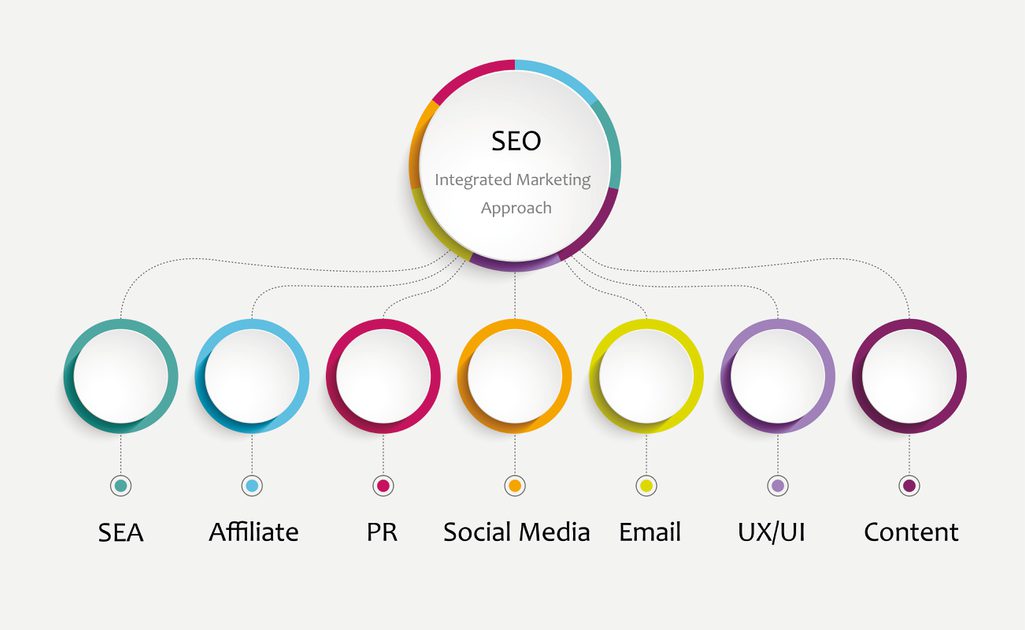
When SEO is aligned with PPC, email marketing, social media, content, digital PR, and conversion optimization, the result is not just more traffic. It is better visibility, sharper messaging, stronger brand recall, and a smoother customer journey from first impression to repeat purchase. In other words, your channels stop competing for credit and start cooperating for results.
Why SEO Should Not Work Alone
SEO is often described as an organic acquisition channel, which is true, but incomplete. In practice, SEO also helps teams understand demand, improve website structure, shape content strategy, and refine landing page experiences. That means it can influence almost every channel touching the customer journey.
Think about what strong SEO work already includes: keyword research, audience intent analysis, content planning, technical site health, internal linking, user experience improvements, and performance measurement. None of that lives in a vacuum. PPC teams need keyword intelligence. Email teams need high-performing landing pages. Social teams need content that actually answers real questions. Brand teams need consistent messaging. SEO can inform all of them.
If your marketing team is still running channels in silos, you are likely wasting good ideas in one department while another team spends money rediscovering them. That is not integrated marketing. That is organized chaos wearing a blazer.
Start With the Customer Journey, Not the Channel Chart
The best integrated marketing approach begins with the customer journey. People do not wake up and say, “Today I will enter the consideration stage through a perfectly attributed channel.” They bounce between search results, social posts, product pages, email reminders, reviews, and sometimes a browser tab they swear they will come back to later. Your job is to make those touchpoints feel connected.
Discovery
At the top of the funnel, SEO helps brands show up for informational queries, comparison searches, how-to content, and category-level questions. Social media can amplify that content, while paid social and display can introduce the brand to audiences who are not searching yet. If messaging is aligned, a user who sees your social content today may search for your brand next week.
Consideration
In the middle of the funnel, SEO content like comparison pages, case studies, product explainers, and FAQ hubs becomes especially useful. Paid search can reinforce visibility for competitive terms. Email can nurture users who downloaded a resource or joined a list. At this point, consistency matters. If your ad promises one benefit and your landing page talks about something completely different, trust disappears fast.
Conversion
Near the bottom of the funnel, search intent becomes more specific. Users may search for branded terms, pricing details, reviews, or “best” alternatives. SEO and PPC can work together here beautifully. Organic listings build authority over time, while paid ads protect visibility and let you test offers, calls to action, and ad copy faster.
Retention
Post-purchase is where many brands mysteriously vanish like socks in a dryer. That is a mistake. Email, loyalty content, support pages, and help-center SEO can improve retention, reduce churn, and create more branded search demand. Happy customers do not just come back. They search for you by name, share your content, and sometimes do your marketing for free, which is everybody’s favorite budget line.
SEO and Content Marketing: Basically Teammates With Shared Snacks
If SEO tells you what the audience wants, content marketing decides how to answer it well. The two should be so closely aligned that separating them feels awkward.
Integrated teams use SEO data to guide editorial priorities. They build content around search intent, not just internal opinions. That means creating pages that serve different needs: educational blog posts for early awareness, landing pages for category intent, comparison pages for evaluation, and product-focused content for conversion. It also means refreshing existing content instead of endlessly publishing new pieces like the internet has not suffered enough already.
Content marketing also gives SEO range. A great content team turns keywords into useful experiences: original articles, visual explainers, downloadable guides, webinars, customer stories, and video scripts. Those assets can then be repurposed across email, social, and paid campaigns. One strong topic cluster can fuel an entire multichannel campaign if the team plans with intention.
The real win is compounding value. A paid campaign may deliver immediate traffic, but an optimized article or resource center can continue driving visits long after the ad spend stops. When both are coordinated, you get speed and staying power.
SEO and PPC: Stop Fighting, Start Sharing Data
SEO and PPC often target the same search landscape, yet too many teams manage them like rival siblings forced to share a room. The better approach is unified search strategy.
Share Keyword Intelligence
PPC gives you fast feedback. You can learn which queries attract clicks, which messages convert, and which offers fall flat without waiting months. SEO gives you durable intent signals and long-term opportunity mapping. Combined, these insights help teams prioritize terms with both immediate and future value.
Test Messaging Faster
Paid search is ideal for headline testing. If certain phrases consistently earn stronger click-through rates in ads, that insight can inform title tags, meta descriptions, landing page headlines, and on-page copy. SEO does not need to guess what resonates when PPC is already running the experiments.
Design Smarter Landing Pages
Not every PPC page should become an SEO page, and not every SEO page should be turned into a campaign destination without adjustments. Some paid landing pages are intentionally narrow and promotional. Some evergreen pages are built to rank and educate. The smartest teams decide which pages can serve both channels and which should stay separate. That choice alone can prevent duplicate intent, weak indexing, and confused users.
Own More SERP Real Estate
When paid and organic results appear together for the same query, your brand can dominate more of the search results page. That can increase credibility, reinforce brand recognition, and improve overall visibility for high-value searches. Even when the click lands on one result, the presence of the other listing still contributes to recognition and trust.
SEO and Social Media: Visibility Is Bigger Than Google
Social media does not directly replace SEO, but it can absolutely strengthen the ecosystem around it. Social platforms help distribute content, build audience familiarity, and surface the language people naturally use when they talk about a topic. That language is gold for search strategy.
When SEO and social teams collaborate, several things happen. First, content has a better chance of earning attention early, which can lead to more visits, more shares, and more branded searches later. Second, social conversations reveal audience pain points that can inspire more useful search content. Third, social profiles themselves increasingly function as searchable assets, especially on platforms where users search for tutorials, product recommendations, and expert commentary.
This is why integrated teams align topic calendars. If SEO identifies a rising topic, social can amplify it. If a social post unexpectedly performs well, SEO can turn that angle into a deeper evergreen article. One channel creates momentum; the other creates shelf life.
SEO and Email Marketing: The Quiet Power Couple
Email and SEO are a particularly underrated combination. SEO brings new people in. Email brings them back. That is a powerful loop.
A well-optimized guide, checklist, or comparison page can attract users through search and convert some of them into subscribers. Email then nurtures those subscribers with personalized follow-ups, relevant resources, product education, and promotional offers. The next time those users search, they are more likely to search for your brand specifically. That branded demand strengthens the entire marketing system.
Email also helps extend the life of SEO content. You do not need to publish an article once and hope the internet notices. You can distribute it to segmented audiences, test subject lines that mirror search intent, and drive engaged traffic back to the page. That can improve the business value of content that would otherwise just sit there waiting for a backlink and a miracle.
The best part is that email performance can help content teams refine what to create next. If a topic consistently earns strong open rates, clicks, and downstream conversions, it is probably worth deeper search coverage too.
SEO and Brand Building: Yes, This Matters More Than Ever
SEO is not just a demand-capture channel. It also benefits from demand creation. Brand awareness influences what people search, how often they click, and whether they trust what they see. A recognizable brand usually has an easier time earning clicks than a stranger with a decent title tag.
That is where PR, thought leadership, podcasts, webinars, partnerships, and offline campaigns come in. These channels may not look like classic SEO work, but they influence brand searches, mentions, links, and authority. Strong brand marketing can improve the environment in which SEO operates.
Likewise, SEO supports brand building by ensuring that branded searches lead to polished, relevant experiences. If users hear about your company on a podcast, then search your brand and land on messy pages with weak messaging, that trust fades. Integrated marketing means your brand promise shows up consistently wherever curiosity turns into action.
Measurement: Where Integration Becomes Real
If every team uses different definitions of success, integration collapses fast. SEO celebrates rankings, paid celebrates return on ad spend, social celebrates engagement, and email celebrates open rates. Meanwhile, leadership just wants to know what is driving revenue. Fair enough.
An integrated marketing approach needs shared measurement. That does not mean every channel uses the same KPI, but it does mean teams align around a common business outcome. For most brands, that includes pipeline, sales, qualified leads, revenue, retention, or customer lifetime value.
Use Shared Reporting
Build dashboards that show how channels interact, not just how they perform separately. Look at assisted conversions, brand search lift, content-influenced pipeline, landing page conversion rates, and combined paid-plus-organic visibility on high-priority queries.
Connect Behavioral Data
Traffic is not enough. You also need to know what users do after they arrive. Heatmaps, session recordings, event tracking, and conversion path analysis help teams understand whether a channel is bringing the right audience, not just a large one.
Review Search Intent Alongside Funnel Data
Do not just ask which page ranked. Ask what query brought the user in, what page they visited next, whether they subscribed, whether they returned, and whether they converted later through another channel. That is where integration shows its value.
A Practical Framework for Integrated SEO
Here is a simple workflow that keeps SEO connected to the wider marketing engine:
1. Build one shared topic map
Create a master topic and keyword map that includes search intent, funnel stage, primary assets, paid opportunities, email angles, and social formats.
2. Align one message across channels
Decide the promise, pain point, and call to action before assets are built. Users should feel the same strategic message whether they find you via Google, LinkedIn, YouTube, or email.
3. Match page types to channel roles
Some pages should rank. Some should convert fast. Some should nurture. Some should do a little of all three. Make those jobs clear before launch.
4. Use paid to test, organic to scale
Test headlines, offers, and positioning in paid campaigns. Move the best performers into SEO titles, page copy, and longer-form assets.
5. Repurpose content deliberately
Turn one strong article into social snippets, an email sequence, a webinar outline, a comparison page, and remarketing creative. One idea should not do just one job.
6. Measure by influence, not ego
Stop asking which channel “owns” the conversion. Ask which channels moved the customer closer to it.
Common Mistakes That Break SEO Synergy
Even strong teams can undermine integration with a few familiar mistakes:
- Treating SEO as a cleanup job after campaigns launch
- Sending paid traffic to pages that do not match ad intent
- Publishing blog content with no distribution plan
- Running social campaigns that never support searchable assets
- Keeping email, paid, and SEO data in separate reporting silos
- Optimizing for clicks without considering post-click behavior
- Ignoring brand consistency across touchpoints
These issues are not dramatic on their own, but together they create friction. And friction is where marketing performance goes to take an unscheduled nap.
Experience and Lessons From the Field
Across integrated marketing programs, a few patterns show up again and again. The first is that SEO becomes dramatically more useful when it is invited into campaign planning early instead of being asked to “optimize the page real quick” two hours before launch. When search teams are involved from the beginning, the brief gets sharper. The language becomes more audience-centered. Landing pages are structured with both discoverability and conversion in mind. Metadata is not an afterthought, internal links are not forgotten, and content assets are built with a longer shelf life.
The second pattern is that paid media often acts like a speedboat while SEO behaves more like a freight train. One moves fast, the other carries long-term value. Brands that understand this stop trying to force one channel to do the other’s job. They use PPC to pressure-test offers, headlines, and audience segments. They use SEO to turn the winners into evergreen assets. Over time, that reduces waste and gives the team a stronger library of content that keeps performing after the campaign budget cools off.
A third lesson is that social media is often the best early-warning system for content relevance. Teams may spend weeks debating a topic internally, only to discover that a quick social post reveals what the audience actually cares about in twenty-four hours. Sometimes the audience loves the practical angle instead of the expert angle. Sometimes they want a checklist, not a manifesto. Sometimes they respond to plain English instead of polished jargon. Those insights can feed directly into search content, email copy, and even ad creative.
Email, meanwhile, tends to be the channel that turns attention into relationship. A search visitor may discover your brand through a guide, but the email program is what keeps that interest warm. In strong programs, content is not published and abandoned. It is sequenced. A blog post leads to a download. The download leads to a nurture series. The nurture series leads back to comparison pages, product pages, or a demo request. When that loop is working, SEO is not just driving traffic. It is feeding a system.
Another practical lesson is that teams get smarter when they share one dashboard and one post-launch review. The moment SEO, paid, email, and social all review the same landing page together, the conversation improves. The SEO lead talks about intent mismatch. The paid manager flags weak conversion rates from one audience set. The email strategist points out that a different headline earned more clicks in a nurture sequence. The CRO specialist notices that users are dropping off before the form. Suddenly, optimization becomes collaborative instead of territorial.
Finally, integrated marketing works best when brands are willing to trade channel vanity for customer clarity. That means fewer arguments about who gets credit and more focus on what actually helped the buyer move forward. The winning teams are rarely the loudest. They are the ones building connected experiences where search, content, social, email, and paid media all feel like parts of the same conversation. That is the real synergy. Not buzzwords. Not dashboards with suspiciously cheerful colors. Just a smarter, more unified way to grow.
Conclusion
SEO is far more powerful when it is woven into the rest of your marketing strategy. It can guide content, strengthen paid campaigns, extend the value of email, sharpen social messaging, support brand visibility, and improve the customer experience from first click to final conversion. That is the heart of an integrated marketing approach.
Instead of asking whether SEO, PPC, email, content, and social are separate disciplines, modern marketers should ask how each one can make the others more effective. That shift changes everything. Rankings become more meaningful, campaigns become more efficient, and marketing starts to feel less like a collection of tactics and more like an engine.
In short, SEO should not sit quietly in the corner waiting for attribution crumbs. It should be in the middle of the room, helping every channel work smarter.