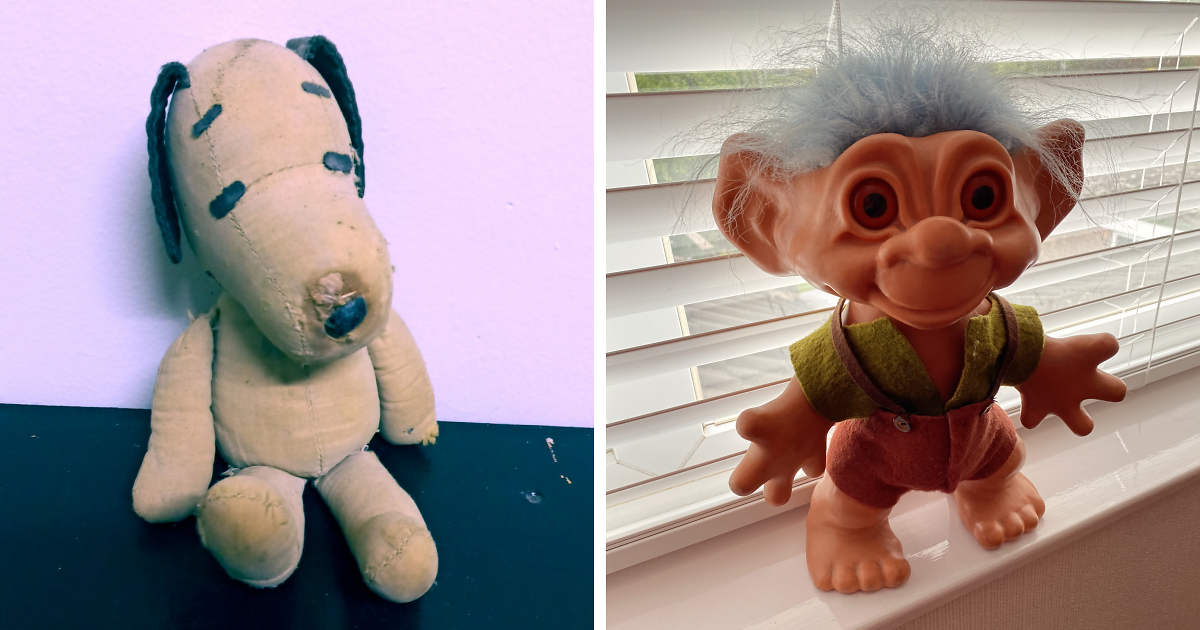
Some childhood memories arrive politely, like a postcard. Others kick the door open wearing light-up sneakers and holding a half-melted Popsicle. That is the magic behind the prompt “Hey Pandas, Post A Thing From Your Childhood”: it asks people to share one object, sound, snack, toy, photo, smell, or tiny everyday detail that instantly sends them back to the years when summer felt endless and “five more minutes” was a serious legal argument.
Childhood nostalgia is powerful because it is rarely about the thing itself. A plastic toy, a scratched CD, a school lunch tray, a cartoon theme song, a friendship bracelet, or a cereal box prize may look ordinary to everyone else. But to the person who remembers it, that item is a time machine with terrible fuel economy but excellent emotional mileage.
Online communities love prompts like this because they turn memory into conversation. One person posts an old Game Boy, another remembers blowing into video game cartridges, someone else brings up the smell of Scholastic book fairs, and suddenly the comment section becomes a digital sleepover. No one brought pajamas, but everyone brought feelings.
Why Childhood Things Hit Us So Hard
Childhood objects become emotional bookmarks. They help us remember not only what we owned, but who we were when we owned it. A teddy bear may remind someone of bedtime safety. A plastic lunchbox may bring back school mornings, noisy buses, and the heroic battle of keeping a sandwich from becoming banana-scented. A stack of trading cards might represent friendship, competition, and the business skills of a tiny Wall Street broker who traded three commons for one shiny rare card.
Nostalgia often feels bittersweet because it mixes happiness with longing. We smile at the memory, but we also recognize that the moment is gone. That emotional blend is part of why childhood memories feel so vivid. They are not only cute flashbacks; they are pieces of personal history.
Objects Carry Stories
A thing from childhood is rarely just a thing. It is a container for routines, people, places, and feelings. A worn-out blanket may hold memories of sick days on the couch. A bicycle may recall scraped knees, driveway races, and the moment the training wheels came off. A sticker album may bring back the high-stakes drama of duplicates, trades, and that one glitter sticker nobody wanted to give away.
This is why “post a thing from your childhood” works so well as a social prompt. It is simple, visual, and personal without demanding a confession. People can join with a picture, a sentence, or a funny story. The doorway is small, but the room it opens is huge.
The Most Nostalgic Things People Love To Share
While everyone’s childhood is different, certain categories appear again and again when people talk about the past. These items show up across generations because they connect to universal experiences: play, food, school, family, boredom, imagination, and the strange glory of being easily entertained.
1. Toys That Were Basically Royal Treasure
Many childhood posts begin with toys. Action figures, dolls, stuffed animals, building blocks, yo-yos, marbles, jump ropes, toy cars, and plastic animals all have a way of becoming legendary. As children, we did not need perfect realism. A cardboard box could become a spaceship. A stick could become a sword, a wand, a microphone, or a very questionable fishing pole.
Toys matter because play is one of the ways children learn. Through pretend battles, tea parties, block towers, and backyard adventures, kids practice creativity, problem-solving, language, cooperation, and emotional control. Adults may see a pile of toys. Children see a kingdom, a construction site, a restaurant, a secret base, and possibly a dinosaur emergency.
2. Snacks That Deserve Their Own Museum Wing
Childhood snacks are another nostalgia heavyweight. Fruit snacks shaped like cartoon characters, lunchbox cookies, frozen pops, neon-colored drinks, cereal with marshmallows, cafeteria pizza, and those tiny cheese-and-cracker packs were not merely food. They were events.
A snack from childhood can bring back the rhythm of an entire day: cartoons before school, recess, lunch trades, after-school TV, homework avoidance, and the sound of someone yelling that dinner was ready. Even if the snack tastes different now, the memory still has flavor.
3. School Supplies With Main Character Energy
Few things capture childhood confidence like a fresh backpack and a pencil box full of sharpened pencils. Add scented markers, colorful erasers, gel pens, folders with animals on them, and a ruler that doubled as a sword during boring math lessons, and you had an academic arsenal.
School items are nostalgic because they represent identity. The backpack you chose said something. The folder design said something. The pencil grip, lunchbox, and stickers said something. Were you a dinosaur kid? A space kid? A horse kid? A sparkly notebook kid? Childhood branding started early, and we all participated with great seriousness.
4. Games, Consoles, and Digital Dinosaurs
For many millennials, Gen Xers, and older Gen Z adults, childhood technology holds a special kind of magic. Handheld games, pixelated computer screens, CD-ROMs, VHS tapes, cassette players, chunky TVs, and early internet sounds were part of growing up. Today, a loading screen or startup jingle can feel like a portal.
The charm comes partly from limitation. Games had fewer graphics, phones were less smart, and saving a file sometimes felt like launching a NASA mission. But those limits created rituals. You shared controllers, took turns, read instruction booklets, cleaned discs, rewound tapes, and learned patience from progress bars that moved like sleepy snails.
5. Outdoor Childhood: Dirt, Bikes, and Questionable Decisions
Before everyone carried a screen in their pocket, many childhood adventures happened outside. Kids rode bikes until streetlights came on, built forts from branches, invented games with rules no court would recognize, and collected rocks as if preparing for a geology-based retirement plan.
Outdoor play gave ordinary neighborhoods a sense of mystery. A ditch became a canyon. A backyard became a jungle. A driveway became a stadium. A sprinkler became a water park if you had enough imagination and low enough standards.
Why Online Childhood Prompts Bring People Together
Posts like “Hey Pandas, Post A Thing From Your Childhood” succeed because they invite recognition. People do not only respond to the original object; they respond to the feeling. Someone posts a toy phone, and another person remembers calling imaginary customers. Someone shares a picture of a lunchbox, and suddenly ten people are discussing cafeteria chocolate milk like it was fine wine.
This kind of sharing creates instant community. It tells people, “You remember this too? I thought I was the only one.” That small moment of recognition can feel surprisingly meaningful, especially in a fast-moving online world where attention often disappears faster than a cookie left unattended near children.
Shared Nostalgia Is Social Glue
Nostalgia can strengthen social bonds because it encourages storytelling. Childhood memories often involve family members, friends, teachers, neighbors, siblings, cousins, and pets who absolutely did not understand personal boundaries. When people share nostalgic objects, they often end up sharing the people connected to them.
A toy may lead to a story about a grandparent. A recipe may bring back a parent. A school photo may recall a best friend. A video game may remind someone of a sibling rivalry that technically ended years ago but spiritually continues.
The Funny Side Of Childhood Memories
Childhood was not always graceful. In fact, it was often a comedy show with no script and questionable safety procedures. That is why childhood posts are so entertaining. They remind us that children are creative, dramatic, literal, and occasionally convinced that the moon is following the family car for personal reasons.
People love sharing childhood things because the memories are often hilarious in hindsight. Maybe you wore a superhero cape to the grocery store. Maybe you believed swallowing a seed would grow a watermelon in your stomach. Maybe you tried to cut your own bangs and created a hairstyle that could be described as “historic.”
Cringe Becomes Comedy
As adults, we can laugh at the things that once felt enormous. The lost toy, the embarrassing school photo, the dramatic diary entry, the playground betrayal, the outfit we thought was amazingthese memories become softer with time. They remind us that growing up is awkward for everyone. Some people simply had better lighting.
This is why childhood nostalgia is not always polished or perfect. The best memories are often messy. They have dirt on the knees, marker on the hands, frosting on the face, and a haircut nobody has fully explained.
How To Choose A Thing From Your Childhood To Post
If you are answering the prompt, do not overthink it. The best childhood item is not necessarily the rarest, prettiest, or most expensive. It is the thing that makes your brain say, “Oh wow, I remember that.”
Look For Emotional Sparks
Start with objects that carry a feeling. Maybe it is a toy you took everywhere, a book you read until the spine gave up, a snack you begged for, or a cartoon you watched every Saturday. The object should unlock a story, even a tiny one.
Think Beyond Toys
Childhood things are not limited to toys. You could post a school worksheet, a family recipe, a birthday candle, a sports jersey, a library card, a photo of your old street, a sticker, a cassette tape, a board game piece, or a keychain from a vacation you barely remember but somehow deeply respect.
Add Context
A good post becomes better with a little story. Instead of simply posting “my old lunchbox,” add a sentence: “This lunchbox survived three school years, two grape juice explosions, and one tragic yogurt incident.” Details make the memory come alive.
What Childhood Objects Say About Generations
Every generation has its own memory kit. Baby boomers may remember metal lunchboxes, drive-in movies, baseball cards, and simple outdoor games. Gen X childhood often brings up bikes, arcade games, mixtapes, Saturday morning cartoons, and latchkey independence. Millennials may remember VHS tapes, Tamagotchis, gel pens, early internet, and the golden age of plastic everything. Gen Z may look back on early smartphones, online games, streaming shows, slime, tablets, and fandom culture.
These objects show how childhood changes with technology, culture, and family life. They also show what stays the same. Children still collect things, invent games, love snacks, form deep attachments to random objects, and turn ordinary days into legends.
The Deeper Meaning Behind “A Thing From Your Childhood”
At first, the prompt sounds light and playful. Post a toy. Post a snack. Post a photo. Easy. But underneath the fun is something deeper: childhood objects help people organize memory. They give shape to time.
When someone shares an old toy, they are not only saying, “Look at this toy.” They may also be saying, “This was my safe place,” “This was my favorite year,” “This reminds me of my sister,” or “This was before life became complicated.” Nostalgia does not mean we want to live in the past forever. It means we recognize that the past helped build us.
Nostalgia Can Be Comforting Without Being Escapist
There is a difference between appreciating childhood memories and refusing to grow up. Healthy nostalgia gives us perspective. It reminds us of joy, creativity, resilience, and connection. It can help us revisit simpler moments while still living in the present.
In other words, you can love your childhood cereal bowl without moving back into your childhood bedroom and demanding cartoon privileges. Balance is key.
Examples Of Childhood Things Worth Posting
Need inspiration? Here are some childhood things that often spark great stories:
- A stuffed animal with one eye, no tag, and the emotional importance of a national monument.
- A scratched video game cartridge or disc that somehow still worked after being treated like a hockey puck.
- A lunchbox, thermos, or cafeteria tray memory.
- A bike, skateboard, scooter, or rollerblades from the era of fearless knees.
- A childhood book with bent pages and suspicious stains.
- A toy phone, toy kitchen, or pretend cash register that launched your first imaginary career.
- A cereal box toy that felt like winning the lottery.
- A photo of an old bedroom, especially if the wallpaper made bold choices.
- A bracelet, necklace, or friendship charm from someone you still remember.
- A school supply that made you feel unstoppable for at least three days.
How Childhood Sharing Builds Better Online Conversations
The internet can be loud, impatient, and occasionally as pleasant as stepping on a building block barefoot. But nostalgia prompts offer a softer kind of interaction. They encourage people to share, listen, laugh, and remember.
Instead of arguing, people compare snacks. Instead of debating, they discuss toys. Instead of doom-scrolling, they spend a few minutes remembering the smell of crayons, the sound of a playground swing, or the thrill of getting the “good” seat in the family car.
That does not solve every problem online, but it does create a small pocket of warmth. Sometimes a childhood memory is just enough to remind people that behind every username is a person who once had a favorite toy, a weird fear, a beloved snack, and a very strong opinion about cartoons.
500 Extra Words: Childhood Experiences That Make This Prompt Feel So Personal
One of the most relatable childhood experiences is discovering that ordinary places could feel enormous. A school hallway seemed as long as an airport runway. A backyard felt like a national park. The space under a dining table became a secret headquarters. Even a closet could become a spaceship if you had a flashlight, a blanket, and enough confidence to ignore the shoes.
Then there were the tiny rituals. Saturday mornings had a special electricity. You woke up early without an alarm, because cartoons had trained your body better than any productivity app ever could. Breakfast tasted better in pajamas. Commercial jingles lived rent-free in your head. The remote control was powerful, but only if no older sibling claimed it first.
School days created their own universe. The pencil sharpener was a destination. The classroom line had politics. The playground had territories. Everyone knew which swing was the best, which slide was too hot in summer, and which kid could run fastest even though no official committee had verified the results. A good recess could improve the entire day. A bad lunch trade could haunt you until dismissal.
Childhood friendships were intense in the funniest ways. Someone could become your best friend because they shared crayons with you. Someone could become your sworn enemy because they cut in line. Five minutes later, both of you might be building a sandcastle together as if nothing happened. Children are dramatic, but they are also excellent at moving on when snacks are involved.
Family memories also live inside childhood things. A mixing spoon may bring back baking with a parent. A fishing lure may recall quiet mornings with a grandparent. A board game may remember cousins shouting over rules that nobody read correctly. A holiday ornament may carry the whole emotional weight of December, including cookies, music, and one tangled string of lights that tested everyone’s character.
There is also the beautiful weirdness of childhood beliefs. Many kids thought quicksand would be a bigger adult problem. Some believed toys came alive at night. Others were convinced that swallowing gum stayed in the stomach forever, that the moon followed the car, or that adults had everything figured out. That last one was especially funny. Adults, as it turns out, are mostly children with calendars and passwords.
Posting a thing from your childhood is not just about showing an old object. It is about opening a drawer in your memory and finding the version of yourself who loved without irony, played without checking the time, and believed a blanket fort could solve most problems. Maybe that version of you still has something useful to say.
Conclusion: Post The Thing, Tell The Story
“Hey Pandas, Post A Thing From Your Childhood” is more than a cute internet prompt. It is an invitation to remember, laugh, connect, and celebrate the small objects that shaped big feelings. Childhood things matter because they hold stories: the toy you carried everywhere, the snack you still crave, the game you played for hours, the book you read under the covers, or the school supply that made you feel like you had your life together at age eight.
Whether your childhood thing is silly, sweet, embarrassing, or surprisingly emotional, it deserves a moment. Share it with context. Tell the tiny story. Let other people recognize it, laugh with you, and maybe remember something they had forgotten. After all, nostalgia is better when it is passed around like a bowl of snacks at a sleepover.
So go ahead, Panda. Post the thing. The internet may not need another argument today, but it could definitely use one more beloved stuffed animal, glitter pencil, old game cartridge, or cereal box memory.