Organizing clothes can feel suspiciously like trying to fit a marching band into a phone booth. You fold, hang, stack, sort, and somehow one sweater still ends up living on “the chair.” The good news? You do not need a celebrity walk-in closet, a custom-built dressing room, or a budget that requires a dramatic meeting with your bank account. You just need smarter systems that work with the space you already have.
Whether you have a compact apartment closet, a shared wardrobe, a dresser that has seen things, or no closet at all, the secret is not simply owning fewer clothes. The real win is creating zones, using vertical space, choosing the right storage tools, and building habits that make it easy to put things back. When your clothes are organized, mornings become faster, laundry feels less monstrous, and your favorite shirt stops disappearing like it joined a witness protection program.
Below are 11 smart, practical, and realistic strategies for organizing clothes in the space you have, with specific examples you can apply today.
1. Start With a Wardrobe Edit Before Buying Organizers
Before you buy bins, baskets, hangers, drawer dividers, shelf risers, or anything that promises to “change your life in 30 seconds,” pause. The first step in organizing clothes is editing what you own. Storage products are helpful, but they cannot fix a closet packed with clothes you do not wear, do not like, or forgot existed sometime around 2019.
Try the Three-Pile Method
Remove your clothes from one section at a time and sort them into three piles: keep, donate, and decide later. The “decide later” pile is important because it prevents you from freezing over one pair of jeans with emotional complexity. If you have not worn something in a year, it does not fit your current lifestyle, or it makes you feel like you are auditioning for discomfort, it may be time to let it go.
For sentimental clothing, be selective. A concert hoodie from your favorite night? Keep it. Seven faded event T-shirts you never wear? Consider saving one and freeing the rest. Editing creates breathing room, and breathing room is the most underrated luxury in a small closet.
2. Sort Clothes by Category, Then by Frequency
Once you know what you are keeping, group clothes by category. Put shirts with shirts, pants with pants, dresses with dresses, and workout clothes with workout clothes. This sounds basic, but it is the foundation of wardrobe organization. When similar items live together, you can see what you own and stop buying duplicate black T-shirts that are “slightly different,” which is what we all say before adding another one to the pile.
Keep Daily Items in the Easiest Spots
After sorting by category, arrange clothes by how often you use them. Everyday basics should be at eye level or in easy-to-reach drawers. Special-occasion outfits, formalwear, costumes, and seasonal pieces can go higher, lower, or farther back. Your closet should support your real life, not the fantasy version where you wear sequins to breakfast.
For example, if you wear work clothes five days a week, give them prime closet space. If you only wear ski gear once a year, it does not need front-row seating.
3. Use Slim, Matching Hangers to Save Space
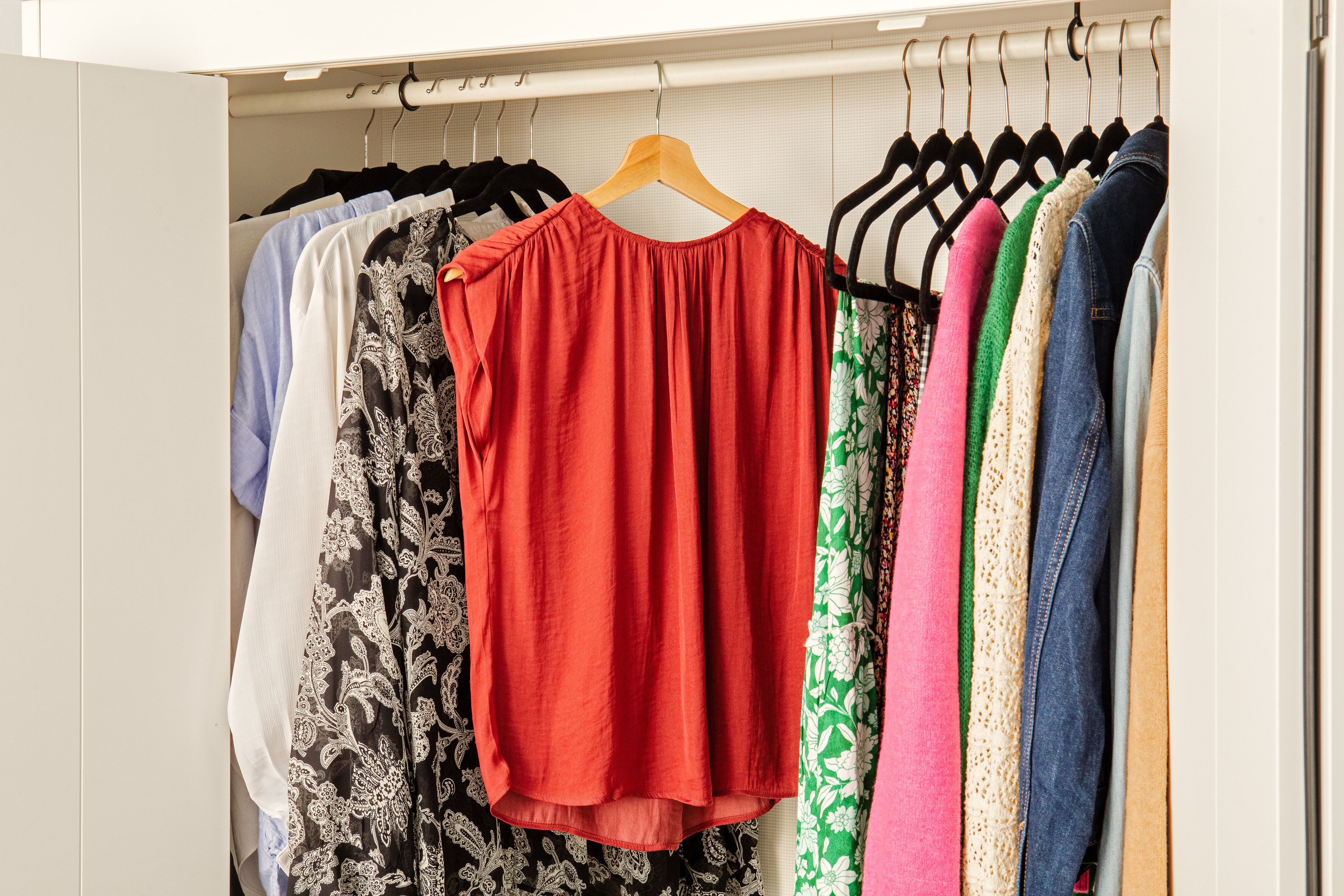
One of the easiest small closet organization upgrades is switching to slim, matching hangers. Bulky plastic and wooden hangers take up more rod space than you think. Slim velvet or nonslip hangers help clothes stay in place and create a cleaner, more uniform look.
Matching hangers also make your closet feel calmer visually. When your closet looks less chaotic, it is easier to maintain. This is not about being fancy; it is about tricking your brain into thinking, “Ah yes, I am a person with systems.” Powerful stuff.
Use Specialty Hangers Carefully
Tiered hangers can work well for pants, scarves, belts, or camisoles, but do not overload them. If one hanger holds 14 items and removing one causes a textile avalanche, the system is too complicated. The best clothing storage ideas are simple enough to use on a tired Tuesday.
4. Double Your Hanging Space With a Second Rod
If most of your wardrobe includes shirts, skirts, folded pants, or shorter jackets, a second closet rod can dramatically increase hanging space. Instead of one high rod with wasted air underneath, double-hang sections let you use the vertical space more efficiently.
A common setup is one rod near the top for shirts and another below it for pants, skirts, or shorter tops. Long dresses, coats, and jumpsuits still need a full-length hanging section, so do not double-rod the entire closet unless your wardrobe is mostly short pieces.
Best For Small Closets
This strategy is especially useful in reach-in closets, kids’ closets, dorm rooms, and rental apartments where floor space is limited. If you cannot install hardware, try an adjustable hanging rod that hooks onto your existing closet rod. It is renter-friendly and does not require you to explain mysterious wall holes later.
5. Make Shelves Work Harder With Dividers and Bins
Open shelves are great until stacks of sweaters begin leaning like they have lost the will to live. Shelf dividers help keep piles upright and separate. They are useful for sweaters, jeans, handbags, sweatshirts, and folded linens.
Bins and baskets are also excellent for clothing categories that do not stack neatly. Use them for swimsuits, scarves, hats, workout accessories, off-season socks, or small items that tend to wander. Clear bins make it easy to see what is inside, while woven or fabric baskets create a warmer, decorative look.
Label What You Cannot See
If a bin is not transparent, label it. Labels do not need to be Pinterest-perfect. A simple tag that says “winter hats” or “gym clothes” is enough. The goal is not to impress visitors. The goal is to avoid opening six boxes while looking for one pair of gloves.
6. File-Fold Clothes in Drawers
Traditional stacking works fine until you need the shirt at the bottom. Then suddenly your drawer looks like raccoons held a meeting in it. File-folding solves that problem by placing clothes upright, like files in a cabinet. This method works well for T-shirts, leggings, pajamas, underwear, kids’ clothes, and workout wear.
When clothes are file-folded, you can see everything at once. No digging. No mystery layers. No accidentally wearing the same three shirts because the others are buried under cotton archaeology.
Use Drawer Dividers for Small Items
Drawer dividers are helpful for socks, underwear, belts, and accessories. You can use adjustable dividers, small boxes, or even repurposed containers. The point is to create boundaries so small items do not merge into one confusing drawer soup.
7. Store Shoes Outside the Main Clothing Zone When Possible
Shoes can eat closet space quickly, especially if they are piled on the floor. If your closet is small, consider moving some shoes elsewhere. Entryway racks, under-bed boxes, over-the-door organizers, or narrow shoe cabinets can free valuable closet space for clothes.
Keep your most-worn shoes accessible and store special-occasion or seasonal pairs farther away. If you own tall boots, use boot shapers or rolled magazines to keep them upright. This protects their shape and prevents the bottom of the closet from becoming a boot swamp.
Use the Floor Intentionally
If shoes must stay in the closet, use a rack instead of letting them spread across the floor. Floor space should be treated like beachfront property: limited, valuable, and not to be wasted on random flip-flops.
8. Use the Back of the Door
The back of a door is prime storage territory. Over-the-door organizers can hold shoes, scarves, belts, hats, accessories, socks, or small folded items. Hooks can hold tomorrow’s outfit, robes, tote bags, or frequently worn jackets.
This strategy works especially well for bedrooms, dorm rooms, laundry rooms, and shared closets. It adds storage without taking up floor space. Just avoid overloading the door so heavily that opening it becomes a gym exercise.
Create a “Ready Zone”
Use a door hook as a staging area for the next day’s outfit. Hang your clothes, belt, bag, or light jacket there the night before. This simple habit can make mornings smoother, especially when your brain is still buffering.
9. Rotate Seasonal Clothing
If you live somewhere with real seasons, your closet does not need to hold every garment all year. Store heavy coats, wool sweaters, thermal layers, or summer beachwear when they are not in use. Seasonal rotation is one of the smartest clothes storage ideas for limited space.
Use under-bed containers, vacuum storage bags, lidded bins, or unused suitcases for off-season clothing. Make sure everything is clean and fully dry before storing it. Storing dirty clothes invites odors, stains, and fabric damage. Nobody wants to open a storage bin and meet the ghost of last summer’s sunscreen.
Keep Transitional Pieces Accessible
Do not pack away every sweater the second spring arrives. Keep a few transitional pieces available: a light jacket, cardigan, jeans, or layering tops. Weather likes to be dramatic, and your closet should be prepared.
10. Create Zones for Real-Life Outfits
A beautifully organized closet is useless if it does not match how you get dressed. Think in zones based on your lifestyle. You might have a work zone, casual zone, workout zone, sleepwear zone, and dressy zone. This makes outfit building faster because related items are near each other.
For example, if you exercise in the morning, keep workout tops, leggings, socks, and sports bras in the same drawer or shelf area. If you often dress for work, keep blouses, trousers, belts, and blazers together. Organizing clothes around your routines makes your system feel natural instead of forced.
Use Outfit Formulas
An outfit formula is a repeatable combination, such as jeans plus a knit top plus sneakers, or trousers plus a button-down plus loafers. Grouping clothes by how you actually wear them helps reduce decision fatigue and makes your wardrobe feel more useful.
11. Maintain the System With a Weekly Reset
Even the best wardrobe organization system needs maintenance. Clothes move. Laundry happens. Chairs become temporary closets. Life gets busy. A weekly reset keeps clutter from becoming a full-blown closet uprising.
Choose one day each week to spend 10 to 15 minutes returning clothes to their proper places. Rehang items, refold messy stacks, clear the floor, and move laundry along. This small habit prevents the dreaded “I need to reorganize everything” weekend project.
Use the One-In, One-Out Rule
When you buy something new, consider removing one similar item. A new pair of jeans replaces a pair you no longer wear. A new hoodie means an old one gets donated or repurposed. This keeps your closet from slowly expanding beyond its borders like a very soft empire.
Smart Clothing Storage Ideas for Different Spaces
If You Have a Tiny Closet
Use slim hangers, double rods, shelf dividers, and door organizers. Keep only current-season clothing in the closet and move bulky or rarely worn items elsewhere. Use bins on the top shelf for categories such as accessories, travel items, or off-season clothes.
If You Have No Closet
Try a freestanding garment rack, wardrobe cabinet, dresser, wall hooks, or under-bed storage. Keep open storage neat by using matching hangers and limiting what is visible. A garment rack can look stylish if it holds a curated selection instead of every item you have ever owned.
If You Share a Closet
Divide the space clearly. Give each person a side, shelf, drawer, or labeled bin. Shared closets fail when boundaries are vague. Clear zones prevent accidental takeovers and reduce the chance of someone asking, “Why are your sweatshirts in my sock area?”
Common Clothes Organizing Mistakes to Avoid
Buying Organizers Before Measuring
Measure your closet, drawers, shelves, and under-bed space before purchasing storage products. Guessing often leads to bins that almost fit, which is somehow more annoying than bins that do not fit at all.
Keeping Too Many “Someday” Clothes
It is fine to keep a few aspirational or sentimental pieces, but too many “someday” clothes can crowd out the items you actually wear. Your closet should serve your present life first.
Making the System Too Complicated
If putting away laundry requires opening a box, removing a lid, folding perfectly, and whispering a motivational quote, you probably will not maintain it. Choose systems that are easy to use even when you are tired.
Extra Experience: What Really Works When You Organize Clothes in a Small Space
After organizing clothes in all kinds of spaces, from narrow apartment closets to shared bedrooms and overflowing dressers, one lesson stands out: the best system is the one you can repeat without thinking too hard. A closet can look stunning for one afternoon, but the real test comes after laundry day. If clean clothes sit in a basket for a week because the system is too fussy, the system needs adjusting.
One practical experience that works almost every time is creating a “landing zone” for clothes that are worn once but not dirty. Many people do not want to put those clothes back with freshly washed items, but they also do not belong on the floor. A small hook, wall peg, or dedicated basket can solve this problem. Jeans, cardigans, and lounge clothes can wait there temporarily instead of forming a fabric sculpture on a chair.
Another useful trick is to organize based on behavior, not fantasy. If you hate folding, give yourself more hanging space or use bins for casual clothes. If you never hang pants, do not force a pants-hanger system just because it looks nice online. If you always drop accessories near the door, create storage there instead of pretending you will walk across the room every time. Organization improves when it follows your habits instead of scolding them.
Small spaces also benefit from fewer “maybe” items. Maybe clothes are dangerous because they quietly consume valuable storage. Maybe it will fit again. Maybe you will wear it to a themed party. Maybe the color will come back into style. A few maybes are normal, but too many make your closet harder to use. A helpful rule is to put maybe items in a separate box for 60 days. If you do not miss them, you have your answer.
For families, roommates, or shared closets, labels can prevent daily confusion. They are especially helpful for children, because a labeled bin for pajamas or school shirts makes cleanup easier. Adults benefit too. Labels remove the tiny decision of where something belongs, and fewer tiny decisions mean a system that lasts.
The most satisfying organizing experience often comes from using hidden spaces: under the bed, behind the door, above the closet rod, inside suitcases, or beneath hanging clothes. These spaces are easy to overlook, but they can hold off-season clothes, shoes, accessories, or backup basics. The key is to avoid turning hidden storage into a black hole. Use containers that are easy to pull out and label everything clearly.
Finally, the biggest improvement comes from a regular reset. Ten minutes once a week can save hours later. Put on music, set a timer, and return clothes to their homes. It does not need to be perfect. In fact, perfection is usually the enemy of an organized closet. The goal is a space that helps you get dressed without stress, find what you own, and stop negotiating with a pile of laundry like it has legal representation.
Conclusion
Organizing clothes in the space you have is not about creating a showroom closet. It is about making daily life easier. Start by editing your wardrobe, then use smart storage tools such as slim hangers, double rods, shelf dividers, drawer organizers, bins, hooks, and seasonal storage. Build zones around your real routines, keep frequently worn items easy to reach, and maintain everything with a simple weekly reset.
When every item has a clear home, your space feels bigger, your clothes last longer, and your mornings become far less dramatic. Your closet may never look like a magazine spread every single day, but it can absolutely stop acting like a laundry tornado with doors.
Note: This article is written as original, publish-ready web content in standard American English, based on practical clothing organization principles and current home organization guidance.