Note: This article interprets the title as a fun, fact-based feature inspired by micron-scale maker fabrication and precision engineering.
There is something deeply charming about a maker project that sounds like a joke and then quietly turns into a master class in engineering. That is exactly the vibe of Jolly Wrencher Down To The Micron. On the surface, it sounds like a cartoon mechanic shrank himself in the wash. Underneath, it opens the door to a bigger story about precision 3D printing, micro machining, dimensional metrology, and the strange thrill of caring about errors so small they would make a human hair look like a tree trunk.
The phrase works because it is funny. “Jolly Wrencher” sounds like a mascot that escaped a toolbox. “Down to the micron” sounds like the point where the shop floor stops being a garage and starts muttering in scientific notation. Put them together and you get a perfect headline for one of the most interesting trends in modern fabrication: the steady migration of ultra-precise manufacturing ideas from elite labs and high-end industrial equipment into the hands of curious builders, tinkerers, and precision-obsessed hobbyists.
And yes, that is where things get exciting. The maker world has long loved big, noisy victories: bigger prints, stronger parts, faster builds, more axes, more lights, more “look what I made.” But the quieter revolution is happening at the opposite end of the scale. It lives in careful calibration, tighter tolerances, cleaner motion systems, smarter toolpaths, better materials, and the stubborn refusal to accept “close enough” when the work demands finer control.
What “Down to the Micron” Really Means
A micron, also called a micrometer, is one-thousandth of a millimeter. That is 0.001 mm. In manufacturing, that tiny unit matters because once you chase small features, smooth finishes, accurate fits, or repeatable motion, the difference between “pretty good” and “actually precise” gets very small very fast.
But here is the first reality check: not every machine that advertises tiny layer heights or impressive resolution is delivering true micron-level dimensional accuracy across a finished part. In precision work, several ideas get mixed together all the time. Resolution is not the same as tolerance. Layer height is not the same as accuracy. Repeatability is not the same as correctness. A machine can produce a tiny feature and still miss the target dimension. It can repeat the same mistake beautifully all afternoon.
That distinction matters because the real heroes of micron-level work are not just print heads and spindles. They are measurement systems, motion control, thermal stability, machine rigidity, calibration discipline, and operator patience. In other words, the glamorous part of high precision is only possible because of a very unglamorous support cast.
From Maker Mascot to Micron Obsession
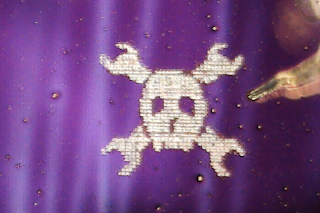
The spirit behind this title comes from a tiny, almost absurdly detailed “Jolly Wrencher” demo produced at micro scale. That kind of project is more than a novelty. It is a compact demonstration of how far maker-grade thinking has evolved. Early desktop fabrication won people over by making objects at all. Today, the frontier is not merely making things, but making them smaller, cleaner, more repeatable, and more exact.
This shift reflects a broader change in digital fabrication. The old dream was democratized manufacturing: let regular people make useful parts, prototypes, and weird little dragons. The new dream is more ambitious. It asks whether open, accessible systems can also borrow ideas from precision engineering. Can a small machine move with less backlash? Can it hold alignment better? Can a print process produce sharper details? Can the measurement loop get tighter? Can an experimental setup behave less like a hobby toy and more like a real instrument?
That is the secret magic of the micron mindset. It turns making into measuring, and measuring into understanding.
Why Micron-Level Precision Is So Hard
Motion Systems Hate Slop
If you want fine features, the machine must move in fine increments without wobble, backlash, stick-slip, or other mechanical nonsense. That is why precision designs often lean on flexures, compliant mechanisms, air bearings, or other low-play motion approaches. Flexures are especially interesting because they trade conventional joints for carefully engineered bending. Done well, they reduce friction, backlash, and wear while enabling extremely repeatable motion.
That sounds elegant because it is elegant. It also sounds a little rude to conventional machinery, because it is. Traditional mechanisms often carry tiny errors from screws, bearings, interfaces, and assembly stack-ups. When you are chasing micron-scale movement, every one of those tiny imperfections starts acting like a heckler in the front row.
Materials Move When They Feel Like It
The second problem is temperature. Precision parts do not politely stay the same size while your workshop warms up. Materials expand and contract. That is why dimensional metrology has long treated temperature as a major source of error, and why 20 degrees Celsius became the standard reference temperature for industrial length measurement. When tolerances get tight, a small temperature shift can chew through your error budget like a shop vacuum through a pile of aluminum chips.
This is one reason micron claims should always be handled carefully. The machine may be capable. The material may be cooperative. The design may be excellent. But if the thermal environment is unstable, the measurement result can drift before you finish congratulating yourself.
Measurement Is the Real Boss
In ordinary making, you build first and measure later. In precision work, measurement is part of the build. Micrometers, comparators, optical systems, calibration artifacts, uncertainty budgets, and process validation are not side dishes. They are the meal.
Nailing a dimension once is pleasant. Nailing it repeatedly, proving it, and knowing the uncertainty around that proof is manufacturing maturity. That is why NIST’s metrology work matters so much to the real-world shop floor. Precision is not just about machining or printing a part. It is about knowing what you made, how sure you are, and what conditions might change the answer.
Precision 3D Printing: Impressive, Useful, and Sometimes Overhyped
Additive manufacturing has become dramatically better, especially for fine details. Resin systems can work with very thin layer heights, and industrial micro-additive processes can reach feature sizes that would have sounded ridiculous to the average desktop printer owner a decade ago. Some additive systems can build tiny features in the tens of microns. That is real progress.
Still, consumers and even professionals often misunderstand what the numbers mean. A 25-micron layer height sounds microscopic, and it is. But that figure usually describes vertical slicing, not guaranteed dimensional accuracy everywhere in the part. Surface finish, resin behavior, cure effects, orientation, peel forces, support strategy, shrinkage, and post-processing all influence the final result.
In practical terms, precision 3D printing is amazing for miniature details, prototypes, custom geometries, medical models, optics-adjacent experimentation, and parts where geometry matters more than a dead-perfect mating fit. It shines when complexity is high and part count is low. It starts sweating when someone demands that every critical dimension behave like a gage block.
That does not make the technology weak. It makes it honest. Additive manufacturing is strongest when the process matches the job. A finely detailed micro part? Great. A tiny logo with crisp visual definition? Excellent. A production feature that must hold extreme tolerance under changing loads and temperatures? That may call for post-processing, hybrid finishing, or a different manufacturing route altogether.
Where True Micron Work Usually Lives
Once you move from “small and detailed” to “micron-class tolerance,” you often leave pure desktop fabrication behind and enter the world of micro machining, grinding, lapping, EDM, and specialized finishing processes. This is where the industrial side of precision gets serious.
Micro machining uses tiny tools, high-speed spindles, rigid setups, and carefully tuned parameters to create features with dimensions measured in micrometers. Precision grinding and lapping push even further when geometry and finish must be tightly controlled. Wire EDM adds another option for conductive materials and intricate profiles. These are not flashy processes to the casual observer, but they are where many medical, aerospace, electronics, and instrumentation parts earn their reputations.
That is the bigger lesson behind the phrase “down to the micron.” At that scale, there is no single silver-bullet machine. Precision comes from systems thinking. Motion, fixturing, material behavior, process selection, temperature control, finishing, and inspection all have to pull in the same direction.
How Makers Can Get Closer to Micron-Class Results
Design for Stiffness, Not Just Looks
Thin, elegant, dramatic geometries are fun until they vibrate, warp, or flex during fabrication. If you want better precision, design for rigidity and predictable behavior. A boringly stable part is often a beautifully accurate part.
Reduce Backlash and Compliance
Loose belts, sloppy bearings, weak frames, and poorly constrained motion can destroy fine detail. Better mechanics beat better marketing. Every time.
Respect Temperature
Precision work in a room with swinging temperatures is a little like baking soufflés on a trampoline. Control the environment, let machines warm up, and avoid measuring parts immediately after aggressive processing.
Measure Smarter
Do not rely on hope, eyeballing, or “it looks centered.” Use appropriate instruments, repeat measurements, and learn the difference between a single reading and actual process capability.
Choose the Right Process
If your part needs gorgeous micro detail, resin printing may be ideal. If it needs a critical bore or very tight flatness, micro machining, grinding, or lapping may be the better play. Good fabrication starts with process humility.
Plan for Finishing
Many high-precision parts are not born perfect. They are printed or machined near target and then refined. Polishing, grinding, lapping, heat treatment, and inspection loops are often what separate acceptable from exceptional.
The Bigger Meaning of the Tiny Wrencher
A microscopic Jolly Wrencher is fun because it collapses two worlds into one image. On one side, it belongs to maker culture: open experimentation, playful design, and the joy of building something nobody technically needed but everybody wants to show a friend. On the other side, it points toward serious manufacturing ideas: compliant mechanisms, metrology, tolerance strategy, motion control, and the ruthless physics of small-scale fabrication.
That combination is exactly why this topic matters. Precision is no longer trapped inside elite industrial settings. The language of repeatability, calibration, and high-fidelity manufacturing has started moving into fab labs, garages, classrooms, and small shops. Not because every hobbyist needs nanometer uncertainty, but because better understanding leads to better tools, better parts, and better decisions about what is realistically possible.
And there is something wonderfully American about that. A lot of the best manufacturing progress happens when practical shop wisdom collides with research, standards, and accessible tooling. The result is not fantasy. It is capability.
Field Notes From Chasing Tiny Perfection
Anyone who has spent time around precision work knows the emotional arc is almost always the same. You begin with confidence, because the CAD model looks immaculate and the machine brochure sounds like it was written by a poet with a caliper. Then the first part comes off the machine and teaches you humility in three decimal places.
At first, the errors seem personal. The line is slightly fat. The tiny corner rounds over. The fit feels close but not right. A pattern that looked razor-sharp on screen becomes soft in real material. You tweak one setting. Then another. Then a third. Suddenly you are deep into an evening spent adjusting exposure, tension, compensation, feed, support density, toolpath smoothing, or alignment shims, wondering how a part smaller than your fingernail managed to take over your whole personality.
Then comes the strange turning point: you stop treating the machine like a magic box and start treating it like a system. That is when the work gets better.
You notice the bench matters. The room temperature matters. The material lot matters. Warm-up time matters. The order of operations matters. The difference between measuring on the machine, at the bench, or the next morning matters. You realize that “precision” is not a switch you flip. It is a relationship you build between design, machine, material, environment, and inspection.
There is also a very particular joy in finally seeing a tiny feature come out right. Not just “good enough for Instagram,” but genuinely right. The edge is crisp. The feature is where it should be. The dimensions land inside the target window. The part repeats. You make a second one, expecting betrayal, and it matches the first. That moment feels less like winning and more like earning entry into a quiet club of people who understand that perfection is rarely dramatic. Usually it looks like a tiny improvement that only five people on Earth would notice, and all five are unreasonably excited about it.
Precision work also changes how you think about failure. A sloppy first prototype in a casual project is annoying. A sloppy result in a micron-minded project is data. It tells you where the machine bends, where the resin swells, where the cutter chatters, where the fixture gives way, or where your assumptions were optimistic in a way that borders on performance art. That kind of failure is not pleasant, but it is valuable. It turns frustration into a map.
And maybe that is why a title like Jolly Wrencher Down To The Micron sticks in the brain. It captures the weird mix of humor and seriousness that defines the best fabrication culture. You can laugh at the ridiculousness of making something tiny, while also respecting the discipline required to do it well. You can enjoy the mascot while admiring the metrology. You can build with playfulness and still care deeply about process control.
In the end, the experience of chasing micron-scale quality is less about shrinking things than sharpening your thinking. It teaches restraint. It teaches observation. It teaches that every claim of precision should be backed by evidence, and that evidence starts with measurement. Most of all, it teaches that making small things well is not small work. It is some of the most demanding, revealing, and rewarding work a builder can do.
Conclusion
Jolly Wrencher Down To The Micron is a playful title with serious engineering underneath it. It points to a world where maker culture and precision manufacturing are no longer strangers. Tiny printed logos, micro-scale motion, dimensional metrology, thermal control, and tolerance strategy all belong to the same story. The lesson is simple: micron-level results do not come from hype. They come from design discipline, smart process selection, reliable measurement, and the willingness to care about details most people will never even see.
That is what makes micron-scale fabrication so compelling. It is not just about making things smaller. It is about making your understanding bigger.