Some kids ask for sneakers. Some want a game console. Some want a dinosaur the size of a loveseat. And then there are the kids who look at the world, spot a brush, a palette, and a little bit of shimmer, and think: Yes, that. I want to learn that.
That is what made this story travel so quickly across the internet. An 8-year-old boy named Ethan wanted to learn makeup, and instead of laughing it off, shutting it down, or delivering the classic parental speech that begins with “absolutely not,” his mother did something far more powerful. She treated his interest as real. She bought him a lesson.
On the surface, it is a sweet viral moment. Underneath, it is a bigger story about child creativity, supportive parenting, boys and makeup, and what happens when adults choose encouragement over fear. It is also a reminder that makeup is not just a beauty product. It can be art, technique, storytelling, confidence-building, and plain old fun with better brushes.
The Viral Story That Felt Bigger Than a Beauty Counter
Ethan’s interest in makeup did not come out of nowhere. Reports at the time described him as an artistic child who already loved creative expression in different forms. He watched beauty tutorials, paid attention to technique, and wanted to understand how the whole process actually worked. In other words, this was not random mischief involving stolen lipstick and a doomed bathroom mirror. It was curiosity with a point of view.
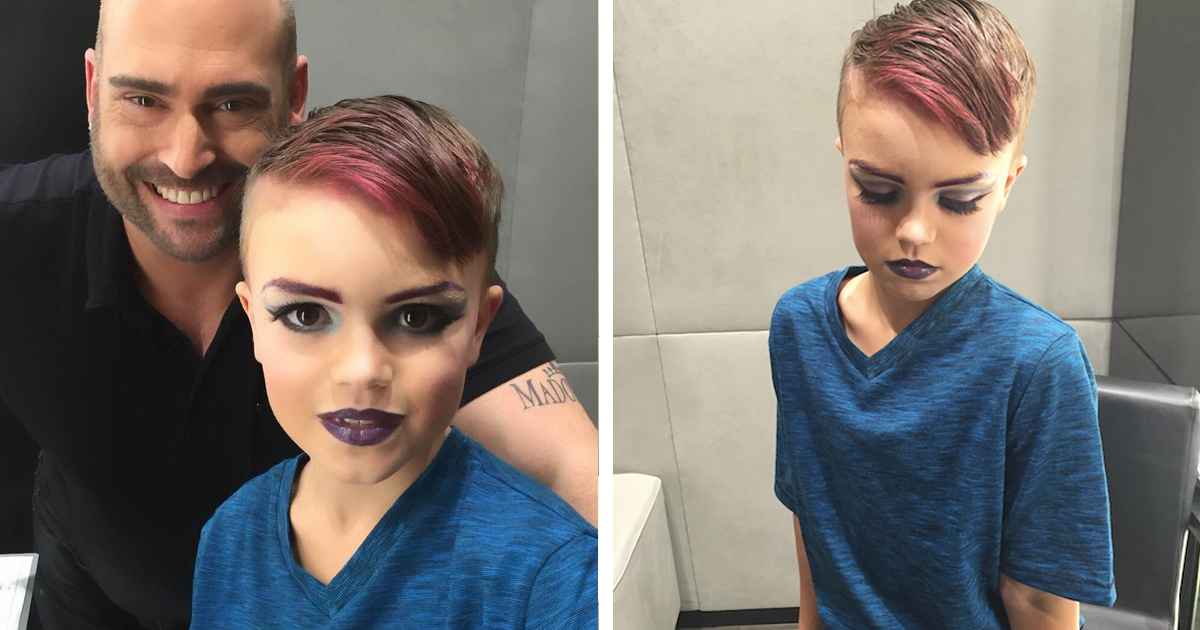
His mom, Season, took that curiosity seriously. She arranged for Ethan to get a makeup lesson at a M.A.C. counter, where makeup artist Joey Killmeyer worked with him like he would any other client. That detail matters. Ethan was not treated like a joke, a stunt, or a tiny headline waiting to happen. He was treated like a student.
The lesson itself became the internet’s favorite part. Joey worked on one side of Ethan’s face, and Ethan recreated the look on the other side. That is the kind of detail that instantly changes the tone of the story. This was not simply a child playing around with color. It showed observation, coordination, patience, and a real interest in technique. Even shoppers nearby reportedly noticed, and some wanted Ethan to do their makeup too.
No wonder the story landed. It had all the ingredients people love: a creative kid, a supportive mom, a skilled mentor, and a result that made everyone look slightly emotional and slightly jealous that their own eyeliner still acts like it has personal grievances.
Why This Story Resonated With So Many People
The internet did not respond so strongly just because the story was adorable. It resonated because it touched a familiar nerve: the gap between what children naturally like and what adults think they are supposed to like.
When a child shows interest in drawing, dancing, cooking, or costume design, adults often praise that curiosity. But add a makeup brush to the scene and suddenly some people start acting like civilization is hanging by one mascara wand. That reaction says more about adult discomfort than it does about childhood development.
Experts in child development have long emphasized that children benefit from opportunities for self-expression and creative play. Art is not just decoration. It helps children explore identity, emotions, experimentation, and problem-solving. Makeup, especially when approached as artistry rather than adult performance, fits naturally into that creative world. It involves color, shape, symmetry, imagination, and the confidence that comes from making something with your own hands.
That is why this story felt heartwarming to many readers. It showed a parent refusing to treat creativity as dangerous just because it arrived wearing concealer.
Makeup Is Art, Skill, and Self-Expression
One of the best things about this story is that it quietly reframed makeup as a skill. Not a punchline. Not a scandal. A skill.
Anyone who has ever tried to blend eyeshadow into something other than “mysterious bruise chic” knows makeup takes practice. A good lesson teaches more than where to put product. It teaches patience, color balance, hand control, sanitation, and attention to detail. It can be playful, but it is also technical.
That is part of why kids can be so drawn to it. Children love activities that let them transform surfaces. They paint paper, walls, pumpkins, shoes, and sometimes unfortunately the family dog. Faces are another canvas, and makeup gives kids a way to experiment with shape and color in a focused, teachable format.
There is also a larger cultural point here. Makeup has never belonged exclusively to women. Across history, men have worn cosmetics too. Ancient Egyptians of both sexes used eye makeup, and beauty practices across civilizations have included men as well as women. So the idea that a boy with an interest in makeup is some shocking modern plot twist does not exactly survive a quick meeting with history.
What His Mom Got Exactly Right
Season’s parenting decision stands out because it was both warm and practical. She did not overreact. She did not turn Ethan’s interest into a philosophical emergency. She simply saw something her child cared about and gave him a structured chance to learn more about it.
That approach matters. Supportive parenting does not mean turning every child preference into a destiny speech with dramatic background music. It means paying attention. It means understanding that curiosity deserves room to breathe. It means helping a child explore interests safely, age-appropriately, and without shame.
Parents often worry that supporting one interest means making a giant statement about who a child will become. But children do not need every hobby interpreted like a fortune cookie. Sometimes a kid likes makeup because it is colorful. Sometimes because tutorials are fascinating. Sometimes because it feels like art class with better lighting. The healthiest response is often the simplest one: listen, support, observe, guide.
That is also what pediatric guidance on child self-expression keeps circling back to. Children benefit when adults create room for exploration rather than forcing them into rigid expectations. When parents lead with calm acceptance, kids tend to feel safer, more confident, and more willing to communicate openly.
The Real Lesson Was Bigger Than Makeup
The makeup lesson was about makeup. It was also not about makeup at all.
It was about what children learn when adults take them seriously. Ethan learned that his interests were worth time and effort. He learned that a professional would treat him with respect. He learned that learning a creative skill could feel exciting rather than embarrassing. Most importantly, he learned that his mother was on his side.
That kind of support can leave a lasting mark. Not because every child hobby turns into a career, but because the emotional memory stays. Children remember who laughed at them, who dismissed them, and who said, “Let’s see where this goes.”
That may be the deepest reason this story still works years later. It is not merely a viral parenting win. It is a case study in how confidence often starts: one adult, one small decision, one moment where a child feels seen instead of corrected.
What Parents Can Learn From This Moment
1. Curiosity is not a crisis
A child wanting to learn makeup does not require panic, prophecy, or a family summit. It requires curiosity in return. Ask what they like about it. Is it color? Characters? Tutorials? Face painting? Transformation? The answer usually reveals much more than the product itself.
2. Structure beats chaos
One reason this story feels so healthy is that Ethan’s interest was guided through a lesson. That gave the moment skill, boundaries, and adult supervision. If a child is interested in beauty or face art, a lesson, a supervised practice session, or even a beginner kit with rules can make all the difference.
3. Encouragement builds confidence
Children become more secure when they feel supported in exploring talents and preferences. Support does not mean there are no rules. It means rules are based on safety and context, not embarrassment.
4. You do not have to agree with every trend to respect a child’s interest
Plenty of parents know very little about contouring and would prefer to keep it that way. That is okay. You do not need to become a beauty influencer to say, “I see that this matters to you.”
Keeping Makeup Play Safe and Age-Appropriate
Now for the practical part, because creativity is more fun when nobody ends the day with an eye infection.
If children are experimenting with makeup, adults should think about hygiene first. Eye-area products should never be shared. Store testers should be handled carefully or avoided unless single-use applicators are used. Brushes need regular cleaning. Old makeup needs to be tossed. And if a product causes irritation, the experiment should stop immediately.
That is especially important because cosmetics in the United States are regulated, but most do not go through FDA premarket approval the way drugs do. Companies are responsible for product safety and labeling. That means parents still need to read labels, choose reputable products, and supervise use. Translation: the packaging may be cute, but your common sense is still doing heavy lifting.
For younger children, simpler is smarter. A supervised lesson, clean tools, gentle products, and clear expectations work better than turning the bathroom into an unsupervised glitter laboratory. Makeup can also overlap with face painting, theatrical looks, and costume play, which often makes more sense for children than copying a full adult routine product for product.
In other words, the goal is not “tiny grown-up.” The goal is creative exploration with safe habits.
Boys and Makeup Are Not the Plot Twist People Think They Are
Part of the discussion around Ethan’s story came from outdated assumptions that makeup is somehow incompatible with boyhood. That idea falls apart quickly once you look at history, theater, fashion, and the beauty industry itself.
Men have worn cosmetics in ancient societies, on stage, on camera, in royal courts, in music scenes, in drag performance, in editorial beauty, and in everyday life. Male makeup artists have shaped film, photography, celebrity culture, and modern beauty standards. The only thing “new” is that more parents and children are sometimes discussing these interests more openly.
That openness matters. It gives children permission to explore creative interests without absorbing shame they did not invent in the first place. It also teaches them a broader lesson: personal expression is not a threat to anyone else.
And honestly, a world in which more children are encouraged to learn precision, color theory, hygiene, and respectful self-expression is not exactly spiraling toward doom. If anything, it sounds more organized than most group projects.
Why This Story Still Matters
Years after the original headlines, this story remains memorable because it is refreshingly simple. A child wanted to learn something creative. His mother supported him. A professional mentor treated him seriously. The result was joy, confidence, and a moment of internet humanity that did not require a prank, a scandal, or a celebrity breakup.
In a culture that often rushes to sort kids into tidy little boxes, Ethan’s makeup lesson offered a better model. Notice who they are. Help them explore what they love. Protect their safety. Ignore the loudest nonsense. Repeat as needed.
That formula works for makeup, art, music, fashion, sports, science kits, robotics, and just about anything else a child lights up around. The real magic is not in the eyeliner. It is in the permission.
Experiences Related to This Story: What Moments Like This Often Look Like in Real Life
Stories like Ethan’s feel memorable because they mirror experiences many families and mentors quietly recognize. A child becomes fascinated by something unexpected, and the adults around them face a choice. They can turn it into a problem, or they can turn it into a doorway.
Often, the first sign is small. A boy lingers in the cosmetics aisle while everyone else is headed toward checkout. A child watches beauty tutorials with the same laser focus another kid gives dinosaur documentaries or magic tricks. A parent notices that face paint at Halloween becomes the highlight of the month, not because of the candy, but because of the transformation. Those early clues usually point to the same thing: interest, not rebellion.
Then comes the testing phase. A child asks what a sponge does. Why there are different brushes. Why one shade looks warmer than another. Whether eyeliner is hard to use. Adults who stay calm usually learn something useful in that moment. Kids are often less interested in “looking grown-up” than in learning process, technique, and effect. They want to know how things work.
Another common experience is the emotional shift that happens when a supportive adult says yes. It can be dramatic. Children who feel awkward or hesitant suddenly become focused, chatty, and proud. They pay attention differently when they realize they are not being judged. That boost in confidence is one reason creative mentorship matters so much. A lesson can teach skill, but it also teaches dignity.
There is usually a social side to these experiences too. Some strangers are kind. Some are curious. Some are weirdly invested in opinions nobody asked for. Parents who have been through this often describe learning to filter the noise fast. Encouragement from a trusted adult tends to matter far more than random public commentary. Children do not need universal approval. They need a safe base.
Mentors matter just as much. A patient makeup artist, art teacher, hairstylist, costume designer, or theater coach can completely change how a child sees their own interests. One respectful adult can validate a talent that a child did not yet know how to describe. That is part of what made Ethan’s lesson so powerful. It was not only maternal support. It was professional respect.
There is also the practical experience families learn quickly: creative freedom works best with boundaries. Clean brushes, fresh products, supervision, and realistic expectations help keep the experience fun. A thoughtful “yes” is stronger than a chaotic one. Kids thrive when exploration has structure.
Most of all, moments like this tend to be remembered long after the makeup comes off. Not because of the lipstick shade or the mascara wand, but because of how the child felt. Seen. Trusted. Encouraged. That is the part people carry with them. The product may wash away, but the confidence often sticks.
Note: This article is written as an original synthesis for web publication and intentionally excludes source links inside the body copy.