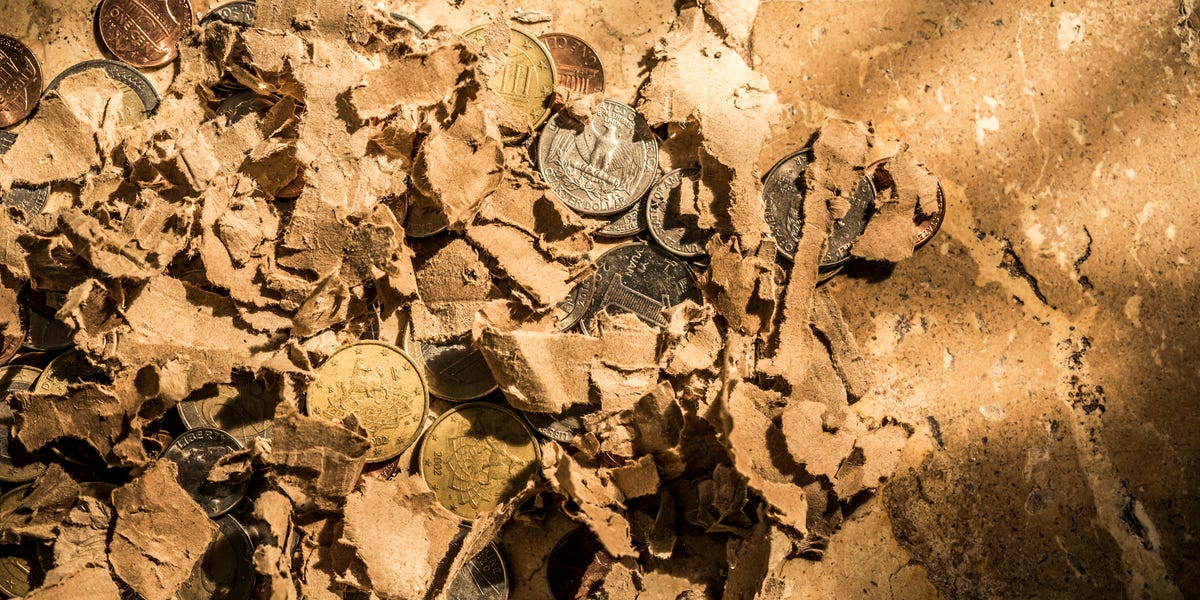
Every so often, archaeology hands us a story so cinematic that it sounds like someone shook a history textbook and a treasure map fell out. That is exactly the feeling behind the discovery of a hidden stash of Persian gold coins at Notion, an ancient Greek city on the western coast of modern-day Turkey. Buried in a small pot beneath the remains of a large house, the coins were not just shiny souvenirs from the past. They were cluestiny, golden witnesses to military pressure, political loyalty, mercenary pay, and the messy reality of ancient warfare.
The discovery matters because coins do more than sparkle. They travel, they pay, they date events, and sometimes they panic with their owners into the ground. This secret stash of coins, known as Persian darics, gives researchers a rare chance to connect money with military history in a specific archaeological setting. In plain English: this was not a random “look, treasure!” moment. It was a carefully excavated find with context, and context is the archaeologist’s favorite snack.
The headline may sound dramatic“rewrite war history”but the real story is even better. The hoard does not magically erase old history and replace it with a Hollywood director’s cut. Instead, it sharpens the picture of how wars around Notion may have been financed, who may have been fighting, and why a person with a very expensive pot of gold never came back for it.
The Discovery: A Pot of Gold Beneath an Ancient City
The coins were found by researchers connected with the Notion Archaeological Project, led by University of Michigan archaeologist Christopher Ratté. The excavation took place at Notion, an Ionian Greek city in western Anatolia, near Turkey’s Aegean coast. Today, the site is quiet and archaeological. In antiquity, it sat in a region where Greek cities, Persian power, Athenian influence, and local loyalties collided like carts in a narrow market street.
The gold coins were buried in a small ceramic vessel under part of a large courtyard house. That detail is crucial. Many ancient coin hoards have surfaced through looting or accidental discovery, which often strips away the surrounding evidence. Here, archaeologists knew where the coins were found, what structures surrounded them, and what other artifacts helped date the deposit. That makes the hoard far more useful than a glittering pile with no memory.
The coins are Persian darics, famous for their image of a kneeling archer. Darics were high-value gold coins issued by the Persian Empire and likely minted at Sardis, a major Persian administrative center northeast of Notion. They circulated from the late sixth century B.C. until the conquest of the Persian Empire by Alexander the Great in 330 B.C. The Notion hoard has been dated to the fifth century B.C., a period when the region was entangled in major military and political conflict.
Why Persian Darics Were the Ancient Version of Serious Money
A daric was not pocket change for buying olives and a modest lunch. It was elite currency. Ancient sources, including Xenophon, suggest that a single daric could equal roughly a soldier’s pay for one month. That instantly changes how we should see the hoard. This was not a forgotten grocery fund. It may have represented military payroll, the savings of a mercenary, or emergency wealth hidden during political chaos.
The design of the daric also matters. The kneeling archer was a recognizable symbol of Persian royal authority. In an age before paper receipts, bank transfers, and suspicious “your package has shipped” emails, coin imagery communicated power. A daric did not merely say “this is gold.” It said, “this is Persian imperial money, backed by one of the greatest powers of the ancient world.”
Because the design of darics changed only subtly over time, numismatists study small stylistic details to arrange the coins chronologically. The Notion hoard is especially valuable because other artifacts found around it help date the deposit independently. That gives researchers a fixed reference point, or anchor, for understanding the development of Achaemenid gold coinage.
How a Secret Stash of Coins Can Rewrite War History
War history is often told through battles, kings, generals, and dramatic speeches that probably sounded much better in later retellings than they did at the time. But wars are also built on money. Soldiers need pay. Mercenaries need motivation. Supplies need purchasing. Ships need crews. Allies need persuading. A secret stash of coins can reveal the financial machinery behind events that ancient writers described mostly in political and military terms.
The Notion hoard suggests that Persian gold may have been moving through the area in connection with military operations. That does not prove a single, neat story, but it does support a broader interpretation: the struggle between Persian and Greek interests was not only fought with spears and ships. It was also fought with payroll, patronage, and the buying of loyalty.
That is where the discovery becomes historically powerful. It helps historians look beyond famous names and battlefield summaries. It points to the working parts of conflict: paid fighters, shifting allegiances, borderland communities, and the practical cost of holding territory. Ancient war was not a clean chessboard. It was a crowded tavern argument with weapons, taxes, and hired muscle.
Notion: A Small City in a Very Big Power Struggle
Notion occupied a strategic position on the coast of western Anatolia. It was connected to nearby Colophon and the sanctuary of Apollo at Claros, and it stood in a region that repeatedly shifted between Persian influence and Greek political networks. In the mid-sixth century B.C., Greek cities along the western coast of Anatolia were absorbed into the Persian Empire. Later, some gained freedom from Persian rule, only to become entangled with Athenian power and, eventually, Persian influence again.
During much of the fifth century B.C., Notion lay under Athenian domination, but the region was hardly politically simple. Ancient historian Thucydides describes conflict involving Persian sympathizers from nearby Colophon, mercenaries, and Athenian intervention. Between 430 and 427 B.C., pro-Persian forces reportedly occupied part of Notion with the help of Greek and non-Greek mercenaries. The Athenian general Paches later attacked, killed the pro-Persian mercenaries, expelled the Persian sympathizers, and reorganized Notion under Athenian supervision.
That episode is one possible historical backdrop for the buried hoard. If gold was being used to pay mercenaries around Notion, the coins could be linked to exactly the type of conflict described by Thucydides. Still, good archaeology resists turning possibility into certainty too quickly. The hoard could also relate to later events, including the naval battle fought off Notion in 406 B.C. during the Peloponnesian War, when Athens and Sparta were locked in their long and exhausting struggle.
Mercenaries, Money, and the Awkward Business of Loyalty
Mercenaries are one of the most fascinating parts of ancient warfare because they remind us that loyalty was often complicated. Some fighters served cities. Others served kings. Some served whoever paid on time, which is not exactly romantic but is extremely human. Persian darics were ideal for this world because they were valuable, recognizable, and portable.
If the Notion coins were connected to mercenary pay, they show how imperial money could shape local conflict. A Persian-backed faction did not necessarily need to command a huge army directly. It could fund allies, hire soldiers, or influence a contested city through cash. In a tense frontier zone, one pot of gold could become a political weapon.
This is why the hoard is more than buried treasure. It suggests a network of power. The coins may represent the movement of Persian resources into a Greek civic environment. They may show how local disputes were plugged into larger imperial strategies. They may also reveal how ordinary houses, not just palaces and military camps, became hiding places during crisis.
Why the Owner Never Came Back
One of the saddest questions in archaeology is also the most obvious: why was the treasure never retrieved? People do not usually bury precious metal for fun. They bury it because they expect danger, secrecy, or temporary absence. They plan to return. When they do not, history quietly raises an eyebrow.
The owner may have died in conflict. The person may have fled and never returned. The house may have been destroyed, reorganized, or abandoned. The hoard may have belonged to a soldier, a commander, a wealthy resident, or someone responsible for paying troops. Each possibility tells a different story, but all of them point toward instability.
That uncertainty is not a weakness. It is part of the discovery’s value. The Notion hoard does not give us a simple answer wrapped in a bow. It gives us a sharply focused question: what kind of military, political, or personal crisis caused someone to hide a fortune and lose it forever?
The Real Treasure Is Context
Gold gets the attention, but context gets the scholarship. Without controlled excavation, the coins would still be beautiful, but they would be historically weaker. A hoard removed from its setting is like a movie scene with no beginning and no ending. Interesting, yes. Useful, only partly.
At Notion, archaeologists could connect the coins with architecture, pottery, earlier walls, and the broader history of the site. They found the hoard beneath a Hellenistic house, in remains associated with an earlier Classical-period structure. Pottery and other evidence helped place the deposit in the late fifth century B.C. That is exactly the period when Notion was caught between Persian, Athenian, and local pressures.
This is also why archaeologists worry so much about looting. A looted coin can still be studied as an object, but the story around it is damaged. Where was it found? What was next to it? Was it hidden in a house, a temple, a military camp, or a grave? Those details can transform a coin from “old gold” into evidence.
How Archaeologists Read Coins Like Historical Documents
Coins are small, but they are packed with information. Their metal content, weight, design, minting style, wear patterns, and find location can all speak. A heavily worn coin may have circulated for decades. A fresh coin may point closer to the time of burial. A group of coins found together can create a snapshot of economic life at a precise moment.
With darics, the archer design remained fairly consistent, but small artistic differences matter. Researchers compare the posture, weapon details, clothing style, and punch marks to build a relative sequence. When a hoard like Notion’s is independently dated by surrounding artifacts, it helps confirm or refine that sequence.
That makes the discovery useful not only for local history, but also for the larger study of Achaemenid coinage. The Persian Empire stretched across a vast area, and its money moved through military, administrative, and commercial networks. Every securely excavated hoard helps researchers understand how that system worked.
What This Find Teaches Us About Ancient Warfare
The Notion hoard reminds us that ancient war was expensive, flexible, and deeply connected to economics. Armies did not march on courage alone. They marched on pay, food, transport, and promises. The secret stash of coins gives physical form to that reality.
It also challenges the neat way people often imagine ancient conflicts. Instead of a simple Persia-versus-Greece story, Notion shows a world of mixed loyalties. Greek cities could be divided internally. Persian sympathizers could live alongside Athenian supporters. Mercenaries could fight for causes they did not personally believe in because wages have always been persuasive.
In that sense, the hoard “rewrites” war history by making it more practical and more human. It moves the spotlight from heroic speeches to payroll. It reminds us that behind every dramatic clash was someone counting coins, worrying about loyalty, and hoping the hired soldiers would stay hired long enough to matter.
Why Modern Readers Should Care
A buried pot of ancient coins might seem distant from modern life, unless you happen to keep emergency gold under your patio, in which case please do not email me the address. But the Notion discovery matters because it shows how fragile history can be. One small object, carefully excavated, can reshape an entire discussion about power, money, and conflict.
It also makes the ancient world feel less like marble statues and more like real life. Someone hid those coins. Someone worried. Someone expected to return. That person lived in a city where international politics could arrive at the front door, where war was not an abstract map but a local emergency.
The find also highlights the importance of protecting archaeological sites. When objects are removed without documentation, their richest meanings can vanish. When they are excavated carefully, even a small pot becomes a time capsule of politics, economics, and survival.
Conclusion: A Tiny Hoard With a Giant Historical Echo
The secret stash of Persian gold coins found at Notion is not just a treasure story. It is a war story, an economic story, and a human story. The coins connect the Persian Empire, Greek city politics, mercenary warfare, and the daily fear of living in a contested region. They show that the history of war is not only written by generals and battles. Sometimes it is written by a pot, a floor, a vanished owner, and a handful of gold that waited 2,400 years for someone to ask the right questions.
The discovery helps historians better understand how conflicts around Notion may have been financed and how Persian wealth may have moved through Greek borderlands. It also gives numismatists a rare, well-dated anchor for studying Persian darics. Most importantly, it proves that archaeology’s greatest power is not finding treasure. It is restoring memory.
Field Notes: Experiences That Bring the Coin Hoard Story to Life
Imagine standing at an archaeological site in the heat of western Turkey, brushing soil away from the corner of an ancient room. At first, the work feels slow. Archaeology is not usually a thunderclap. It is more like convincing the earth to whisper. A piece of pottery appears. Then a wall line becomes clearer. Then the soil changes color. Everyone leans in a little closer because experience teaches excavators that the ground often announces a secret before it reveals one.
When a small vessel begins to emerge, the mood changes. Nobody starts dancing with a trowelat least, not professionallybut the air gets sharper. A buried pot beneath a house is not just an object. It is a decision someone made. The person who placed it there likely chose the spot carefully. Maybe it was a corner they could remember. Maybe it was hidden quickly during panic. Maybe it was placed beneath the floor with the confidence of someone who thought, “I’ll come back when this chaos is over.” That thought is what makes the discovery so haunting.
For anyone who has visited an archaeological museum, coins can sometimes seem small compared with statues, weapons, or painted pottery. They sit behind glass, tidy and silent. But at a site like Notion, a coin hoard feels alive because it appears in the place where a human being last trusted the future. The gold is beautiful, yes, but the emotional weight comes from absence. The owner never returned. War, exile, death, or disaster interrupted the plan.
This is the experience that makes archaeology different from treasure hunting. Treasure hunting asks, “What is it worth?” Archaeology asks, “What happened here?” The Notion hoard rewards the second question. Its value is not only in the gold but in the story built around itthe house, the earlier walls, the pottery, the city’s political tension, and the possibility of mercenary warfare. The coins are like a sentence preserved from a burned letter. We may not have the whole message, but we have enough to feel the urgency.
There is also a modern lesson tucked inside the ancient one. People still hide valuables when life becomes uncertain. They move savings, protect family documents, and make emergency plans. The technologies change, but the instinct is familiar. That is why the Notion coins connect so strongly with readers today. They are not only artifacts of Persian imperial finance. They are evidence of human anxiety, hope, and unfinished plans.
To stand near such a discovery, even in imagination, is to feel history shrink from “long ago” into “someone was here.” Someone held these coins. Someone knew their weight. Someone may have counted them by lamplight and listened for trouble outside. Then the door closed, the years buried the room, and the city moved on. Centuries later, archaeologists opened the ground and gave that interrupted moment a voice again. That is the real magic of the secret stash of coins: it does not simply rewrite war history; it makes war history personal.