Note: This web-ready article is based on real research and reporting about human-robot interaction, empathy, robot treatment, social robotics, safety, trust, and robot ethics.
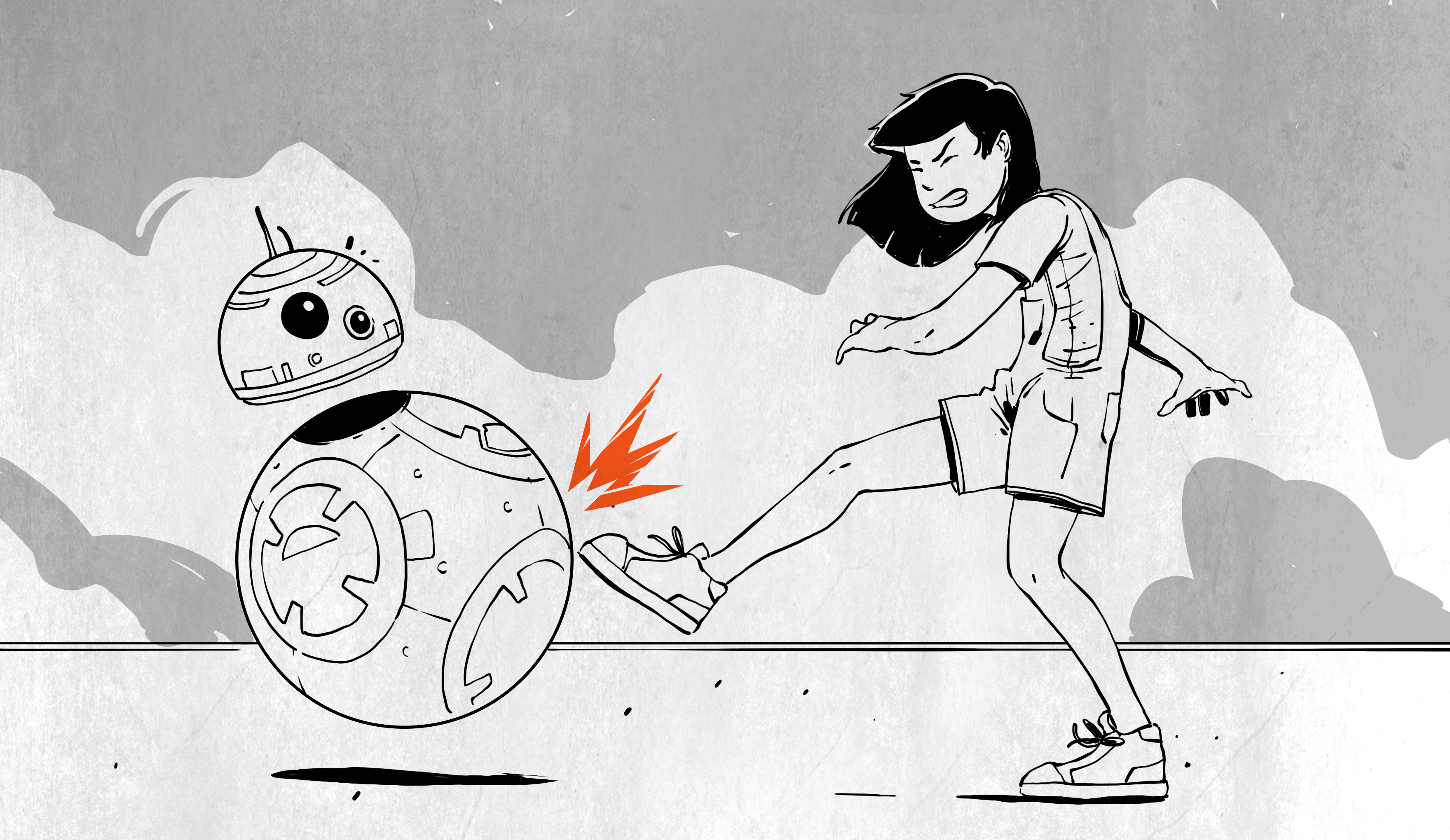
Somewhere on the internet, a robot dog gets kicked in a demonstration video, stumbles, regains its balance, and keeps walking. Technically, nothing “suffers.” No bones break. No feelings are hurt. No tiny robot diary gets filled with sad mechanical poetry. And yet, many viewers wince. Some laugh nervously. Others feel oddly protective, as if someone just shoved a golden retriever wearing Wi-Fi.
That strange little emotional hiccup is the heart of our reactions to the treatment of robots. We know robots are machines. We know a Roomba is not quietly composing a revenge ballad under the couch. We know a delivery robot stuck at a curb is not “embarrassed.” Still, when a robot is helped, ignored, mocked, kicked, praised, or treated kindly, humans often respond as if something social is happening.
And maybe something is happeningnot inside the robot, but inside us.
As robots become more common in homes, hospitals, schools, warehouses, sidewalks, airports, and workplaces, the way we treat them is becoming more than a quirky internet debate. It raises real questions about empathy, moral habits, design, safety, trust, and the future of human-robot interaction. Do we owe robots kindness? Or do we owe ourselves better behavior when dealing with machines that look, move, and talk like social beings?
Why Do We React Emotionally to Robots?
Human beings are champion pattern-finders. Give us two dots and a line, and we see a face. Give us a robot with blinking eyes, a soft voice, and a slightly confused pause before answering, and suddenly we are apologizing to it like it is a polite intern on its first day.
This tendency is called anthropomorphism: assigning human qualities, feelings, or intentions to nonhuman things. It is why people name their cars, yell at laptops, thank voice assistants, and feel guilty when replacing an old phone that has “been through a lot.” Robots intensify this effect because they do not merely sit there. They move. They respond. They appear to notice us.
Movement Makes Machines Feel Alive
A chair can fall over and nobody gasps. A robot can fall over and half the room wants to help it up. Movement is powerful because our brains are tuned to read motion as intention. When something approaches, turns away, hesitates, follows, retreats, or reaches, we instinctively ask: What does it want?
Robots that move in animal-like or human-like ways trigger this social radar. A robot dog trotting across a room can look determined. A humanoid robot turning its head can look curious. A small delivery bot waiting at a crosswalk can look patient, even though it is really running code, sensors, and navigation softwarenot practicing mindfulness.
Faces, Voices, and Names Change Everything
Design matters. A robot with a name, eyes, voice, and expressive body language can quickly move from “tool” to “character” in our minds. That does not mean people literally believe it is alive. Instead, the robot becomes socially legible. We understand it through the same emotional shortcuts we use with pets, children, coworkers, and that one printer that clearly has personal issues.
This is why even simple social cues can change how people behave. A machine that says “ouch,” “please,” or “thank you” may create more hesitation before someone mistreats it. A robot that seems vulnerable can draw help. A robot that seems too human, however, can also make people uncomfortable. Welcome to the uncanny valley, where a machine is almost human enough to be impressive, but not quite human enough to stop haunting your dreams.
Robot Abuse: Why It Bothers Us
“Robot abuse” sounds dramatic, like a courtroom episode starring a toaster. But researchers use the term to describe aggressive or harmful behavior toward robots: kicking, hitting, blocking, grabbing, yelling at, bullying, or deliberately interfering with them. The robot may not experience pain, but the act still reveals something about the human actor and the surrounding social environment.
Studies in human-robot interaction have found that observers often feel discomfort when they see robots mistreated, especially when the robot appears social, lifelike, or vulnerable. Brain-imaging and behavioral research suggests that people can show empathy-like responses when robots are treated affectionately or violently. The reaction is usually weaker than empathy for humans or animals, but it is real enough to make us pause.
We Are Not Defending Metal; We Are Defending Meaning
When someone kicks a robot, viewers may not be thinking, “Poor circuit board, it had dreams.” More likely, they are reacting to the behavior itself. Violence toward a socially expressive object can feel like practice for cruelty. It can also violate expectations about public decency. We may not believe the robot suffers, but we may still dislike what the action says about the person doing it.
This distinction matters. The ethical issue is not only whether robots deserve rights. It is also whether casual cruelty toward human-like machines trains people to ignore vulnerability, mock dependence, or enjoy domination. A robot can become a mirror. Unfortunately, mirrors do not always flatter us. Some of them say, “Wow, you really yelled at a vacuum today.”
Children and Robots: Cute, Complicated, and Occasionally Chaotic
Children’s reactions to robots are especially important because kids are still developing social reasoning, empathy, and moral habits. Research on child-robot interaction has shown that children may treat robots as companions, learners, helpers, or classmates. They may also test boundaries by teasing, blocking, grabbing, or bullying robots, particularly in group settings.
This does not mean children are tiny villains in sneakers. Children experiment with categories. Is the robot a toy? A peer? A teacher? A pet? A computer with elbows? Their behavior often depends on how adults frame the robot, how the robot responds, and whether the setting encourages care, curiosity, or chaos.
For schools, museums, and therapy environments, this creates a practical challenge. Designers and educators must decide how robots should respond to mistreatment. Should they ignore it? Ask for help? Stop the activity? Express sadness? Call an adult? File a strongly worded firmware complaint? The right answer depends on context, but the goal should be clear: encourage respectful interaction without tricking children into believing machines feel exactly like people.
Kindness Toward Robots: Sweet, Silly, or Socially Useful?
Many people instinctively treat robots politely. They say “thank you” to voice assistants. They rescue delivery robots from snowbanks. They give robot vacuums names like “Dusty,” “Meryl Sweep,” or “Sir Crumbs-a-Lot.” Is this foolish? Maybe a little. Is it harmful? Usually not. In many cases, it may reflect a healthy overflow of social habits.
Politeness is not expensive. Saying “excuse me” to a robot does not drain the national empathy reserve. In fact, practicing courtesy in low-stakes interactions may reinforce the kind of behavior we want in high-stakes human ones. The problem begins when people confuse simulated emotion with real emotional need, or when companies exploit human attachment to make products more persuasive than they should be.
The Helpful Bystander Effect
One fascinating area of research explores whether robots can encourage bystanders to intervene when someone mistreats them. In experiments and public settings, robots that appear socially aware or that call attention to abuse can sometimes prompt people nearby to step in. This is not just about saving a machine. It is about understanding how social norms form around new technology.
Imagine a delivery robot being harassed on a sidewalk. Some people may film it. Some may laugh. Some may help. Some may walk by pretending they suddenly received a very important text from the cloud. The outcome depends on design, environment, group behavior, and whether people believe intervention is socially appropriate.
The Role of Trust in Human-Robot Interaction
Our reaction to robots is not only emotional. It is also practical. We ask: Is this thing safe? Is it predictable? Can I understand what it is doing? Can I stop it if something goes wrong? Trust is central to human-robot interaction, especially when robots share physical space with people.
A warehouse robot that moves predictably may earn trust even if it looks like a rolling shelf with ambition. A humanoid robot in a home may generate more anxiety because it has arms, height, weight, and the unsettling ability to appear in a hallway at 2 a.m. like a premium subscription to nightmares.
People Prefer Robots With Clear Purpose
Research and public surveys often suggest that people are more comfortable with robots doing practical, physical, or dangerous tasks: lifting heavy items, cleaning floors, delivering goods, inspecting hazards, or assisting in manufacturing. Acceptance drops when robots enter emotionally sensitive roles such as caregiving, teaching, counseling, or companionship.
This does not mean robots have no place in care. Socially assistive robots may help with reminders, routines, therapy exercises, education, or emotional check-ins. But people generally want transparency. They want to know what the robot can do, what it cannot do, who controls the data, and whether a human remains responsible.
Trust Requires Boundaries
A trustworthy robot should not pretend to be more capable, more conscious, or more caring than it is. If a machine says, “I understand exactly how you feel,” that may sound comforting, but it can also be misleading. A better design might say, “I’m here to help you talk through it,” or “Would you like to contact someone you trust?”
Good robot design does not require robots to become fake humans. It requires them to become clear, safe, useful machines that respect human emotions without manipulating them. In other words, less “mysterious metal soulmate,” more “reliable assistant that does not overpromise and definitely does not watch you sleep.”
Do Robots Deserve Rights?
This is where the conversation gets spicy. Ask whether robots deserve rights, and you will quickly find philosophers, engineers, legal scholars, ethicists, and comment sections gathering like storm clouds.
At present, most robots are not conscious. They do not have subjective experiences, desires, pain, fear, dignity, or inner lives. A robot saying “I am sad” is not the same as a child, friend, or animal being sad. It is a performance generated by design.
But robot rights debates are not always about robots as they exist today. They are often about future possibilities, human moral psychology, and social consequences. If a robot becomes increasingly autonomous, adaptive, embodied, and socially integrated, should it receive some kind of protection? If people form deep attachments to robots, should companies be allowed to remotely disable them without warning? If a robot is used in elder care, who is accountable when it fails?
Rights May Be the Wrong First Question
Instead of asking, “Do robots deserve rights?” we might begin with better questions: What responsibilities do humans have when designing robots? What kinds of robot treatment encourage healthy human behavior? How should companies prevent deception? How should robots behave around children, older adults, and vulnerable users? What safety standards are needed before robots move freely through homes and public spaces?
These questions are less dramatic than “Should my blender have constitutional protections?” but they are far more useful.
Why Robot Treatment Reveals Human Character
Our reactions to the treatment of robots show how quickly humans create social meaning. When a robot is kind, we may feel charmed. When it fails, we may feel pity. When it is abused, we may feel anger. When it is too lifelike, we may feel creeped out. When it helps us, we may feel grateful, even if we know gratitude has nowhere to land.
This tells us that robots are not entering society as ordinary appliances. They are entering as social objects: machines that occupy the emotional middle ground between tool, toy, pet, coworker, helper, and character.
The “It’s Just a Machine” Argument
One common response is simple: “It’s just a machine.” That is true. But it is incomplete. A wedding ring is “just” metal. A flag is “just” fabric. A family photo is “just” paper or pixels. Humans attach meaning to objects all the time. The meaning does not have to be located inside the object to be socially powerful.
A robot may be just a machine, but the way we treat it can still shape public norms, emotional habits, and expectations for future technology. If people become comfortable humiliating machines designed to resemble caregivers, classmates, or companions, that behavior may matter even if the machine itself remains blissfully unaware.
Experiences Related to Our Reactions To The Treatment Of Robots
My own experiences with robots and robot-like technology have been ordinary, which is exactly why they are revealing. Most people do not meet a dramatic silver humanoid who asks deep questions about existence while dramatically staring out a rainy window. We meet robots in small ways: a vacuum bumping into a chair, a customer service bot misunderstanding a question, a delivery robot waiting at a curb, a voice assistant setting a timer for pasta because we forgot how clocks work.
The first time I watched a robot vacuum work, I knew perfectly well it was not alive. Still, after ten minutes of watching it escape a chair leg, reverse, reconsider its life choices, and bravely try again, I felt a ridiculous little sense of pride. When it returned to its dock, I had the emotional reaction of a coach watching a toddler score a goal in the wrong net: confused, proud, and unwilling to correct the record.
That reaction says less about the robot and more about the human tendency to narrate motion. We turn behavior into story. The vacuum is not “trying hard,” but it moves in a way that invites the phrase. The delivery robot is not “nervous,” but when it pauses in a crowd, it looks like someone deciding whether to enter a party where they know only the host. We cannot help ourselves. Our brains bring confetti to the smallest parade.
I have also noticed how quickly people split into different camps when a robot is mistreated. Some laugh because the situation feels absurd. Some object because the behavior feels cruel. Some become practical and ask who owns it, what it costs, or whether it is blocking traffic. Others immediately worry about the future: if people treat robots badly now, what will happen when robots become caregivers, tutors, or coworkers?
The most interesting reactions often come from people who insist they do not care. They say, “It’s just a robot,” and then five minutes later they are giving it a nickname, moving a chair out of its way, or getting annoyed when someone interrupts it. The emotional line is not fixed. It shifts with design, context, and familiarity.
That is why real-world experience matters. A robot in a lab video may seem creepy or impressive. A robot in a grocery store may seem annoying if it blocks the aisle. A robot in a hospital may seem helpful if it delivers supplies, but unsettling if it replaces a comforting human presence. A robot in a classroom may delight students, but it also needs adult guidance so children understand what the robot isand what it is not.
These experiences suggest a balanced approach. We do not need to pretend robots are people. We also do not need to treat them as meaningless junk once they become socially expressive. The healthiest reaction may be respectful realism: understand the machine, protect human values, avoid cruelty as entertainment, and keep emotional boundaries clear.
In practice, that means teaching children not to abuse robots because kindness is a habit worth practicing. It means designing robots that do not fake deep emotional bonds for profit. It means making robots predictable, safe, and transparent. It means allowing people to feel affection for machines without letting companies weaponize that affection. And yes, it may mean saying “thank you” to the robot vacuum now and thennot because it needs appreciation, but because maybe we need the practice.
Conclusion: Robots Test Our Empathy More Than We Test Their Feelings
Our reactions to the treatment of robots are not really about whether today’s machines have souls, feelings, or secret group chats where they complain about humans. They are about how humans respond to lifelike behavior, vulnerability, usefulness, and social cues.
Robots challenge our categories. They are tools, but not always ordinary tools. They are objects, but often socially charged objects. They do not feel pain, but they can make us feel discomfort when they are harmed. They do not need dignity, but our treatment of them can reflect our own.
As robots become more visible in everyday life, the goal should not be blind affection or cold dismissal. It should be thoughtful interaction. We can be kind without being fooled. We can be cautious without being cruel. We can design robots that help humans without pretending to replace human care.
In the end, the robot may not remember how we treated it. But we might. And that memory may shape the kind of society we build around the next generation of intelligent machines.