If you are building a SaaS company and the phrase “50+ new VCs are coming” does not make your calendar hand twitch toward the “book flight” button, please check your founder pulse. SaaStr Europa has long been one of the most practical meeting grounds for SaaS founders, operators, executives, and investors. It is not just another conference with branded tote bags and lukewarm coffee. It is a concentrated room full of people who understand annual recurring revenue, customer acquisition cost, net revenue retention, product-led growth, AI adoption, and the delicate art of answering, “So, what does your company actually do?” in under 20 seconds.
The arrival of 50+ new venture capitalists at SaaStr Europa matters because fundraising is still a relationship game, even in an age of AI-powered pitch-deck analysis and data-driven deal sourcing. Founders can email investors all day, but nothing replaces a smart, prepared, face-to-face conversation with someone who funds companies in your market. The right five-minute exchange can turn into a follow-up call, a partner meeting, a customer introduction, or a strategic suggestion that saves you six months of wandering through the startup wilderness with a laptop and a dream.
Why SaaStr Europa Is a Big Deal for SaaS Founders
SaaStr Europa is built around one of the most important truths in B2B software: great companies are not built in isolation. Founders need customers, investors, operators, mentors, peers, and the occasional brutally honest person who says, “Your pricing page is confusing.” The event brings together SaaS and cloud leaders from across Europe, the United States, and global startup hubs, creating a rare environment where practical advice and investor access sit side by side.
The original excitement around SaaStr Europa’s 50+ new VCs was not just about headcount. It was about variety. Investors from firms such as Hummingbird, Partech, Threshold, Samsung NEXT, Blossom Capital, Dawn Capital, Tola Capital, Sapphire Ventures, Notion Capital, and others represented a healthy mix of U.S. and European venture capital perspectives. For founders, that matters. A European SaaS startup selling into U.S. enterprise accounts may need a different investor than a vertical SaaS company focused on local markets. An AI-native infrastructure platform may need someone who understands technical adoption cycles, while a sales automation tool may need a partner who lives and breathes go-to-market strategy.
The Real Opportunity: Not Just Meeting VCs, But Meeting the Right VCs
More investors in the room sounds exciting, but the smartest founders know that fundraising is not a badge-collecting contest. The goal is not to meet every VC. The goal is to meet the right investors: people who understand your category, invest at your stage, believe in your business model, and can help beyond writing a check.
At SaaStr Europa, founders can use investor-heavy programming to sharpen their strategy before they even enter a meeting. Sessions on fundraising, equity incentives, cap tables, corporate partnerships, and scaling companies are especially useful because they force founders to think like investors. How big is the market? Why now? Why this team? Why does the product win? What proof exists beyond enthusiasm and a very confident slide 7?
That is why the “Meet a VC” concept has become such a strong fit for SaaStr-style events. It turns networking from a random hallway sport into a more intentional experience. When post-revenue founders and CEOs are matched with relevant investors, the conversation starts several steps ahead. Instead of awkwardly circling the snack table, both sides can get to business: traction, market, customer pain, growth efficiency, expansion potential, and whether the next round actually makes sense.
Why VCs Are Paying Attention to SaaS Again
The SaaS market has been through several moods in recent years. It enjoyed the champagne-and-confetti era of 2020 and 2021, then faced a more disciplined period when investors demanded profitability, efficient growth, and clearer paths to durable revenue. In 2025, private-market data showed renewed funding momentum, especially around AI-enabled SaaS companies and startups that could combine growth with efficiency.
That shift makes events like SaaStr Europa even more valuable. Investors are not just searching for “software companies.” They are searching for software companies with sharper positioning, measurable customer value, and a credible reason to exist in a world where AI is changing workflows fast. A founder who can explain how AI improves retention, reduces implementation friction, expands product usage, or creates a new category will have a much better conversation than one who simply says, “We added AI,” and hopes everyone claps politely.
AI Has Changed the Pitch
AI is no longer a decorative feature in SaaS. For many new companies, it is becoming part of the architecture, product experience, pricing model, and operational engine. Recent SaaS benchmark research has shown that companies deeply incorporating AI into their products often outperform peers that use AI as a light feature layer. That does not mean every founder should slap “agentic” on the homepage and call it strategy. It means investors are asking harder questions: Is AI making the product meaningfully better? Does it improve gross margin? Does it reduce churn? Does it create data advantages? Can it be defended?
SaaStr Europa gives founders a place to pressure-test those answers. A VC may love the idea but challenge the customer acquisition cost. Another may question whether the AI workflow is truly differentiated. A third may suggest a better buyer persona. That feedback is gold, even when it stings a little. Actually, especially when it stings a little.
What Founders Should Prepare Before SaaStr Europa
Walking into SaaStr Europa without preparation is like showing up to a demo day with 72 slides, no Wi-Fi, and the confidence of a raccoon in a server room. Founders need a plan. The best investor meetings are rarely accidental. They come from research, targeted outreach, clear materials, and a strong understanding of what each investor wants to see.
1. Update Your LinkedIn Before You Update Your Pitch
VCs will look you up. Customers will look you up. Other founders will look you up. Your LinkedIn profile should clearly explain who you are, what your company does, who you serve, and why your work matters. Keep it crisp. If your headline reads like a fog machine wrote it, rewrite it.
2. Build a Pitch Deck That Respects Everyone’s Time
A strong SaaS pitch deck should explain the problem, market, product, traction, business model, go-to-market motion, team, competition, financials, and fundraising ask. Keep it focused. Investors do not need a 19-step origin story unless step 12 includes a dragon, and even then, it had better improve net revenue retention.
3. Know Your Metrics Cold
SaaS investors care deeply about metrics because recurring revenue businesses reveal their health through numbers. Be ready to discuss ARR, MRR, gross margin, churn, net revenue retention, customer acquisition cost, payback period, burn multiple, pipeline quality, sales cycle, average contract value, and expansion revenue. If you are early, you may not have every metric fully matured, but you should understand what matters and where your business is trending.
4. Prepare a Clear Fundraising Ask
Do not say, “We are raising some money to grow.” That is not a plan; that is a weather report. Say how much you are raising, what milestone it funds, how long the runway will be, and what the company should look like by the next round. For example: “We are raising $3 million to reach $2 million ARR, expand from founder-led sales to a repeatable sales motion, and prove expansion revenue in our top customer segment.” That is much more useful than “We want to scale,” which is startup-speak for “Please imagine the details for us.”
What VCs Want to See at SaaStr Europa
The investors coming to SaaStr Europa are not all looking for the same thing, but many share a few common priorities. They want large markets, strong founders, clear customer pain, efficient growth, and evidence that the company can become much bigger without becoming operationally chaotic.
For seed-stage companies, investors may focus on founder-market fit, early customer love, product velocity, and the size of the opportunity. For Series A companies, the conversation shifts toward repeatability: Can the company acquire customers predictably? Are customers renewing? Is the team learning quickly? For growth-stage SaaS businesses, VCs will look closely at retention, expansion, margins, sales efficiency, and whether the company can scale without lighting cash on fire like a ceremonial bonfire for bad forecasting.
Customer Proof Beats Founder Poetry
Founders often love their product story. Investors love customer proof. Bring specific examples. Explain how a customer used the product, what changed, and why they renewed or expanded. If your product saves a finance team 20 hours a month, improves close rates, reduces compliance risk, or replaces three expensive tools, say that clearly. Specificity is the founder’s best friend.
How to Network Without Being Weird
Networking at a major SaaS event can feel intense, but it does not need to be awkward. The best approach is simple: be prepared, be brief, be useful, and be human. Do not sprint at investors with a pitch deck open on your phone. Do not trap someone between a coffee station and a wall. Do not begin with “I only need 30 seconds” and then launch into the extended director’s cut of your company history.
Start with context. “I saw your firm invests in vertical SaaS and workflow automation. We are building software for mid-market logistics teams and just crossed $600,000 ARR. Would it be worth sending a short deck after the event?” That is respectful, relevant, and easy to answer.
Also, remember that founders, operators, and potential customers may be just as valuable as VCs. A fellow founder can introduce you to an investor. A CRO can explain why your pricing model will not survive procurement. A customer success leader can help you rethink onboarding. SaaStr Europa’s power is not only in investor access; it is in the density of useful people.
Why In-Person Events Still Matter in a Digital Fundraising World
Remote fundraising is normal now. Founders can pitch across continents without leaving their kitchen. That is convenient, but it also means inboxes are flooded and first impressions are thinner. In-person events restore some texture. Investors can read founder energy, clarity, humility, and speed of thought. Founders can evaluate investors, too. Are they thoughtful? Do they understand the market? Do they ask sharp questions? Would you want this person in a board meeting when the quarter goes sideways?
Recent SaaS benchmark reports have also pointed to the continued value of events, conferences, and real-world interactions as go-to-market channels. That makes sense. Enterprise software is still a trust business. Big buyers and serious investors like to know who is behind the product. A handshake will not close a round by itself, but it can start a relationship that email never would.
Examples of Smart Founder Moves at SaaStr Europa
Imagine a founder building AI software for customer support teams. Before SaaStr Europa, she identifies 15 investors who have backed customer experience, automation, or AI workflow companies. She sends concise notes to eight of them, books three meetings, and prepares two customer stories with measurable outcomes. At the event, she attends sessions on AI deployment and scaling go-to-market teams. After each VC conversation, she sends a same-day follow-up with her deck, current metrics, and one specific reason the meeting felt relevant. That is professional. That is memorable. That is how momentum starts.
Now imagine another founder who arrives with no plan, introduces himself to every badge with “VC” on it, and says his company is “like Salesforce meets Notion meets ChatGPT, but for everyone.” That founder may still be talented, but the signal is buried under fog. Preparation separates strong opportunities from conference confetti.
The Bigger Picture: Europe, SaaS, and Global Capital
SaaStr Europa sits at an interesting intersection. European SaaS companies are increasingly global from day one. Many sell into the United States earlier, build distributed teams, and design products for international markets. At the same time, U.S. investors continue to pay attention to European founders, especially in AI, infrastructure, fintech, security, developer tools, and vertical SaaS.
That cross-border energy is exactly why having more VCs at SaaStr Europa is so valuable. A founder may discover that a European fund understands local talent and early customers best, while a U.S. fund can help with expansion into North American enterprise accounts. The right cap table is not just about valuation. It is about building a support system for the company you are trying to become.
Experience Section: What It Feels Like When 50+ New VCs Enter the Room
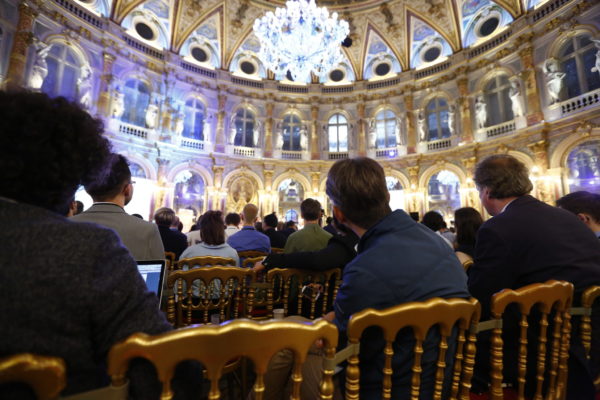
There is a special kind of electricity at a SaaS conference when founders realize the investor density has suddenly increased. You can feel it near the registration desk, around the coffee bar, and in that mysterious zone where everyone pretends to check Slack while scanning badges. The arrival of 50+ new VCs at SaaStr Europa changes the atmosphere. Conversations become sharper. Founders rehearse their one-liners in their heads. Operators compare notes on growth strategy. Investors move from session to session looking relaxed, while every founder nearby silently calculates whether now is a good time to say hello.
From a founder’s perspective, the best experience is not necessarily the big scheduled meeting. Sometimes the most useful moment happens between sessions, when an investor asks one clean question that exposes a weak spot in the business. “Who is the buyer?” “Why do customers expand?” “What happens if Microsoft builds this?” These questions can feel uncomfortable, but they often become turning points. A founder may leave the conversation realizing the product is strong, but the positioning is too broad. Another may discover that the fundraising story needs to shift from “growth” to “efficient growth.” A third may realize that the company is not ready to raise yetand that is useful, too.
The experience is also energizing because SaaStr Europa tends to attract people who speak the same operational language. You do not need to explain why net revenue retention matters. You do not need to define ARR every five minutes. You can have a real conversation about sales efficiency, expansion revenue, AI-native workflows, enterprise procurement, customer success, onboarding, pricing experiments, and why your best sales rep somehow updates the CRM only during lunar eclipses.
For first-time attendees, the most important lesson is to pace yourself. Do not try to meet everyone. Choose your targets, leave room for serendipity, and protect your energy. A founder who has five excellent conversations will usually outperform one who has 35 rushed introductions and remembers none of them. Bring a concise pitch, but also bring curiosity. Ask investors what they are seeing in the market. Ask operators what is working. Ask other founders which sessions were actually useful. The hallway wisdom at SaaStr Europa can be as valuable as the stage content.
Another underrated part of the experience is post-event follow-up. The conference does not end when the badge comes off. In many ways, that is when the real work begins. Send thoughtful follow-ups within 24 to 48 hours. Reference the conversation. Share the deck if requested. Include the metric or customer story that matters most. Keep it short. Nobody wants a novel in their inbox unless it comes with a signed term sheet and snacks.
Ultimately, “50+ new VCs are coming” is exciting because it creates more chances for prepared founders to meet aligned capital. But the magic is not automatic. The founders who benefit most are the ones who show up ready: clear story, clean metrics, smart target list, strong follow-up, and enough self-awareness to treat every conversation as a learning opportunity. SaaStr Europa is not just a room full of investors. It is a mirror for your startup story. If the story is strong, the room can help amplify it. If the story needs work, the room will show you exactly where to improve. Either way, that is a pretty good reason to get excited.
Conclusion
The news that 50+ new VCs are coming to SaaStr Europa is more than a fun headline. It is a signal that SaaS fundraising, founder networking, and in-person relationship building remain deeply connected. For SaaS founders, the opportunity is clear: prepare your story, know your metrics, research the right investors, and treat every conversation as a chance to learn, sharpen, and build momentum.
SaaStr Europa is valuable because it combines content, community, and capital access in one high-energy environment. Whether you are raising your first round, planning your next one, or simply trying to understand what investors care about in the age of AI-enabled SaaS, the event offers something practical. The VCs may be coming, but the real question is whether your company is ready to meet them.
Note: This article is based on publicly available SaaStr announcements and recent SaaS venture-capital benchmark information. Source links are intentionally not inserted to keep the article clean for web publishing.