Note: This article is based on publicly reported interviews, music coverage, and Lorde’s own public comments. It discusses gender expression respectfully and does not assign Lorde any label she has not claimed for herself.
Lorde’s “Man of the Year” Moment Has the Internet Talking Again
Lorde has never been the kind of pop star who simply walks into a new era wearing a sparkly jacket, waves at the camera, and says, “Please stream my single.” No, Lorde prefers to arrive like a weather event: mysterious, emotional, slightly muddy, and guaranteed to make the internet open 47 tabs at once.
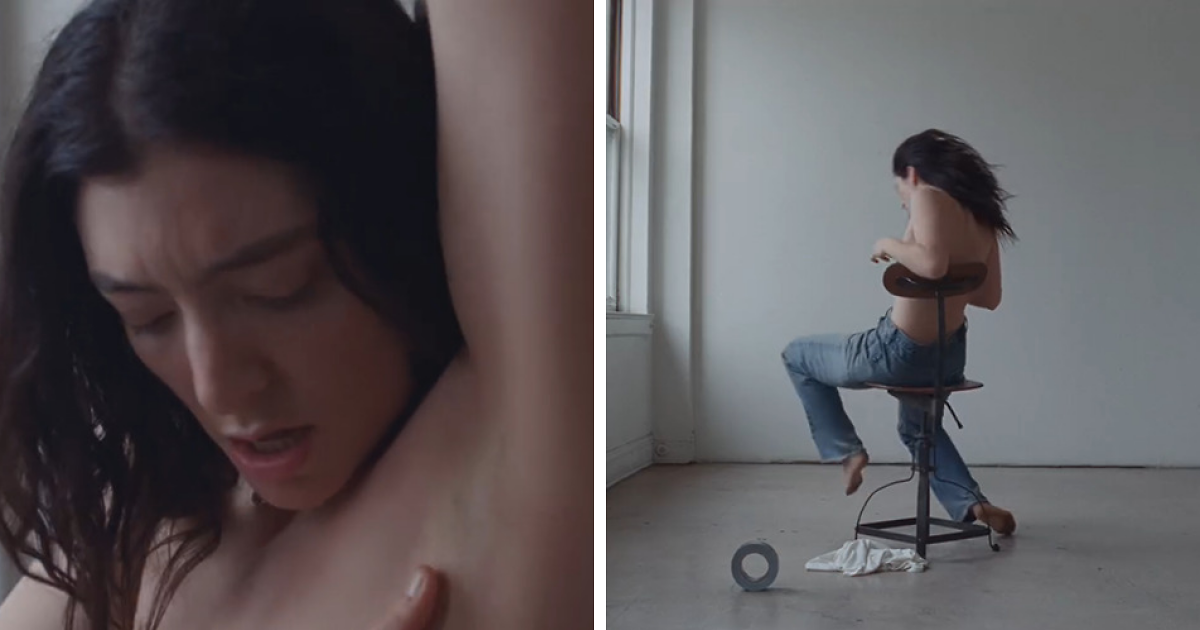
Her new video for “Man of the Year,” one of the most talked-about songs from her fourth studio album Virgin, did exactly that. The clip shows the New Zealand singer-songwriter in a stripped-down visual setting, at one point appearing topless while binding her chest with tape. The image quickly became the center of a heated online conversation about Lorde’s gender, body, self-expression, and the public’s endless appetite for turning personal art into a courtroom drama.
The controversy did not come out of nowhere. In recent interviews surrounding Virgin, Lorde has spoken openly about feeling “in the middle” gender-wise, while also saying that she still publicly identifies as a cis woman and continues to use she/her pronouns. That nuance should have been the whole point. Naturally, the internet treated it like a group project where half the class did not read the instructions.
What Happens in the “Man of the Year” Video?
The “Man of the Year” video is not a glossy pop spectacle with backup dancers, wind machines, and enough glitter to bankrupt a craft store. Instead, it is raw and physical. Lorde appears in a minimal room, wearing jeans and a white shirt before removing the shirt and taping her chest. Later, she moves through dirt in a loose, almost ritualistic performance that feels less like a music video and more like an emotional excavation.
The visual language is intentionally uncomfortable. It is not trying to be a standard “look how glamorous I am” pop-star moment. The tape, the bare skin, the dirt, the room, and the restless movement all point toward transformation. This is not Lorde presenting a tidy answer. It is Lorde showing the mess of becoming.
That is part of why the video sparked such a strong reaction. For some viewers, it felt brave and moving. For others, it felt confusing, provocative, or even too intimate. But the strongest reactions often came from people trying to turn one artistic image into a definitive statement about Lorde’s identity.
Why the Video Reignited the Gender Conversation
The debate around Lorde’s gender had already been building before the video dropped. In interviews promoting Virgin, Lorde discussed a broader, less fixed relationship with gender. She has described feeling connected to womanhood on some days and masculinity on others, while also acknowledging that she does not have a perfectly neat label for the experience.
That kind of answer can be honest, but it is not very convenient for social media. Online platforms love certainty. They want a headline, a label, a verdict, a category, preferably delivered in eight words or fewer. Lorde, inconveniently, offered something more human: a description of an evolving inner life.
When the “Man of the Year” video arrived, people immediately folded it into that conversation. The chest tape became evidence for some, symbolism for others, and outrage bait for a loud minority. But art is not a passport office. A music video does not issue legal documentation for someone’s gender identity.
Lorde’s Public Comments Matter More Than Online Guessing
One of the most important things to remember is that Lorde has already spoken about the subject in her own words. She has not asked fans to solve her identity like a crossword puzzle. She has shared that her sense of gender has broadened, that certain visual and physical experiences helped her understand herself differently, and that she is still navigating what that means.
She has also made clear that her public pronouns have not changed. That matters. Respecting someone’s gender does not mean rushing to assign the most dramatic possible label. It means listening to what the person actually says.
In Lorde’s case, the more interesting story is not “What is Lorde, really?” The better question is: why does the public become so uncomfortable when an artist refuses to package identity in a perfectly labeled box?
The Song Title Is Doing a Lot of Work
The title “Man of the Year” is already loaded with irony, longing, humor, and tension. It sounds like an award. It sounds like a joke. It sounds like a challenge. It also sounds like someone trying on a title to see how it feels.
Lorde has connected the song to an experience after attending a GQ Men of the Year event, where traditional ideas of glamour, gender, power, and public image seemed to collide. The next day, she began writing what became one of the defining tracks of Virgin. That backstory helps explain why the song feels like a private diary entry placed inside a very public frame.
The phrase “Man of the Year” is not necessarily Lorde declaring herself a man. It is more complicated than that. It can be read as a way of exploring masculinity, fame, self-recognition, and the strange hunger to be celebrated for a version of yourself you are still learning how to name.
Why Some Fans Found the Video Powerful
For many fans, the video landed with emotional force because it captured something rarely shown in mainstream pop: the awkward, unfinished, deeply physical experience of questioning how one’s body fits with one’s identity. Pop music often gives us transformation after the makeover is complete. Lorde gives us the middle part, where the mirror is confusing and the floor is covered in dirt.
Some viewers saw the chest tape as a symbol of liberation. Others saw it as a visual expression of discomfort with conventional femininity. Some related to the push-and-pull of wanting to be seen but not simplified. That range of interpretations is exactly what makes the video interesting.
Great pop moments do not always tell you what to think. Sometimes they hand you a strange image and let it echo. “Man of the Year” does that. It gives the audience Lorde in a state of motion, not resolution.
Why Others Reacted Negatively
Of course, the internet being the internet, not every reaction was thoughtful. Some critics mocked the video. Others accused Lorde of chasing attention. Some commenters treated gender fluidity as a trend rather than a personal experience. A few seemed personally offended that a pop star might make art about her own body without first submitting it to a committee of strangers with profile pictures of pickup trucks, cartoon frogs, or suspiciously intense flags.
Part of the backlash comes from discomfort with ambiguity. Many people are used to gender being presented as fixed, obvious, and visually predictable. When a famous artist complicates that expectation, the reaction can become defensive. The topless element also amplified the response, because public conversations about women’s bodies are rarely calm, generous, or normal.
Still, disagreement about art is not the same as permission to dehumanize the artist. Viewers can dislike the video, question the aesthetics, or find the symbolism too heavy-handed. But turning Lorde’s personal exploration into a public guessing game crosses a line.
How “Virgin” Frames the Conversation
Virgin is not just an album title; it is a theme. The project circles around rebirth, exposure, vulnerability, body image, femininity, desire, shame, and self-recognition. Compared with the sunny, sometimes polarizing mood of Solar Power, this era feels more direct and bruised. It is Lorde with fewer filters, fewer metaphors to hide behind, and possibly fewer shirts.
The album’s imagery has also leaned into physical transparency. Its artwork and promotional materials have emphasized the body in ways that are not always conventionally flattering or polished. This is not the plastic perfection of celebrity culture. It is closer to a medical scan, a confession, or a note written at 2 a.m. and sent before the sender can change her mind.
“Man of the Year” fits that world perfectly. It is about identity as something felt in the body, not simply declared in a caption.
Lorde Has Always Challenged Pop Expectations
To understand why this moment feels so intense, it helps to remember Lorde’s career. She became famous as a teenager with “Royals,” a song that mocked luxury-pop clichés while becoming a global hit. On Pure Heroine, she sounded like someone watching fame from the corner of the party, taking notes while everyone else spilled drinks.
With Melodrama, she turned heartbreak into neon-lit theater. With Solar Power, she swerved into a more relaxed, sun-dazed sound that divided listeners. Now, with Virgin, she seems interested in the body as a site of truth, confusion, and reinvention.
In other words, Lorde making people uncomfortable is not new. It is practically part of the operating system. What is new is how directly she is addressing gender and embodiment in a mainstream pop landscape that is both more open and more hostile than ever.
The Problem With Turning Personal Art Into Public Evidence
The biggest issue with the controversy is not that people are discussing the video. Art is meant to be discussed. The problem is the way some viewers treat art as a confession that must be decoded into a fixed identity.
A singer can bind her chest in a video without the audience needing to announce what it “means” for her forever. A lyric about feeling like a man on some days does not automatically erase every other thing she has said about herself. A person can explore masculinity, femininity, and everything in between without providing a press-release-ready label.
That may be frustrating for people who want clean categories. But real life is often less tidy than a streaming-service genre tag.
Specific Examples of the Public Reaction
The response to the video generally fell into three camps. The first group praised Lorde for making vulnerable art about gender, body image, and self-recognition. These fans saw “Man of the Year” as one of her boldest visual statements yet.
The second group approached the video as cultural commentary. They were less interested in labeling Lorde and more interested in what the video says about modern pop, gender performance, and the pressure on female artists to remain visually pleasing even while discussing discomfort.
The third group reacted with mockery or moral panic. This group focused heavily on the topless imagery and used Lorde’s gender comments as fuel for jokes, criticism, or speculation. That reaction says less about Lorde than it does about the strange expectation that famous women should be personal enough to entertain us, but not personal enough to confuse us.
Why the Conversation Should Stay Respectful
It is fair to analyze the work. It is fair to say the video is intense, strange, moving, pretentious, beautiful, awkward, or all of the above. It is fair to debate whether the symbolism works. That is cultural criticism.
What is not fair is insisting that Lorde must define herself on demand. Public figures still deserve basic boundaries. A musician can invite interpretation without surrendering every private detail to the comment section.
Respectful coverage should focus on what Lorde has actually said: that her gender experience has become more expansive, that she has connected with masculinity in ways that surprised her, and that she continues to move through that understanding in real time.
Experience-Based Reflection: Why This Topic Feels So Personal to So Many People
One reason the “Man of the Year” discussion became so heated is that gender is not just an abstract topic. It lives in clothing, posture, haircuts, bathrooms, family expectations, childhood memories, school uniforms, compliments, insults, and the quiet moment before someone leaves the house wondering, “Do I look like myself today?”
Many people have experienced some version of that question, even if they would never describe it as a gender journey. Think of the teenager who cuts their hair short and suddenly feels more visible. Think of the woman who hates being told to “dress more feminine” at work. Think of the man who enjoys fashion but fears being mocked for caring too much. Think of the person who tries on a jacket in the “wrong” section of a store and feels, unexpectedly, more at home.
That is why Lorde’s video may resonate even with viewers who do not share her exact experience. The image of someone changing how their body is presented can stir memories of our own experiments with identity. Maybe it was a prom outfit that felt like a costume. Maybe it was the first time someone used a nickname that felt more real than a legal name. Maybe it was looking in the mirror after a breakup and realizing the old version of yourself had quietly packed a bag and left.
Art about gender often gets flattened into argument because people are afraid of what it might reveal. If Lorde can say, “This is complicated,” then perhaps others might have to admit their own relationship with identity is not as simple as they pretend. That can be liberating, but it can also be annoying. Self-reflection is rarely anyone’s favorite surprise activity. It is like being handed emotional homework with no snacks.
The public reaction also shows how quickly society turns personal experimentation into performance review. When an ordinary person changes their style, a few friends may comment. When Lorde does it, the internet behaves like a global homeowners association deciding whether her self-expression violates neighborhood guidelines.
But the deeper experience here is familiar: the desire to be seen without being trapped by what others see. That is a very human tension. We want recognition, but not reduction. We want language, but not cages. We want freedom, but also understanding. Lorde’s “Man of the Year” video sits right in that uncomfortable middle.
For readers watching the controversy unfold, the healthiest takeaway may be simple: let people describe themselves. Let art be art before turning it into a verdict. Let discomfort become curiosity instead of cruelty. And if a music video makes you think seriously about bodies, labels, and identity, maybe that is not a scandal. Maybe that is the work doing its job.
Conclusion: The Real Story Is Bigger Than a Topless Video
Lorde’s new topless video reignited controversy about her gender because it touched several cultural nerves at once: celebrity, body image, gender expression, online speculation, and the public’s complicated relationship with ambiguity. But reducing the moment to shock value misses the point.
“Man of the Year” is not simply a provocative video. It is part of a larger artistic era in which Lorde is exploring what it means to feel changed, exposed, powerful, uncertain, feminine, masculine, and unfinished. That may not produce a simple headline, but it does produce something more valuable: a conversation about identity that is messy because people are messy.
Whether viewers find the video beautiful, uncomfortable, or a little too intense for a casual lunch break, one thing is clear: Lorde is not making art designed to sit quietly in the background. She is asking questions about the self, the body, and the labels people reach for when language falls short.
And in true Lorde fashion, she has managed to turn a three-minute song into a cultural debate, a mirror, and a group therapy session nobody technically signed up for.