Millennials entered the workforce with colentually lead to financial stability. Then came two recessions, student debt, open-plan offices, “unlimited” vacation policies, return-to-office mandates, and managers who schedule meetings to discuss why there are too many meetings.
That combination has created the perfect environment for millennial work memes. They turn burnout, corporate jargon, video-call fatigue, low raises, and impossible job descriptions into jokes that can be quietly forwarded to a trusted coworker.
The humor has a serious foundation. U.S. employee engagement fell to a decade-low 31% in 2024, with detachment particularly noticeable among younger workers. Meanwhile, many employees value remote-work flexibility, worry about workplace AI, and feel that compensation has not kept pace with their needs. In other words, the memes are exaggeratedbut sometimes only slightly. er>
Why Millennial Workplace Memes Feel So Personal
Millennials are no longer the office newcomers being blamed for killing napkins, department stores, and apparently the entire concept of homeownership. Many are now experienced professionals, parents, managers, and team leaders. Yet their workdays can still feel like an obstacle course built from calendar invitations and vague feedback.
Research suggests that millennials want meaningful work, professional development, supportive management, reasonable pay, and enough flexibility to maintain a life outside the office. These are not outrageous demands. Unfortunately, some workplaces react as though employees have requested a private helicopter and a four-day weekend on the moon.
That gap between reasonable expectations and corporate reality is where workplace humor thrives. A good meme captures an entire professional crisis in one screenshot, one facial expression, and six words written in an unnecessarily bold font.
The 50 Most Relatable Millennial Work Meme Moments
Career Expectations Versus Corporate Reality
-
“Entry-Level Position: Eight Years of Experience Required”
The perfect image would show a recent graduate staring at a job listing as if it were an ancient riddle guarded by a dragon with dental insurance. -
“Competitive Salary”
Competitive against whatthe electric bill? A salary described as competitive often enters the interview wearing sunglasses and refusing to reveal its identity. -
“Work Hard and You’ll Be Rewarded”
The hardworking employee receives additional responsibilities while the reward quietly transforms into a company-branded water bottle. -
“Your Annual Raise Is 2%”
The employee smiles politely while inflation stands behind the manager holding a baseball bat. -
“We’re Like a Family Here”
Translation: boundaries may disappear, arguments will be uncomfortable, and someone will ask you to work during a holiday. -
“The Career Ladder”
Millennials were promised a ladder. Many received a folding chair positioned beneath a ceiling labeled “budget limitations.” -
“Promoted on LinkedIn, Underpaid in Real Life”
The title changes from coordinator to senior coordinator, but the checking account remains committed to its original role. -
“We Need Someone Who Can Wear Many Hats”
The hats include marketing, accounting, customer support, graphic design, event planning, and pretending the office printer is functional. -
“The Five-Year Plan”
At 25: become a director. At 35: survive Thursday, answer three emails, and remember to defrost something for dinner. -
“Loyalty Will Be Rewarded Eventually”
The loyal employee watches a newly hired colleague receive a higher salary, better title, and the ergonomic chair everyone requested in 2019.
Career progression remains important to millennials, but rapid promotion is not necessarily the ultimate goal. Many now prioritize gradual development, useful experience, meaningful work, and well-being over climbing toward leadership at any cost. >Meetings, Messages, and Digital Chaos
“This Meeting Could Have Been an Email” “Let’s Circle Back” “A Quick Call?” “Reply All” “The 4:59 P.M. Request” “Can Everyone See My Screen?” “Calendar Tetris” “Twenty-Seven Browser Tabs” “The Green Status Dot” “Corporate Jargon Bingo” Digital collaboration has made work faster, but not always calmer. Microsoft’s workplace research found that heavily connected employees can be interrupted by meetings, emails, or messages every two minutes, while unscheduled calls and after-hours communication continue to fragment the day. >Remote Work and Return-to-Office Adventures
“Professional From the Waist Up” “Unexpected Cat Presentation” “Return to the Office for Collaboration” “The Commute Is Part of the Culture” “Hybrid Desk Reservation” “Remote Lunch Break” “Your Status Has Been Away for Four Minutes” “The Wi-Fi Performance Review” “Mandatory Office Fun” “What Remote Workers Miss Most” Flexible work has become a meaningful retention issue. Nearly half of employees who work remotely at least sometimes have said they would be unlikely to remain if that option disappeared. Many also report that hybrid or remote arrangements help them balance work and personal responsibilities. >Burnout, Boundaries, and Corporate Wellness
“Running on Coffee and Professionalism” “Use Your PTO” “Mental Health Webinar at 7:00 P.M.” “Employee Appreciation Pizza” “Please Protect Your Boundaries” “Unlimited Vacation” “Download Our Wellness App” “Mindfulness Will Fix Understaffing” “Quiet Quitting” “Vacation Inbox” Burnout is not simply an individual failure to meditate correctly. Workload, recognition, psychological safety, management quality, job security, and control all influence employee well-being. Younger workers have also reported feeling stressed, isolated, and undervalued at higher rates than older colleagues. >Money, Technology, and the Future of Work
“Your Raise Versus the Cost of Living” “Student Loans Have Entered the Chat” “My Side Hustle Needs a Side Hustle” “Stop Buying Avocado Toast” “Subscription-Based Adulthood” “The Rent Reminder” “Please Learn This New AI Tool” “Retirement Planning” “Free Office Snacks” “The Printer Knows Fear” Financial pressure remains central to millennial workplace decisions. Deloitte’s research has found that cost-of-living concerns, paycheck-to-paycheck living, career development, purpose, and well-being frequently overlap. Workers are not choosing between money and meaning; many are trying to secure both while adapting to automation and constant technological change. ion> A workplace meme cannot increase a salary, cancel an unnecessary meeting, or convince the printer to recognize paper. It can, however, provide something surprisingly valuable: recognition. When employees laugh at the same joke about Sunday-night anxiety or a mysterious “quick chat,” they are acknowledging a shared experience. The humor communicates, “This situation is strange, and you are not the only person who thinks so.” That tiny moment of solidarity can make an exhausting day feel less isolating. Memes also allow workers to criticize corporate habits without producing a 40-slide presentation called Reasons This Process Is Slowly Destroying Us. A joke about meeting overload can reveal a genuine productivity problem. A meme about “unlimited” vacation can expose a culture in which employees do not feel safe taking time off. Humor is often the informal employee survey nobody in leadership commissioned. The best millennial office memes are funny because they compress complicated realities into recognizable moments. They make invisible pressure visibleand give coworkers something to laugh about before the next notification arrives. Consider a millennial marketing coordinator hired to write website copy and schedule social posts. Within two years, the role expands to include analytics, graphic design, customer support, event planning, video editing, and training interns. The title remains almost unchanged. During the annual review, the employee receives praise for being “adaptable.” That sounds encouraging until adaptability becomes the official corporate term for accepting unlimited responsibilities. The employee is not unwilling to contribute. The frustration comes from watching temporary favors quietly become permanent duties without additional pay, support, or authority. Another common experience begins with the promise of flexibility. Working from home eliminates the commute and makes it easier to manage school pickups, medical appointments, or household responsibilities. Then the boundaries begin to blur. A message arrives before breakfast because a colleague works in another time zone. A meeting is scheduled during lunch. The laptop remains visible after dinner, creating the temptation to “quickly” answer one email. Remote work offers genuine benefits, but without clear expectations it can turn the home into an office that never officially closes. Many millennials have reached the stage of life once associated with financial security. They may supervise teams, manage major accounts, or hold specialized credentials. Yet housing, child care, health insurance, debt payments, and everyday expenses can consume most of their income. This produces a particularly strange workplace experience: being trusted with decisions worth hundreds of thousands of dollars while checking a banking app before ordering lunch. The resulting memes are not merely jokes about being broke. They reflect the mismatch between professional responsibility and personal financial progress. Millennials remember offices before widespread cloud collaboration, but they have spent much of their careers adopting new systems. They moved from desktop software to web platforms, from email to instant messaging, from office meetings to video calls, and now from manual processes to AI-assisted work. Each tool arrives with the promise of efficiency. Frequently, it also creates another password, dashboard, notification channel, and training session. Employees may appreciate technology while still questioning why a platform designed to save time requires three weekly meetings to discuss its implementation. Millennials increasingly occupy management positions, which creates a fresh set of struggles. They may want to offer flexibility and psychological safety while also enforcing policies they did not design. Senior leaders demand office attendance; team members ask why attendance matters. Executives request aggressive deadlines; employees explain that the team is already overloaded. The millennial manager becomes a translator between corporate expectations and employee reality. One moment involves discussing strategy with leadership. The next involves explaining why “ASAP” cannot be the deadline for every project. This balancing act can be emotionally exhausting, especially when managers are given responsibility without enough resources or decision-making power. Perhaps the most important millennial experience is the gradual rejection of work as a complete identity. Many started their careers during an era that celebrated hustle, constant availability, and personal sacrifice. Over time, layoffs, burnout, economic shocks, and changing family responsibilities challenged that bargain. Today, plenty of millennials remain ambitious. They want to develop skills, perform meaningful work, and earn promotions. They simply may not believe success should require permanent exhaustion. The goal is not to avoid effort. It is to build a career that leaves enough energy for relationships, health, hobbies, parenting, community, and the revolutionary act of enjoying a weekend without checking email. Millennial workplace struggles are funny because they are recognizable. Beneath jokes about reply-all disasters, remote-work sweatpants, tiny raises, and aggressive calendar invitations are real concerns about compensation, stability, burnout, flexibility, and professional growth. The healthiest organizations will not dismiss these memes as employee negativity. They will treat them as clues. When the same jokes repeatedly appear across industries, they may be pointing toward broken processes, unclear expectations, weak management, or workloads that no wellness webinar can repair. Until every unnecessary meeting is canceled and every printer begins behaving responsibly, millennials will continue converting workplace frustration into highly shareable comedy. At least laughter remains one employee benefit that does not require manager approval.
The unofficial slogan of modern employment, usually whispered during a 60-minute call that reaches its point at minute 58.
Nobody knows where the circle began, where it ends, or why everyone is still walking around it carrying spreadsheets.
Two words capable of instantly raising an employee’s heart rate, especially when sent by a manager without context.
One person congratulates the entire company. Forty-seven others reply, “Thanks!” Productivity leaves the building through an emergency exit.
A manager appears from the shadows with a “small favor” that requires data from six departments and approval from someone already on vacation.
The sacred opening ceremony of virtual meetings, followed by someone saying, “You’re muted,” before anyone has actually spoken.
Finding a 30-minute opening among seven coworkers becomes more strategically complicated than negotiating an international peace treaty.
Closing one feels dangerous because it may contain an important documentor a recipe opened during lunch three weeks ago.
A tiny symbol that somehow determines whether colleagues believe you are working, regardless of what you have accomplished.
Synergy. Bandwidth. Deliverables. Low-hanging fruit. Take it offline. Congratulationsyou have won another meeting.
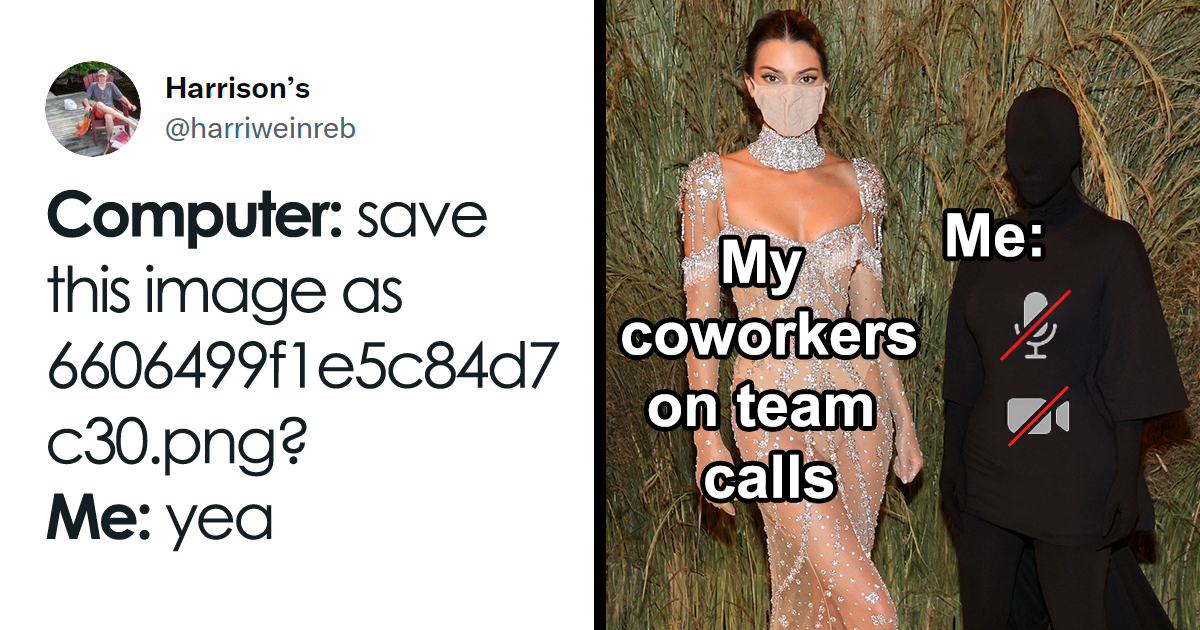
Camera-ready shirt, sweatpants, and slippers: the unofficial uniform of remote professionalism.
The employee has prepared charts and projections. The cat has prepared to display its tail directly in front of the webcam.
Everyone commutes for an hour, sits at separate desks, puts on headphones, and joins the same video meeting.
Nothing builds team spirit like sitting motionless in traffic while calculating how much gasoline costs.
Employees must book a workstation through three apps, two confirmation emails, and a system that insists every desk is unavailable.
The kitchen is ten steps away, yet lunch still happens over the keyboard while answering a message labeled “not urgent.”
Apparently getting coffee now requires an alibi, supporting witnesses, and security-camera footage.
Your work is excellent, but your router has demonstrated inconsistent leadership potential.
The company promises spontaneous connection at a carefully scheduled event between 3:00 and 3:17 p.m.
Not the commute. Not the fluorescent lighting. Possibly the industrial coffee machine, but only during moments of weakness.
The professionalism is nearly empty, but there may be enough coffee to reach Friday.
Management encourages vacations while assigning enough work to make taking one feel like abandoning a small nation.
Nothing supports work-life balance like mandatory after-hours training about the importance of work-life balance.
The team requests staffing, raises, and manageable workloads. Leadership provides two medium pizzas and asks everyone to take only one slice.
This message is immediately followed by, “Also, we need this tonight.”
Technically unlimited, emotionally discouraged, managerially confusing, and somehow used less than ordinary vacation time.
The app recommends breathing exercises while the employee performs the jobs of three people.
Take a deep breath, visualize adequate resources, and gently release the expectation of receiving them.
An alarming new trend in which employees perform the responsibilities listed in their job descriptions.
You return refreshed, open your email, and immediately need another vacation.
The raise arrives on a bicycle. Rent, groceries, insurance, and utilities pass it in sports cars.
Every financial milestone begins with a payment reminder from a degree that was supposed to make financial milestones easier.
One job covers rent, another covers groceries, and a third pays for the software needed to manage the first two.
Excellent advice. Cancel brunch 14,000 times and the down payment should be ready sometime around retirement.
Software, entertainment, storage, delivery, fitness, and productivity are all billed monthly. Existing is now a premium plan.
Payday briefly appears in the checking account before rent performs a flawless magic trick.
Employees must adopt it immediately, become experts by Tuesday, and remain calm when told it may eventually replace several tasks.
Step one: open retirement calculator. Step two: laugh nervously. Step three: close retirement calculator.
The salary may not cover a house, but the break room contains twelve flavors of sparkling water.
Millennials can troubleshoot apps, websites, cloud platforms, and video calls. The printer still senses confidence and destroys it.Why Humor Helps Millennials Survive the Modern Workplace
Beyond the Memes: Real Millennial Experiences at Work
The Employee Who Became an Entire Department
The Remote Worker Who Is Always Available
The Experienced Professional Who Still Feels Financially Stuck
The Worker Expected to Adapt to Every Technological Revolution
The Manager Caught Between Generations
The Search for Work That Does Not Consume Everything
Conclusion: Sometimes You Have to Laugh Before the Next Meeting