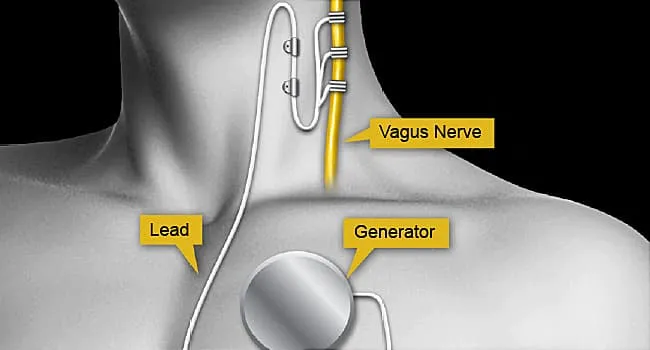
When epilepsy medications do not provide enough seizure control, another prescription is not always the only next step. Vagus nerve stimulation, commonly called VNS, uses a small implanted device to send carefully programmed electrical pulses along the vagus nerve toward the brain.
VNS is not a cure, and it rarely makes seizures disappear overnight. Instead, it is a long-term add-on treatment that may reduce seizure frequency, severity, or recovery time. Think of it less as an electrical “off switch” and more as a patient, pocket-size drummer trying to persuade misfiring brain networks to follow a steadier rhythm.
What Is Vagus Nerve Stimulation for Epilepsy?
Vagus nerve stimulation is a form of neuromodulation, meaning it uses electrical signals to influence how networks in the nervous system behave. The implanted system includes a battery-powered pulse generator, usually placed under the skin of the upper left chest, and a thin lead that travels beneath the skin to the left vagus nerve in the neck.
The generator delivers mild electrical pulses at programmed intervals. These signals travel through the vagus nerve to the brainstem and then influence broader areas involved in seizure activity. The operation does not require opening the skull or placing an electrode directly in the brain.[1]
Why is the left vagus nerve used?
The body has a vagus nerve on each side. Surgeons generally connect epilepsy VNS systems to the left nerve because the right vagus nerve has stronger connections to areas that help regulate heart rhythm. Using the left side reduces, but does not completely eliminate, concerns about cardiac effects.
What does the vagus nerve normally do?
The vagus nerve is the tenth cranial nerve and a major communication route between the brain and organs in the neck, chest, and abdomen. It contributes to swallowing, voice production, digestion, breathing, heart-rate regulation, and other automatic functions.[2] Its name comes from a Latin word meaning “wandering,” which is appropriate because this nerve takes quite the anatomical road trip.
How Does VNS Help Control Seizures?
The complete antiseizure mechanism of VNS is still being studied. Researchers believe that repeated stimulation changes activity in brainstem pathways and connected regions involved in attention, mood, and seizure propagation. It may alter the release of neurotransmitters and make large brain networks less likely to synchronize into a seizure.
A traditional VNS device operates on a repeating schedule, such as 30 seconds of stimulation followed by several minutes without stimulation. The exact current, pulse width, frequency, and duty cycle are individualized. Newer systems may also detect certain rapid increases in heart rate and automatically deliver additional stimulation because some seizures are accompanied by a sudden cardiac change.
Patients or caregivers usually receive a special magnet. Swiping it over the generator may trigger an extra pulse when a seizure warning or seizure begins. In some people, this shortens or weakens the event. The magnet is helpful, but it is not a magic wand wearing medical scrubs; it cannot be expected to stop every seizure.[3]
Who May Be a Candidate for VNS?
VNS is primarily considered for drug-resistant epilepsyepilepsy that remains inadequately controlled despite appropriate trials of antiseizure medication. The U.S. Food and Drug Administration has approved implanted VNS as an adjunctive treatment for people age 4 and older who have medication-resistant focal-onset seizures.[4]
Epilepsy specialists may also consider VNS in selected people with generalized epilepsies or syndromes such as Lennox-Gastaut syndrome. Such use requires an individualized discussion because a regulatory indication and everyday specialist practice are not always identical.
VNS may be particularly useful when:
- Seizures continue despite properly selected and tolerated medications.
- Seizures begin in multiple areas or the seizure focus cannot be safely removed.
- Resective brain surgery is not appropriate or is not desired.
- Previous epilepsy surgery did not provide adequate control.
- Frequent seizures, injuries, prolonged recovery, or medication effects substantially reduce quality of life.
Children with persistent, quality-of-life-limiting seizures may also be evaluated for VNS. Pediatric programs report that some children experience shorter seizures, faster postictal recovery, or functional improvements even when seizure freedom is not achieved.[5]
Why a complete epilepsy evaluation still matters
VNS should not automatically be treated as the next stop after medication failure. Some people have a removable seizure focus and may have a better chance of seizure freedom with resection or laser ablation. Others may benefit from responsive neurostimulation, deep brain stimulation, dietary therapy, or a revised diagnosis and medication plan.
A comprehensive epilepsy center may review seizure history, electroencephalogram results, brain imaging, medication trials, cognitive testing, and overall health. The goal is not to award VNS a participation trophy. It is to identify the treatment with the best balance of likely benefit and risk for that particular patient.[6]
What Happens During VNS Implantation?
VNS implantation is typically performed under general anesthesia. Many patients return home the same day, although practices vary according to age, health, and the complexity of the procedure.
The basic surgical steps
- The surgeon makes a small incision in the upper chest and another on the left side of the neck.
- A pulse generator is placed beneath the skin or chest muscle.
- A lead is tunneled under the skin from the chest to the neck.
- Small helical electrodes at the end of the lead are wrapped around the left vagus nerve.
- The system is tested before the incisions are closed.
The implanted generator may be noticeable as a small bump, especially in a slender person, but it is normally hidden beneath clothing. The incisions may feel sore or tight during early healing.
When is the device activated?
The stimulator is commonly activated at a follow-up visit after the incisions have had time to heal. Treatment starts with gentle settings. The neurology team gradually increases the output during later appointments while balancing seizure response against side effects.
Programming is a process, not a one-visit makeover. Adjustments may continue for months. In-person follow-up is important because stimulation settings, battery status, seizure patterns, and tolerability all need to be reviewed.[7]
How Effective Is VNS for Epilepsy?
VNS usually reduces seizures rather than eliminating them. Results vary according to seizure type, epilepsy syndrome, treatment duration, and individual biology. Unfortunately, the brain did not read the instruction manual, so no clinician can predict the response with perfect accuracy.
Data summarized by the Epilepsy Foundation suggest that average seizure reduction may improve over timefrom approximately 28% during the first three months to 36% after six months and 58% after four years. These figures describe group averages and do not guarantee an individual result.[3]
An evidence review published through the American Academy of Neurology and American Epilepsy Society found that about 55% of studied children achieved at least a 50% reduction in seizures. Similar responder rates were reported among patients with Lennox-Gastaut syndrome, although the quality and design of the underlying studies varied.[8]
Potential benefits beyond seizure counts
A seizure diary may reveal the headline number, but frequency is not the whole story. Patients and caregivers sometimes report:
- Shorter or less intense seizures
- Fewer seizure clusters
- Quicker return to baseline after an episode
- Improved alertness or mood
- Fewer seizure-related injuries or emergency visits
- Greater confidence in school, work, or community activities
These outcomes can be meaningful even when a person does not cross the conventional threshold of 50% seizure reduction. A drop from six dangerous convulsive seizures to four milder events may matter more in daily life than the percentage alone suggests.
What VNS generally does not do
VNS is not expected to cure epilepsy, and complete seizure freedom is uncommon. Most patients continue taking antiseizure medication. Medication changes should be directed by an epilepsy specialist and are usually considered only after a stable benefit becomes clear. Abruptly reducing medication because the implant “seems to be working” is a fine way to turn optimism into an emergency.
Side Effects and Surgical Risks
The most recognizable VNS side effects occur while stimulation is active. Because the vagus nerve affects the throat and voice box, a person may notice:
- Hoarseness or a temporary change in voice
- Coughing or throat discomfort
- A tickling or tingling sensation in the neck
- Shortness of breath during stimulation
- Difficulty swallowing
- Headache or neck discomfort
These effects often become less troublesome as the body adapts. Programming changes can also improve tolerability. Singers, teachers, public speakers, and people with swallowing or respiratory conditions should discuss the potential impact in detail before surgery.
Risks related to implantation
Possible surgical complications include pain, bleeding, infection, scarring, damage to the vagus nerve, and temporary or persistent vocal-cord weakness. Rare changes in heart rate can occur while the device is tested. Children may have a somewhat higher implantation-site infection risk than adults, making wound care especially important.
Sleep and breathing considerations
VNS can worsen existing obstructive sleep apnea or contribute to new sleep-disordered breathing. Loud snoring, gasping, morning headaches, unusual daytime sleepiness, or witnessed breathing pauses should be reported. A sleep study or adjustment of stimulation settings may be appropriate.
Living With an Implanted VNS Device
Keep a detailed seizure diary
Record seizure type, frequency, duration, severity, possible triggers, magnet use, and recovery time. Note medication changes separately. Without consistent tracking, improvement can be surprisingly difficult to measurehuman memory is excellent at remembering birthdays from 1998 and less excellent at counting last month’s brief seizures.
Learn how to use the magnet
The care team should demonstrate when and how to swipe the magnet. Depending on the model, the magnet may activate extra stimulation or temporarily stop stimulation when held over the generator. Family members, school staff, or coworkers involved in the seizure action plan may also need training.
Plan for battery replacement
Battery life depends on the device and programmed settings but commonly ranges from approximately three to ten years. More frequent or stronger stimulation uses more power. Replacing the generator requires another operation, although the existing lead may remain in place if it is functioning properly.
Discuss medical procedures in advance
Always tell healthcare professionals about the implant before imaging, surgery, radiation treatment, or electrical procedures. Many modern VNS systems are MRI-conditional, meaning MRI may be performed only under specific device, body-area, scanner, and programming conditions. “MRI-conditional” is not the same thing as “walk into any scanner and hope for the best.”
Short-wave diathermy, microwave diathermy, and therapeutic ultrasound diathermy are contraindicated because they can heat or damage the implanted system. CT scans are usually performed safely, but the imaging team should still know about the neurostimulator.[9]
Carry device information
Keep the implant identification card available and consider medical identification jewelry. Contact the epilepsy team if stimulation suddenly feels painful, the usual sensation disappears, seizures unexpectedly worsen, the generator area becomes red or swollen, or the device appears to have moved.
Questions to Ask an Epilepsy Specialist
- Have I completed a comprehensive epilepsy-surgery evaluation?
- Why is VNS preferable to resection, ablation, RNS, DBS, or dietary therapy in my case?
- Which seizure outcomes should we track besides frequency?
- How often will programming appointments be needed?
- Could VNS affect my voice, swallowing, asthma, heart condition, or sleep apnea?
- Which MRI examinations are permitted with this device model?
- What should my family do if the magnet does not stop a prolonged seizure?
- How will we decide whether treatment is providing enough benefit to continue?
Experiences With VNS: What the Adjustment Period Can Feel Like
Note: The following scenarios are realistic composites based on commonly reported clinical experiences. They are not quotations from specific patients and should not be treated as predictions of an individual outcome.
The slow-burn improvement
An adult with focal epilepsy may begin VNS expecting an obvious change within several weeks. Instead, the first programming visits bring mostly a brief scratchy voice every few minutes and a growing suspicion that the device’s main talent is interrupting phone calls.
During the first three months, the seizure count changes little. By month six, however, the person and family notice that several seizures have been shorter and recovery no longer requires the rest of the day. At one year, the overall frequency is modestly lower, but the number of injuries and missed workdays has fallen substantially.
This pattern illustrates why VNS should usually be evaluated over months rather than days. Benefit can accumulate as settings are optimized, and meaningful improvement may appear first in severity or recovery rather than raw seizure totals.
Finding the right setting for voice and comfort
A teacher may tolerate the initial low setting comfortably but develop noticeable hoarseness after the current is increased. The voice change occurs only during stimulation, yet that is inconvenient when explaining fractions to a room full of ten-year-oldsan audience already suspicious of fractions.
The neurology team can adjust parameters, potentially reducing throat symptoms while preserving useful stimulation. Some patients plan demanding speaking or singing activities around device cycles. Others use the magnet according to their clinician’s instructions to pause stimulation briefly. The important lesson is that discomfort should be reported; it is not a toughness contest.
The caregiver’s experience with the magnet
For a child who cannot reliably describe an aura, a parent may swipe the magnet when familiar seizure behaviors begin. Sometimes an event appears shorter. Other times there is no obvious effect. The family records every attempt rather than relying on memory, helping the specialist determine whether magnet activation is useful.
The magnet may provide caregivers with a practical action during a frightening moment, but it does not replace rescue medication or an emergency plan. A seizure lasting five minutes or longer, repeated seizures without recovery, serious injury, or breathing difficulty requires the response specified by the medical team, which may include calling 911.
Redefining what “success” means
Another patient may experience only a 35% reduction in seizures and initially view the result as disappointing. Closer review shows that convulsive episodes have become less frequent, nighttime clusters are shorter, and postictal confusion has declined from several hours to under one hour.
For this person, success is not represented by one tidy percentage. It is being able to attend more family events, spend fewer nights in the emergency department, and recover with less disruption. Conversely, another person may experience no meaningful benefit despite careful programming. Honest tracking allows the patient and epilepsy team to discuss whether further adjustments, generator continuation, or another treatment strategy makes sense.
These varied experiences capture the central reality of VNS: it is a gradual, adjustable partnership between technology, clinical follow-up, medication, and everyday observation. Patience matters, but so does speaking up when the therapy is uncomfortable, impractical, or ineffective.
Conclusion
Vagus nerve stimulation offers a well-established neuromodulation option for selected children and adults with drug-resistant epilepsy. It can reduce seizure frequency or severity, shorten recovery, and improve daily life without operating directly on the brain. Its limitations are equally important: VNS is an adjunctive treatment, benefits may take months to develop, and most patients continue using antiseizure medication.
The best decision comes from a comprehensive epilepsy evaluation, realistic expectations, careful seizure tracking, and regular programming visits. For the right candidate, VNS may not silence every seizure, but turning down epilepsy’s volume can still make room for a much fuller life.