Holograms have a funny way of making adults behave like children in a science museum. One minute you are a reasonable person who pays bills and pretends to understand insurance. The next, you are staring at a floating singer, a digital astronaut doctor, or a shimmering blue princess and whispering, “Okay, that is ridiculous… but also, please show me again.”
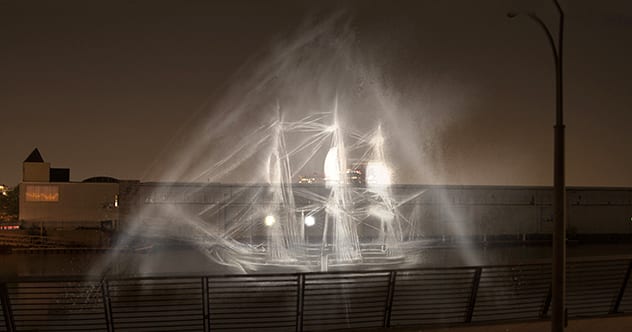
Before we dive into the most unforgettable holograms, let’s clear the fog machine: not every famous “hologram” is a true hologram in the scientific sense. Real holography records and reconstructs light so that an image appears three-dimensional. Many stage “holograms” are actually Pepper’s Ghost illusions, projection tricks, light-field displays, volumetric images, mixed-reality avatars, or giant LED wizardry wearing a very shiny marketing hat. Still, they all belong to the same cultural family: technologies that make light feel alive.
From pop concerts and fashion runways to space medicine and museum education, these eight incredible holograms show how humans keep trying to turn imagination into presence. Some made crowds scream. Some made people cry. Some made engineers say, “Technically, that is not a hologram,” which is the scientist version of applause.
What Makes a Hologram Unforgettable?
An unforgettable hologram does more than look cool. It changes the way we understand presence. A great hologram asks: Can a person be “there” without being physically there? Can memory talk back? Can a fictional image inspire real technology? Can a band perform forever without pretending time does not exist?
The best holograms combine three things: visual surprise, emotional timing, and cultural impact. A tiny display on a credit card may be technically real holography, but it probably will not make 90,000 festivalgoers lose their minds. On the other hand, a stage projection may not be a true hologram, yet it can still become a defining image of the digital age. That tension is exactly what makes hologram technology so fascinating.
1. Princess Leia’s Message: The Hologram That Started the Dream
The unforgettable moment
Few holograms are more famous than Princess Leia’s blue, flickering plea in Star Wars: A New Hope. R2-D2 projects her message, and suddenly a tiny figure in white becomes the spark that launches Luke Skywalker’s journey. It is short, grainy, and fictional, but culturally it is enormous.
Why it matters
The Princess Leia hologram became the visual shorthand for what people expect holograms to be: free-floating, three-dimensional, visible from different angles, and dramatically useful in a crisis. Never mind that real-world physics is less cooperative than movie magic. That scene gave scientists, engineers, filmmakers, and gadget fans a common target. When people ask, “When will we have real holograms?” what they often mean is, “When can I get the Leia message without needing a droid and a galactic civil war?”
Its influence is so strong that modern researchers still use “Princess Leia” as a reference point when explaining volumetric displays and free-space 3D projections. The scene may be fantasy, but it helped define the future that engineers are still chasing.
2. Tupac at Coachella: The Night a Crowd Saw a Ghost Rap
The unforgettable moment
In 2012, during Dr. Dre and Snoop Dogg’s Coachella set, a virtual Tupac Shakur appeared onstage and performed as if he had stepped through a tear in time. The crowd reacted with shock, excitement, confusion, and probably a few “Did I drink the wrong festival lemonade?” moments.
The technology behind the magic
The performance was widely called a hologram, but it was closer to a modern Pepper’s Ghost illusion: a computer-generated image projected onto a reflective transparent surface so it appeared to occupy the stage. Digital Domain helped create the virtual likeness, and the effect was convincing enough to become a global conversation almost overnight.
Why it matters
The Tupac projection changed the entertainment industry’s imagination. Suddenly, audiences were discussing whether deceased artists could tour again, whether digital resurrection was respectful, and whether nostalgia had become powerful enough to sell tickets without a living performer. It was technically impressive, emotionally complicated, and culturally impossible to ignore. That is a pretty good recipe for an unforgettable hologram.
3. Michael Jackson at the Billboard Music Awards: The Moonwalk Returns
The unforgettable moment
In 2014, the Billboard Music Awards presented a virtual Michael Jackson performing “Slave to the Rhythm.” The digital King of Pop appeared with dancers, stage lighting, choreography, and enough spectacle to make viewers lean toward the screen.
Why it was different
Like the Tupac performance, this was not true holography. It used a Pepper’s Ghost-style stage illusion, supported by visual effects, choreography, lighting, and production design. But the ambition was huge: recreate one of the most recognizable performers in modern music history and make the performance feel alive enough for a prime-time audience.
Why it matters
This hologram-like performance raised the stakes. Tupac’s appearance felt like a shocking one-time festival moment. Michael Jackson’s virtual performance felt like an awards-show statement: digital celebrity had arrived on the main stage. It also intensified ethical questions. Is a virtual performance a tribute, a product, or both? Can technology honor an artist without flattening them into a special effect? The answers are still being debated, which is part of why the moment remains so memorable.
4. Hatsune Miku: The Pop Star Made of Light and Fan Love
The unforgettable phenomenon
Hatsune Miku is not a traditional singer. She is a Vocaloid character, a voice synthesizer, an anime-style digital idol, and one of the strangest success stories in pop culture. In concert, Miku appears as a projected performer singing with real musicians while crowds wave glow sticks and cheer for someone who never has to worry about vocal rest, jet lag, or a messy celebrity breakup.
Why it works
Miku’s magic is not only technical. It is participatory. Fans create songs, art, videos, costumes, and entire emotional worlds around her. Unlike a conventional pop star, she is partly a platform. The hologram-like concert is the place where all that fan creativity becomes communal and loud.
Why it matters
Hatsune Miku proved that a virtual performer could inspire real devotion. Her shows helped normalize the idea that audiences will happily pay to see a projected character if the music, community, and staging feel meaningful. In other words, Miku did not need to become human. She made humans meet her halfway.
5. Kate Moss at Alexander McQueen: Fashion Becomes a Ghost Story
The unforgettable moment
At Alexander McQueen’s Fall/Winter 2006 show, “The Widows of Culloden,” a spectral Kate Moss appeared inside a glass pyramid, wrapped in flowing white fabric. She moved like smoke, fabric, memory, and myth had joined forces for one dramatic runway finale.
The technology behind the beauty
The effect used Pepper’s Ghost, the old theatrical illusion that makes a reflected image appear present in a physical space. McQueen’s team transformed that Victorian trick into high fashion poetry. The result looked less like a product demo and more like a haunting.
Why it matters
This was not a hologram trying to shout, “Look at my pixels!” It was technology serving mood. The Kate Moss illusion showed that hologram-like displays do not have to be loud to be unforgettable. Sometimes the most powerful digital apparition is the one that whispers, twirls, and vanishes before your brain can file a complaint.
6. Dimensions in Testimony: Holograms That Let History Answer Back
The unforgettable experience
USC Shoah Foundation’s Dimensions in Testimony project allows visitors to ask questions and receive real-time responses from pre-recorded interviews with Holocaust survivors and other witnesses to genocide. These interactive biographies use advanced filming, display technology, and natural language processing to create the feeling of a conversation across time.
Why it is powerful
This is one of the most meaningful uses of hologram-style technology. Instead of resurrecting a performer for spectacle, it preserves testimony. Visitors can ask about childhood, fear, survival, family, loss, courage, and rebuilding a life after unimaginable violence. The technology creates a bridge, but the human story carries the weight.
Why it matters
As living witnesses age and pass away, museums face a difficult question: how can future generations encounter testimony in a way that feels personal, respectful, and educational? Dimensions in Testimony offers one answer. It reminds us that holograms are not only about entertainment. They can also protect memory from becoming abstract.
7. NASA’s Holoported Doctor: A House Call to the International Space Station
The unforgettable moment
In 2021, NASA flight surgeon Dr. Josef Schmid and collaborators were “holoported” to the International Space Station, allowing astronauts to interact with live 3D representations of people on Earth through mixed-reality technology. It sounds like a rejected Star Trek subplot, except this one actually happened.
The technology behind the connection
NASA described holoportation as a capture technology that reconstructs, compresses, and transmits high-quality 3D models of people in real time. When paired with mixed-reality displays such as Microsoft HoloLens, it allows remote participants to appear as if they share the same physical space.
Why it matters
Space travel is lonely, risky, and extremely inconvenient for in-person appointments. Holoportation could support telemedicine, mission planning, training, mental health, and family connection during long-duration missions. A doctor appearing as a 3D presence on the ISS is not just a cool trick. It is a preview of how humans may communicate when “remote work” means “someone is orbiting Earth.”
8. ABBA Voyage: The Avatar Concert That Feels Almost Too Real
The unforgettable show
ABBA Voyage in London presents digital versions of Agnetha, Björn, Benny, and Anni-Frid performing with a live band in a purpose-built arena. The show is often described casually as a hologram concert, although the production uses advanced digital avatars, huge display systems, motion capture, lighting, and theatrical design rather than simple free-floating holography.
Why it works
Industrial Light & Magic helped create the digital versions of ABBA. The band members participated in performance capture, giving the avatars a sense of authenticity. The production does not merely display old footage. It builds a live event around digital presence, stagecraft, and audience memory.
Why it matters
ABBA Voyage may be the most mature version of the avatar concert so far. It avoids some of the discomfort that comes with posthumous digital performances because the living artists were directly involved. It also shows a possible future for legacy acts: not replacing live concerts, but creating a new category somewhere between theater, cinema, concert, and time machine.
Bonus: The Hologram Protest That Turned Absence Into Action
In 2015, activists in Spain staged a hologram-style protest against a controversial public security law. Instead of gathering as physical demonstrators in front of parliament, they projected ghostly digital protesters. It was eerie, clever, and politically sharp: if bodies are restricted, can light still assemble?
This event proved that hologram-like technology can do more than entertain or amaze. It can become a symbol. The projected crowd made absence visible. It turned a legal constraint into a media image that traveled around the world. That is the strange power of holograms: they can make what is missing feel present.
How Holograms Are Changing Entertainment, Education, and Communication
The future of hologram technology will not arrive as one single device. It will arrive in layers. Entertainment will keep experimenting with avatar concerts and virtual performers. Museums will use interactive testimony and digital reconstruction to deepen learning. Medicine and engineering will use mixed-reality presence for remote collaboration. Consumer displays may bring glasses-free 3D images into homes, studios, classrooms, and design labs.
Light-field displays, such as those developed by Looking Glass Factory, already let people view 3D content without headsets. MIT researchers have explored AI-assisted tensor holography to generate 3D holograms faster and more efficiently. BYU researchers have demonstrated tiny free-space volumetric images using particles and lasers. None of these technologies is exactly the same, but they all point in one direction: humans want digital images to stop behaving like flat rectangles.
That desire is older than smartphones, older than virtual reality, and older than most of the marketing departments currently abusing the word “immersive.” We want images to share space with us. We want memory to stand in the room. We want distance to shrink. We want the impossible to glow politely at eye level.
Personal Experiences and Reflections: Why These Holograms Stay With Us
The most memorable thing about holograms is not always the technology. It is the moment your brain briefly surrenders. You know the performer is not really there. You know the museum survivor is answering through recorded responses. You know the floating object may be a projection, a reflection, or a carefully managed display. Still, for a second, your instincts say, “There.” That tiny moment of belief is powerful.
Anyone who has watched a great hologram-like performance knows the feeling. The room changes. People lean forward. Phones come up. Someone laughs nervously. Someone else goes completely quiet. The image may be made of light, but the reaction is solid. That is why the Tupac appearance at Coachella became more than a festival stunt. It forced viewers to confront the emotional weirdness of seeing a beloved artist apparently return. The effect did not just ask, “Is this real?” It asked, “Why do I feel something?”
Museum holograms create a different kind of experience. In a concert, the crowd wants spectacle. In a museum, visitors often want connection. Interactive testimony can make history feel less like a chapter and more like a conversation. When a student asks a survivor a question and receives a relevant answer, the technology disappears behind the responsibility of listening. That is the best-case scenario for any digital tool: it becomes useful enough to become almost invisible.
Fashion holograms, like Kate Moss at Alexander McQueen, prove that beauty still matters in technology. People often talk about innovation as if it lives only in laboratories, but that runway finale showed another truth. The same optical trick used for stage ghosts could become an artwork when placed in the hands of a designer with taste, timing, and theatrical courage. The lesson is simple: technology needs imagination, or it becomes expensive furniture.
Space holoportation adds another emotional layer. Imagine being far from Earth, surrounded by machinery, schedules, and the endless black outside the window, then seeing a doctor or colleague appear as a 3D presence. Even if the image is mediated by a headset, the psychological difference between a flat video call and a spatial presence could matter. Humans are social animals. We read posture, distance, and shared space. A hologram-like meeting may never replace a hug, but in orbit, it might beat another rectangular screen.
At home, future holographic displays may begin with simple memories: a pet captured in 3D, a child’s birthday scene, a product prototype, a game character, a medical scan, a family video that seems to have depth. That may sound less dramatic than resurrecting a superstar, but it could be more important. Technologies become part of everyday life when they stop being spectacles and start solving ordinary human desires. We do not only want bigger screens. We want richer presence.
The funny part is that holograms also teach humility. Many of the most famous examples are not “real holograms,” and yet they changed culture anyway. Engineers may be right to correct the terminology. Audiences may also be right to keep using the word because it names a feeling: a luminous presence that should not be there but somehow is. The future will probably include true holography, volumetric displays, mixed reality, avatars, and stage illusions all living under the same popular umbrella.
And honestly, that is fine. The magic has never belonged to one technique. It belongs to the human response. We remember holograms because they turn absence into presence, flatness into depth, and memory into performance. They are not just images. They are invitations to believe for a moment, then think harder afterward.
Conclusion: The Future Is Bright, Weird, and Probably Wearing a Reflective Screen
The eight incredible holograms above are unforgettable because each one expanded the idea of presence. Princess Leia gave us the dream. Tupac and Michael Jackson turned digital resurrection into a global debate. Hatsune Miku proved a virtual idol could build a real community. Kate Moss showed that a projection could become fashion poetry. Dimensions in Testimony used interactive display technology to preserve human memory. NASA’s holoported doctor pushed 3D presence beyond the planet. ABBA Voyage transformed nostalgia into a new kind of live entertainment.
Holograms are not just futuristic decorations. They are tools for storytelling, remembrance, performance, communication, and wonder. Some are scientifically true holograms. Some are clever illusions. Some are avatars. Some are volumetric displays. But all of them reveal the same desire: we want light to do more than show us pictures. We want it to bring people, stories, and impossible moments closer.
So the next time someone says, “That is not technically a hologram,” you can nod politely. They may be correct. But if the image gives you goosebumps, starts a conversation, or makes a crowd gasp at the same time, it has already done the thing great holograms do best: it made light unforgettable.