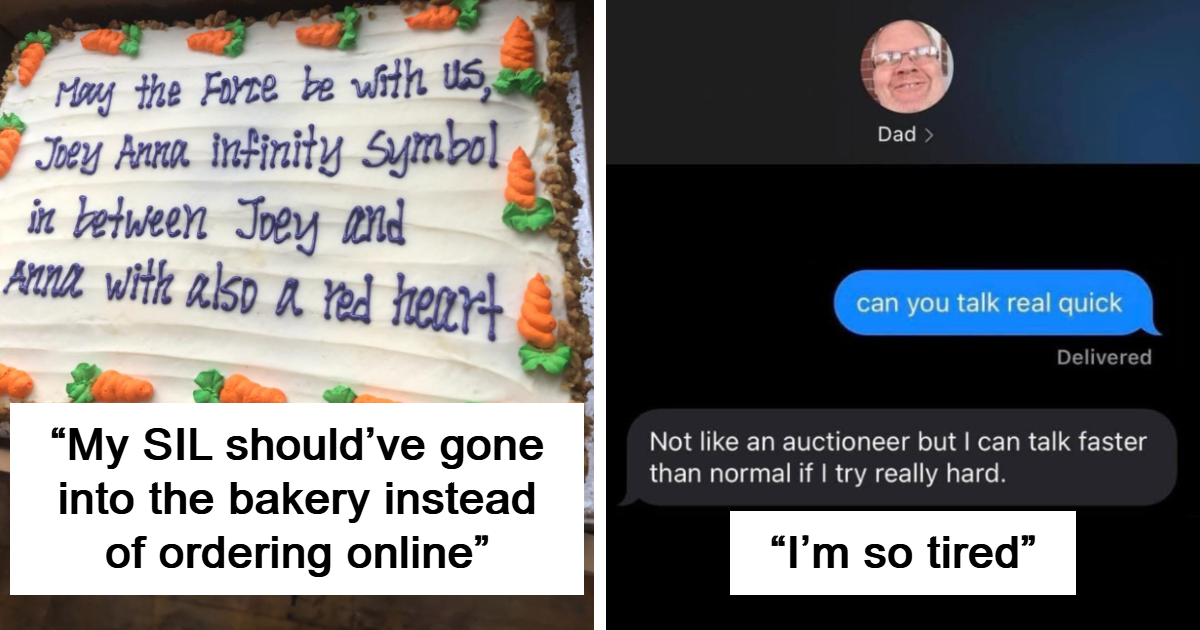
There are two kinds of people in this world: people who follow instructions, and people who follow instructions so literally that the instruction-giver immediately regrets owning a mouth. The internet, being the chaotic scrapbook of humanity that it is, has turned this very specific behavior into comedy gold. That is why collections like “50 Unhinged Pics Of People Doing Exactly What They Were Asked To Do” feel so satisfying, strange, and painfully relatable.
These pictures usually capture a perfect collision between obedience and absurdity. Someone asks for “popcorn chicken,” and a mischievous genius serves chicken on actual popcorn. A sign says to “push,” so someone pushes the entire idea of common sense out the window. A boss gives vague instructions, and an employee completes the task with courtroom-level literalness. Technically correct? Yes. Spiritually unwell? Also yes.
At the heart of these unhinged pics is a simple truth: language is messy. People say one thing, mean another, and expect everyone else to fill in the blanks. Most of the time, we do. But sometimes, someone decides not to fill in the blanks. They follow the words exactly as written, and suddenly we have a photo that belongs in the Louvre’s “Human Nonsense” wing.
Why “Doing Exactly What They Were Asked” Is So Funny
The humor works because it flips expectations. When someone gives an instruction, we assume the listener will understand the hidden meaning behind it. “Put the sign somewhere visible” does not usually mean “attach it to the most aggressively inconvenient surface possible.” “Draw a line under the answer” does not mean “draw one dramatic line across the entire page like a tiny academic thunderbolt.” Yet these interpretations are what make literal compliance so entertaining.
It Is Technically Right, Which Makes It Even Worse
The funniest examples are not random mistakes. They are correct in the most annoying way possible. That is the beauty of literal humor: the person did not fail the task. They passed it with chaotic extra credit. They obeyed the request while quietly exposing how poorly the request was worded.
This is why viewers often laugh and wince at the same time. We have all given unclear instructions. We have all assumed our meaning was obvious. Then someone follows the exact wording, and suddenly the problem is not their obedienceit is our communication skills wearing clown shoes.
The Joke Lives in the Gap Between Words and Meaning
Everyday communication depends on context. If someone says, “Can you throw this away?” they do not mean “Are you physically capable of throwing this object?” They mean, “Please put it in the trash.” Humans constantly interpret tone, situation, relationship, and shared knowledge. But literal-minded comedy removes that invisible layer and treats words like a legal contract written by a raccoon.
That gap between what was said and what was meant creates instant comedy. The more obvious the intended meaning seems, the funnier the literal response becomes.
Common Types of Unhinged Literal Compliance Pics
Not every unhinged instruction-following photo is the same. Some are harmless jokes, some are workplace masterpieces, and some make you wonder whether the person responsible should be promoted or gently supervised. Here are the most common categories that appear in viral collections of people doing exactly what they were asked to do.
1. Food Orders Taken Way Too Literally
Food is one of the best playgrounds for literal humor because menu names are already ridiculous. “Popcorn chicken” does not contain popcorn. “Buffalo wings” do not come from buffalo. “Baby carrots” are not infant vegetables with tiny mortgages. But when someone decides to interpret food names literally, the results are unforgettable.
Imagine ordering a “hot dog” and receiving a dog-shaped arrangement of sausages. Or asking for “extra ice” and getting a drink that is basically an iceberg with a straw. These examples are funny because restaurants, kitchens, and home cooks depend on shared assumptions. Break those assumptions, and dinner becomes performance art.
2. Workplace Tasks Completed With Dangerous Precision
Workplaces are natural factories for literal compliance. Managers often give rushed instructions. Employees often hear them with the tired ears of someone who has attended too many meetings about meetings. Add a vague request, and suddenly you get a masterpiece of technical obedience.
A supervisor says, “Make sure this sign cannot be missed,” so someone tapes it across a doorway. A team lead asks for “a quick report,” and receives a report that says only, “Quick.” A warehouse worker is told to “stack everything by the wall,” so the wall becomes the unwilling centerpiece of a cardboard skyscraper.
These moments are funny because they reveal a workplace truth: clear instructions matter. When people are overloaded, annoyed, or simply feeling playful, they may obey the words instead of the intention.
3. Signs That Accidentally Invite Chaos
Signs are supposed to prevent confusion. Unfortunately, some signs are written with the clarity of a fortune cookie translated through a ceiling fan. That is why signs often appear in collections of unhinged pics. A sign might say “Use other door” while pointing at a wall. Another might read “Please do not sit here” on a chair that looks comfier than every chair in the building.
Sometimes the unhinged part is not the sign itself but how people respond to it. If a notice says “Do not touch,” someone may place a tiny paper hand next to it. If a trash can says “Bottles only,” someone might place a single bottle with the solemn dignity of a museum artifact. It is childish, yes. It is also extremely human.
4. School Assignments That Prove Kids Are Comedy Geniuses
Children are masters of literal interpretation. Adults call it “not following directions.” The internet calls it “content.” When a worksheet says, “Write the answer in the box,” a child may write the words “the answer” in the box. When a question asks, “What ended in 1896?” the student may answer, “1895.” That is not wrong. That is a tiny lawyer with a pencil.
These school-related pics often go viral because they show intelligence hiding behind silliness. Kids are excellent at spotting loopholes. They may not know long division yet, but they can absolutely destroy a poorly worded prompt.
5. Customer Requests That Backfire Beautifully
Customer service also produces legendary examples. Someone asks for “a little bit of sauce,” and receives a microscopic dot. Another person requests “no onions,” and the cook sends a burger with a dramatic empty space where onions might have emotionally existed. A cake order says, “Write Happy Birthday on it,” and the decorator writes the entire instruction: “Write Happy Birthday on it.”
These examples spread quickly because they combine relatable frustration with absurd visual payoff. Anyone who has worked in service knows that requests can be confusing, contradictory, or hilariously specific. Sometimes the safest response is to follow the words exactlyand hope the customer appreciates modern art.
The Psychology Behind Literal Humor
Literal compliance is funny because it creates surprise without being completely random. The result makes sense, but not in the way we expected. That balance is important. If the outcome were totally unrelated, it would just be confusing. But because it follows the instruction precisely, the brain gets the joke almost instantly.
Humor Loves a Pattern Break
Most jokes depend on a pattern break. We expect one outcome, then get another. Literal compliance takes a normal instruction and produces an abnormal result while still staying inside the rules. That contradiction gives the joke its spark.
For example, if someone says, “Put the cake in the fridge,” we expect the cake to be placed safely on a shelf. If the person somehow crams the cake into the fridge sideways, still technically inside, the visual becomes ridiculous. The request was completed. The cake, however, has seen things.
It Lets Us Laugh at Rules
Rules are necessary, but they can also be silly. Literal compliance exposes the weak spots in rules, instructions, and authority. It says, “Fine, I will obeybut I will obey so precisely that the rule collapses under its own wording.”
This is why workplace and public sign examples are especially satisfying. They allow people to laugh at bureaucracy without necessarily breaking anything. It is rebellion wearing a name tag.
It Turns Miscommunication Into Entertainment
Miscommunication is usually stressful. At work, it wastes time. In relationships, it causes arguments. In restaurants, it leads to someone receiving pickles they never emotionally consented to. But in these viral pics, miscommunication becomes entertainment because the stakes are low and the outcome is visual.
Instead of dealing with the annoyance ourselves, we get to observe it from a safe distance and say, “Well, technically…” which is one of the most dangerous phrases in the English language.
Why These Pics Go Viral So Easily
Collections of unhinged pics work well online because they are easy to understand quickly. A viewer does not need a long backstory. The image usually tells the whole joke in a second or two: instruction, literal response, chaos. That makes the format perfect for social media, where people scroll fast and patience is thinner than gas station napkins.
They Are Visual, Instant, and Shareable
A strong literal-compliance picture does not require much explanation. The viewer sees the instruction and the result, then immediately understands the absurdity. This instant payoff makes the content highly shareable. People send it to friends, coworkers, siblings, and that one person in the group chat who replies with “LOL” three business days later.
They Feel Relatable Across Generations
Everyone understands being asked to do something unclear. Students, parents, office workers, service employees, teachers, and customers have all lived through moments where words did not match expectations. That shared experience gives these pictures broad appeal.
A teenager may laugh at a homework loophole. A manager may laugh nervously at a workplace example. A parent may recognize their child’s exact brand of innocent chaos. The humor travels because confusion is universal.
They Reward Close Reading
Ironically, these photos often reward the same behavior that causes the joke: close reading. The viewer has to notice the wording. A sign, label, assignment, or text message becomes the setup. The physical result becomes the punchline. That makes the viewer feel clever for catching the joke, which increases the urge to share it.
What These Unhinged Pics Teach Us About Communication
Behind the laughter, these examples offer a surprisingly useful lesson: say what you mean. Clear communication is not about using bigger words. It is about removing unnecessary guesswork. When instructions rely too heavily on assumptions, they leave room for chaos, comedy, and occasionally a cake with the wrong sentence written on it.
Be Specific Without Becoming a Robot
Good instructions explain the expected outcome. Instead of saying, “Put this somewhere safe,” say, “Please place it on the top shelf away from water.” Instead of “Make it nice,” try “Use a clean layout, large text, and no neon green unless we are opening a laser tag arena.”
Specificity prevents confusion. It also prevents the most mischievous person in the room from exploiting your vague wording for sport.
Context Matters More Than We Think
People often assume others have the same context they do. That is where instructions break down. The person giving the task knows the goal, the background, and the preferred result. The person receiving the task may only know the sentence they were handed. If that sentence is unclear, they may guessor worse, they may follow it exactly.
Adding one sentence of context can save everyone from disaster. “Please organize these files by date so we can find invoices faster” is much clearer than “Fix this folder.” The first instruction gives purpose. The second gives someone permission to create digital mayhem.
Humor Can Reveal Real Problems
These pics are funny, but they also reveal how easily communication can fail. In a workplace, unclear instructions can slow projects. In customer service, they can create bad experiences. In schools, they can confuse students. Online, they become memes. In real life, they become meetings, and meetings are how joy goes to get laminated.
The lesson is not that people should stop joking. The lesson is that better wording creates better outcomesand fewer opportunities for someone to obey you with villainous accuracy.
Examples of “Exactly What They Were Asked” Energy
Because this topic thrives on examples, here are a few realistic scenarios that capture the same unhinged spirit without copying any specific viral post.
The Birthday Cake Disaster
A customer writes, “Please put ‘Happy Birthday, Mom’ in blue icing.” The decorator, either confused or deeply committed to the bit, writes the full sentence: “Please put Happy Birthday, Mom in blue icing.” Somewhere, a family opens the cake box and discovers dessert has become a grammar lesson.
The Overly Honest Form
A form asks, “Reason for leaving previous job?” The applicant writes, “They stopped paying me after I stopped going.” Is it polished? No. Is it honest? Horrifyingly.
The Literal Parking Sign
A sign reads, “Parking for customers only.” Someone places a toy car in the space with a sticky note: “Customer.” That is not transportation. That is legal theater.
The School Worksheet Loophole
A worksheet says, “Name the quadrilateral.” A student writes, “Gary.” The teacher wanted “square” or “rectangle.” The student gave the shape an identity. Gary has rights.
Why We Secretly Admire the Chaos
Part of the appeal is that many of us wish we could be this bold. Most people interpret instructions politely, even when the wording is terrible. We do the mental labor of figuring out what someone probably meant. But the heroes of unhinged literal compliance refuse that unpaid internship. They make the words do their own job.
There is a tiny thrill in watching someone follow an instruction with no emotional cushioning. It feels like a prank, a protest, and a public service announcement at the same time. They are not necessarily being mean. Sometimes they are being playful. Sometimes they are making a point. Sometimes they are simply built different, possibly by a committee of cats.
How to Enjoy These Pics Without Becoming the Problem
Literal humor is great online, but in real life, timing matters. Doing exactly what someone asked can be funny when the stakes are low. It is less funny when safety, money, deadlines, or someone’s wedding cake are involved. The best examples are harmless, clever, and surprisingnot cruel.
If you want to create your own “technically correct” moment, keep it light. Do not damage property. Do not embarrass someone who cannot laugh with you. Do not turn a workplace task into a full-blown HR documentary. The goal is a laugh, not a paper trail.
500-Word Experience Section: Living With “Technically Correct” People
Anyone who has spent time around literal thinkers knows the experience can be both hilarious and mildly dangerous to your blood pressure. You ask someone to “grab a few napkins,” and they return with exactly three, because apparently “few” has been legally defined in their personal constitution. You say, “Can you watch the pasta?” and they stand beside it like a museum guard while it boils over. Technically, they watched it. Emotionally, you are now cleaning starch foam off the stove.
The funny thing is that these moments often come from intelligence, not ignorance. Literal people notice the details others skip. They hear the exact words. They spot the loophole. They understand that “bring me the blue folder” and “bring me a blue folder” are not the same command. To them, language is not a loose suggestion. It is a map. If the map leads into a shrub, well, perhaps the mapmaker should have tried harder.
In families, this kind of humor becomes part of the household culture. A parent says, “Put your shoes by the door,” and the child places them perfectly beside the door, still covered in mud, because nobody specified “clean them first.” A sibling says, “Save me a bite,” and receives one lonely bite-sized portion preserved like a historical artifact. Annoying? Absolutely. Memorable? Forever.
At work, the experience becomes more complicated. A coworker who follows instructions literally can be a blessing when precision matters. They are the person you want checking forms, reviewing procedures, or making sure the file name matches the required format. But they can also expose every vague request in the building. If a manager says, “Send this to everyone who needs it,” the literal employee may ask, “Who needs it?” That question can feel irritating, but it is often the most useful question in the room.
The best way to live with technically correct people is to appreciate the service they provide. They reveal weak wording. They test assumptions. They remind us that communication is a team sport, not a mind-reading contest. Yes, they may occasionally turn a simple request into a philosophical debate about the meaning of “soon.” But they also prevent mistakes by refusing to pretend unclear instructions are clear.
That is why unhinged pics of people doing exactly what they were asked to do hit such a sweet spot. They are not just random internet silliness. They are tiny case studies in language, expectation, and human stubbornness. They show us what happens when words are followed without the invisible padding of common sense. Sometimes the result is ridiculous. Sometimes it is genius. Sometimes it is a plate of popcorn chicken served on popcorn, which may honestly deserve its own restaurant chain.
Conclusion
“50 Unhinged Pics Of People Doing Exactly What They Were Asked To Do” is more than a funny internet theme. It is a celebration of literal thinking, loophole comedy, and the universal joy of watching vague instructions backfire in spectacular fashion. These pictures make us laugh because they are technically correct, visually absurd, and deeply relatable.
They also remind us that words matter. Whether you are writing a sign, assigning homework, ordering a cake, managing a team, or texting a friend, clarity can save everyone a lot of confusion. Of course, confusion can also create comedy. So maybe the real lesson is this: be clear when it matters, stay playful when it does not, and never underestimate the person who hears your instruction and thinks, “Challenge accepted.”
Note: This article is an original, web-ready commentary piece based on real internet humor patterns, literal compliance examples, communication principles, and viral visual culture. It does not reproduce copyrighted image captions or source text.