Note: This article is written for appreciation, photography, history, and preservation. Forgotten places can be unsafe, privately owned, environmentally hazardous, or legally restricted. Enjoy them through legal photo archives, authorized tours, museums, documentaries, and preservation projects rather than risky trespassing. The ghosts can keep the broken staircases.
There is something weirdly magnetic about abandoned places. A polished skyscraper may impress us, but a moss-covered mansion with cracked windows? That one whispers, “I have seen things.” The “Urban Explorer” Twitter page became popular because it taps into that exact feeling: the thrill of looking at forgotten places that seem frozen between yesterday and forever.
These images are not just “ruin porn,” although the internet does love a dramatic hallway with peeling paint. The best urban exploration photography captures history, architecture, human ambition, and nature’s slow but undefeated comeback tour. A railway station becomes a forest. A theater becomes a cathedral of dust. A hotel becomes a cliffside mystery novel. The result is breathtaking, slightly spooky, and strangely comfortinglike the world’s most beautiful attic.
Below is a deep, SEO-friendly tour of 50 kinds of breathtaking forgotten places often celebrated by urban exploration communities, including examples, themes, and the bigger meaning behind why these images keep stopping people mid-scroll.
Why Forgotten Places Fascinate Us
Urban exploration, often called “urbex,” focuses on abandoned buildings, deserted infrastructure, industrial ruins, closed resorts, old hospitals, silent schools, forgotten churches, and other spaces left behind by time. What makes the photos powerful is not just decay. It is contrast. We see luxury beside rot, grand design beside weeds, chandeliers beside water stains, and human plans being politely canceled by vines.
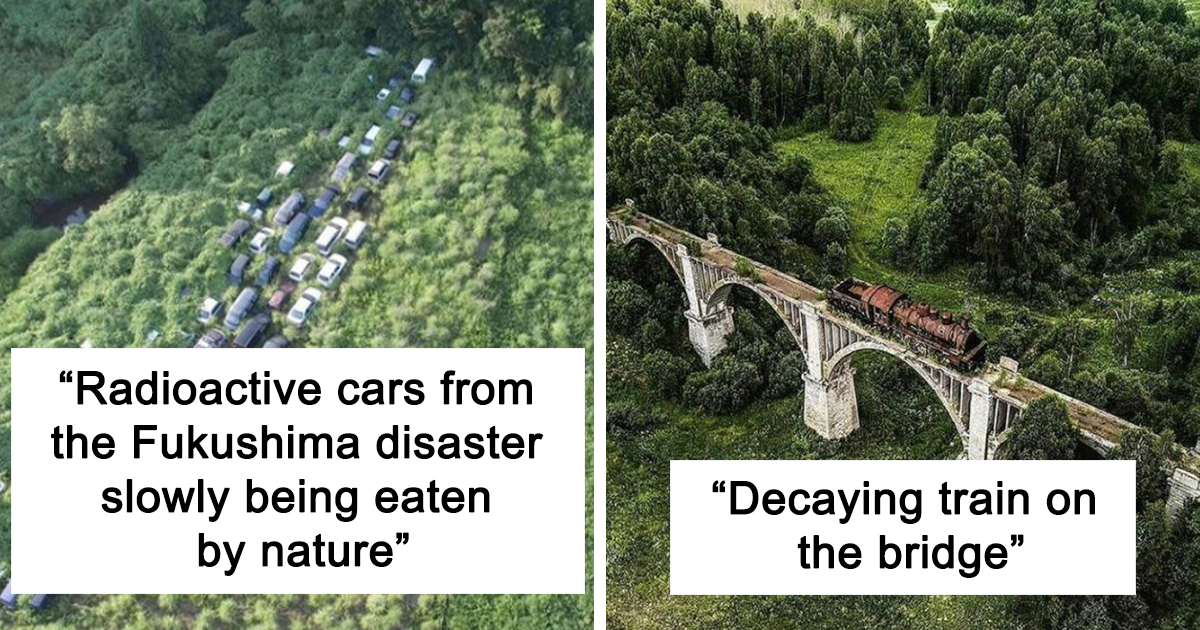
These places also remind us that every “permanent” structure is actually on a rental agreement with time. Factories close. railroads are rerouted. resorts lose visitors. castles burn. theaters stop selling tickets. Then nature arrives with a clipboard and says, “I’ll take it from here.”
50 Breathtaking Forgotten Places Worth Knowing
Instead of treating abandoned places as a simple gallery of creepy rooms, it is more meaningful to see them as categories of memory. Here are 50 unforgettable types of forgotten locations that often appear in urban exploration photography and spark millions of reactions online.
1. Overgrown Mansions
Abandoned mansions are internet royalty. Their grand staircases, empty ballrooms, and ivy-covered facades make them look like fairy tales that missed a mortgage payment.
2. Forgotten Castles
European castles such as Château de la Mothe-Chandeniers in France show how ruins can become preservation stories. Once damaged and neglected, some castles have inspired crowdfunding and restoration efforts.
3. Abandoned Hotels
Hotels are especially haunting because they were built for comfort, service, and temporary happiness. When empty, a lobby can feel like the last guest checked out in 1978 and forgot to tell the wallpaper.
4. Cliffside Ruins
Places like Colombia’s Hotel del Salto near Tequendama Falls are dramatic because landscape and architecture collide. A building beside a waterfall already has main-character energy; abandonment just adds fog and mystery.
5. Empty Theaters
An abandoned theater is one of the most emotional urbex subjects. The seats face a silent stage, waiting for a performance that will never begin. Even the dust seems to be holding applause.
6. Deserted Churches
Forgotten churches often retain stained glass, high ceilings, and carved details. Whether one sees them as sacred spaces or architectural treasures, they carry a quiet weight.
7. Closed Schools
Empty classrooms can feel more unsettling than castles. Chalkboards, desks, and bulletin boards suggest daily life stopped mid-sentence.
8. Abandoned Hospitals
Hospitals attract attention because they combine human vulnerability with institutional architecture. Their corridors can be visually striking, but they also raise strong safety and ethical concerns.
9. Old Asylums
Former psychiatric hospitals often appear in urbex culture, but good writing treats them with respect. These were real places connected to real patients, not just spooky backdrops for flashlight drama.
10. Silent Libraries
A deserted library is peak melancholy. Books left on shelves make a place feel less abandoned and more interrupted.
11. Train Graveyards
Old locomotives, rusting carriages, and railway depots create powerful images of motion brought to a standstill.
12. Disused Subway Tunnels
Hidden tunnels fascinate people because cities usually show us their clean, public faces. Underground spaces reveal the backstage area.
13. Forgotten Factories
Factories are among the most photographed abandoned places. Their giant windows, machinery, catwalks, and rusted beams tell stories of labor, industry, and economic change.
14. Power Plants
Old power stations look like mechanical cathedrals. Turbines, control rooms, and huge halls can feel futuristic and ancient at the same time.
15. Cooling Towers
Cooling towers are beloved by photographers because of their scale. Standing beneath onelegally and safely, of coursemust feel like being inside a concrete volcano designed by engineers with dramatic flair.
16. Abandoned Amusement Parks
Nothing says “emotional whiplash” like a rusting Ferris wheel. Amusement parks were designed for laughter, which makes their silence extra loud.
17. Empty Water Parks
Water slides without water look like giant snakes that gave up. Their bright colors often remain, creating a strange mix of fun and decay.
18. Forgotten Swimming Pools
Empty pools with cracked tiles and faded lane markers are oddly beautiful. They turn leisure into geometry.
19. Deserted Resorts
Resort towns can become time capsules when tourism fades. Old signs, lobbies, spas, and restaurants reveal how quickly a destination can fall out of fashion.
20. Ghost Town Streets
Ghost towns are abandoned places at neighborhood scale. Their roads, storefronts, homes, and churches show what happens when an entire community moves on.
21. Mining Settlements
Mining towns often grew quickly and declined just as fast. Their ruins are reminders of boom-and-bust economies.
22. Desert Gas Stations
Few things look more cinematic than a lonely gas station on an empty road. Add a sun-bleached sign, and suddenly every passing tumbleweed deserves an agent.
23. Roadside Motels
Old motels tell stories of pre-app travel, neon signs, paper maps, and families who definitely argued about directions.
24. Abandoned Diners
A diner with stools still lined up at the counter feels like a paused movie scene. Coffee may be gone, but the atmosphere is still brewing.
25. Forgotten Shopping Malls
Dead malls have become symbols of retail change. Their fountains, food courts, and empty department stores show how consumer culture evolves.
26. Empty Department Stores
Large retail spaces become surreal when stripped of crowds. Escalators stop, display racks vanish, and the whole place feels like capitalism went out for lunch.
27. Abandoned Airports
Airports represent movement, departure, and connection. When deserted, they become unusually poetic: gates to nowhere, runways for no one.
28. Plane Graveyards
Rows of retired aircraft create striking images of technology at rest. These places are often controlled facilities, best appreciated through authorized photography.
29. Shipwrecks
Shipwrecks are abandoned places shaped by water. They attract historians, divers, photographers, and anyone who enjoys a dramatic silhouette at sunset.
30. Beached Boats
Old boats left on shore become sculptures. Salt, wind, and time carve them into rough, beautiful forms.
31. Abandoned Military Bases
Former bases can include barracks, bunkers, hangars, and command rooms. Their atmosphere is heavy because they connect architecture to conflict and secrecy.
32. Bunkers
Bunkers are visually intense: thick walls, narrow corridors, and a sense that the building was designed to survive everyone’s worst day.
33. Radar Stations
Old radar stations and communication sites look like sci-fi props left on a hilltop. Their strange shapes make them favorites in abandoned architecture photography.
34. Forgotten Observatories
Observatories are poetic ruins because they were built for looking outward. When abandoned, they make us look inward instead. Rude, but effective.
35. Greenhouses Reclaimed by Plants
An abandoned greenhouse is nature’s comeback album. Glass breaks, vines enter, and the building’s original purpose returns in wild form.
36. Botanical Ruins
Old gardens, conservatories, and estate grounds can become enchanting when overgrown. They remind us that “landscaping” is just a temporary negotiation with plants.
37. Forgotten Villas
Villas in places such as northern Italy or around Lake Como often appear in urbex discussions because of their dramatic settings and old-world architecture.
38. Mountain Sanatoriums
Sanatoriums built for fresh air and recovery often sit in remote, scenic locations. Their architecture can be stunning, though the history behind them deserves sensitivity.
39. Abandoned Spas
Old bathhouses and spas combine leisure with eerie stillness. Tile rooms, mineral pools, and treatment spaces can look both luxurious and alien.
40. Empty Restaurants
Restaurants are intimate ruins. A dining room without diners feels more personal than a factory because it once held birthdays, dates, bad first impressions, and heroic amounts of bread.
41. Forgotten Farmhouses
Rural abandoned houses often show how family histories fade from the landscape. A collapsed porch or wallpapered bedroom can carry more emotion than a grand palace.
42. Barns and Silos
Aging barns and silos are icons of rural decay. They also raise preservation questions because agricultural buildings are part of cultural history.
43. Abandoned Bridges
Old bridges are symbolic: they were built to connect, and abandonment turns them into monuments to disconnection.
44. Forgotten Rail Stations
Rail stations can be spectacular ruins, especially when plants grow through platforms. They remind us how transportation reshapes entire towns.
45. Old Movie Sets
Some deserted places were never meant to be permanent. Abandoned film sets blur the line between real history and manufactured fantasy.
46. Empty Stadiums
Stadiums without crowds are almost philosophical. Seats wait. Scoreboards sleep. The hot dogs, thankfully, are gone.
47. Industrial Canals
Canals, docks, and warehouses show how cities once moved goods before logistics became a spreadsheet with wheels.
48. Abandoned Apartments
Residential ruins are powerful because they reveal ordinary life. A kitchen, hallway, or child’s room can feel more haunting than any castle tower.
49. Ruined Palaces
Palaces show the collapse of wealth in architectural form. Marble cracks, ceilings stain, and grandeur becomes strangely democratic: everyone gets dust.
50. Places Nature Has Fully Reclaimed
The most breathtaking forgotten places are often those where nature has won completely. Trees grow through roofs, moss covers floors, and birds occupy rooms once reserved for humans with better shoes.
The Beauty Is Real, But So Are the Risks
It is easy to romanticize abandoned places when they appear on a screen. A photo filters out the smell, unstable floors, sharp debris, contaminated materials, weak roofs, hidden holes, and legal issues. That is why the safest and most ethical way to enjoy urban exploration is through published photography, sanctioned tours, preservation organizations, documentaries, museums, and public heritage sites.
Many forgotten places are not truly ownerless. They may belong to families, cities, companies, park agencies, or redevelopment groups. Some are being studied for adaptive reuse, which means the building may find a new purpose instead of being demolished. A former school can become housing. A factory can become offices. A train station can become a cultural landmark. In the best cases, forgotten places are not endings. They are rough drafts for a second life.
Why Urban Explorer Photos Matter
Urban exploration photography matters because it documents fragile places before they vanish. Buildings are demolished, restored, burned, sealed, renovated, or simply eaten by weather. A single photograph can preserve a staircase, a lobby, or a painted ceiling long after the physical place changes forever.
These images also encourage people to ask better questions. Who built this? Who worked here? Why did it close? What did this place mean to the community? Could it be saved? Should it be left alone? The best forgotten-place photography does not just say, “Look how creepy.” It says, “Look how much history is hiding in plain sight.”
Preservation, Adaptive Reuse, and the Second Life of Ruins
Historic preservation is not about freezing cities in amber. It is about choosing what deserves memory and how old buildings can serve modern life. Adaptive reuse gives structures new functions while respecting their character. A warehouse becomes apartments. A church becomes a performance hall. A mill becomes a market. A station becomes a museum. The building does not have to pretend nothing changed; it simply gets to keep speaking.
This is why abandoned places should not be reduced to spooky content. Some are hazardous and beyond saving. Others are treasures waiting for the right plan, funding, and community support. When people share breathtaking images of forgotten places, they may accidentally become preservation advocates. Nothing motivates public interest quite like a grand old building looking tragic but photogenic. Architecture has discovered its influencer era.
Experience: What It Feels Like to Fall in Love With Forgotten Places
My fascination with forgotten places began the same way it does for many people: with one photo. It was not a famous landmark or a perfectly composed magazine image. It was a simple shot of an abandoned hallway where sunlight fell through broken windows and landed on a floor covered with leaves. There was no dramatic ghost, no monster, no person in a gas mask trying too hard to look mysterious. Just light, silence, and time. Somehow, it felt more alive than many crowded places.
That is the strange magic of urban exploration images. They make you feel like you arrived late to a story but can still read the last page. A rusted staircase suggests footsteps. An empty hotel room suggests suitcases, arguments, honeymoon breakfasts, and someone stealing tiny soaps with absolutely no shame. A theater with torn seats suggests applause that once filled the room so completely that the walls probably remembered it. Forgotten places ask the imagination to become an archaeologist.
One of the most powerful experiences related to this topic is realizing that decay is not the opposite of beauty. In modern life, we are trained to admire the new: new phones, new buildings, new paint, new floors shiny enough to make socks nervous. But abandoned places reveal another kind of beautythe beauty of texture, imperfection, and change. Peeling paint becomes a landscape. Rust becomes color. Broken glass catches light. Vines become decorators with no budget limits and excellent confidence.
Looking at the “Urban Explorer” style of photography also changes the way you see everyday surroundings. An old warehouse on the edge of town is no longer just an eyesore. A closed cinema becomes a time capsule. A boarded-up school becomes a question. You begin to notice faded signs, bricked-up windows, old tracks in the pavement, and architectural details that most people walk past while checking whether their coffee order is emotionally supportive enough.
The emotional pull comes from the fact that forgotten places are honest. They do not hide age. They do not smooth over damage. They show what weather, economics, neglect, and time can do. Yet they also show resilience. A wall may crack, but a tree grows through it. A roof may collapse, but sunlight fills the room. A grand lobby may lose its guests, but it gains birds, moss, and the kind of silence that makes people stop scrolling.
The best way to experience this fascination responsibly is to treat forgotten places as cultural memory, not as personal playgrounds. Legal tours, historic sites, photo books, museum archives, preservation blogs, and documentary projects can deliver the wonder without the danger. The goal is not to conquer these places. It is to understand them. They are not empty. They are fullof design, labor, dreams, mistakes, and the soft comedy of humans believing anything we build is permanent.
In the end, the most breathtaking forgotten places remind us that time is the greatest urban explorer of all. It enters every room eventually. It carries no flashlight, asks no permission, and always gets the final edit.
Conclusion
The “Urban Explorer” Twitter page and similar abandoned-place photography communities are popular because they transform decay into storytelling. The best images of forgotten places do more than look eerie; they reveal history, architecture, memory, and nature’s unstoppable patience. From empty theaters and overgrown mansions to rusting trains and silent hotels, these spaces show that abandonment is not always emptiness. Sometimes it is a museum without labels.
For readers, the lesson is simple: admire the beauty, respect the danger, and remember the history. Forgotten places deserve curiosity, but they also deserve care. Some should be preserved. Some should be safely redeveloped. Some should be left in peace. All of them remind us that every building, no matter how grand, is temporaryand that even ruins can still take our breath away.