During the COVID-19 pandemic, the internet became part newsroom, part town hall, and part family group chat that nobody could escape. Medical researchers were studying a new virus in real time, while freshly minted “experts” were studying screenshots, anonymous voice messages, and memes featuring suspicious amounts of capital lettering.
That chaotic environment gave rise to the word covidiot, an informal term for someone whose reckless behavior or confidently shared misinformation increased pandemic risks. It also produced a memorable genre of online humor: the covidiot shutdown. These COVID-19 comebacks used logic, facts, irony, and occasionally the verbal equivalent of closing a laptop very slowly.
The 40 shutdowns below are original paraphrases inspired by recurring pandemic arguments, documented coronavirus myths, public-health fact checks, and the wonderfully inventive ways ordinary people responded. The jokes are aimed at bad reasoning rather than people who asked sincere questions, faced legitimate uncertainty, or changed their views when better evidence arrived.
Mask Myths Meet Their Match
-
“Masks Make You Breathe Carbon Dioxide”
The shutdown: “Surgeons wear masks for hours without turning into houseplants. Your ten-minute grocery trip is unlikely to begin a new carbon-based life cycle.” Properly worn masks do not cause dangerous oxygen deprivation or carbon-dioxide poisoning in most people.
-
“If Masks Worked, Nobody Would Get Sick”
The shutdown: “Seat belts work, yet traffic injuries still exist. Apparently, risk reduction is different from wizardry.” A protective measure can be useful without being perfect, especially when combined with ventilation, vaccination, testing, and staying home while sick.
-
“The Virus Is Smaller Than the Holes in a Mask”
The shutdown: “Mosquitoes are smaller than chain-link fences, but that does not explain how fishing nets catch fish.” Respiratory particles behave in complex ways, and mask filtration involves layers, fibers, electrostatic effects, fit, and airflownot simply comparing two measurements.
-
“My Mask Protects Me, So Yours Is Irrelevant”
The shutdown: “Your headlights help you see, but I still appreciate oncoming drivers using theirs.” During periods of substantial transmission, community precautions worked best when people reduced both the germs they released and the germs they inhaled.
-
“I Can Smell Coffee Through My Mask”
The shutdown: “You can smell dinner through your front door. That does not mean a lasagna can crawl through the keyhole.” Odor molecules and virus-containing respiratory particles are not interchangeable simply because both are too small to challenge to arm wrestling.
-
“Wearing a Mask Means Living in Fear”
The shutdown: “Using oven mitts does not mean you fear lasagna. It means you understand heat.” Precautions are often practical responses to risk, not declarations of terror. Most people buckle seat belts without composing farewell letters to the highway.
-
“I Have an Immune System”
The shutdown: “You also have teeth, yet dentists remain employed.” An immune system is essential, but it is not an invisible force field. Vaccines and other preventive measures help it recognize threats and reduce the chances of severe illness.
-
“Masks Are Unnatural”
The shutdown: “So are eyeglasses, indoor plumbing, and correcting strangers from a smartphone made of rare metals.” Something does not become harmful merely because humans designed it. Civilization is largely a collection of unnatural things that prevent natural disasters from ruining lunch.
-
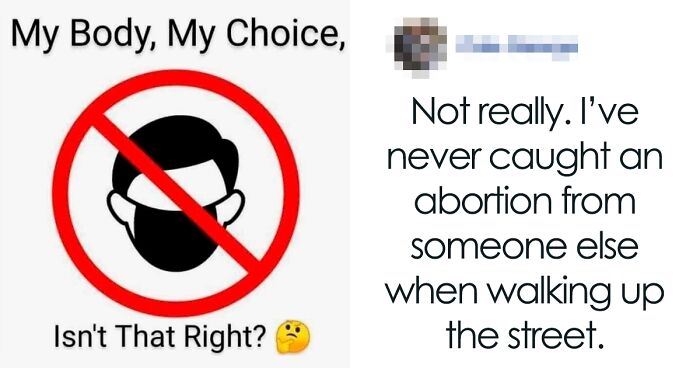
“My Face, My Choice”
The shutdown: “Your choice stops being entirely personal when your respiratory droplets begin networking.” Public-health rules were debated intensely, but the central principle was simple: infectious diseases involve shared spaces and consequences that can extend beyond one individual.
-
“I Pulled My Mask Down to Talk”
The shutdown: “Excellent. Next, remove your umbrella whenever the rain becomes serious.” Talking can release respiratory particles, making it one of the least logical moments to expose the nose and mouthespecially while standing six inches from a cashier.
Miracle Cures Versus Basic Medical Evidence
-
“This Remedy Is Natural”
The shutdown: “So are poison ivy, hurricanes, and being chased by a bear.” The word natural is not evidence of safety or effectiveness. Treatments require credible research, appropriate dosing, quality control, and more support than a testimonial beneath a shopping-cart button.
-
“Doctors Do Not Want You to Know This Secret”
The shutdown: “Remarkable that millions of competing doctors, hospitals, universities, regulators, and insurers coordinated perfectly, yet your cousin discovered the conspiracy before breakfast.” Extraordinary medical claims need stronger evidence than a dramatic video introduction.
-
“Ivermectin Won a Nobel Prize”
The shutdown: “Penicillin won a Nobel Prize too, but it will not repair your transmission.” A drug can be valuable for approved uses without treating every disease. The FDA did not authorize or approve ivermectin as a COVID-19 treatment or preventive medication.
-
“A Laboratory Study Proved It Works”
The shutdown: “Soap kills cells in a laboratory dish. Please do not drink a bubble bath.” Early laboratory findings can justify further research, but they do not automatically establish a safe, effective dose for living human beings.
-
“Drink Disinfectant and Kill the Virus”
The shutdown: “Fire kills weeds. That does not make a flamethrower a salad dressing.” Disinfectants are made for surfaces, not internal use. Swallowing or injecting them can cause severe poisoning, organ damage, or death.
-
“More Hand Sanitizer Must Mean More Protection”
The shutdown: “By that logic, bathing in toothpaste should replace dentistry.” Hand sanitizer is useful when soap and water are unavailable, but it must be used safely. Drinking it, inhaling concentrated vapors, or leaving it around small children creates new emergencies.
-
“Garlic Prevents COVID-19”
The shutdown: “It may reduce the number of people standing close enough to infect you, but that is a different mechanism.” Garlic can be part of a healthy diet. It was never a scientifically established substitute for vaccination, testing, ventilation, or medical treatment.
-
“Heat Kills the Virus, So Summer Will End It”
The shutdown: “Arizona has summer. Arizona also has germs.” Weather can influence behavior and transmission patterns, but warm temperatures did not make SARS-CoV-2 resign, pack a suitcase, and relocate to a ski resort.
-
“Vitamin Supplements Make Me Untouchable”
The shutdown: “Your immune system is not a video-game character that becomes invincible after collecting enough zinc.” Correcting a genuine deficiency can matter, but unsupported megadoses are not guaranteed prevention and can sometimes cause harm.
-
“The Product Has Thousands of Five-Star Reviews”
The shutdown: “So does a banana slicer. Customer enthusiasm is not a randomized clinical trial.” Reviews can describe shopping experiences, but they cannot establish whether a product prevents, treats, or cures an infectious disease.
Vaccine Myths Get Fact-Checked
-
“The Vaccine Changes Your DNA”
The shutdown: “A recipe delivered to your kitchen does not remodel the house.” Messenger RNA provides temporary instructions that help the immune system recognize a target. It does not enter the cell nucleus and rewrite a recipient’s genetic code.
-
“The Vaccine Gives You COVID-19”
The shutdown: “A fire drill does not set the building on fire.” Authorized COVID-19 vaccines teach the immune system without causing COVID-19. Temporary fatigue, fever, or soreness can reflect an immune response rather than infection with the disease.
-
“Vaccinated People Still Get Infected, So Vaccines Failed”
The shutdown: “People wearing helmets still get injured, yet nobody calls helmets decorative bowls.” Protection against infection can decrease over time and vary by variant, while protection against severe disease remains an important measure of vaccine benefit.
-
“I Saw Thousands of Reports in VAERS”
The shutdown: “A fire-alarm log records alarms, not proof that every building burned down.” The Vaccine Adverse Event Reporting System accepts reports of events occurring after vaccination, whether or not the vaccine caused them. Investigators analyze patterns before drawing conclusions.
-
“It Was Developed Too Quickly”
The shutdown: “Fast does not automatically mean careless; sometimes it means funding, urgency, overlapping steps, and researchers not spending six months searching for grant money.” The underlying mRNA research began long before the pandemic.
-
“I Do Not Know What Is in It”
The shutdown: “You probably cannot list every compound in a blueberry muffin, yet breakfast continues.” Questions about ingredients are reasonable. Inventing microchips, antifreeze, or mysterious tracking devices after official ingredient information is available is not investigation.
-
“The Vaccine Makes You Magnetic”
The shutdown: “If a coin sticks to sweaty skin, congratulationsyou have rediscovered moisture.” COVID-19 vaccines do not contain components capable of turning people into refrigerator doors, compass needles, or supporting characters in a superhero sequel.
-
“Nobody Knows the Long-Term Effects”
The shutdown: “We already know a considerable amount about the long-term effects of the disease, and several of them are not charming.” Responsible decisions compare known and plausible risks on both sides, including hospitalization, vascular complications, and Long COVID.
-
“My Friend Got Sick After the Shot”
The shutdown: “After is a time word, not a medical conclusion.” Symptoms occurring after vaccination deserve attention, but timing alone does not prove causation. Researchers compare rates, biological mechanisms, background events, and multiple safety-monitoring systems.
-
“The Vaccine Sheds and Harms Other People”
The shutdown: “An mRNA vaccine cannot shed a live virus it does not contain.” Claims that vaccinated people transmitted vaccine material to nearby individuals and caused reproductive problems were repeatedly investigated and found unsupported.
Conspiracy Logic Takes a Sick Day
-
“The Virus Is Caused by 5G”
The shutdown: “Radio waves cannot catch a respiratory virus, no matter how many signal bars they have.” COVID-19 spread in areas without 5G service, and viruses cannot travel through mobile networks. The theory had excellent branding and terrible biology.
-
“Hospitals Are Calling Everything COVID”
The shutdown: “Hospitals use diagnostic criteria, laboratory tests, medical records, and auditsnot a carnival wheel labeled ‘COVID.’” Errors can occur in any large system, but isolated mistakes do not demonstrate a nationwide plot involving countless independent professionals.
-
“Nobody I Know Died, So It Was Exaggerated”
The shutdown: “Nobody you know has been struck by lightning either. The weather service may continue operating.” Personal experience is emotionally powerful but statistically tiny. A disease does not become fictional because it stayed outside one social circle.
-
“Only a Tiny Percentage Die”
The shutdown: “A small percentage of a very large population is still an enormous number of families.” Death was not the only serious outcome; hospitalization, prolonged symptoms, lost income, delayed care, and pressure on health systems also mattered.
-
“They Keep Changing the Guidance”
The shutdown: “Yes. That is what happens when scientists learn more. A GPS that refuses to recalculate is not principled; it is broken.” Some early recommendations changed as evidence, variants, medical supplies, and available tools changed.
-
“Experts Disagree, So Nobody Knows Anything”
The shutdown: “Mechanics can disagree about the best oil without doubting the existence of engines.” Scientific debate usually concerns interpretation, magnitude, timing, or policynot whether all accumulated evidence should be replaced by a stranger livestreaming from a truck.
-
“Do Your Own Research”
The shutdown: “Searching until you find a screenshot that agrees with you is not research. It is online shopping for conclusions.” Useful research evaluates source quality, methods, sample sizes, competing explanations, corrections, and the full body of evidence.
-
“The Post Was Deleted, So It Must Be True”
The shutdown: “By that standard, spam filters are hiding the world’s greatest investment opportunities.” Content may be removed because it violates platform rules, misuses copyrighted material, harasses people, or spreads dangerous falsehoods. Deletion alone proves nothing about accuracy.
-
“A Doctor Said It on Video”
The shutdown: “A pilot can still be wrong about submarines.” Credentials matter, but expertise has boundaries. One confident speaker does not outweigh stronger evidence from relevant specialists, replicated studies, medical organizations, and independent reviews.
-
“Everyone Who Disagrees Is a Sheep”
The shutdown: “Repeating the same insult as thousands of identical accounts is an adventurous definition of independent thought.” Skepticism is valuable when applied consistentlyincluding to sensational claims that flatter the reader by declaring everyone else brainwashed.
Why These Covidiot Shutdowns Were So Satisfying
The best pandemic comebacks did more than produce likes. They exposed recurring failures of reasoning in a format people could understand quickly. A good shutdown translated abstract concepts such as probability, risk reduction, causation, and scientific uncertainty into seat belts, umbrellas, recipes, fire drills, and other familiar comparisons.
That mattered because pandemic misinformation rarely arrived as a dull technical paper. It came wrapped in emotional stories, frightening predictions, edited videos, screenshots stripped of context, and posts announcing that an unnamed nurse had revealed “what was really happening.” Research on pandemic communication found that heavy dependence on social media could increase exposure to dubious claims, while corrective information could reduce some misperceptions.
Still, ridicule has limits. The term covidiot became popular because it condensed public anger into one memorable word, but scholars have noted that pandemic shaming could also deepen division and turn complex public-health questions into personal battles. Humor worked best when it punctured arrogance or dangerous misinformation without treating every uncertain person as irredeemable.
Experiences and Lessons From the Great Pandemic Argument
Anyone who spent time online during the pandemic probably remembers the strange sensation of opening a social-media app for a harmless distraction and immediately finding Uncle Gary conducting an unauthorized epidemiology seminar. One minute, the feed contained sourdough bread and a dog wearing pajamas. The next, somebody was announcing that every infectious-disease specialist had overlooked a cure available in the spice cabinet.
A common experience was realizing that facts alone did not always end an argument. You could provide guidance from the CDC, safety information from the FDA, a hospital explanation, and three independent fact checks. The response might still be a 47-minute video recorded beside an unmade bed. The debate was no longer about evidence; it had become a contest between institutional mistrust and the emotional thrill of possessing secret knowledge.
Many people also learned how easily uncertainty could be misrepresented. Scientists would say that evidence was incomplete or that recommendations might change as new data arrived. Online, that careful honesty was often translated into, “They admit they know nothing.” Yet updating conclusions is one of science’s core strengths. The willingness to correct a claim separates an evidence-based process from a conspiracy theory, which can absorb every contradiction as further proof of the conspiracy.
Families developed their own survival strategies. Some muted group chats. Others appointed the calmest relative as the designated fact-checker. A few used humor: “Please provide the clinical trial before dessert.” The most successful conversations usually began with questions rather than humiliation. Where did the claim come from? Was the source discussing laboratory findings or human outcomes? Did another credible organization independently reach the same conclusion?
Businesses and frontline workers experienced the conflict more directly. Cashiers, servers, flight attendants, nurses, teachers, and security employees often had to enforce rules they had not written. They became targets for people who believed shouting “constitutional rights” at a teenager beside a cash register was an advanced form of legal scholarship. In those moments, the funniest shutdown was sometimes the simplest: “The rule applies inside this business. You are free to shop somewhere else.”
The pandemic also demonstrated that people can change. Some initially dismissed COVID-19, questioned masks, or hesitated about vaccination, then revised their opinions after seeing better evidence or experiencing the disease personally. That deserves more recognition than social media typically allows. Intellectual honesty is not never being wrong; it is becoming less wrong when the evidence changes.
Looking back, the most useful covidiot shutdowns were not merely insults. They were miniature lessons in critical thinking. They reminded readers that anecdotes are not datasets, correlation is not causation, expertise has boundaries, and confidence is not proof. They also showed that humor can make accurate information memorableprovided the joke does not become more important than the truth.
Conclusion
The COVID-19 era produced fear, loss, sacrifice, scientific breakthroughs, social conflict, and enough internet nonsense to keep fact-checkers permanently caffeinated. The funniest covidiot shutdowns gave people a way to release frustration while defending basic standards of evidence.
The larger lesson remains useful beyond coronavirus misinformation. Pause before sharing. Check the original source. Distinguish a preliminary study from settled evidence. Be suspicious of miracle cures, secret plots involving millions of perfectly coordinated participants, and anyone selling both terrifying information and the product that supposedly protects you from it.
Most importantly, leave room for good-faith questions and changed minds. A sharp comeback may end a comment thread, but clear explanations, credible evidence, and patient communication are more likely to improve the next conversation.
Note: The shutdown lines in this article are original paraphrases based on recurring pandemic-era claims. The term “covidiot” is used as historical internet slang, and the criticism is directed at reckless conduct and misinformationnot at sincere questions, illness, or people who reconsidered their beliefs. Research grounding included material from the CDC, FDA, FTC, NIH, AP, Snopes, FactCheck.org, Mayo Clinic, Cleveland Clinic, Harvard Health, Johns Hopkins Bloomberg School of Public Health, Pew Research Center, Scientific American, and Smithsonian Magazine.