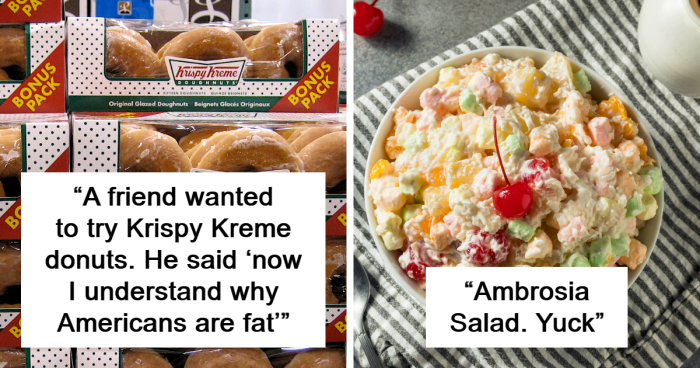
America is a vast, complicated, deeply snackable country. It gave the world jazz, national parks, space exploration, and the bold idea that cheese should sometimes come from a spray can. For many non-Americans, the United States food scene is a thrilling theme park where the rides are deep-fried, neon-colored, extra-large, and occasionally served with ranch dressing for reasons no one fully understands.
The online debate around stomach-churning American foods is not really about whether Americans have “bad taste.” Taste is personal, culture is powerful, and nostalgia can make even the strangest casserole feel like a warm hug from grandma. Still, some American foods look absolutely baffling from the outside. Why are marshmallows on vegetables? Why is salad sometimes made of whipped topping and fruit? Why is a pizza built like a lasagna wearing a tomato hat?
This article explores 30 questionable American foods and food habits that non-Americans online often find confusing, funny, or mildly alarming. Some are beloved regional classics. Some are processed-food legends. Some are edible dares with better marketing departments than nutritional profiles. Grab a napkin. Maybe two.
Why American Food Looks So Weird To Outsiders
American food culture is shaped by immigration, industrial food production, wartime convenience, state fairs, regional traditions, and a national talent for asking, “What if we made it bigger?” Many foods on this list were created to be cheap, filling, portable, shelf-stable, or fun. That explains a lot. It does not explain everything. The rest is pure American chaos with a side of fries.
30 Stomach-Churning American Foods That Confuse Non-Americans
1. Deep-Fried Butter
Deep-fried butter sounds like a prank invented by a cardiologist who gave up on society. At state fairs, frozen butter can be battered, fried, glazed, and served on a stick. The idea is not to bite into a solid stick of butter, but to eat a doughy shell soaked with melted butter. Is it technically dessert? Breakfast? A cry for help? Yes.
2. Spray Cheese
Cheese in an aerosol can is one of those American products that makes visitors stare at the label as if it might start speaking. It is shelf-stable, squeezable, salty, and strangely satisfying on crackers. To fans, it is convenient party food. To critics, it is dairy doing performance art.
3. American Cheese Slices
American cheese is famous for melting beautifully and looking suspiciously like a tiny orange yoga mat. The regulated world of processed cheese includes real dairy ingredients, emulsifiers, moisture rules, and standards of identity, but that does not stop many non-Americans from calling it “plastic cheese.” On a burger, though, it melts like a dream and refuses to apologize.
4. Giant Sodas
In much of the world, a soda is a drink. In parts of America, it can look like a personal aquarium. Oversized fountain drinks are a symbol of abundance, value, and the national belief that cup holders should be engineered for survival. Non-Americans often wonder why anyone needs that much cola. Americans might answer: “It came with the combo.”
5. High-Fructose Corn Syrup Everywhere
Many visitors notice that American packaged foods taste sweeter than expected. High-fructose corn syrup became common in U.S. soft drinks and processed foods because it was affordable, functional, and tied to the country’s enormous corn industry. Its use has declined from previous highs, but it still represents a major difference between American supermarket shelves and those in many other countries.
6. Super-Sweet Grocery Store Cupcakes
American cupcakes can be charming little cakes. They can also be frosting delivery systems wearing sprinkles. The frosting is often thick, vividly colored, and sweet enough to make your teeth file a formal complaint. For people raised on less sugary desserts, one bite can feel like licking a birthday candle dipped in confetti glue.
7. Neon Candy And Food Coloring
From blue raspberry slushies to candy that glows like emergency signage, American sweets often embrace artificial color with theatrical enthusiasm. Non-Americans may find these shades unappetizing because they do not resemble anything grown in soil. In America, however, “electric blue” is apparently a fruit flavor if we all agree not to ask questions.
8. Circus Peanuts
Circus peanuts are orange, peanut-shaped marshmallow candies that usually taste like banana. That sentence alone could end the investigation. Their texture is foam-adjacent, their flavor is unexpected, and their continued existence proves that nostalgia is stronger than logic.
9. Marshmallow Sweet Potato Casserole
Sweet potatoes are naturally sweet, earthy, and delicious. America looked at them and said, “Needs marshmallows.” This Thanksgiving side dish is often baked with brown sugar, butter, pecans, and a toasted marshmallow topping. To some families, it is tradition. To outsiders, it is dessert pretending to be a vegetable so it can sneak onto the dinner plate.
10. Jell-O Salad
Jell-O salad is where the American mid-century kitchen got ambitious and possibly unsupervised. Gelatin, fruit, vegetables, cottage cheese, mayonnaise, or whipped topping can all appear in various versions. These molded salads became popular in an era when convenience foods felt modern and impressive. Today, they remain beloved in some families and terrifying in others.
11. Ambrosia Salad
Ambrosia salad sounds elegant because “ambrosia” means food of the gods. In practice, it may involve canned fruit, coconut, marshmallows, whipped topping, sour cream, or mayonnaise. It is sweet, fluffy, and usually appears at holidays. Calling it “salad” is doing a lot of legal work, but America has always admired confidence.
12. Minnesota “Salads”
In parts of the Midwest, the word “salad” can mean lettuce. It can also mean whipped topping, marshmallows, canned pineapple, pudding mix, or pasta covered in mayonnaise. These dishes make sense in potluck culture: they are affordable, easy to transport, and feed a crowd. They also make Europeans blink slowly.
13. Canned Potatoes
Potatoes are famously durable. That is why seeing whole potatoes floating in a can can feel unnecessary, like selling pre-wrinkled laundry. Still, canned potatoes are convenient, shelf-stable, and quick for soups, stews, and emergency dinners. Are they glamorous? No. Are they there when the fresh potatoes have sprouted little alien arms? Absolutely.
14. Cream-of-Something Casseroles
Condensed soup casseroles are a cornerstone of American convenience cooking. Cream of mushroom, cream of chicken, and cream of celery became shortcut sauces for green bean casserole, tuna noodle casserole, hotdish, and more. The flavor is nostalgic and salty. The texture can be described as “soft beige comfort.”
15. Green Bean Casserole
Green bean casserole was created in the Campbell’s test kitchen in the 1950s and became a Thanksgiving classic. It combines green beans, condensed cream of mushroom soup, and crispy fried onions. Non-Americans may wonder why vegetables are being tucked into a creamy bunker, but millions of holiday tables insist this dish belongs beside the turkey.
16. Chicago Deep-Dish Pizza
Chicago deep-dish pizza is magnificent, excessive, and guaranteed to start arguments. To visitors expecting thin, chewy pizza, deep-dish can feel like a savory birthday cake filled with cheese and sauce. Is it pizza? Is it a casserole? Is it architecture? Chicago says yes, and Chicago says it loudly.
17. Mac And Cheese On Everything
Macaroni and cheese is wonderful. America, however, sometimes treats it as a universal building material. Mac and cheese burgers, mac and cheese pizza, mac and cheese grilled cheese, and fried mac and cheese bites all exist. This is either culinary creativity or dairy-based overconfidence.
18. Twinkies
Twinkies are golden sponge cakes with creamy filling and an enormous cultural reputation. They were introduced in the 1930s, originally with banana-flavored filling before vanilla became the classic. Their shelf-life myths are bigger than the cakes themselves, which is impressive because Americans can turn even a snack cake into folklore.
19. Twizzlers
Twizzlers are chewy red candy twists often compared to plastic by bewildered visitors. Fans enjoy the mild sweetness and movie-theater nostalgia. Critics say they taste like a garden hose that studied abroad. Either way, they are part of the American candy landscape.
20. Coffee Creamer
Many non-Americans ask why Americans do not simply put milk in coffee. The answer is that flavored coffee creamers can turn a cup of coffee into hazelnut cake, vanilla pudding, peppermint bark, or liquid birthday party. It is less about coffee purity and more about turning Monday morning into dessert with caffeine.
21. Chitlins
Chitlins, or chitterlings, are cooked pig intestines, often associated with Southern and soul food traditions. They come from a history of using the whole animal and transforming overlooked cuts into meaningful dishes. They require careful cleaning and cooking, and the smell can clear a room with military efficiency. For many families, though, they are heritage on a plate.
22. Livermush
Livermush is a North Carolina specialty made with pork liver, spices, and cornmeal. The name does it no favors. If it were called “Southern farmhouse pâté,” people might line up with tiny crackers. Instead, it sounds like a dare. Pan-fried until crisp, it is beloved by those who grew up with it and puzzling to almost everyone else.
23. Scrapple
Scrapple is another “use everything” pork product, especially associated with Pennsylvania Dutch cooking. It is made with pork scraps, cornmeal, flour, and spices, then sliced and fried. The crispy outside is the selling point. The ingredient list is the part people read after they have already taken a bite.
24. Raccoon, Opossum, And Other Wild Game
Wild game exists in many countries, but online commenters are often surprised to learn that raccoon, opossum, squirrel, and other animals have appeared in American regional cooking. These foods reflect rural survival traditions, hunting culture, and older ways of eating locally. They are not everyday supermarket fare, but they are part of the country’s food history.
25. Grits
Grits are ground corn cooked into a porridge-like dish, especially beloved in the South. To newcomers, plain grits can seem bland or texturally confusing. To fans, grits are a canvas for butter, cheese, shrimp, gravy, hot sauce, or breakfast happiness. Like many simple foods, they depend heavily on who is cooking them.
26. Ranch Dressing On Pizza
Ranch dressing began as a buttermilk-herb dressing and became one of America’s favorite condiments. Then Americans started dipping pizza crust in it, drizzling it on fries, and treating it like a national sauce. Non-Americans may object. Americans are too busy dunking.
27. Bloomin’ Onion
A Bloomin’ Onion is a whole onion cut to resemble a flower, battered, deep-fried, and served with dipping sauce. It is dramatic, crunchy, salty, and not remotely subtle. It also raises a fair question: why did the onion need to become a party centerpiece? Because in America, even vegetables deserve a costume.
28. Four Loko
Four Loko became infamous as a high-alcohol, brightly flavored beverage that originally included caffeine and other stimulants before regulatory pressure led to reformulation. It is less a food than a liquid warning label with fruit flavoring. Its reputation proves that America can make even beverages feel like extreme sports.
29. Biscuits And Gravy
To Americans in the South, biscuits and sausage gravy are comfort food royalty. To many non-Americans, “biscuits” mean cookies, and gravy means brown meat sauce, so the name creates instant confusion. The actual dish is soft, savory biscuits covered in creamy sausage gravy. It is rich, heavy, and deeply beloved.
30. Sloppy Joes
A Sloppy Joe is ground beef in a sweet tomato-based sauce served on a soft bun. It is popular in school cafeterias and family kitchens because it is cheap, filling, and easy. The problem is right there in the name: sloppy. For anyone who dislikes food falling apart mid-bite, this sandwich is less lunch and more laundry risk.
What These Foods Say About American Culture
The most stomach-churning American foods often tell a story. Processed cheese and canned casseroles speak to industrial convenience. Jell-O salads reflect mid-century domestic trends. Chitlins, scrapple, and livermush come from thrift, survival, and respect for the whole animal. Giant sodas and deep-fried butter come from spectacle and abundance. Ranch dressing proves that a condiment can build an empire if it believes in itself.
That is why it is too easy to laugh at these foods without understanding them. Many dishes that look strange from the outside are tied to memory, geography, money, migration, or family rituals. Food is rarely just food. Sometimes it is history. Sometimes it is comfort. Sometimes it is a marshmallow-covered sweet potato casserole that your aunt will defend like a constitutional right.
Personal Experience: Tasting America’s Weirdest Comfort Foods With An Open Mind
The first rule of trying strange American foods is simple: do not judge too quickly. The second rule is even simpler: if someone hands you a plate at a family gathering, smile first and ask questions later. Many of these foods make more sense when you encounter them in their natural habitat. A green bean casserole eaten alone at 11 a.m. feels questionable. The same casserole at Thanksgiving, surrounded by turkey, stuffing, cranberry sauce, and three relatives debating football, suddenly becomes part of the ceremony.
Imagine a non-American visitor walking into an American supermarket for the first time. The cereal aisle looks like a cartoon exploded. The coffee creamer section has more flavors than some ice cream shops. The cheese aisle includes artisanal cheddar, string cheese, shredded cheese, sliced cheese, and cheese that exits a can with a cheerful hiss. It is not just food shopping; it is anthropology under fluorescent lights.
Then come the regional foods. In the South, biscuits and gravy may look heavy, but one good bite explains the devotion. The biscuit is soft, the gravy is peppery, and suddenly breakfast feels like a blanket. Grits are similar. Plain grits can be underwhelming, but cheese grits with shrimp or hot sauce can convert skeptics quickly. The lesson is that simple American comfort foods often depend on seasoning, context, and the cook’s patience.
State fair foods are a different adventure. They are not designed for daily nutrition; they are edible fireworks. Deep-fried butter, fried Twinkies, funnel cakes, corn dogs, and giant lemonades belong to a temporary world where everyone walks around in the sun pretending calories do not count until Monday. A fair food should be understood as performance. You are not eating deep-fried butter because it is sensible. You are eating it because you want a story.
Processed foods create the biggest culture shock. American cheese slices, spray cheese, Twizzlers, and neon cupcakes can feel artificial to people raised on fresher or less sweet snacks. But they also carry emotional power. A Twinkie may not impress a pastry chef, but it can remind someone of childhood lunchboxes, road trips, vending machines, and after-school cartoons. Nostalgia is an ingredient no label has to list.
The hardest foods to understand are the ones with strong smells or challenging origins, such as chitlins, scrapple, and livermush. These foods are easy targets online because their names and ingredients sound intimidating. Yet they also represent older food wisdom: waste less, season well, and make a meal from what is available. Around the world, many respected dishes began the same way. The difference is that French cuisine gets elegant names, while America sometimes says “livermush” and hopes for the best.
After exploring these foods, the funniest conclusion is that non-Americans are both right and wrong. Yes, some American foods are strange. Yes, some are too sweet, too large, too processed, or too aggressively covered in ranch. But many are also meaningful, inventive, and tied to place. The best way to understand them is not to stare at a photo online and recoil. It is to sit at the table, try a bite, laugh kindly, and admit that every country has at least one dish that looks like a dare to everyone else.
Conclusion
America’s most stomach-churning foods are not just culinary oddities. They are tiny edible biographies of the country itself: practical, excessive, nostalgic, regional, industrial, creative, and occasionally unhinged in the most entertaining way. Non-Americans may not understand deep-fried butter, spray cheese, Jell-O salad, or ranch on pizza, but these foods survive because they mean something to the people who love them.
The real takeaway is not that American food is “gross.” It is that food culture looks weird when you remove it from memory. One person’s horror is another person’s holiday tradition. One person’s plastic-looking candy is another person’s movie-night essential. And somewhere, right now, someone is opening a can of spray cheese with absolute confidence. Honestly, that level of commitment deserves respect.
Note: This article is written as humorous cultural commentary based on real American food traditions and online reactions. Taste is personal, and many foods that seem strange to outsiders are meaningful comfort foods to the communities that love them.