Converting kilograms to pounds sounds like the kind of thing that should require a lab coat, a clipboard, and perhaps a dramatic pause. Thankfully, it does not. Whether you are checking luggage before a flight, reading a recipe from another country, comparing shipping weights, or trying to understand a product label, the kilogram-to-pound conversion is one of the most useful little math tricks you can keep in your back pocket.
The main idea is simple: 1 kilogram equals about 2.20462 pounds. In everyday life, many people round that to 2.2 pounds, which is usually accurate enough for quick estimates. But depending on the situation, you may want a precise calculation, a fast mental shortcut, or a conversion chart that saves you from poking at your phone calculator like it owes you money.
In this guide, you will learn three easy ways to convert kilograms to pounds, when to use each method, and how to avoid common rounding mistakes. We will keep the math friendly, practical, and just spicy enough that your calculator does not fall asleep.
What Are Kilograms and Pounds?
Before jumping into the conversion methods, it helps to know what these units actually measure. A kilogram, abbreviated as kg, is the base unit of mass in the International System of Units, often called the metric system. It is used widely around the world in science, commerce, education, food labeling, shipping, and everyday measurement.
A pound, abbreviated as lb, is commonly used in the United States customary system and the British imperial system. In everyday American English, people often say “weight in pounds,” even though, technically, kilograms measure mass and weight depends on gravity. For most normal situations on Earth, that scientific distinction is not going to ruin your grocery trip. The number you want is still found with the same conversion factor.
The standard conversion is:
1 kilogram = 2.2046226218 pounds
For most everyday uses, you can write:
1 kg ≈ 2.205 lb
Or, for quick mental math:
1 kg ≈ 2.2 lb
That tiny difference between 2.20462 and 2.2 matters in engineering, scientific reports, international shipping, and precise product specifications. For luggage, recipes, and casual conversions, 2.2 is usually close enough. In other words, use the fancy number when precision matters; use the simple number when you are trying to beat the airport scale without breaking into a sweat.
Method 1: Convert Kilograms to Pounds by Multiplying by 2.20462
The most accurate everyday method is to multiply the number of kilograms by 2.20462. This gives you a result in pounds with strong precision, suitable for schoolwork, product pages, shipping documents, sports equipment specifications, and any situation where “close enough” is not quite close enough.
The Formula
Pounds = Kilograms × 2.20462
Example 1: Convert 5 Kilograms to Pounds
Let’s say a package weighs 5 kg. To convert it to pounds:
5 × 2.20462 = 11.0231
So, 5 kilograms is about 11.02 pounds.
Example 2: Convert 20 Kilograms to Pounds
If your suitcase weighs 20 kg:
20 × 2.20462 = 44.0924
So, 20 kilograms is about 44.09 pounds. This is especially useful for travel because many international airlines list baggage limits in kilograms, while many travelers in the United States think in pounds.
Example 3: Convert 68 Kilograms to Pounds
Suppose you are reading a fitness equipment manual, medical form, or sports registration document that lists 68 kg:
68 × 2.20462 = 149.91416
So, 68 kilograms is about 149.91 pounds, which is commonly rounded to 150 pounds.
When This Method Works Best
Use this method when you need reliable accuracy. It is the best choice for academic work, formal documents, technical writing, manufacturing specs, shipping labels, and product descriptions. If you run an online store, for example, converting 7.5 kg to 16.53 lb looks more professional than saying “around 17-ish pounds, give or take a snack.”
The only downside is that 2.20462 is not exactly the world’s easiest number to multiply in your head. Unless your brain enjoys decimals for breakfast, you may want a faster shortcut for everyday estimates.
Method 2: Use the Quick Mental Math Shortcut: Multiply by 2.2
If you only need a fast estimate, multiply kilograms by 2.2. This shortcut is popular because it is simple, memorable, and close enough for many real-life situations. You can do it mentally, scribble it on a sticky note, or calculate it while pretending you are not panicking at the luggage counter.
The Quick Formula
Pounds ≈ Kilograms × 2.2
Example 1: Convert 10 Kilograms Quickly
Using the shortcut:
10 × 2.2 = 22
So, 10 kg is about 22 pounds.
The more precise answer is 22.0462 pounds, so the shortcut is extremely close.
Example 2: Convert 25 Kilograms Quickly
Using the shortcut:
25 × 2.2 = 55
So, 25 kg is about 55 pounds. The precise answer is about 55.12 pounds. Again, the shortcut does a respectable job and does not demand a scientific calculator.
A Slightly Better Mental Trick
Here is a neat trick: multiply the kilogram value by 2, then add 10 percent of that result.
For example, to convert 30 kg:
30 × 2 = 60
10 percent of 60 = 6
60 + 6 = 66
So, 30 kg is about 66 pounds. The precise value is 66.14 pounds. That is impressively close for math done with nothing but your brain and possibly a suspicious look at the scale.
When This Method Works Best
Use the 2.2 shortcut for travel planning, grocery estimates, casual conversations, quick recipe adjustments, gym equipment comparisons, and situations where a small rounding difference does not matter. It is not ideal for engineering, science, legal trade documents, or precision shipping calculations, but for daily life, it is fast and dependable.
Method 3: Use a Conversion Chart or Online Calculator
The third way to convert kilograms to pounds is to use a conversion chart or online calculator. This is the easiest method when you want instant answers without doing math manually. It is also helpful when you need several conversions at once.
A chart is especially useful for common values. If you frequently compare kilograms and pounds, you can save a small table and avoid repeating the same calculations. Your future self will thank you, probably while holding coffee.
Common Kilogram to Pound Conversion Chart
| Kilograms | Pounds |
|---|---|
| 1 kg | 2.20 lb |
| 2 kg | 4.41 lb |
| 5 kg | 11.02 lb |
| 10 kg | 22.05 lb |
| 15 kg | 33.07 lb |
| 20 kg | 44.09 lb |
| 25 kg | 55.12 lb |
| 50 kg | 110.23 lb |
| 100 kg | 220.46 lb |
When an Online Calculator Is Best
Online calculators are useful when you need speed, decimal precision, or repeated conversions. For example, if you are converting a list of product weights from kilograms to pounds for an e-commerce page, manually calculating each number can be slow. A converter helps reduce errors and keeps the formatting consistent.
Calculators are also helpful when the number is awkward, such as 13.74 kg. With the formula, you would calculate:
13.74 × 2.20462 = 30.2915
So, 13.74 kg is about 30.29 pounds. That is doable by hand, but an online calculator makes it faster and less likely to produce a decimal disaster.
When a Chart Is Better Than a Calculator
Charts work well for repeated everyday values. If you are writing a guide, packaging products, planning workouts, or converting luggage weights, a chart can be more convenient than typing numbers again and again. It also improves user experience on a website because readers can scan the answer quickly.
How to Round Kilograms to Pounds Correctly
Rounding is where small conversion mistakes like to sneak in wearing tiny math shoes. The correct level of rounding depends on your purpose.
For Everyday Use
Round to the nearest whole pound. For example:
12 kg × 2.20462 = 26.45544 lb
Rounded to the nearest whole number, 12 kg is about 26 pounds.
For Product Listings
Round to one or two decimal places. For example:
3.5 kg × 2.20462 = 7.71617 lb
You could write 7.72 lb for a clean product specification.
For Technical or Scientific Work
Keep more digits and follow the required precision rules for the project. If a measurement was only given as 3 kg, writing 6.6138678654 lb may look precise, but it can be misleading because the original measurement was not that detailed. In other words, do not dress a rough estimate in a tuxedo.
Kilograms to Pounds in Real Life
The kilogram-to-pound conversion appears in more places than people expect. International recipes may list flour, sugar, or produce in kilograms. Airlines often use kilograms for baggage limits. Shipping companies may require both metric and U.S. customary measurements. Sports equipment, pet food bags, bicycles, furniture, and electronics may also display weights in kilograms.
For example, a 2 kg bag of rice is about 4.41 lb. A 10 kg dumbbell is about 22.05 lb. A 23 kg suitcase is about 50.71 lb, which is why a 23 kg airline limit often feels familiar to U.S. travelers: it is very close to 50 pounds.
Understanding this conversion saves time and prevents confusion. It also makes you look surprisingly prepared in situations where everyone else is arguing with the scale. That is not a superpower, exactly, but it is a practical little victory.
Common Mistakes When Converting Kilograms to Pounds
Mistake 1: Dividing Instead of Multiplying
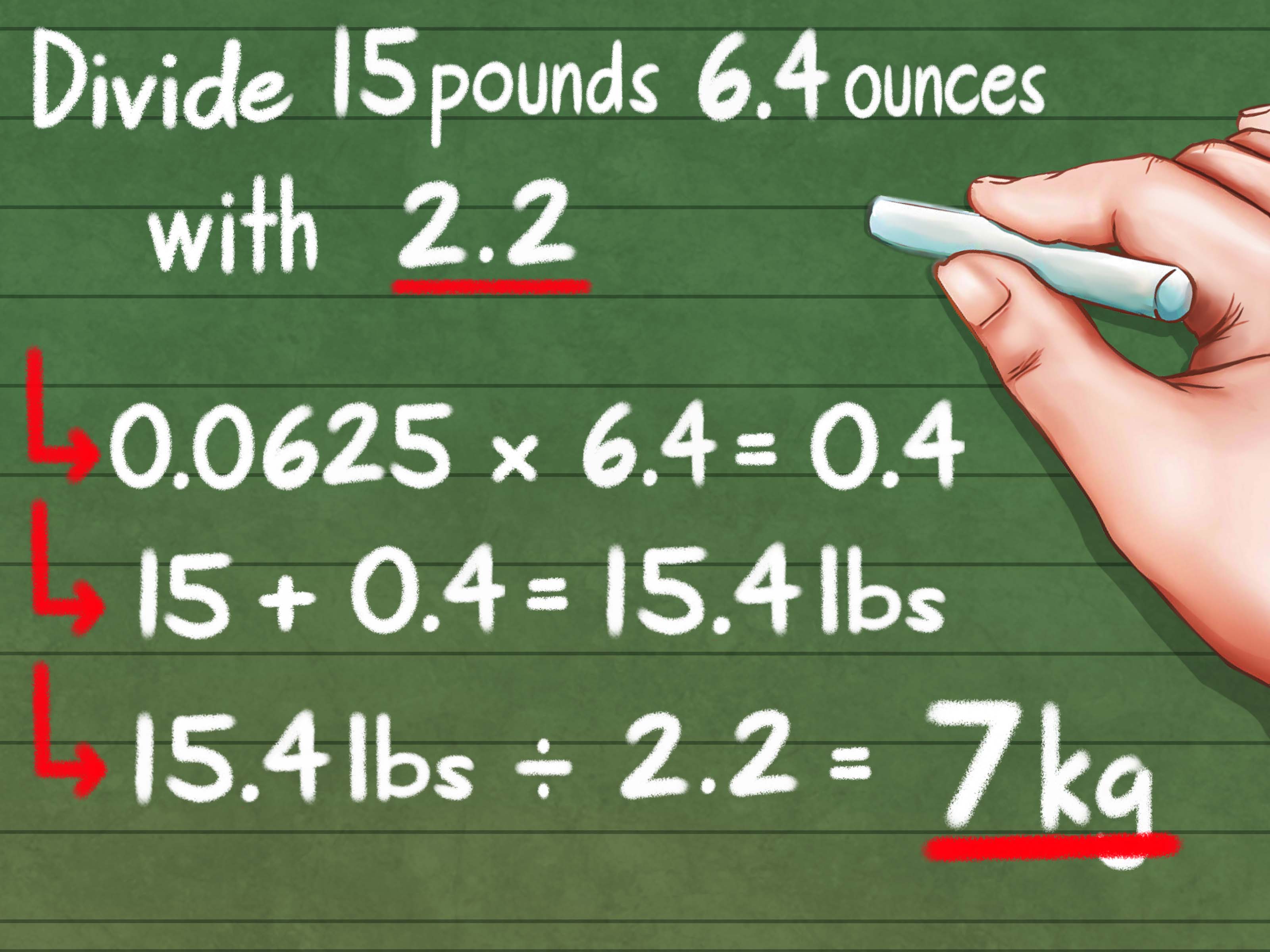
To convert kilograms to pounds, you multiply by 2.20462. Dividing by 2.20462 converts pounds to kilograms. Mixing these up can produce wildly wrong results. If 10 kg became 4.54 lb, your math has wandered into the wrong neighborhood.
Mistake 2: Using 2.2 for Precision Work
The 2.2 shortcut is useful, but it is rounded. For precise conversions, use 2.20462. The difference is small for low weights but grows as the number gets larger.
Mistake 3: Rounding Too Early
If you are doing multi-step calculations, avoid rounding at the beginning. Convert first, then round the final result. This keeps your answer cleaner and more accurate.
Mistake 4: Confusing Pounds and Ounces
Pounds and ounces are related, but they are not the same. One pound equals 16 ounces. If you convert kilograms to pounds and then need ounces, you will need an additional step. For example, 1 kg is about 2.20462 lb, which is about 35.27 ounces.
Practical Experiences: What Converting Kilograms to Pounds Teaches You
After converting kilograms to pounds in everyday situations, one lesson becomes clear: context matters. The same conversion can feel simple, urgent, annoying, or oddly satisfying depending on where you are standing. At home, converting 1 kg of potatoes to about 2.2 pounds is easy. At the airport, converting 23 kg to about 50.7 pounds while a line forms behind you feels like a competitive sport.
Travel is probably the most common real-world classroom for this conversion. Many international airlines list checked baggage limits in kilograms, while travelers from the United States often think in pounds. Once you remember that 20 kg is about 44 pounds and 23 kg is about 51 pounds, packing becomes less mysterious. You start to recognize the numbers quickly. A 32 kg heavy-bag limit? That is about 70.5 pounds. Translation: maybe do not pack your entire bookshelf unless your suitcase has been emotionally training for it.
Cooking is another surprisingly useful example. International recipes may use kilograms or grams, especially for baking ingredients. If a recipe calls for 0.5 kg of flour, that is about 1.1 pounds. If it calls for 1 kg of apples, that is about 2.2 pounds. You may not need laboratory precision for a fruit crumble, but having a quick estimate prevents the recipe from turning into edible confusion.
Shopping online also shows why kilogram-to-pound conversion is handy. Product pages for furniture, exercise equipment, electronics, tools, and pet supplies often include weights in kilograms. If a chair weighs 18 kg, multiplying by 2.20462 tells you it weighs about 39.68 pounds. That helps you understand whether it is easy to move, expensive to ship, or likely to make you reconsider your relationship with stairs.
In fitness and sports settings, kilogram and pound conversions appear constantly. Dumbbells, barbells, weight plates, bicycles, backpacks, and training equipment may use either unit. A 10 kg plate is about 22 pounds, while a 15 kg bar is about 33 pounds. Knowing the conversion helps people compare equipment without guessing. It also prevents the classic gym moment where someone confidently grabs a weight and immediately learns humility.
The best experience-based advice is this: choose the method that fits the moment. For casual estimates, multiply by 2.2. For accurate work, multiply by 2.20462. For repeated values, use a chart or calculator. Once you practice a few common numbers, the conversion becomes automatic. You will not need to memorize every possible value; you only need the pattern. Kilograms to pounds is not a monster hiding in the math closet. It is just multiplication with a decimal wearing a tiny hat.
Final Thoughts
Converting kilograms to pounds is easier than it first appears. The most accurate everyday method is to multiply kilograms by 2.20462. For quick estimates, multiply by 2.2. For repeated or awkward numbers, use a conversion chart or online calculator. Each method has its place, and the best choice depends on how precise your answer needs to be.
The next time you see a weight listed in kilograms, you do not need to stare at it like it is a secret code from a mysterious international math club. Multiply, round appropriately, and move on with confidence. Congratulations: you have officially made kilograms less dramatic.