If you have ever looked at a tiny bedroom and thought, “Well, this room can hold either two people or one nightstand,” welcome. Bunk beds are the great peace treaty between limited square footage and real life. They free up floor space, create room for storage, and make a small bedroom feel more intentional instead of accidentally crowded. And today’s bunk beds are not just for summer camp flashbacks and siblings who argue about whose sock is on whose pillow. They can be sleek, built-in, grown-up, playful, coastal, minimalist, or surprisingly luxurious.
The smartest space-saving bunk bed ideas do more than stack one mattress over another. They turn awkward corners into sleeping nooks, sneak drawers into staircases, tuck desks underneath lofts, and make guest rooms work harder without looking harder. Whether you are designing for kids, teens, weekend visitors, vacation homes, or even adults in a compact apartment or multipurpose room, the right bunk setup can make a room feel bigger, calmer, and much more functional.
Below, you will find 25 stylish bunk bed ideas for adults and kids, plus practical tips for choosing the right layout, materials, and features. In other words: less clutter, more sleep, and fewer arguments over who gets the good spot by the window.
Why Bunk Beds Work So Well in Small Spaces
Bunk beds are one of the rare furniture categories that actually earn the phrase “space-saving.” By stacking beds vertically, they open valuable floor area for desks, dressers, toy storage, reading chairs, or simply enough empty space so the room does not feel like a game of furniture Tetris. They are especially effective in shared kids’ rooms, guest rooms, attic bedrooms, vacation homes, and narrow or oddly shaped spaces where two standard beds would make the room feel pinched.
They also work because they can be tailored to how a room is really used. A bunk for siblings will look different from a bunk for sleepovers. A bunk room for kids can lean playful, while an adult-friendly setup might feature warm wood finishes, built-in lighting, subtle millwork, and hotel-style bedding. In short, bunk beds are no longer just practical. They are practical with taste, which is the furniture equivalent of having a résumé and good cheekbones.
25 Space-Saving Bunk Bed Ideas
1. Built-In Wall Nook Bunks
Built-in bunks carved into a wall or alcove make a room feel custom and organized. This is one of the best ways to maximize every inch because the beds sit flush with the architecture instead of floating awkwardly in the room.
2. Twin-Over-Twin for Classic Shared Rooms
You really cannot go wrong with the classic twin-over-twin. It is simple, compact, and easy to style. Choose a clean-lined frame in wood or metal to keep the room from feeling visually heavy.
3. Twin-Over-Full for Mixed-Age Siblings
A twin-over-full bunk is a smart compromise when one sleeper needs more room or when the bottom bunk occasionally doubles as a guest bed. It is practical without looking like you gave up halfway through planning.
4. Loft Bed with a Desk Underneath
If the room only needs one bed, a loft layout is the overachiever of small-space furniture. The space below can hold a desk, homework station, vanity, or gaming setup, turning one footprint into a multitasking zone.
5. Bunk Bed with Storage Stairs
Swapping a ladder for stairs instantly makes a bunk bed feel more substantial and easier to use. When each stair includes a drawer, you get bonus storage for pajamas, books, toys, or extra bedding.
6. Trundle Bunk for Sleepovers
A trundle under the bottom bunk is ideal for families who host cousins, friends, or holiday guests. By day, the room stays tidy. By night, it quietly becomes the sleepover headquarters.
7. Corner Bunk Layout
Using a corner for bunks can free the center of the room for play or movement. This works especially well in kids’ rooms where open floor area matters almost as much as the beds themselves.
8. Perpendicular Bunk Beds
Instead of stacking directly, try an L-shaped or perpendicular arrangement. It can soften the visual bulk of a bunk system and create useful pockets for shelves, a dresser, or a reading corner.
9. Triple Bunk Beds for Big Families
Triple bunks make sense in vacation homes, shared siblings’ rooms, and bonus rooms where capacity matters. Done right, they feel clever. Done wrong, they feel like a submarine. Keep the palette light to avoid the latter.
10. Queen-Size Bottom Bunk for Adults
If adults will actually use the room, a queen-size lower bunk can make the setup feel much more comfortable and less novelty-driven. Pair it with tailored bedding and a solid wood frame for a more refined look.
11. Privacy Curtain Bunks
Privacy curtains can make each bunk feel like its own little retreat. They are especially useful in shared rooms, bunk rooms, or homes with frequent guests. It is the architectural version of saying, “I need five minutes.”
12. Bunks with Individual Reading Lights
Integrated sconces or clip-on reading lights give each sleeper their own zone. This small feature adds a surprisingly high-end feel and prevents one person’s bedtime from becoming everyone’s bedtime.
13. Bunk Beds with Built-In Shelves
Open shelving along the bed frame or in the wall niche keeps essentials close without requiring extra furniture. Books, water bottles, chargers, and bedtime treasures all get a home instead of the floor.
14. Minimalist Scandinavian Wood Bunks
Light wood, clean lines, and simple shapes keep bunk beds from overpowering a small room. This style works beautifully for both adults and kids because it feels calm, timeless, and not remotely cartoonish.
15. Metal Frame Bunks for an Airier Look
Metal bunk beds can visually recede more than chunky wood versions, especially in tight rooms. Black, white, or muted finishes add structure without making the room feel packed to the ceiling.
16. Bunk Beds Under a Sloped Ceiling
Attics and top-floor bedrooms can be awkward, but bunk beds often make excellent use of low rooflines. Nestling bunks under the slope turns a tricky architectural feature into a smart design move.
17. Bunk Nook Beside the Stairs
That weird space near a staircase or landing? It might be a bunk nook waiting to happen. This is a great strategy in cottages, lake houses, or renovations where every inch has to pull its weight.
18. Daybed-Style Lower Bunk
Use the lower bunk as a daybed with oversized pillows so it can lounge by day and sleep by night. This works particularly well in guest rooms and teen rooms that need to feel flexible.
19. Bunks with Under-Bed Drawers
If a trundle is not necessary, deep drawers under the lower bunk can handle off-season clothes, extra sheets, or toys. Hidden storage is always attractive. Hidden storage that clears clutter is practically heroic.
20. Color-Drenched Bunk Room
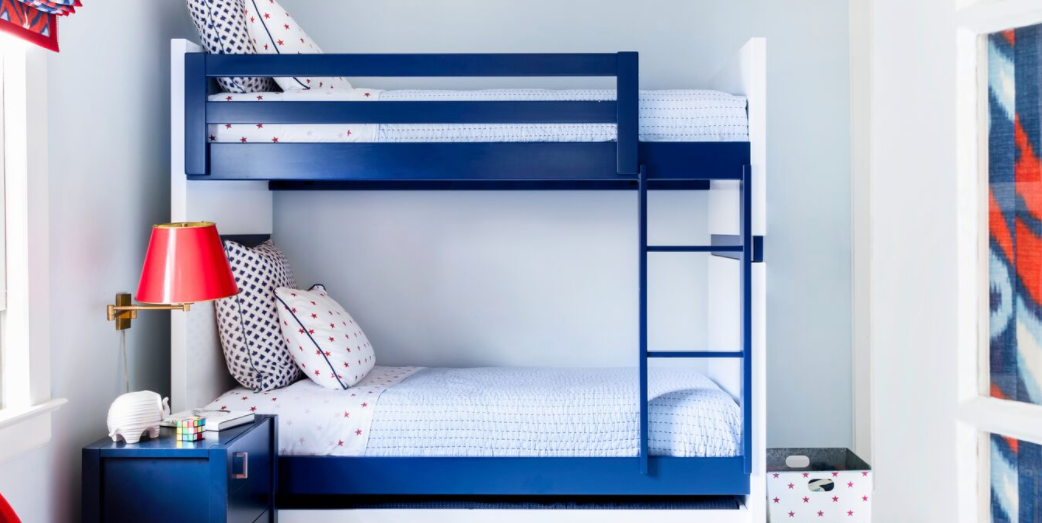
Painting the bunk structure and walls in the same shade can make the whole room feel cohesive and custom. Deep blue, warm green, or soft taupe can add drama without visual chaos.
21. Coastal-Inspired Bunk Room
For beach houses or relaxed guest spaces, bunk beds paired with light woods, blue-and-white textiles, and natural materials feel breezy and welcoming. This style helps bunks look intentional rather than purely utilitarian.
22. Bunk Beds with Personalized Details
Name plaques, individual cubbies, unique bedding, or a small ledge for each sleeper can help shared spaces feel fair and personal. Sometimes the best design feature is avoiding a future sibling tribunal.
23. Low Bunk Beds for Younger Kids
A lower-profile bunk or low loft can be a smart step for younger children who are transitioning out of toddler beds. It still saves space, but it feels less intimidating and easier to manage daily.
24. Adult Bunk Beds in a Multipurpose Guest Room
Adult bunk beds can be incredibly useful in guest rooms that also serve as offices, hobby spaces, or TV rooms. Warm millwork, grown-up lighting, and elevated linens help the setup feel designed, not improvised.
25. Custom Floor-to-Ceiling Bunk Wall
If you want the most polished result, a floor-to-ceiling custom bunk wall can combine beds, storage, shelves, lighting, and even luggage cubbies in one seamless installation. It is the splurge option, but it earns every inch.
How to Choose the Right Stylish Bunk Bed
Measure Ceiling Height First
Before you fall in love with a dramatic bunk setup online, measure the ceiling. The top sleeper needs enough headroom to sit up comfortably, and the room should not feel like the mattress was installed in a filing cabinet.
Decide Between a Ladder and Stairs
Ladders take up less room, but stairs are often easier to climb and can include storage. For younger users or frequent guest use, stairs may feel safer and more comfortable.
Think About Who Will Use the Top Bunk
For kids, safety matters more than aesthetics, always. For adults and teens, comfort becomes a bigger factor, including mattress support, width, and ease of getting in and out without performing an acrobatic routine.
Look for Storage You Actually Need
Drawers, shelves, cubbies, or a trundle can all be useful, but do not choose every feature at once unless the room truly needs it. The best space-saving bunk bed is the one that solves your real problem, not all possible problems in the known universe.
Choose a Finish That Matches the Room
Light woods and white finishes brighten a room. Darker woods add warmth and sophistication. Painted built-ins can make a bunk bed feel architectural. The finish should help the bed blend with the room instead of shouting, “Look at me, I am furniture.”
Important Safety and Comfort Tips
Style should never outrank safety. Check age guidance for upper-bunk use, confirm guardrails are secure, and make sure the mattress height fits the manufacturer’s recommendation so the guardrail can do its job. Use the ladder as intended, avoid overcrowding the top bunk, and verify product-specific weight limits rather than assuming every bunk bed is suitable for every user.
Comfort matters, too. High-quality mattresses, breathable bedding, individual lights, and a little personal storage make bunk beds much more enjoyable in daily life. A stylish bunk room should not just photograph well. It should also be a place where people actually sleep well, read comfortably, and avoid bonking their heads before coffee.
Design Tips to Make Bunk Beds Look More Expensive
Built-in trim, paneled walls, integrated sconces, and coordinated bedding can instantly elevate a bunk room. Use matching hardware, layered textures, and a restrained palette to create cohesion. If the room is small, let one element do the talking, such as wallpaper in the bunk niche or a rich paint color on the bed wall.
For adult-friendly bunk beds, focus on quality materials and cleaner styling. Think walnut, oak, matte metal, soft linens, reading lights, and hidden charging access. For kids’ rooms, you can still have fun, but anchor the playfulness with thoughtful organization so the room feels polished rather than toy-store-adjacent.
Experiences and Real-Life Lessons from Living with Bunk Beds
One of the most surprising things people discover after adding bunk beds is that the room does not just gain sleeping space; it often gains a new identity. A plain spare room suddenly becomes the favorite sleepover room. A tight siblings’ room becomes more organized because the open floor area actually makes daily cleanup possible. A vacation-home bunk room turns into the place everyone asks for first, which is both flattering and slightly chaotic.
Families often say the biggest win is flexibility. A bunk bed with a trundle can handle ordinary weeknights, holiday visitors, and last-minute cousins without needing a parade of air mattresses. In a small home, that kind of flexibility is gold. The room can function calmly 90 percent of the time, then expand when life gets noisier. It is furniture that understands deadlines, birthdays, and family logistics.
Adult users tend to appreciate bunk beds most in guest situations. A home office that includes a tasteful bunk setup can host multiple overnight guests without permanently sacrificing floor space. In lake houses, cabins, and beach homes, built-in bunks become part of the charm. They feel nostalgic, but the good kind of nostalgic, not the “why is this mattress thinner than a sandwich” kind.
Parents also learn quickly that the details matter more than the basic frame. Individual reading lights reduce bedtime battles. Small shelves prevent cups and books from being stacked in dangerous places. Privacy curtains can make even a shared room feel calmer. A storage stair can hold an almost suspicious amount of stuff. These little upgrades make the difference between a room that merely fits people and one that genuinely supports daily life.
Another real-life lesson is that bunk beds affect how a room feels, not just how it functions. When the structure is scaled well and styled thoughtfully, the room can feel bigger because the layout is more efficient. But when the bunk is too bulky, too dark, or too tall for the room, it can swallow the space. That is why measurements, ceiling height, and visual weight matter so much. Sometimes the best-looking solution is a simple wood frame. Sometimes it is a custom built-in. Sometimes it is a loft bed with a desk because only one sleeper actually needs the room. The smartest choice is usually the one that matches real habits, not fantasy habits.
There is also an emotional side to bunk beds that people do not always expect. Kids often love having a nook that feels personal, especially when they can choose a reading light, bedding color, or curtain pattern. Guests appreciate the thoughtfulness of a bunk room that includes outlets, a place for a phone, and decent bedding. And adults who were initially skeptical about bunk beds often change their minds once they see a well-designed setup in action. Good bunk beds do not feel temporary. They feel intentional.
In the end, the best experience with bunk beds comes from balancing three things: capacity, comfort, and character. Yes, they should save space. Yes, they should be safe. But they should also feel inviting. A room can be efficient without being cold, and playful without being messy. When bunk beds are designed well, they solve practical problems while making a room more memorable. That is a pretty impressive résumé for a piece of furniture that used to be known mainly for creaky ladders and top-bunk diplomacy.
Conclusion
The best space-saving bunk bed ideas combine smart planning with strong style. Whether you choose a minimalist wood frame, a custom wall of bunks, a loft with a desk, or a stair-and-storage setup, the goal is the same: create more room to live without sacrificing comfort. Stylish bunk beds for adults and kids can turn a small bedroom into one of the hardest-working and best-looking spaces in the house. Not bad for furniture that spends most of its time standing still.