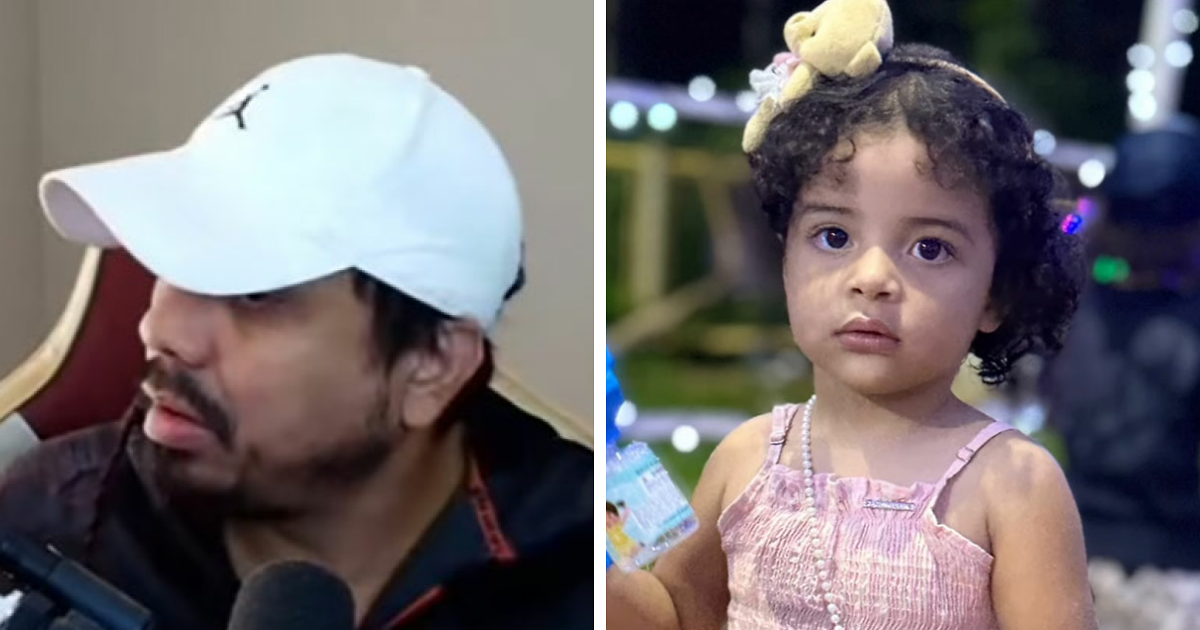
Some stories do not arrive gently. They crash into the internet, stop the scrolling, and remind everyone that behind every screen is a real home, a real family, and sometimes a grief so large that language walks in circles trying to describe it.
The heartbreaking case of a 2-year-old girl drowning while her father was live-streaming has shaken viewers far beyond the gaming community. According to public reports, Brazilian streamer Renato Tsukasa, known online as Fanho, was broadcasting when he was suddenly alerted that his young daughter, Giulia, had fallen into the family pool. She was reportedly rushed to the hospital after resuscitation attempts, but she did not survive.
One viewer’s comment captured the emotional weight of the tragedy: “They need supernatural strength to hold up after this.” It is the kind of sentence people write when ordinary sympathy feels too small. And it is also a moment that forces a difficult conversation about toddler drowning, home pool safety, distractions, supervision, and how quickly a normal day can become unthinkable.
The Live-Streaming Tragedy That Left Viewers Stunned
Live streaming can create the illusion that viewers are “in the room” with a creator. Fans see laughter, small interruptions, pets wandering across the camera, children popping into frame, and the everyday messiness that makes online personalities feel familiar. That closeness is exactly why this tragedy hit so hard.
Reports say Renato was working during a live gaming session when desperate cries from a family member interrupted the broadcast. His daughter had reportedly accessed the pool area, climbed over a fence, and entered the water without being seen at the critical moment. Renato later described trying mouth-to-mouth breathing and chest compressions before the family rushed her to the hospital.
For viewers, the story was almost impossible to process because Giulia had reportedly appeared happy and playful not long before. Online communities often move at the speed of memes, but this time the mood shifted into stunned silence. Many streamers paused or canceled broadcasts out of respect. Fans left messages of condolence, not as spectators chasing drama, but as people trying to hold up a grieving family from a distance.
Why Toddler Drowning Happens So Fast
One of the most dangerous myths about drowning is that it looks loud. Movies teach us to expect splashing, shouting, dramatic arms, and music swelling in the background. Real life is much quieter. Drowning can happen in seconds, and a young child may not be able to call for help at all.
Children ages 1 to 4 are especially vulnerable around pools, hot tubs, spas, bathtubs, buckets, ponds, and any standing water. Toddlers are fast, curious, top-heavy, and powered by a level of confidence that would make a mountain goat nervous. They climb, test gates, squeeze through gaps, follow toys, and chase whatever sparkly thing caught their attention three seconds ago.
That is why the phrase “I only looked away for a moment” appears in so many drowning stories. A moment is enough. A phone notification, a bathroom trip, a doorbell, a work call, a pot boiling over, a sibling needing help, a livestream chat moving quicklynone of these things feel dangerous on their own. But around water, small distractions can become catastrophic.
Live Streaming, Remote Work, and the Modern Attention Trap
This case has also stirred conversation about work-from-home life, digital labor, and parenting in the age of constant connection. Streaming is not simply “playing games on camera.” For many creators, it is their job: performing, responding, moderating chat, managing sponsors, keeping an audience engaged, and staying “on” for hours. The camera may show a bedroom or home office, but the creator is still at work.
That does not make the loss less painful, and it does not erase the need for safety layers around water. But it does remind us to resist lazy internet verdicts. Tragedies are often more complex than comment sections allow. In many drowning incidents, an adult is nearby, a barrier exists but fails or is bypassed, and a child reaches water during what families call “non-swim time.” That means no one planned a pool activity. No swimsuits. No towels. No sunscreen. Just a toddler finding access when nobody expected it.
The lesson is not “never work from home” or “never stream.” The lesson is that water needs its own system, one that does not depend on perfect attention from exhausted humans. Humans get distracted. Gates should not. Locks should not. Door alarms should not. Pool covers should not. Safety planning exists because real life is busy, noisy, and sometimes full of things that ping.
What Pool Safety Experts Mean by “Layers of Protection”
Water safety professionals often use the phrase “layers of protection.” It sounds fancy, but the idea is simple: do not trust one safety measure to do the whole job. A single fence, a single adult, a single swimming lesson, or a single rule is not enough. Toddlers are tiny loophole lawyers in sneakers.
1. Four-Sided Pool Fencing
A home pool should be completely separated from the house and yard by a four-sided fence whenever possible. The fence should be difficult to climb, have gaps small enough to prevent a child from slipping through, and include a self-closing, self-latching gate. A fence that is easy for adults to forget open is not a system; it is wishful thinking with hinges.
2. Door and Gate Alarms
If a home opens toward a pool area, alarms on doors and gates can buy precious seconds. The goal is to know immediately when a child has left a safe zone. An alarm may feel annoying during normal life, but annoying is underrated when it prevents tragedy.
3. Active Adult Supervision
When children are in or near water, a responsible adult should be assigned as the “water watcher.” That adult should not be scrolling, cooking, reading, drinking, napping, filming, streaming, or doing the classic “I’m watching” while actually watching three other things. Phone down. Eyes up. Wi-Fi can wait; toddlers cannot.
4. Swim Lessons and Water Competency
Formal swim lessons can reduce drowning risk, but no child becomes “drown-proof.” That phrase should be retired, placed in a museum, and guarded by a very stern lifeguard. Lessons help children build skills, but supervision and barriers still matter every single time.
5. CPR and Emergency Readiness
Parents, relatives, babysitters, and pool owners should learn CPR and basic rescue steps. In a drowning emergency, fast action matters. Rescue equipment and a phone should be easy to reach near the pool. Nobody wants to plan for the worst moment of their life, but planning is exactly what gives families a fighting chance.
The Pain of Parental Guilt After a Child Drowning
After tragedies like this, grief often arrives with guilt attached. Parents replay the day in a brutal loop: What if I had checked sooner? What if the gate had been different? What if the schedule changed? What if I had heard something? What if, what if, what if?
Those questions are human. They are also merciless. Public reports say both parents expressed profound heartbreak, with Giulia’s mother sharing emotional tributes and the family receiving waves of support online. The most compassionate responses from viewers were not focused on punishment or blame. They were focused on comfort: stay strong, do not carry this alone, and please do not let guilt become the only voice in the room.
There is an important distinction between learning from a tragedy and turning grieving parents into targets. Learning asks, “What systems can prevent this from happening again?” Blame often asks, “How can I convince myself this could never happen to me?” The first response saves lives. The second only protects the ego.
How Online Communities Respond When Real Life Breaks Through
The internet is not famous for tenderness. It can be sarcastic, impatient, and about as gentle as a shopping cart with one bad wheel. But in moments like this, online communities sometimes show their best side.
Fans of Renato and other creators shared condolences, canceled entertainment plans, and reminded the family that they were not alone. That matters because grief can be isolating even when thousands of people know your name. Public grief is strange: everyone has seen the headline, but no one can carry the teddy bear, the empty bed, the silence at breakfast, or the tiny shoes by the door.
At the same time, public grief needs boundaries. Viewers should avoid demanding updates, replaying painful clips, speculating about legal consequences, or treating a child’s death like content. Sympathy should not require access. Sometimes the most respectful thing an audience can do is leave a kind message and step back.
Practical Pool Safety Checklist for Families
Families with pools, spas, ponds, or nearby water should treat this story as a painful reminder to inspect the environment today, not “sometime before summer.” A safety checklist does not make anyone paranoid. It makes them prepared.
- Install a four-sided fence that fully separates the pool from the house and yard.
- Use a self-closing, self-latching gate and check it regularly.
- Add alarms to doors, windows, and gates leading to water.
- Keep pool toys out of sight when swim time is over.
- Use a secure pool cover when the pool is not in use.
- Assign one adult as water watcher during gatherings.
- Keep toddlers within arm’s reach near water.
- Do not rely on floaties or inflatable toys as safety devices.
- Enroll children in age-appropriate swim lessons.
- Learn CPR and refresh the skill regularly.
- Ask about pools, ponds, and hot tubs before playdates.
- Empty buckets, kiddie pools, and tubs immediately after use.
The best safety plan is boring. Nothing dramatic happens. No emergency. No viral clip. No ambulance. Just a gate that closes, an adult who watches, and a toddler who gets to grow up.
Experiences and Lessons Related to This Tragedy
Anyone who has cared for a toddler knows the strange mix of joy and alarm that comes with the job. One minute, a 2-year-old is offering you a half-eaten cracker like it is a priceless family heirloom. The next minute, they are halfway up a chair, reaching for something that was definitely not reachable five seconds ago. Toddlers are not reckless in the adult sense; they are explorers with no risk department.
Many parents describe the same stomach-drop feeling around water. A family gathering is happening. Adults are talking. Someone brings out snacks. A child who was just beside the patio table is now closer to the pool steps than anyone realized. Nothing bad happens because an adult notices in timebut that single moment changes the household rules forever. Suddenly the gate gets checked twice. Toys are moved away from the water. The phone stays inside during pool time. The phrase “Who is watching the kids?” becomes specific: “Maria is the water watcher until 3:15, then David takes over.”
Another common experience is discovering that children are far more capable climbers than adults expect. A fence that looks tall to a parent can look like a challenge to a determined toddler. Outdoor furniture placed near a barrier can become a ladder. A loose latch can become an invitation. Even a pool cover can create danger if it is not designed and secured properly. These are not failures of love. They are failures of design, routine, and imagination. Safety requires adults to think like a toddler: What can be pushed? What can be climbed? What can be opened? What shiny object might lure them over there?
Families who have gone through close calls often say the hardest part is admitting how ordinary the day felt. It was not a “dangerous” day. It was laundry day, work day, visiting-grandma day, answer-one-email day. That is why stories like Giulia’s hurt so deeply. They do not feel distant. They feel possible. And because they feel possible, they deserve more than a sad comment and a quick scroll away.
The healthiest response is not panic. It is action. Walk outside and test the gate. Ask whether the latch is too low. Check whether the door alarm works. Move chairs, boxes, planters, and toys away from fences. Ask relatives whether they know CPR. Decide who watches children during parties. Put the phone in a drawer during swim time. Have the awkward playdate conversation: “Do you have a pool, and is it fenced?” It may feel uncomfortable for ten seconds. That is a good trade.
Above all, this experience teaches that love must be paired with systems. Parents love their children fiercely, but love cannot physically lock a gate. Love cannot make a phone silent. Love cannot perform CPR unless someone learned it first. Systems are how love becomes practical. They are how care turns into habits that stand guard when attention slips.
Conclusion: A Tragedy That Should Become a Safety Wake-Up Call
The story of a 2-year-old drowning while her father was streaming live is devastating because it contains two truths at once. First, a family lost a beloved child, and no article, comment, or safety checklist can soften that loss. Second, the tragedy points to prevention steps that every household near water should take seriously.
Giulia’s death should not become internet spectacle. It should become a reminder. Drowning is often silent. Toddlers are quick. Supervision must be active. Pool barriers need to be strong, well-maintained, and layered with alarms, rules, swim education, and emergency readiness. The goal is not to live in fear of water. The goal is to respect it enough that children can enjoy it safely.
When viewers wrote that the family would need “supernatural strength,” they were acknowledging a pain no parent should have to carry. For everyone else, the most meaningful response is simple: offer compassion, reject cruelty, and make the nearest pool safer before another ordinary day becomes an irreversible one.