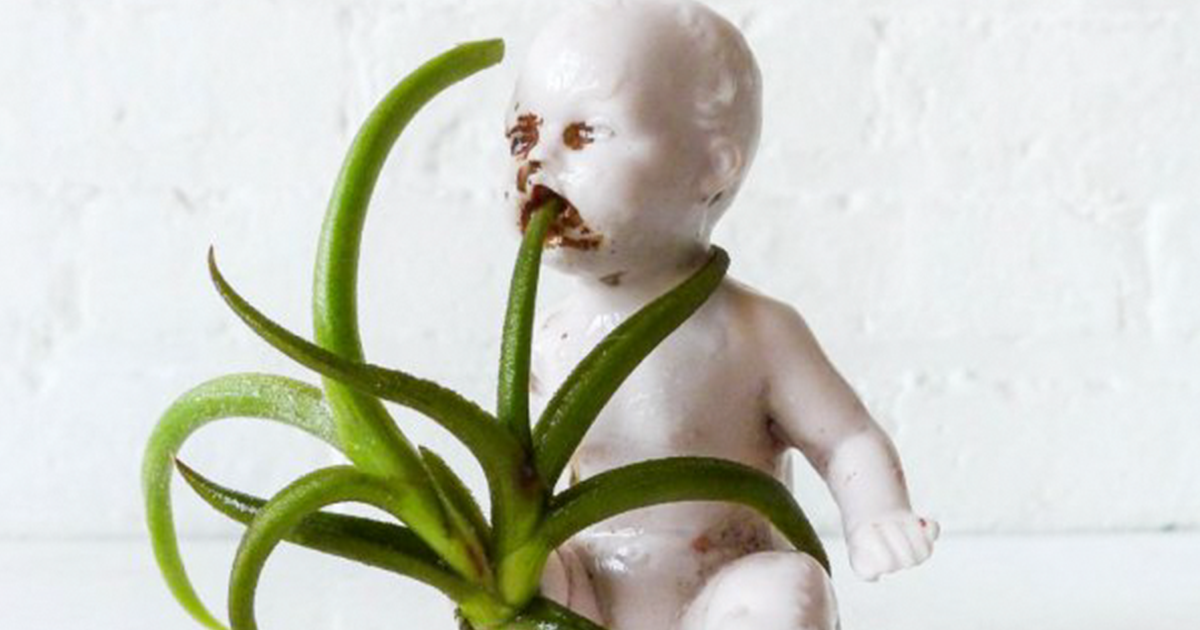
Some people look at an old doll and see a childhood keepsake. Otent with a cactus erupting from its skull.
That second group has apparently been very busy.
Across thrift stores, garage sales, craft rooms, and gardens, creative makers have transformed unwanted dolls into some of the strangest planters ever placed on a porch. Baby-doll heads now wear succulent “hair.” Hollow plastic torsos overflow with ivy. Barbie styling heads have been painted to resemble cracked stone statues. Limbs dangle from hanging baskets like the aftermath of a botanical crime scene.
The results are funny, inventive, sustainable, and just unsettling enough to make the mail carrier reconsider the safest route to the front door. A collection featuring 145 creepy doll planters demonstrates how far people will go when they have an old toy, a power drill, and no fear of neighborhood gossip.
Why Are Old Doll Planters So Disturbingly Popular?
Creepy doll planters occupy the narrow decorative space between charming garden art and evidence from an unsolved mystery. That tension is exactly why they attract attention.
A normal flowerpot performs its duties quietly. It holds soil, supports a plant, and never appears to follow visitors with its eyes. A doll head planter does all three while looking as though it remembers something terrible about 1987.
The concept also combines several popular interests: thrift-store hunting, upcycling, container gardening, surreal art, Halloween decorations, and do-it-yourself home decor. Instead of buying another mass-produced planter, makers create a one-of-a-kind object with a history, a personality, and possibly a grudge.
There is also an irresistible visual joke. Hair traditionally grows from the top of a doll’s head, so replacing that hair with living plants feels oddly logical. A spiky haworthia becomes a punk haircut. String of pearls creates luxurious green curls. A tall cactus delivers an alarming botanical mohawk. Trailing sedum can make an innocent baby doll look like it joined a heavy-metal band.
From Forgotten Toy to Nightmare Garden Decor
The basic transformation sounds simple: find a hollow doll, create an opening, add drainage, fill it with potting mix, and insert a plant. However, the appearance can vary dramatically depending on the type of doll, finish, plant, and display method.
Baby-Doll Head Planters
The classic version uses a vinyl baby-doll head with the top removed. These are among the most startling designs because the face remains recognizable while the missing scalp becomes a planting cavity.
Some makers preserve the original eyes, faded cheeks, and scratched skin. Time has often done most of the horror-design work for free. Others repaint the head in matte black, metallic gold, concrete gray, chalky white, or mossy green. A stone-effect finish can make a cheap plastic toy resemble an antique garden sculptureuntil someone notices the tiny molded eyelashes.
Full-Body Doll Planters
More ambitious artists use the entire doll. Openings may be created in the head, back, torso, or even the stomach. Plants growing from several areas turn the doll into a mobile miniature garden.
Positioning matters. A seated doll holding a small succulent can look whimsical. The same doll half-buried in a flower bed with vines escaping from its chest creates an entirely different emotional experience.
Several dolls grouped together can form a bizarre garden family. Line them along a fence, and the yard begins to resemble a daycare center managed by poison ivy.
Barbie and Styling-Head Planters
Large hairstyling dolls are especially practical because their hollow heads provide more room for soil and roots. Their broad bases are also less likely to tip over than smaller toy heads.
Barbie dolls require more precision because their bodies are narrow, but their exaggerated fashion poses make them ideal for artistic displays. A Barbie torso mounted on a pedestal can support a small air plant, while multiple dolls may be combined into hanging or wall-mounted arrangements.
Doll Limbs as Miniature Containers
Nothing says “welcome to our garden” quite like a row of plastic hands holding tiny succulents.
Arms, legs, shoes, and cupped hands can become miniature propagation vessels or air-plant holders. Makers sometimes attach them to wooden boards, old picture frames, wire baskets, or fences. Because these pieces hold little soil, compact succulents and air plants are usually more practical than thirsty flowering plants.
The Creative Styles Behind the 145 Doll Planters
The most memorable projects are not simply dolls with plants shoved into them. They use color, texture, placement, and plant shape to build a complete character.
The Abandoned-Nursery Look
This style preserves every stain, scratch, cloudy eye, and patch of missing paint. Moss may be added around the face, while trailing plants make the doll appear to have spent several decades waiting in a forest for someone who never returned.
For maximum discomfort, place it behind a shrub where visitors notice it only after standing nearby for several seconds.
The Faux-Stone Statue
A textured coating in gray, beige, white, or charcoal can disguise plastic and produce the appearance of weathered concrete. Subtle layers of paint create depth, while dabs of green or brown suggest moss and age.
This version can be surprisingly elegant. From across the patio, it resembles a classical sculpture. From six feet away, it resembles a classical sculpture that knows your Wi-Fi password.
The Bright Pop-Art Planter
Not every old doll planter must look haunted. Electric pink, turquoise, yellow, orange, and metallic finishes create playful pop-art pieces. Add a bright succulent or patterned scarf, and the result becomes quirky rather than terrifying.
These colorful planters work well in eclectic interiors, art studios, children’s gardening spaces, and patios where conventional terracotta would feel too polite.
The Full Halloween Treatment
For seasonal displays, makers add fake blood, black lace, spiders, cobwebs, cracked paint, dark flowers, or miniature tombstones. Red-and-green succulents can imitate an alien organism emerging from the doll’s head.
A battery-powered light placed behind translucent eyes can raise the terror level considerably, although it may also permanently end casual conversations with the neighbors.
Why Succulents Are the Perfect Doll-Planter Hair
Succulents appear in many creepy doll planters because they offer unusual shapes, moderate root systems, and relatively low watering needs. Rosette-forming echeverias resemble oversized flowers. Sedums spill over the rim. Haworthias and aloes provide spikes, while string of pearls creates dangling green hair.
They also tolerate the limited planting volume found in many doll heads better than large, fast-growing plants. That does not mean they can survive neglect, poor soil, and a head with no drainage hole. Succulents still require an airy growing medium and protection from constantly wet roots.
Air plants are another useful choice, particularly for tiny dolls or shallow openings. They do not require potting soil and can be positioned in heads, hands, shoes, or other small cavities. Moss can provide a softer woodland effect, although its moisture requirements differ from those of desert succulents.
How a Creepy Doll Planter Is Made
The exact process depends on the doll’s material and shape, but most successful projects follow the same general stages.
1. Choose a Suitable Doll
Thrift stores, flea markets, garage sales, and online marketplaces are common hunting grounds. Hollow vinyl or plastic dolls are easier to modify than solid figures. A flat-bottomed head or broad styling bust is more stable than a narrow, rounded toy.
Inspect the item before cutting it. Avoid dolls with major sentimental value, electrical components, leaking batteries, heavy contamination, or uncertain materials. Vintage dolls may also have collectible value, so check labels and maker’s marks before turning a rare antique into a home for a $4 cactus.
2. Clean the Surface
Remove hair, dirt, dust, stickers, and oily residue. A clean surface helps paint and decorative coatings adhere more evenly. Allow the doll to dry completely before continuing.
3. Create the Planting Opening
The opening must be wide enough for the plant’s root ball and deep enough to hold a useful amount of potting mix. Depending on the material, makers may use sturdy scissors, a utility knife, a rotary tool, a small saw, or a hole-cutting attachment.
Secure the doll so it cannot slip. Wear appropriate eye and hand protection, keep fingers away from the cutting path, smooth sharp edges, and let an experienced adult handle power tools. Soft vinyl can suddenly bend or tear, so slow cuts are safer and cleaner than aggressive ones.
4. Add Real Drainage
A doll head may look like a decorative container, but the plant inside still needs oxygen around its roots. Create one or more holes at the lowest point so excess water can escape.
Do not rely on a thick layer of rocks to correct a container with no outlet. A better solution is a drainage hole or a removable nursery pot fitted inside the doll. Double-potting also makes it easier to water the plant separately and replace it without damaging the artwork.
5. Paint and Decorate
Apply paint in thin coats and follow the manufacturer’s drying and ventilation instructions. Stone-effect spray paint, chalk paint, acrylic paint, metallic finishes, and textured compounds can all produce distinctive results.
Outdoor pieces benefit from a finish intended for the planter’s material and expected exposure. Even then, sunlight, rain, temperature changes, and moisture will eventually alter the surface. For creepy decor, a little weathering may improve the design rather than ruin it.
6. Add Potting Mix and Plants
Use commercial container mix instead of dense garden soil. Succulents generally perform better in a fast-draining mix containing coarse mineral material such as perlite, pumice, or coarse sand.
Plant at approximately the same depth as the original root ball, leave a little space beneath the rim for watering, and avoid burying the crown. Water thoroughly, let the container drain, and then follow the moisture needs of the selected plant.
Where to Display Doll Head Planters
Placement determines whether the project reads as art, comedy, or a warning.
A single faux-stone head on a shelf can blend into modern decor. A colorful styling-head planter on a desk feels playful. A baby doll suspended upside down from a tree branch feels like the opening scene of a movie in which nobody makes sensible decisions.
For outdoor displays, consider the plant’s light requirements before choosing the spot. Some succulents enjoy strong light but may need gradual acclimation to intense sun. Shade-loving plants should not be placed in an exposed location merely because that is where the doll looks most threatening.
Planters must also be stable. Add a weighted base, mount the doll securely, or place it where wind and curious animals cannot knock it down. Hanging arrangements require hardware rated for the planter’s total wet weight, not merely its empty weight.
Are Doll Planters Actually Sustainable?
Repurposing an unwanted toy can extend its useful life and reduce the demand for a newly manufactured decorative container. The environmental benefit is modest for one doll, but the broader habit is valuable: pause before discarding an object and consider whether it can serve another purpose.
Upcycling is not permission to buy piles of new plastic dolls solely to cut them apart. The most sustainable version uses an item that is already unwanted, damaged, incomplete, or unsuitable for donation.
It is also worth designing the planter so its components can be separated later. A removable nursery pot, mechanical fasteners, and minimal permanent adhesive may make future repairs or disposal easier.
Why the Neighbors Cannot Look Away
Creepy doll planters work because they transform familiar objects into something unexpected. Dolls are designed to imitate people, while plants are unmistakably alive. Combining them creates an object that seems caught between toy, sculpture, and organism.
The face also triggers an immediate emotional response. A standard pot disappears behind its plant. A doll keeps staring through the foliage. Even a cheerful expression becomes suspicious when rosemary is growing out of the skull.
That discomfort is balanced by humor. Viewers understand that the planter is absurd, and the maker knows exactly how strange it looks. The best examples invite a sequence of reactions: surprise, confusion, laughter, admiration, and a quiet decision never to trespass on that property.
Experience-Based Lessons From Making and Displaying Creepy Doll Planters
The photographs may make old doll planters appear effortless, but real projects usually involve experimentation. The following experience-based observations reflect the common surprises that arise when unusual objects become functioning containers.
The First Doll Is Usually the Test Subject
Many makers begin with a clear image in mind: one neat cut, one perfect coat of paint, and one healthy succulent sitting gracefully on top. Reality often introduces a crooked opening, paint that remains sticky, or a head that rolls across the workbench every time it is touched.
The first attempt is valuable because it reveals how the material behaves. Flexible vinyl may collapse under pressure. Hard plastic may crack if drilled too aggressively. Rooted doll hair can leave dozens of tiny holes after removal. Instead of treating these flaws as disasters, experienced upcyclers incorporate them into the final style. A cracked surface becomes “ancient stone.” Uneven paint becomes “distressed texture.” A jagged opening becomes “the exact nightmare aesthetic originally intended.”
Plant Health Matters More Than the Photograph
A freshly assembled planter can look excellent for a picture even when it is poorly designed for long-term growth. Trouble appears later. Soil remains wet. The plant stretches toward insufficient light. Water collects inside the doll’s neck. Fungus gnats arrive as uninvited supporting actors.
The practical lesson is to design the planter around the plant rather than forcing a plant into an attractive cavity. A removable inner pot solves many problems. It allows complete drainage, makes watering easier, and lets the maker change plants with the seasons. The doll becomes a decorative shell instead of a permanent horticultural prison.
Faces Change Dramatically After Planting
Plant choice can completely alter a doll’s personality. A compact rosette may look like a floral crown. Tall grass creates wild hair. Trailing vines soften the face, while upright spikes make the same doll appear furious.
Makers often discover that the best plant is not the one originally planned. A large succulent may overpower a small head, while a tiny plant can disappear inside a deep opening. Dry arranging several nursery plants before committing helps identify the right scale, color, and silhouette.
Outdoor Weather Becomes Part of the Artwork
A planter that looks flawless indoors will change outside. Sunlight may fade the finish. Rain may create streaks. Dust settles in the eyes. Moss forms in creases. Insects occasionally move into spaces no human knew existed.
For a polished decorative piece, regular cleaning and touch-ups are necessary. For a horror-themed planter, natural weathering can make the doll more convincing. The important distinction is between attractive aging and structural failure. Faded paint is character; trapped water, unstable hanging hardware, and brittle plastic are maintenance problems.
Neighbor Reactions Become Part of the Fun
The most entertaining experience may occur after the planter is finished. Guests notice it mid-conversation. Delivery drivers perform a double take. Children either love it immediately or refuse to approach the porch. Someone eventually asks, “Why?” as though ordinary flowerpots were legally required.
A thoughtful display keeps the joke playful. Avoid positioning realistic dolls where they could alarm drivers, block walkways, or be mistaken for a person in distress. A porch shelf, garden table, fenced patio, or clearly decorative grouping allows people to appreciate the absurdity without causing unnecessary panic.
The ultimate lesson from these 145 creations is that memorable garden decor does not need to be expensive or universally tasteful. It needs imagination, functional planting decisions, and enough confidence to accept that one neighbor may never make eye contact again.
Final Thoughts
Old doll planters are strange, resourceful, funny, and occasionally beautiful. They rescue discarded toys, challenge conventional garden design, and prove that almost any hollow object can become a planter when drainage and plant health are treated seriously.
Whether painted like a classical statue, decorated for Halloween, or left in its naturally unsettling thrift-store condition, every doll develops a new identity once greenery begins emerging from it. The project can be cute, artistic, gothic, ridiculous, or all four before breakfast.
So the next time an unwanted doll appears at a yard sale, look beyond the cloudy eyes and suspicious smile. With careful cutting, proper drainage, and the right succulent, it could become the neighborhood’s most unforgettable garden feature.
Just remember to turn it away from the bedroom window.